


Developing story update (August 02, 2026, 01:29 UTC):
The difficulty slide has now crossed two levels it had not touched in years. Based on our sources, 2026 is on track to become the first year on record to close with an annual decline in Bitcoin network difficulty, rather than the steady year-over-year growth the network has shown through prior cycles.
Difficulty has also dropped below where it stood twelve months ago, the first time that has happened since the 2021 mining ban in China reset the map. For traders this reinforces the miner-capitulation read rather than changing it: weaker operators are switching off or reallocating power toward AI and HPC, a network cleansing that tends to precede a firmer cost base for the miners that remain. Price context is unchanged, with BTC near $62,924 and holding just above the $62,500 invalidation that keeps the cautiously bullish structure intact.
What to watch now: Whether difficulty keeps printing below year-ago levels into the next adjustment, or stabilizes as inefficient hashrate finishes leaving.
Listen: the breakdown
Market briefing: Bitcoin mining difficulty has fallen 14% from this year's high as operators chase AI and HPC energy. BTC sits near $62,878, barely moved, holding above the ParadiseTeam's $62,500 line.
- Mining difficulty fell to 126.23 trillion, down 14% from the 2026 high and 19.9% from the November 2025 peak.
- Operators are pivoting to AI and HPC as data centers outbid miners three to 25 times per megawatt for energy.
- BTC held near $62,878, a muted reaction that reads as network cleanse, not immediate distress selling.
Bitcoin mining difficulty just dropped 14% from its 2026 high as operators chase AI power instead of hashrate. Is this network weakness or a quiet cleanse?
Bitcoin mining difficulty has dropped 14% from this year's high. The metric fell to 126.23 trillion at the July 25, 2026 adjustment, down 19.9% from the roughly 156 trillion peak set in November 2025. The chain kept producing blocks the entire time. That is the point of the adjustment: when miners leave, difficulty follows them down.
The reason is money, not ideology. Mining economics have deteriorated, and hashprice, the revenue per unit of compute, keeps grinding lower. Operators are now pivoting toward Artificial Intelligence (AI) and High-Performance Computing (HPC), where the returns look better.
The competition is brutal on the one input miners cannot avoid: power. AI data centers are outbidding miners at three to 25 times more per megawatt for energy. A machine that hashes cannot pay what a machine that trains a model can pay. So the electricity walks toward the higher bidder.
Forward markets signal little relief for mining economics through year-end. The people who forecast this stuff are, as ever, confident about a future that keeps refusing to cooperate. Miners are reading the same curves and quietly redeploying rigs and real estate.
Meanwhile Bitcoin itself barely flinched. BTC was trading near $62,878 as of the print, down 0.2% on the day. A 14% difficulty slide once would have rattled headlines. This time the network shrugged, adjusted, and moved on.
Why energy competition is reshaping mining
This story is a macro reallocation wearing a mining headline. Capital is moving toward AI and HPC across the whole economy, and that flow is deciding who gets the cheap electricity. Bitcoin miners are simply on the losing side of that auction right now.
The transmission runs through power, not price. When AI buyers pay three to 25 times more per megawatt, the marginal miner cannot compete for the same grid. Their machines go dark or get repurposed. Difficulty falls, which is the network confessing that some hashrate left the room.
That matters for Bitcoin's structure in two directions. A leaner network is a healthier one long term, because weaker operators exit and the survivors mine cheaper. A difficulty drop is not an attack on Bitcoin; it is Bitcoin's built-in shock absorber doing its job.
But there is a real cost too. Deteriorating economics can force miner selling, and miners hold coins they sometimes need to dump to cover power bills. That is a slow supply pressure, not a sudden one, and it rarely arrives as a single dramatic candle.
The honest read: there is no single confirmed same-day catalyst here. We are describing a trend, capital chasing AI energy, not one event that moved the tape. Framing it as a clean cause would be tidier than the truth, and less useful to you.
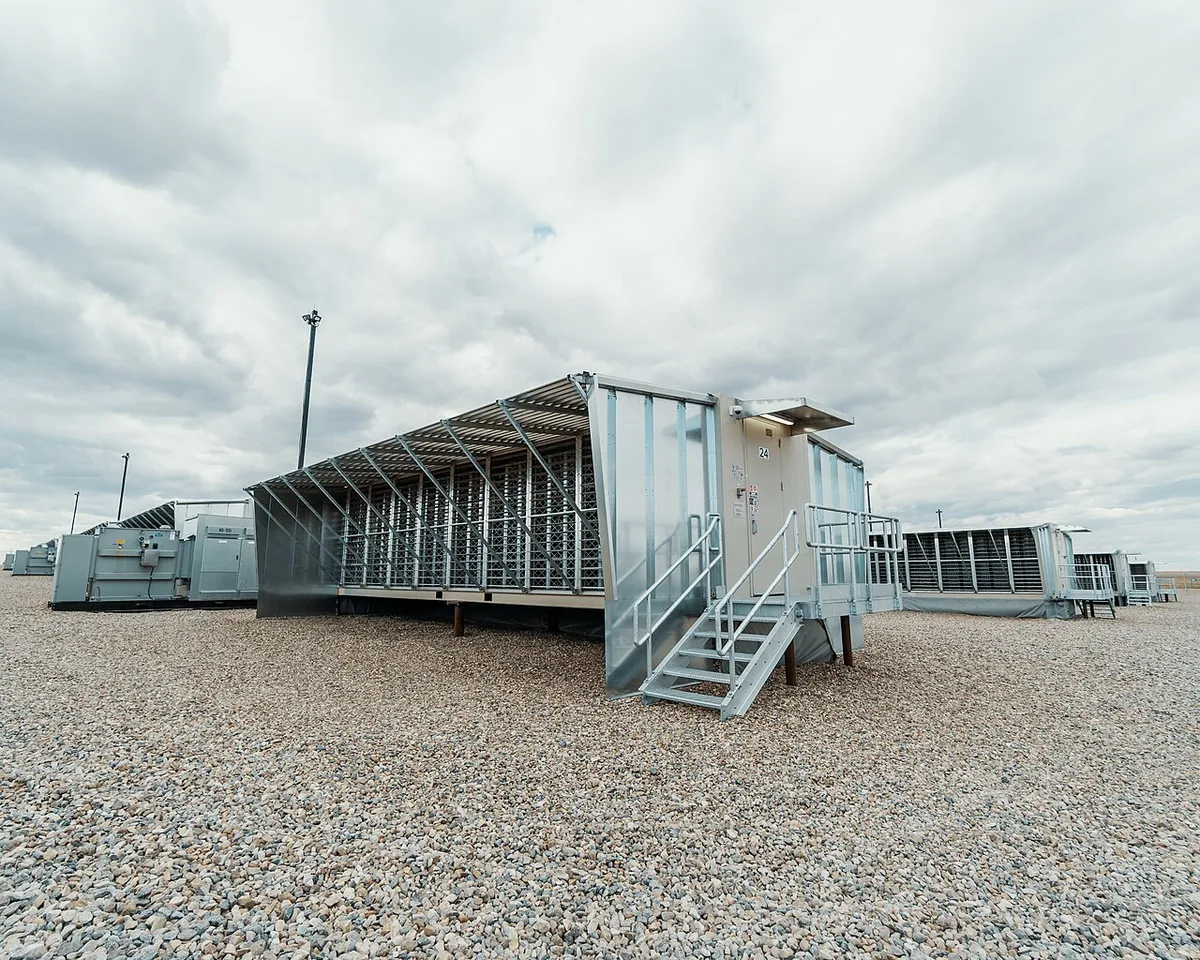
How the liquidity picture flows to alts
Start with the liquidity, then trace it down the risk curve. Money leaving Bitcoin mining infrastructure is not leaving crypto directly; it is leaving one industry for another. That is capital reallocation, and it can quietly thin the pool of buyers who once funded hashrate expansion.
BTC is the first to absorb it, and BTC is the calmest part of this story. Price near $62,878 with a 0.2% daily move tells you the market did not treat difficulty as a threat. No liquidity cascade fired. The muted reaction is itself the signal.
Ethereum sits one layer out. ETH does not care about mining difficulty mechanically, but it does care about the same macro tide pulling capital toward AI narratives. When traders chase the hottest sector, ETH and majors can lag until Bitcoin sets a clear direction.
Alts sit furthest out and feel it last but hardest. They need spare liquidity to run, and a market distracted by AI energy plays is a market rationing its attention. If BTC holds, that liquidity eventually rotates outward; if BTC cracks support, alts bleed first and fastest.
So the chain is simple. Miner stress feeds a supply worry that is real but slow. The near-term price effect is small. The bigger risk is not a crash from difficulty; it is capital drifting toward AI and starving the speculative end of crypto of oxygen.
What confirms a cleanse versus capital flight
Watch difficulty and hashprice together, because one without the other misleads. If difficulty keeps sliding while hashprice stabilizes, that is a clean rebalancing: weak miners left and the survivors are fine. That is the constructive path.
Watch for capitulation selling next. If miner-linked wallets start moving coins to exchanges in size, the slow supply pressure becomes visible, and that would tilt the read bearish. Absence of that flow is quietly bullish.
Watch the AI-energy narrative for spillover. If the same capital that outbid miners starts buying tokenized-compute or AI-crypto stories, liquidity is rotating inside the space, not leaving it. That is very different from money exiting crypto entirely.
The confirmation that this is a healthy cleanse is Bitcoin holding its structure while difficulty falls. Price above support plus stable hashprice plus no miner dump equals network doing exactly what it was designed to do.
The invalidation is a break of key support on rising volume with miner outflows climbing. That combination would turn a shrug into distribution, and retail tends to notice only after the move. Forward markets already signal little relief through year-end, so do not expect the mining economics themselves to rescue sentiment. Price structure will lead, and the difficulty number will lag it, as it always does.
What miner stress means at this support
The ParadiseTeam reads this against one line that matters right now: $62,500. BTC near $62,878 sits just above it, so the current bullish structure is intact but not comfortable. Difficulty falling 14% did not break that structure, which is the tell.
We treat this miner stress as a long-term rebalancing, not an immediate bearish trigger. Smart money has been reaccumulating around $61,000, and a cleanse that forces weaker operators out fits that patient thesis. It even supports the case for an eventual macro bottom near $44,000 if capitulation ever runs deeper.
Retail sees a scary difficulty headline and hears weakness. That gap between the headline mood and the price reaction is where the edge lives. Fear at support, with price barely moving, is usually accumulation dressed as bad news.
So the ParadiseTeam keeps the focus on confirmation, not the mining story itself. Hold above $62,500 with volume, and the path toward the $79,000 redistribution target stays open. Lose $62,500 decisively, and the read flips: that invalidation likely hands smart money cheaper entries lower down.
This is analysis, not a promise. Probabilities favor a network cleanse over capital flight while support holds. The moment $62,500 breaks, respect it, because the tape, not the difficulty print, is the honest referee.
Track it live: our Crypto Fear and Greed Index and the live crypto funding rates both update in real time, so you can watch this shift for yourself.
Related coverage
For exact entries, targets, and stop losses with full risk management, that is what ParadiseFamilyVIP is for. New to reading these moves? Start with our crypto trading strategies guide.
ParadiseTeam is monitoring the market situation closely, and we are taking these developments into consideration while building our trading tactics inside ParadiseFamilyVIP.
Crypto trading involves substantial risk. Prices are volatile and you can lose money. This article is educational and is not financial advice. Past performance does not guarantee future results.
Is the 14% difficulty drop a healthy network cleanse or early capital flight?
This is how the Paradisers are calling it. Tap your call.
No calls on this one yet. Tap yours to be the first.
Free account, no password. Members just sign in.










Join the discussion
No comments yet. Members, share how you are reading this.