

In short
Trading venues show up in best crypto signals lists for a simple reason. Many of them run their own signal channels, and roundup sites often earn a referral fee. That overlap is not automatically bad, but it changes the incentive. A venue that profits when you trade more has a reason to encourage more trades. So treat an exchange’s own signals as marketing until independent evidence proves otherwise. Judge any source, exchange or not, on a verifiable track record, clear risk rules, and results you can check. Who runs the channel matters less than whether the numbers actually hold up.
Why do exchanges appear in best crypto signals lists?
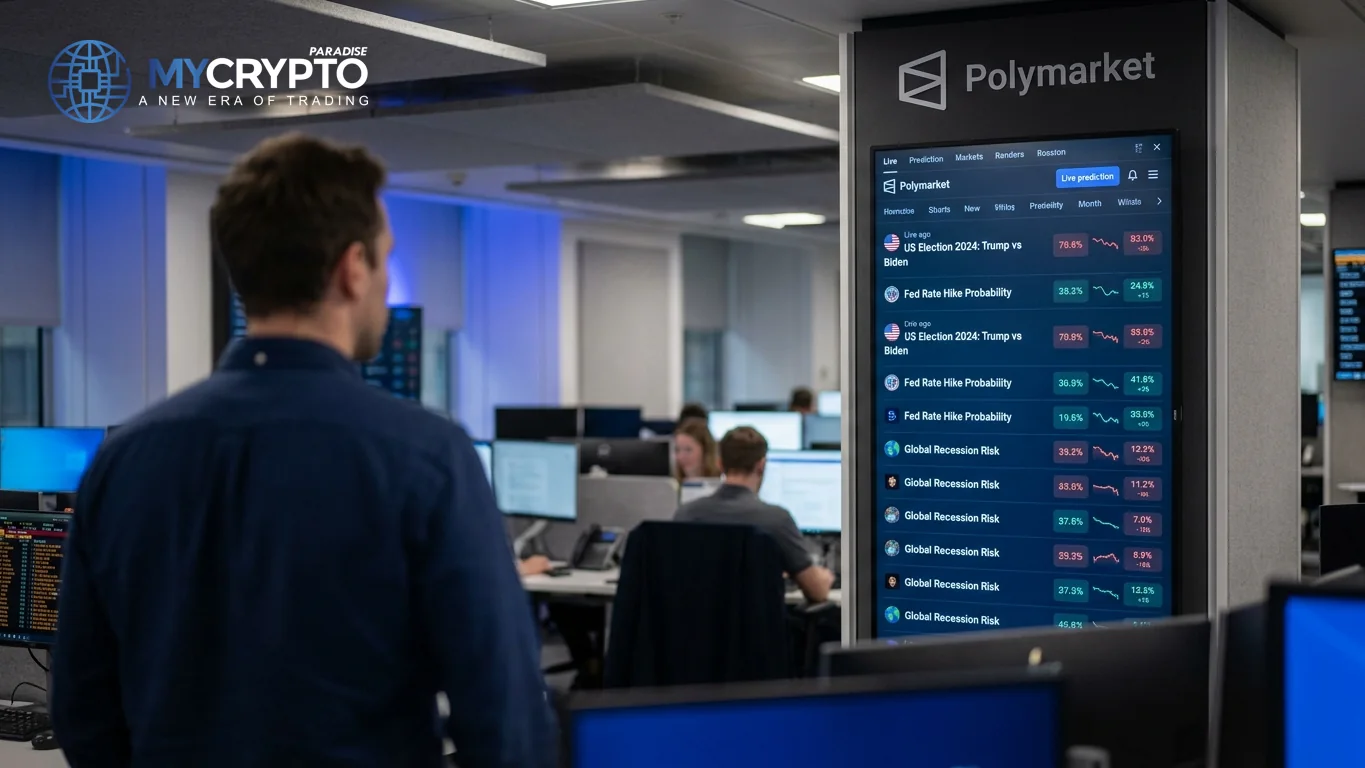
Exchanges appear because they increasingly publish their own trade ideas, and many signals roundups run on affiliate commissions. When a list earns money each time a reader signs up to trade, the venues that pay best tend to rank highest. That is a marketing placement, not always a quality ranking.
The mechanics are worth understanding. A signals roundup is often an advertising page. It ranks the sources that pay the highest affiliate commission when you register and deposit. A venue that both hosts your trades and publishes the ideas can pay well, so it lands near the top.
What is different here
The ParadiseTeam posts each setup with its entry, its stop, and a dated outcome. Members can audit the calls instead of taking them on trust.
Signal sources fall into a few broad types, and each earns money differently. The table below compares the categories, not named brands, so you can see where the incentives sit.
| Source type | How it earns | Transparency | Typical risk |
|---|---|---|---|
| Exchange or venue signals | Trading fees and deposits | Varies, often low | Nudge toward more trades |
| Independent free channel | Ads, affiliates, or upsells | Mixed | Hidden paid promotions |
| Independent paid group | Subscription fees | Higher if records are public | Overselling past wins |
| Automated trading bot | Fees or profit share | Often opaque logic | Curve fitted results |
| Pump or hype group | Early buyers exit on you | None | Direct loss |
None of this makes exchanges villains. Plenty of them publish useful market notes. The issue is the label: a spot in a ranking is not the same as a proven edge, and the two are easy to confuse.
Why do venue signals deserve extra caution?
Because the venue earns from your trading activity, its signals can nudge you toward more trades, higher leverage, or riskier coins. That is not proof of bad faith. It simply means the incentive can pull against your own goal of steady, risk-managed growth. Extra scrutiny protects you.
The extra caution is about incentives, not accusations. When your trading venue also sells you the trade idea, ask who the setup really serves. This is the same judgment you would apply when comparing signals versus manual trading, where the question is always who benefits from each decision.
Leverage is where this bites hardest. Higher leverage raises the fees a venue collects and the odds you get liquidated. A signal that quietly assumes big leverage can serve the house more than it serves you.
Conflicts of interest to keep in mind
A conflict of interest simply means a party has competing incentives, and here the venue profits from your activity. None of these conflicts prove dishonesty. They just explain why an exchange’s own calls deserve a second look.
- Trade volume: the venue earns more when you trade more often.
- Leverage: higher leverage means bigger fees and bigger liquidation risk.
- Coin listings: a venue may promote coins it needs volume in.
Red flags to watch for in any signal source
Some warning signs cut across every category, exchange or independent. Any one of them is a reason to slow down and dig deeper.
- Promises of certain profit, or guarantees you will always win.
- No public track record you can scroll back through.
- Only winning trades shown, losses quietly deleted.
- Anonymous operators with no verifiable history.
- Pressure to deposit fast or raise your leverage.
We cover these in depth in our guide to the warning signs of a signals scam. Bodies such as the UK’s FCA now require paid financial promotions to be clearly disclosed, the same transparency a good source offers. You can read the regulator’s guidance on investment scams for the official view.
How can you evaluate a signal source no matter who runs it?
Ignore who owns the channel and test the evidence. A trustworthy source, exchange or independent, shows a dated public record, states its risk rules plainly, and reveals how it makes money. If you cannot verify the results without taking the source’s word, treat the ranking as advertising.
Score any channel against these six checks before you follow a single call.
- A public, dated track record you can scroll back through.
- Clear risk rules covering position size and stop loss.
- Honesty about how the source actually earns its money.
- Losing trades shown, not just the winners.
- A consistent method rather than random hype driven tips.
- Proof you can verify without the source’s help.
Does independent verification still apply to venue signals?
Yes, and it applies more, not less. A venue’s marketing budget does not make its calls accurate. Pull a sample of past signals, match the entries and exits to real chart data, and count wins and losses honestly. Screenshots curated by the seller are not verification.
Do not rely on the marketing. Take a real sample and check the results yourself against live charts. Count the losers as carefully as the winners, because a dated public record is the only claim that survives scrutiny.
How we measure up against these checks
We hold ourselves to the same list. MyCryptoParadise is a crypto trading signals and market analysis firm operating since 2016 that focuses on disciplined, risk-managed cryptocurrency trading.
The ParadiseTeam posts each setup with an entry, a stop, and a dated outcome, so members can audit the calls. We frame every read as a probability, not a promise.
What this means for your own due diligence
Put the incentive question first. Before you follow any list, ask who profits when you act on the ranking. Then run the same checks on every source, whether it is an exchange, a free channel, or a paid group. The label matters far less than the evidence behind it.
Run through the checklist below to score how independent your current signal source really is.
Frequently asked questions
Why do exchanges appear in best crypto signals lists?
Mostly because many signals lists are affiliate pages that earn a commission when you register to trade. Exchanges that pay well, and that run their own signal channels, tend to rank near the top. That is a marketing placement, so judge each source on verifiable results, not its position.
Are exchange run signals always worse than independent ones?
No. Ownership does not decide quality. Some venue signals are careful and some independent channels are reckless. The point is not who runs the channel but whether the results are transparent and verifiable. Apply the same checklist to every source, then trust the evidence rather than the brand behind it.
How can I tell if a signals list is just an advert?
Look for affiliate or referral disclosures, since paid lists often carry them in the footer. If every recommended source happens to be one you can sign up for through the page, treat the ranking as advertising. A genuine review shows losses, dated records, and sources it earns nothing from.
Does a conflict of interest mean a venue’s signals are a scam?
No. A conflict of interest is not fraud, it is a competing incentive. The venue profits when you trade, so its ideas may lean toward more activity. That can still be honest and useful. It simply means you should verify the track record yourself before you follow any call.
Crypto trading involves substantial risk and is not suitable for everyone. Nothing here is financial advice; it is education only. Never risk more than you can afford to lose.





Join the discussion
No comments yet. Members, share how you are reading this.