


Listen: the breakdown
Market briefing: A Bank of Korea study links dollar-backed stablecoin demand to weaker local currencies, a structural story rather than a same-day catalyst. Bitcoin sat near $79,973, up around 0.6%, and largely shrugged it off.
- A central bank study ties dollar-backed stablecoin demand to weaker local currencies across 12 markets.
- Retail buys the tokens with fiat while market makers sell local currency for dollars, acting like quiet capital flight.
- Long term it is bullish for crypto as a hedge, but near term it invites regulatory scrutiny into a bearish macro.
A central bank study just put numbers on what traders long suspected: stablecoin demand can quietly weaken a nation's own currency. So who really pays for that dollar hunger?
A Bank of Korea study has connected dollar-backed stablecoin demand to weaker local currencies. The researchers tracked what happened when a major global exchange let people buy USDT and USDC directly with their own fiat. The mechanism is quiet but real. When retail buys the token, professional market makers must sell local currency and buy dollars to keep their books balanced.
That flow ties stablecoin demand straight to a country's exchange rate. The study covered 12 currencies, including Brazil's real, from 2019 through 2025. Buying pressure in those Binance-paired currencies lined up with local depreciation. In Brazil, a spike in Bitcoin search interest coincided with a 0.118% drop.
It is a small number. Repeated across millions of orders, small numbers stop being small.
None of this is a same-day price catalyst, and we will not pretend otherwise. Bitcoin was trading near $79,973 as of the latest read, up about 0.6% on the day, barely noticing the headline. What matters is the structure the study exposes: a frictionless pipe from shaky local money into dollar exposure. That pipe cuts both ways. It hands emerging-market savers a hedge, and it hands regulators a fresh reason to look harder at the exchanges that build it.
How stablecoin demand drains local currencies
The transmission runs through balance sheets, not sentiment. A saver in a high-inflation economy wants dollars. Buying a dollar-pegged token is the easiest route available. The market maker who sells that token immediately hedges by selling local fiat and buying dollars.
Multiply that by every fiat-to-stablecoin ramp on a global exchange. You get a steady structural bid for dollars and a steady offer on weaker currencies. It behaves like capital flight, just wearing a friendlier interface. Central banks have spent decades managing outflows through banks, and this route skips the bank entirely.
For traders, the signal is about liquidity's direction of travel. Capital leaving fragile fiat has to land somewhere. Some parks in stablecoins as a waiting room. Some eventually rotates into BTC and majors as a harder hedge.
That is the long-term bullish thread. It is also years, not days.
The near-term risk points the other way. A central bank publishing this research is not celebrating adoption. It is building the case for tighter rules on the exact on-ramps that make crypto liquid, which is a headwind traders should respect.
Reading the liquidity path into BTC
Start with the honest part: the immediate impact on BTC, ETH and alts is muted. The study confirms a mechanism the market already half-knew. Confirmed mechanisms rarely move price on the day they are published.
The longer arc is a liquidity story. If fragile currencies keep leaking into dollar stablecoins, the stablecoin float grows. A larger float is dry powder. It sits on exchanges ready to buy, which historically supports BTC first when risk appetite returns.
Bitcoin is the deepest, most liquid destination, so it absorbs that flow before anything else. ETH tends to follow once BTC stabilises. Alts come last and only when confidence is genuine, which is exactly why they lead on the way down and lag on the way up.
For now, none of that is switched on.
The counterweight is regulatory. The same growth that feeds crypto liquidity invites scrutiny of the fiat ramps. Tighter access to direct fiat-to-stablecoin buying would throttle the pipe, drain the waiting room, and pull liquidity out just as fast as it flowed in.
What confirms or breaks the liquidity thread
Watch the regulatory response first, because that is where this story actually lives. If more central banks echo the finding, expect proposals to restrict direct fiat-to-stablecoin ramps. That would confirm the scrutiny-heavy read and pressure exchange liquidity.
Watch stablecoin supply as the cleaner tell. A rising aggregate stablecoin float, especially against weak emerging-market currencies, confirms capital is still leaking toward dollars. That is the long-term adoption thread staying intact, whatever the price does this week.
A shrinking float would invalidate it. If stablecoin supply contracts while regulators tighten ramps, the hedge narrative weakens and crypto loses a structural bid.
On price, the tell is structural, not emotional. A decisive reclaim of the key weekly resistance zone, held with strong confirmation, would force us to retire the bearish thesis. Until buyers achieve that, we treat bounces as suspect.
Absent that reclaim, a clean break of prior lows on real volume confirms the macro downtrend the crowd keeps refusing to price.
Reading stablecoin flows through smart money
The ParadiseTeam reads this as a long-term thesis dropped into a short-term bear market, and the timing matters. Bitcoin was trading near $79,973 as of the latest read, sitting on what we treat as a temporary defense around $79,000. The study does not change that map.
Our bias stays firmly bearish on the daily and weekly. We expect a flush toward the $58,000 prior low, with a genuine capitulation and exchange of hands closer to $44,000. Smart money has not been absorbing this selling. It is waiting for that flush before re-entering.
Here is the trap the study sets for retail. The crowd will read "stablecoins pressure fiat" as an instant bullish adoption story and buy it. Search interest already runs hotter during crashes than during pumps, which is bear-market behavior, not FOMO. That premature optimism is exactly what distribution feeds on.
Long term, the hedge thesis is real. It just does not rescue a chart printing a shooting star at weekly resistance.
For invalidation we stay strict: a held reclaim of the $82,000 to $84,000 daily zone flips the structure and earns a rethink. Until then, the ParadiseTeam treats every study-driven rally as suspect and lets the macro finish first.
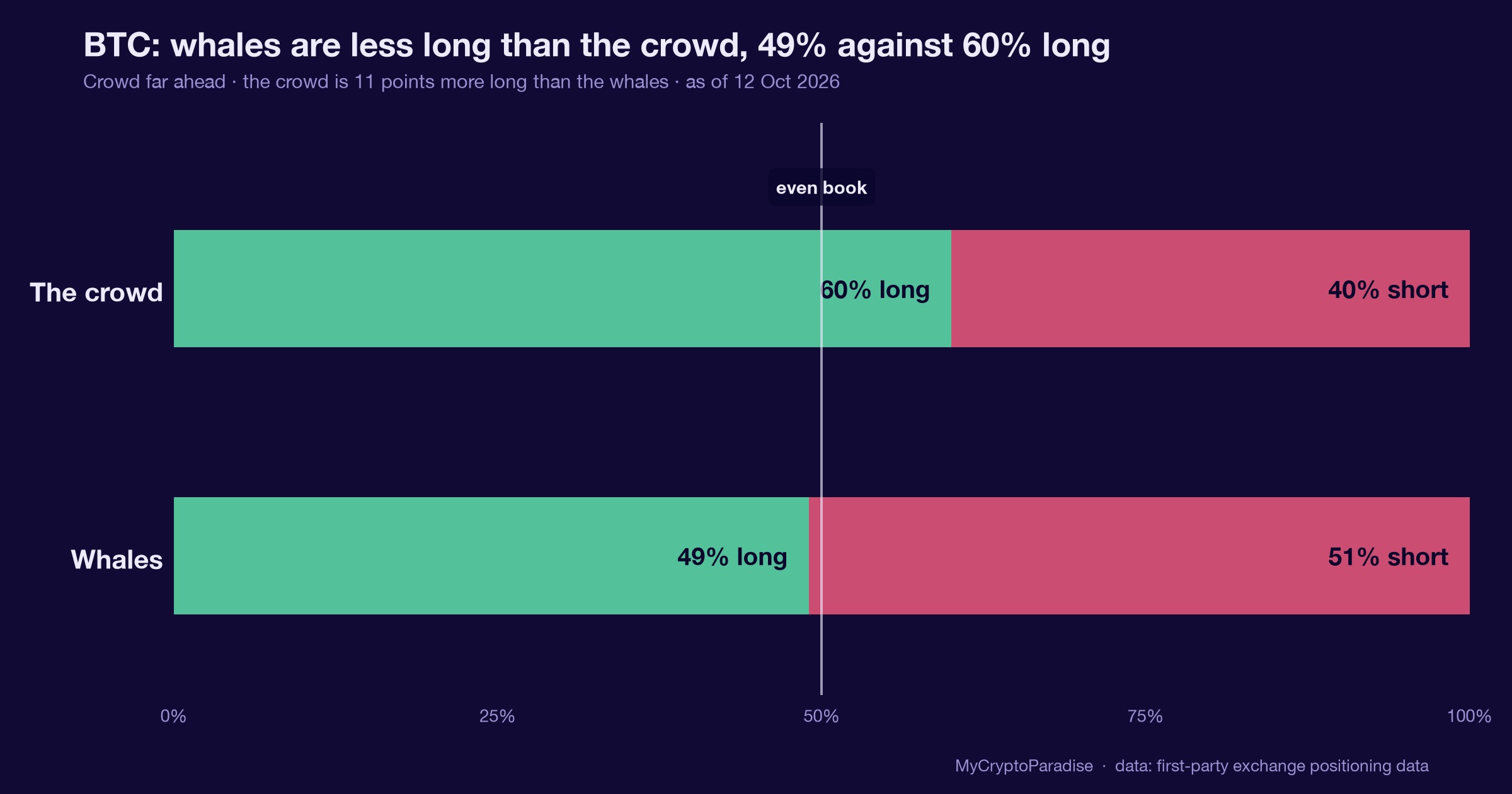
The read behind this: we framed this story through our own market analysis, Bitcoin Whale Shorts $51M: What Does He Know?
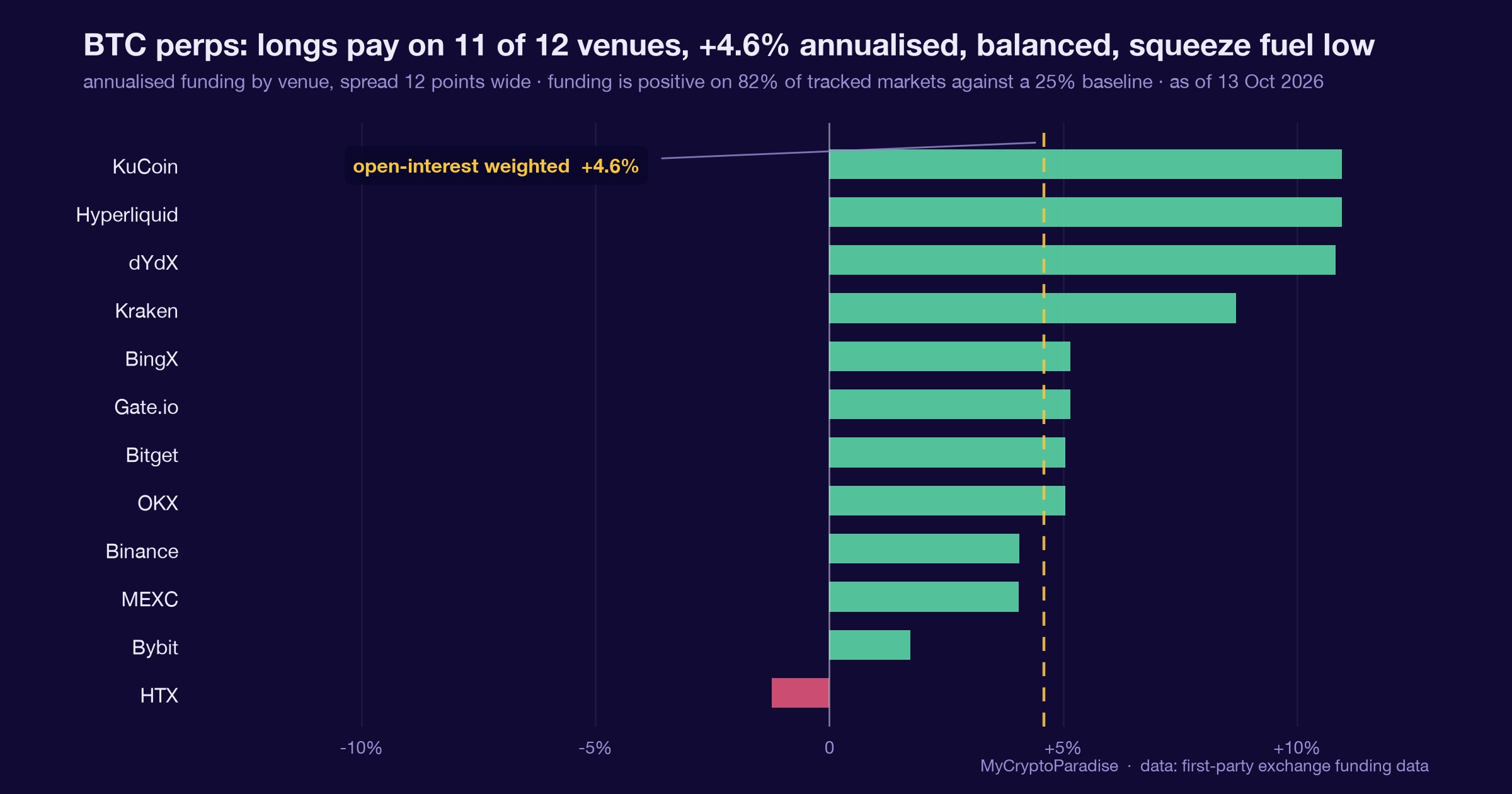
Track it live: our live crypto funding rates and the Crypto Fear and Greed Index both update in real time, so you can watch this shift for yourself.
Related coverage
For exact entries, targets, and stop losses with full risk management, that is what ParadiseFamilyVIP is for. New to reading these moves? Start with our crypto trading strategies guide.
ParadiseTeam is monitoring the market situation closely, and we are taking these developments into consideration while building our trading tactics inside ParadiseFamilyVIP.
Crypto trading involves substantial risk. Prices are volatile and you can lose money. This article is educational and is not financial advice. Past performance does not guarantee future results.
Will BTC flush toward $44K before this stablecoin adoption thesis ever supports price?
This is how 22 Paradisers are calling it. Tap your call.
No calls on this one yet. Tap yours to be the first.
Free account, no password. Members just sign in.
Follow this topic: Stablecoin news







Join the discussion 7
Yeah, it hits home seeing this data from Korea. People just want a dollar that stays a dollar.. it's that simple. 🇦🇷
remember seeing these flows myself back then when stablecoin demand first picked up, its useful to map that alongside local currency weakness to see the full picture
i recall that period had strong local currency demand for USDT too, not solely weakness driven, there was a liquidity basis to capture.
recalls how frequently in '17 a client's first question was about how to access this "digital dollar." it was always the simplest on-ramp.
Oh, yes, I can see that. Even now, sometimes I wonder about the 'best' way to move money in, to be honest. It's confusing!
i find the causality from local currency weakness to stablecoin demand in this study a bit too direct; there are often other factors like remittance flows or regional capital flight that can pre-empt this.
It was like when the pressure gauge kept dropping on the old fuel pump... you knew something was off, even if the engine still ran. Good point, Diego.