

Listen: the breakdown
Developing story update (September 28, 2026, 16:12 UTC):
Since we published, THORChain’s permissionless design has surfaced in a fresh case. A wallet tied to a Bitget exchange hack routed roughly $6.3M in ETH through THORChain, converting it into about 75.2 BTC, based on our sources. This is a separate incident from the May pool drain but underlines the same point: the network does not blacklist or censor addresses by default.
For traders, the practical read is that Bitget has since restarted Bitcoin withdrawals, so the immediate operational disruption at the exchange looks contained. The reputational and regulatory overhang on THORChain, however, likely persists, since the protocol remains a preferred venue for moving illicit flows precisely because of its neutrality.
What to watch now: Whether renewed scrutiny of THORChain as a laundering venue pressures liquidity or invites regulatory attention.
Developing story update (September 28, 2026, 14:29 UTC):
New detail has surfaced on how the May 2026 incident actually played out. Based on our sources, the protocol’s automatic solvency controls, not a manual decision, halted signing and trading once the roughly $10.7 million drain hit the liquidity pools. This reinforces the point that a network halt is a blanket protective brake, not a targeted freeze of specific wallets.
The follow-on cost was real time offline: the network stayed down for about five weeks and only restarted on June 22 with patched code. Traders should read this as the practical trade-off of THORChain’s halt design, strong protection against draining exploits, weighed against the probability of multi-week downtime when controls trigger.
What to watch now: Whether any future halt resolves faster than the five-week May outage, signaling improved recovery tooling.
Developing story update (September 28, 2026, 12:15 UTC):
New detail has surfaced on how long THORChain stayed down after the May 2026 exploit that drained $10.7M from its liquidity pools. Based on our sources, the protocol remained offline for roughly five weeks before it came back online on June 22 with patched code, which frames just how significant the halt mechanism can be in practice.
For traders, this reinforces the core tension in the current decentralization debate: an emergency halt can protect vaults, but a multi-week outage also means liquidity and swap access can be suspended for an extended period. That is a live risk factor to price in when holding or routing through THORChain rather than an abstract governance question.
What to watch now: Whether the patched code holds up under stress and how long any future halt would keep swaps offline.
Developing story update (September 28, 2026, 08:23 UTC):
New analysis from GoPlus suggests THORChain’s emergency controls, including network halts, differentiate its consensus model from that of Bitcoin or Ethereum. This adds a new dimension to the ongoing discussion about THORChain’s decentralization.
Further technical details confirm THORChain employs threshold signatures for authorizing outbound transactions from shared vaults, with participating nodes collectively managing the signing process. This mechanism is directly impacted by network halts, providing clarity on the protocol’s operational security.
What to watch now: The ongoing debate regarding THORChain's decentralization in light of its emergency halt capabilities.
Developing story update (September 28, 2026, 07:44 UTC):
Our latest intelligence confirms new details regarding the May 2026 THORChain network halt. The incident report indicates the halt began with automatic solvency controls stopping signing and trading after the $10.7 million drain. This was followed by node operators adding manual pauses and governance votes, bringing the network to a full controlled halt within approximately two hours.
Crucially, the protocol remained offline for about five weeks, restarting on June 22 with patched code. This extended downtime and the necessity for code remediation underscore the severity of the incident and the coordinated effort required for recovery. Furthermore, THORChain utilizes a mechanism called Mimir, which facilitates parameter changes and emergency halts, highlighting a specific point of centralized control.
For traders, these details reinforce the ongoing tension between security and decentralization. While emergency halts are critical for asset protection, the extent of manual intervention, governance votes, and prolonged downtime with patched code suggests a more centralized recovery process than some might assume for a permissionless protocol.
What to watch now: Traders should monitor how THORChain balances its permissionless design with the necessity of centralized emergency controls, especially regarding future incident response and recovery times.
Market briefing: THORChain has clarified that its network halt is an emergency security mechanism, not a selective freeze, pointing back to the May 2026 exploit that drained 10.7 million dollars. BTC was near 83,133 dollars, down 1.6 percent on the day, as the decentralization debate rolled on.
- THORChain calls its network halt an emergency security mechanism, not a selective freeze of funds or a single swap
- A May 2026 exploit drained about 10.7 million dollars before solvency controls, node pauses and governance votes forced a full halt in roughly two hours
- The protocol stayed offline for about five weeks and restarted June 22 on patched code
THORChain says its network halt is a security shield, not a fund freeze. But a protocol that can pause itself raises an old question: how decentralized is cross-chain DeFi really?
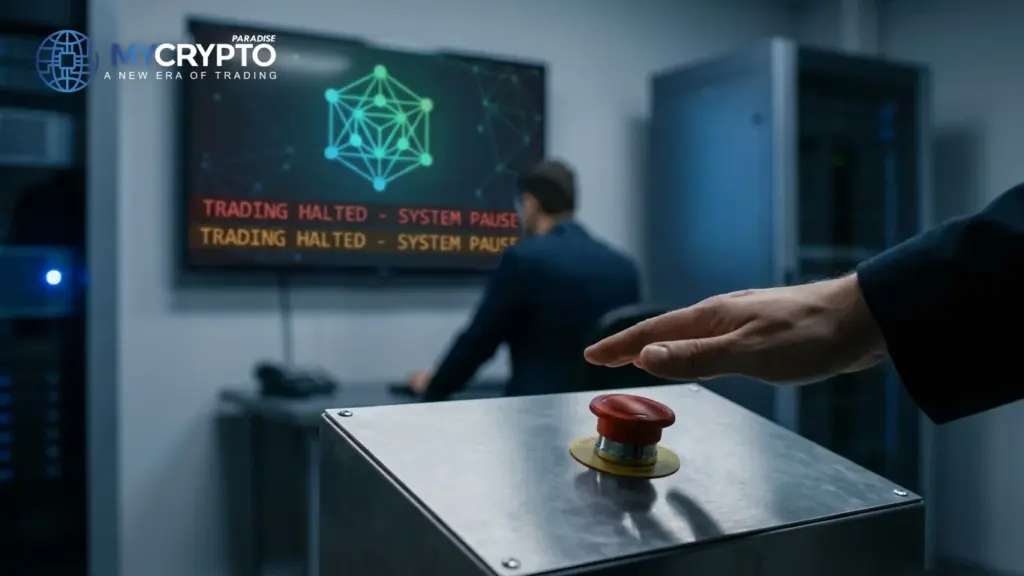
THORChain has spelled out what its network halt actually does. The protocol calls it an emergency security mechanism, built to protect the network when funds face a critical threat. It is not, THORChain stresses, a selective freeze of specific funds or a single swap.
The clarification lands against a concrete memory. In May 2026, attackers drained roughly 10.7 million dollars from THORChain's liquidity pools. Automatic solvency controls then halted signing and trading once the drain was detected.
What followed was a coordinated shutdown. Node operators stacked manual pauses on top of governance votes and brought the whole network to a controlled halt within about two hours. Any single node can issue a make pause command that lasts 720 blocks, roughly one hour, and additional nodes can extend it.
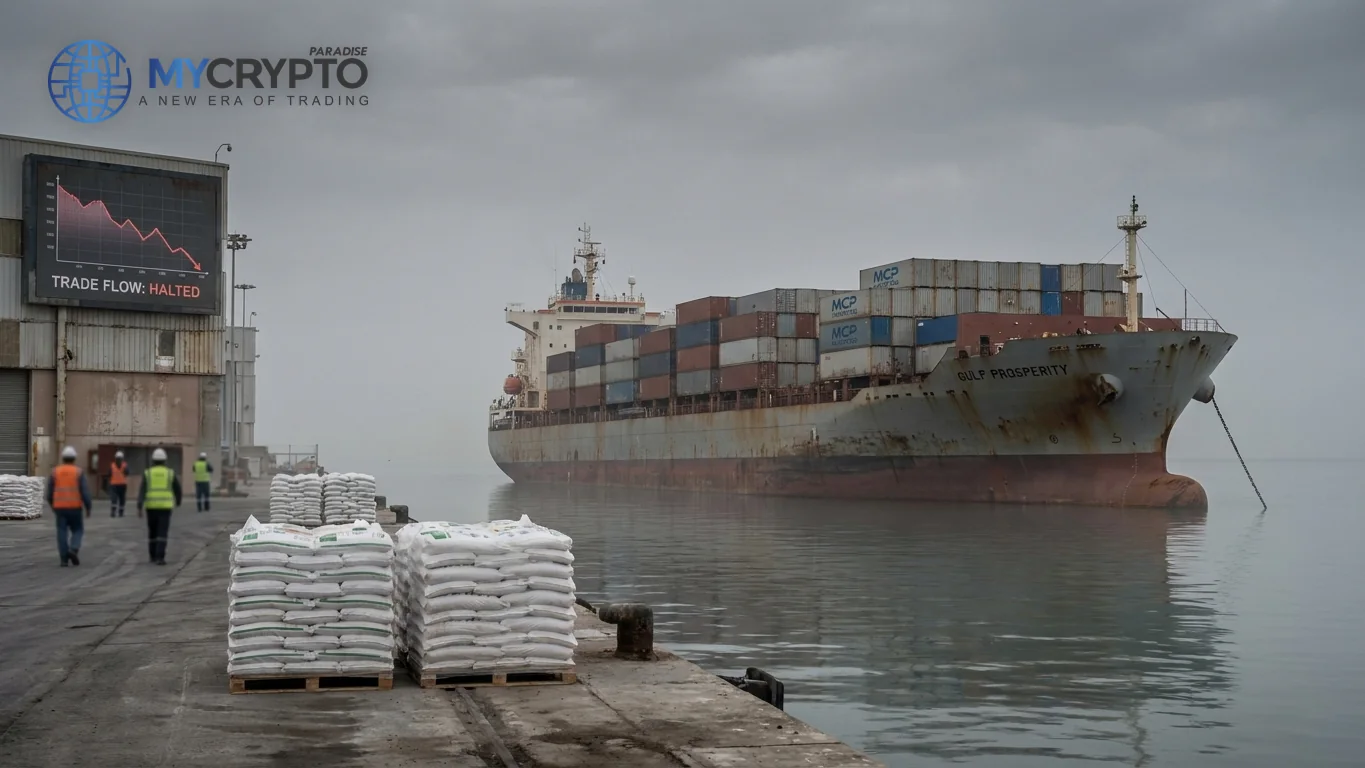
The protocol stayed dark for about five weeks. It restarted on June 22 with patched code, having traded five weeks of downtime for solvency. In a sector that markets itself on always-on, unstoppable rails, that is a revealing trade.
This is where the tension lives. THORChain's own documentation lists trading halts, chain-specific stops and signing controls as available emergency actions. Each one is a safety valve. Each one is also a lever a coordinated group of operators can pull.
The clarification does not change any of that. It simply names the mechanism plainly, at a moment when the whole market is arguing about whether cross-chain protocols are as trustless as their pitch decks claim.
The trade-off buried in cross-chain rails
This story matters because it sharpens a structural question, not a price one. A protocol that can halt itself has a defense that a truly unstoppable system lacks. The same power is also a point of control, and control is exactly what regulators and attackers both look for.
Cross-chain protocols sit at the riskiest seam in crypto. They hold pooled liquidity across many chains, which makes them a fat target and a hard thing to secure. A kill switch is a rational response to that exposure.
But a kill switch reframes the trust model. If a quorum of node operators can pause trading, the network is only as neutral as those operators choose to be. That invites pressure, whether from a courtroom, a jurisdiction, or a governance faction.
The market already senses this tension. Debate around cross-chain flows and forced-intervention cases keeps circling the same point: can a protocol stop bad money, and if it can, why does it not always do so.
The honest read is that there is no clean answer. Full immutability means an exploit runs to completion. Full pausability means someone holds the brakes. THORChain has picked a middle path and is now describing it out loud. The clarification does not resolve the debate. It just makes the trade-off harder to ignore.
Why BTC and ETH barely register this
Read on its own facts, this is a low-voltage event for prices. It explains an existing mechanism and revisits a past exploit. There is no new inflow, no unlock, no fresh drain. So the direct liquidity impact is close to zero.
BTC was trading near 83,133 dollars as of the day's read, down about 1.6 percent over 24 hours, with ETH near 2,649 dollars and down about 2.1 percent. Those moves belong to the broader tape, not to this clarification. Nobody sold BTC because THORChain defined the word halt.
The more realistic effect is a soft, selective one. It sits on alts carrying perceived centralization risk, especially cross-chain and DeFi names where the halt question is live. This is sentiment drift, not a cascade.
BTC and ETH stay the anchors here. Neither depends on THORChain's uptime, so both are insulated from this specific story. The transmission line from a halt explainer to major-cap liquidity is thin at best.
Where it could matter is at the margin for related tokens. If traders start pricing governance and pause risk into cross-chain protocols, that premium shows up quietly, in relative underperformance rather than a headline dump. For now the market is treating the clarification as background noise inside a wider risk-off session, which is roughly what it is.
Signposts between safety valve and choke point
The next real signal is behavioral, not verbal. Watch whether the halt mechanism ever gets used again, and under what pretext. A pause triggered by a fresh exploit reads as the system working. A pause triggered by outside pressure reads very differently.
Confirmation that this is a genuine security feature would look like transparent, exploit-driven halts with fast restarts and clear post-mortems. That pattern rebuilds the argument that the brakes exist to protect users, and it tends to steady sentiment around the protocol.
Invalidation would look like halts or refusals that track legal or political pressure rather than solvency threats. If operators start blocking or freezing at the request of outside parties, the decentralization claim weakens fast, and any related token would likely wear a discount.
Also watch the operator set. The fewer the nodes needed to force a halt, the more concentrated the control, so any drift toward a small pausing quorum is a yellow flag worth tracking.
Across the wider market, keep the frame simple. This clarification is not a driver for BTC or ETH, so treat major-cap moves this week as macro-led. The THORChain-specific tell is narrow: does the halt power stay a defensive tool, or does it become a pressure point that others learn they can lean on. That distinction, over the coming weeks, matters far more than today's wording.
What a pausable protocol means for positioning
The ParadiseTeam treats this as a structural note, not a trade trigger. The clarification does not move BTC, so it does not change the levels that actually matter right now.
On the majors, our standing read stays macro cautious. BTC was near 83,133 dollars against the 82,000 zone we track as prior resistance now being tested as support. Reclaiming and holding 82,000 is still the line that separates a low-risk continuation toward the 88,000 to 90,000 band from a deeper slide. This THORChain story adds nothing to that map.
Where it does inform positioning is at the altcoin edge. We would flag cross-chain and DeFi tokens with visible pause or governance power as carrying an extra risk premium. That premium is easy to forget in calm tape and painful to discover during a forced halt.
The smart-money framing is subtle here. Sophisticated operators likely view a kill switch as pragmatic protection for a complex protocol, while also pricing it as a centralization vector that outside parties may one day pull. Retail, by contrast, is barely reacting, which fits our wider view that real crowd interest tends to arrive on sharp drops, not on nuance.
So the practical takeaway is modest. Size cross-chain exposure with the halt question in mind, keep BTC decisions tied to the 82,000 reclaim rather than to this headline, and remember that a protocol able to pause itself is safer and less neutral at the same time.
The read behind this: we framed this story through our own market analysis, Can Bitcoin Push to $99K?
Track it live: our Crypto Fear and Greed Index and the crypto liquidation heatmap both update in real time, so you can watch this shift for yourself.
Related coverage
For exact entries, targets, and stop losses with full risk management, that is what ParadiseFamilyVIP is for. New to reading these moves? Start with our crypto trading strategies guide.
ParadiseTeam is monitoring the market situation closely, and we are taking these developments into consideration while building our trading tactics inside ParadiseFamilyVIP.
Crypto trading involves substantial risk. Prices are volatile and you can lose money. This article is educational and is not financial advice. Past performance does not guarantee future results.
Is a protocol that can halt itself safer or just more centralized?
This is how 20 Paradisers are calling it. Tap your call.
No calls on this one yet. Tap yours to be the first.
Free account, no password. Members just sign in.





Join the discussion 8
pausability mechanisms are a real liability if the trigger conditions are not transparent, or if the chain of custody for activation isnt public. I would want to see auditable logs.
Security, seizure - same diff when your funds are locked 🔒. Banks do the same "for your protection" 🙄 and we all know how that ends for us. 😡 What is the difference??
I am still trying to understand these security mechanisms... like, for my small amounts on CEX it seems okay but I wonder about the bigger picture for others here.
For me, security or seizure is just a choice of words 🤷♂️ when my money is not there 💔. I learned this one the hard way 📉😂.
So what happens to my open positions during these halts... Rule 4: "Assume nothing, verify everything" comes to mind.
this pausability feature always concerns me, especially when monitoring basis on perp markets. one really needs to consider the specific chain risk here.
I understand your concern about pausability, Jonas, particularly for basis trades. However, a well-defined pause mechanism, even a manual one, is a necessary evil to contain systemic risk in a multi-chain environment.
While a manual pause is one mitigation, the basis data suggests it disproportionately compresses open interest in anticipation, making that "systemic risk" difficult to quantify. We saw this in Q3 2023.