


Listen: the breakdown
Market briefing: A supply-chain attack pushed malicious scripts through the Optimizely platform to visitors of 178 major sites, including the hardware wallet maker Ledger. BTC sat near $64,910 and barely moved, so treat this as a personal-security story, not a price catalyst.
- Malicious JavaScript reached visitors of 178 organisations through the Optimizely Web Experimentation platform on 16 November.
- Scripts were built to skim card and payment data, with crypto-wallet theft reported among the named sites, Ledger included.
- BTC held near $64,910 and ETH near $1,826, so the market is reading this as a cybersecurity event, not a crypto flow.
Source: Report URI
An Optimizely supply-chain attack injected skimming code into 178 big sites, Ledger among them, yet BTC barely twitched. So is this a crypto risk or a browser risk?
A single compromised script reached a lot of front doors at once. On 16 November, malicious JavaScript was served through the Optimizely Web Experimentation platform to visitors of 178 organisations.
The list reads like a who's who of the modern web. Zoom, BBC, CNN, Salesforce, GitLab, IKEA, HSBC, Equifax, Air France-KLM, Peacock, and, relevant to us, the hardware wallet maker Ledger.
Security researcher Scott Helme of Report URI identified the campaign, which some have labelled OPTIMJACK. The mechanism is the uncomfortable part. Attackers abused Optimizely's customer-editable Project JavaScript field, the same A/B-testing hook marketers use to tweak a button colour, and turned it into a delivery pipe.
That is the quiet danger of supply-chain attacks. You never touched a shady link. You visited a brand you trust, and someone else's compromised code ran in your browser.
The injected scripts were built to steal card and payment data. Some reports also describe crypto-stealing functionality, and the payload was served from an external hosting domain rather than the trusted site itself.
For our readers, the crypto angle is narrow but real. Ledger sits on the affected list, so anyone who visited and entered payment or wallet-related details during the window has a genuine reason to check their accounts. And yet the price tape barely noticed. BTC was trading near $64,910 and ETH near $1,826, both essentially flat on the day. That gap, between an alarming headline and a motionless chart, is the real story for traders.
A browser-level theft risk, not a flow event
This matters because of where the theft happens, not how big the headline sounds. The attack lives in the browser, at the exact moment a visitor types a card number or interacts with a wallet prompt. It does not touch exchange reserves, stablecoin liquidity, or institutional positioning.
That distinction decides everything about the market read. A hack that drains an exchange or a protocol creates forced selling, visible outflows, and contagion into risk sentiment. This one creates individual theft risk, spread thin across millions of ordinary site visitors.
There is no macro or liquidity channel here. No reported link to crypto exchange flows, no stress on redemptions, no wave of coins hitting order books. The transmission simply stops at the affected user's own device. So the honest framing is personal, not systemic. If you used any of these 178 sites in the window, including Ledger's, the risk is a fraudulent charge or a phishing-style wallet prompt, not a market crash.
We would stress one habit the pros never skip. Confirm any wallet-connect or signing request on the hardware device screen itself, never trust what the browser displays. A compromised page can show you anything it likes.
The broader lesson is structural. Modern sites stitch together dozens of third-party scripts, and each one is a door. Attackers have learned it is easier to poison one shared supplier than to breach 178 companies one by one.
Crypto prices barely flinched at the breach
The most telling market reaction was no reaction at all. BTC sat near $64,910, down a rounding error on the day, while ETH held near $1,826. A breach touching a crypto hardware wallet brand produced no visible crypto sell-off.
That silence is information. If the market believed this threatened wallet security at scale, you would expect a nervous bid under safe havens, a wobble in exchange-linked tokens, or at least a jumpy hour of volatility. None of that showed up.
Walk the usual cascade and it dead-ends fast. A genuine flow event hits BTC first, then ETH, then bleeds into higher-beta alts as liquidity thins. Here, the first domino never fell, so there is nothing to pass down the chain.
Ledger being named is the one thread that could have spooked holders. In practice, the firm's cold-storage model keeps private keys off the browser entirely, which is precisely why a web-page skimmer is not an existential threat to funds held properly.
None of this means complacency. Individual users entering details on those pages still face real theft risk, and that is worth taking seriously. But for positioning, the conclusion is clean. This is a security story that briefly wore a crypto costume. The flat tape tells you smart money never treated it as a catalyst, and neither should your trading plan.
Signs the skimming reaches your wallet
The first thing to watch is your own statements, not the chart. Anyone who visited these sites in the window should scan for unauthorised card charges and unfamiliar logins over the coming days.
For crypto specifically, watch your wallet prompts with new suspicion. A skimming script can mimic a legitimate connect or signing request, so verify every approval on the hardware device screen before you click, and treat any prompt that only appears in the browser as guilty until proven innocent.
On the market side, the confirmation we care about is boring, and that is the point. As long as BTC and ETH keep trading on their own macro rhythm, with no outflow spike and no stress in exchange-linked tokens, this stays filed as cybersecurity, not a price driver.
Invalidation would look different. If reports later tied actual stolen crypto to a scaled exploit of a major platform, or if a named exchange confirmed customer-facing impact, the story would graduate into a genuine confidence event worth repricing.
We see no evidence of that today. The scripts targeted browser-level payment data, and the funds held correctly in cold storage were never in the blast radius. So the practical watchlist is short. Check your cards, harden your wallet habits, and keep reading BTC through its real drivers. The headline was loud, but the chain of consequence for the broader market was unusually quiet.
Reading a non-catalyst against a bearish tape
The ParadiseTeam would separate this cleanly from what actually moves the tape right now. A browser-skimming campaign is a personal-security problem, and with BTC near $64,910 it changed nothing about the levels that matter.
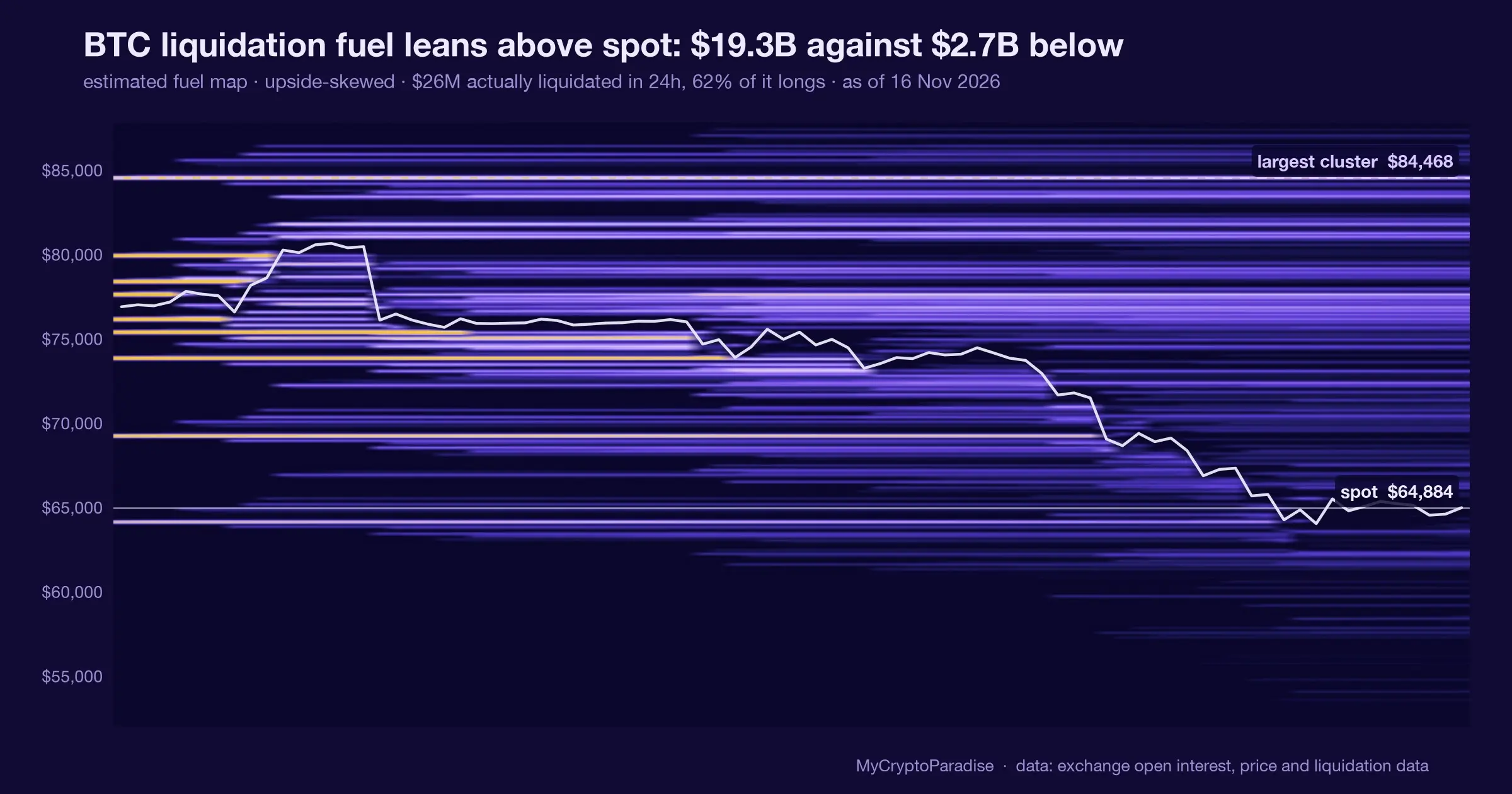
The pressure on price is coming from somewhere else entirely. On the weekly timeframe we still lean cautious, with $64,000 the 0.786 Fib retracement in play and a deeper exchange-of-hands zone between $55,000 and $44,000 still on the map.
What we see is liquidation-driven, not fear-driven by this breach. Crowded long positions are being flushed, funding rates stay stubbornly positive even as price slips, and the Fear and Gauge sits near extreme fear for the first time in roughly two months. That is the real backdrop, and a malware headline does not alter it. Whales slowed their aggressive selling near support in the past day, an early hint of slow re-accumulation, but nothing here confirms a bottom.
So do not let an alarming security story pull your eyes off the structure. The number to track is funding, not this breach: a reset toward zero and then negative would set up the short-squeeze we are waiting on.
For positioning, the caution is unchanged. Strength into resistance can still meet sellers in a bearish weekly trend, and we treat bullish-sounding noise skeptically until price confirms near the $44,000 to $64,000 zone. This headline is simply not part of that equation.
The read behind this: we framed this story through our own market analysis, Bitcoin Crash to $44K or Bounce First?
Track it live: our live crypto funding rates and the Crypto Fear and Greed Index both update in real time, so you can watch this shift for yourself.
Related coverage
For exact entries, targets, and stop losses with full risk management, that is what ParadiseFamilyVIP is for. New to reading these moves? Start with our crypto trading strategies guide.
ParadiseTeam is monitoring the market situation closely, and we are taking these developments into consideration while building our trading tactics inside ParadiseFamilyVIP.
Crypto trading involves substantial risk. Prices are volatile and you can lose money. This article is educational and is not financial advice. Past performance does not guarantee future results.
Will the Ledger site breach dent crypto wallet trust this week?
How 1 Paradiser is calling it
The first call is still open
Free account, no password. Members just sign in.












Join the discussion
No comments yet. Members, share how you are reading this.