

Listen: the breakdown
Developing story update (October 21, 2026, 18:51 UTC):
US OCC Finalizes GENIUS Act Stablecoin Rules, Effective January 2027. The U.S. Office of the Comptroller of the Currency (OCC) has issued final regulations for the GENIUS Act, which sets federal standards for the issuers of stablecoins. The announcement includes the implementation of the regulations starting January 18, 2027, for reserves, redemptions, custody, and risk management. Ad Ad OCC Establishes Federal Rules for Stablecoin Issuers The post US OCC Finalizes GENIUS Act Stablecoin Rules, Effective January 2027 appeared first on CoinGape.
Developing story update (October 21, 2026, 17:33 UTC):
Treasury Secretary Bessent likens GENIUS Act to Lincoln-era banking reform. The OCC has finalized rules for stablecoin reserves and redemptions, with Bessent calling the GENIUS Act a “watershed moment for American finance.”
Developing story update (October 21, 2026, 15:50 UTC):
OCC's final rule to start fresh in weighing stablecoin rewards against GENIUS Act ban
Market briefing: The U.S. OCC has finalized its GENIUS Act stablecoin rules on reserves, redemption, and risk, though no application date is set yet. BTC held near $83,423, up 2.4% on the day, as the news landed.
- The OCC finalized GENIUS Act stablecoin rules covering reserves, redemption, and risk management for issuers.
- No start date for applications was given, so the framework exists but the door stays shut.
- BTC traded near $83,423 and ETH near $2,464, a mild positive response rather than a breakout.
Source: U.S. OCC
The U.S. OCC just finalized its GENIUS Act stablecoin rules on reserves, redemption, and risk. The framework is set, yet no application date exists. So is this real clarity, or just more waiting?
The U.S. OCC has finalized its rules for stablecoin issuers under the GENIUS Act. The standards set clear bars for reserves, redemption, and risk management. For the first time, issuers can see what approval will actually require. That kind of clarity has been scarce in this market for years.
One line does the heavy lifting here. The OCC has not said when it will begin accepting applications.
So the rulebook now exists, but the front door stays shut. Issuers can prepare, yet they cannot apply. That gap matters more than the headline suggests. A finished framework with no start date is a promise of capital, not yet a flow of it.
Still, the direction of travel is hard to miss. Regulators are building a formal lane for dollar-backed stablecoins. That lane favors large, compliant issuers who can meet strict reserve and redemption tests. Smaller players without the balance sheet may find it harder to follow.
The market noticed, but only politely. BTC traded near $83,423, up 2.4% on the day, as this landed. ETH sat near $2,464, up 3.2%. A regulatory milestone that moves price by a few points tells you where the real attention is: elsewhere, for now.
Regulated reserves reshape crypto's settlement layer
Stablecoins are the plumbing of crypto, not a side show. Most trading, lending, and settlement runs through them. So rules governing their issuers shape the entire liquidity base of the market.
The GENIUS Act framework ties stablecoin supply to audited reserves and clean redemption. That lowers the tail risk that once kept large institutions away. A money-market fund or a bank can now point to a federal standard, not a hope.
That is the transmission chain worth watching. Clearer issuer rules build institutional confidence over time. Confidence invites capital into regulated dollar tokens. Those tokens then act as dry powder that can rotate into BTC, ETH, and risk assets when conviction returns.
But notice the tense. Every link in that chain is future, not present. The OCC finalized the rules and then declined to open the gate.
That is the honest limit here. Regulatory clarity is a foundation, and foundations do not rally price by themselves. They decide who can build on top, and how safely. The structural win is genuine. The timing of any resulting inflow is not something this announcement actually pins down, which is why the macro effect reads as slow and cumulative rather than sharp.
Clarity reaches issuers before it reaches alts
The immediate price effect is modest, and that is the correct read. BTC rose 2.4% and ETH 3.2% into the news, moves well within normal daily noise. This is not a liquidity event. It is a rulebook.
Think about the order in which clarity travels. It reaches regulated stablecoin issuers first, because the rules are theirs. Only later does any resulting capital touch the open market.
BTC sits at the front of that eventual queue. Regulated stablecoin growth deepens the dollar liquidity that BTC trades against. More compliant on-ramp capital is, over time, more potential bid for the reserve asset of the space.
ETH follows the same logic with a lag. Much of the stablecoin economy settles on its rails, so a formal issuer lane is a structural tailwind for that activity. Alts sit last in line, as usual, waiting for BTC and ETH to lead before capital trickles down.
The bullish case is real but patient. Clearer rules widen the funnel that future inflows pass through. That is a first-order positive for crypto, which is why this story leans constructive.
Just keep the scale honest. A missing application date means no new regulated supply can actually launch tomorrow. The market is pricing a better pipe, not fresh water in it. That is precisely why the response stayed quiet.
The missing application date sets the pace
The single most important signal is the one the OCC withheld: a date. The moment it announces when applications open, this story shifts from framework to flow.
Watch for named issuers moving first. Large banks and established dollar-token operators have the reserves and compliance muscle to apply early. Their entry would confirm that the lane is being used, not just drawn.
Confirmation builds if regulated stablecoin supply starts to expand under the new standard. Growing compliant supply is the mechanism that eventually feeds market liquidity. That is the chain actually doing the work.
Invalidation looks different. A long delay on the application window would stall the whole thesis. So would a legal challenge to the rules, or reserve and custody requirements strict enough to deter issuers from applying at all.
There is also the quiet risk of anticlimax. Markets priced in clarity months ago. If the eventual opening lands without new capital behind it, the structural win stays on paper.
So separate the two timelines cleanly. The regulatory outcome is confirmed and positive. The liquidity outcome depends entirely on a start date that does not yet exist. Treat the date, the first applicants, and the pace of new supply as the real tells, and ignore the surface noise in the hours around the headline.
What finalized stablecoin rules mean at resistance
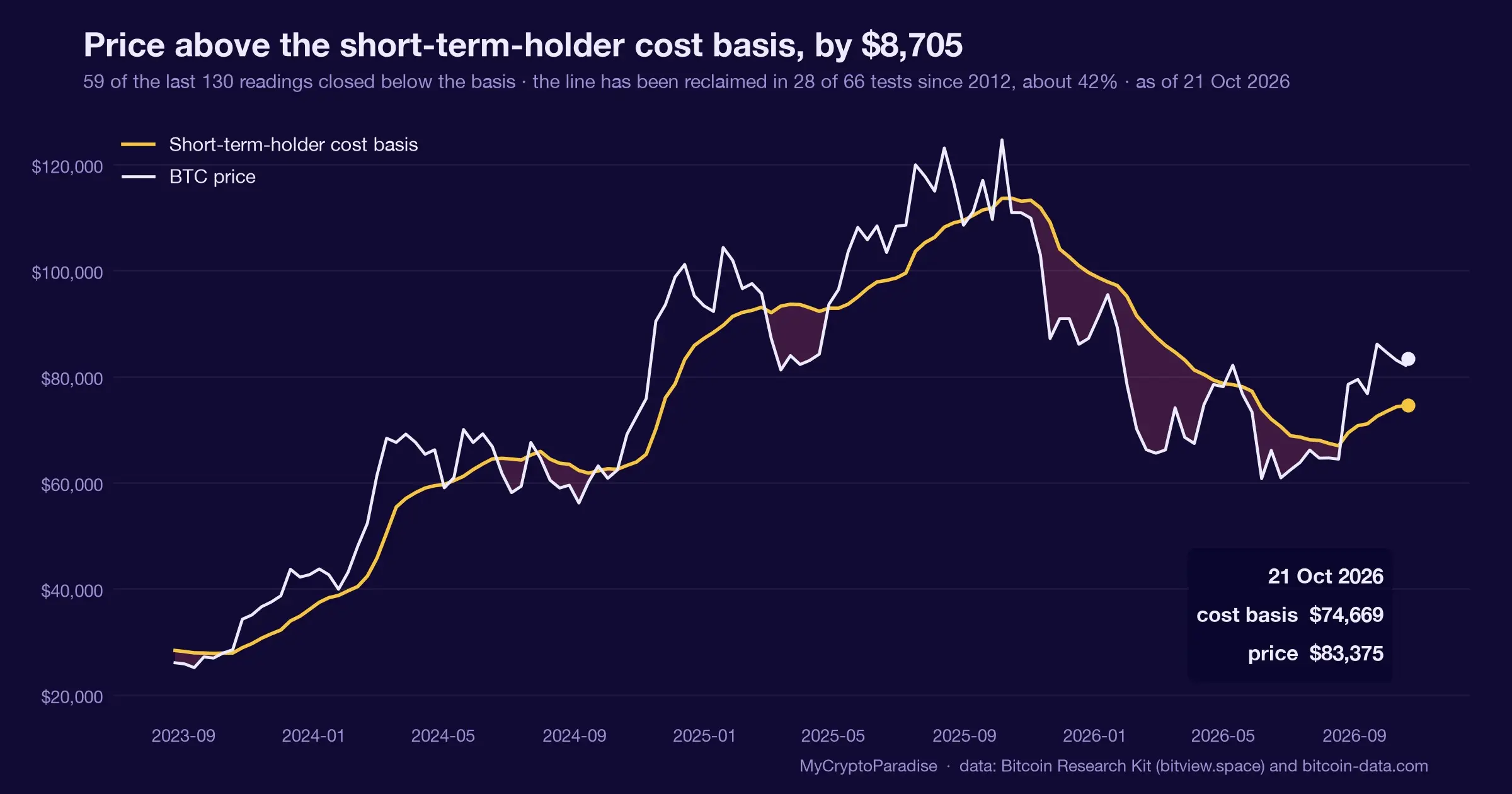
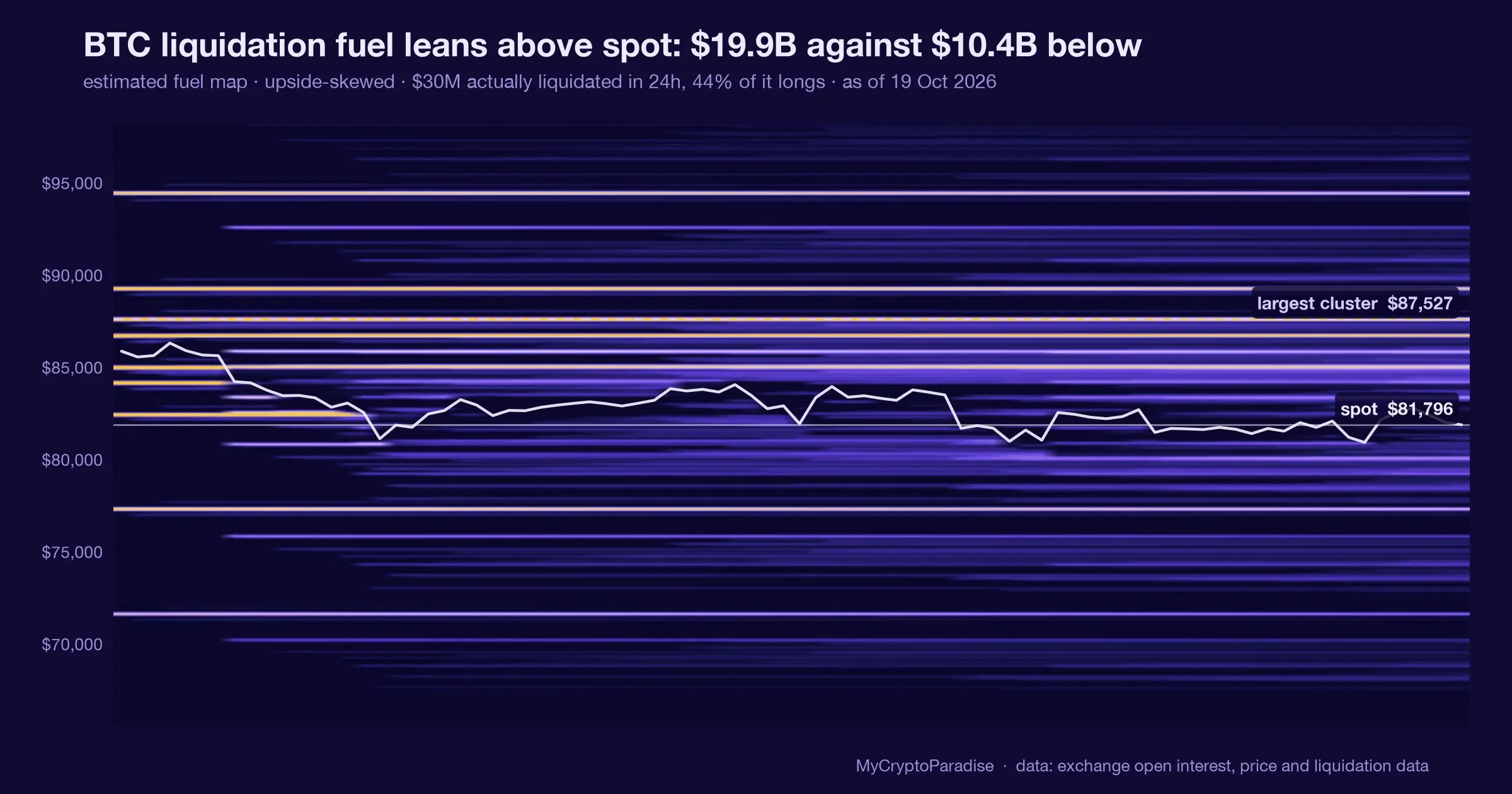
The ParadiseTeam frames this as a foundation story meeting an awkward price location. BTC traded near $83,423 as the news hit. That sits right inside the $82,000 to $84,200 band, a zone our market lens has flagged as resistance that recently turned red.
That overlap matters. Good structural news arriving while price presses into known resistance is where retail gets tempted to chase. Our standing read is cautious here: whales have been heavy sellers, and a calm regulatory headline can be convenient cover for distribution into eager buyers.
So the rules do not change the levels. They improve the long-term backdrop, not today's chart. $90,000 sits above as the next magnet, and the lens warns a push there could meet a larger rejection, not a clean breakout.
Below, $73,000 remains the key structural line. A clean break there would change market structure regardless of how constructive the stablecoin story reads.
The nuance keeping us from pure bearishness is the medium-term picture. Bullish divergences are forming and bearish momentum is slowing, so a bounce is plausible. That is a short-term lean, not a license to buy a regulatory headline into red resistance. The ParadiseTeam would rather see acceptance above $84,200 confirm strength than assume this news delivers it.
The read behind this: we framed this story through our own market analysis, Can Bitcoin Recover From This Support?
Track it live: our live crypto funding rates tracks this in real time, so you can watch it play out for yourself.
Related coverage
For exact entries, targets, and stop losses with full risk management, that is what ParadiseFamilyVIP is for. New to reading these moves? Start with our crypto trading strategies guide.
ParadiseTeam is monitoring the market situation closely, and we are taking these developments into consideration while building our trading tactics inside ParadiseFamilyVIP.
Crypto trading involves substantial risk. Prices are volatile and you can lose money. This article is educational and is not financial advice. Past performance does not guarantee future results.
Will finalized stablecoin rules pull fresh capital into crypto soon?
This is how 10 Paradisers are calling it. Tap your call.
No calls on this one yet. Tap yours to be the first.
Free account, no password. Members just sign in.
Follow this topic: Stablecoin news












Join the discussion 4
Solid to see more movement on this.. stability is the whole point for people like us. A dollar that stays a dollar.. feels good, no?
OCC moving on reserves and redemption is long overdue... digital dollars were a lifeline for my family. But the "no application date" bit... feels like a pause before anything actually moves.
for me the on-chain flows from these always tell the real story so it'll be interesting to see if these rules change anything there
Yes, Mei Lin. The on-chain data for reserve attestations will be key. It will show if these new rules actually impact the backing.