


Listen: the breakdown
Developing story update (October 16, 2026, 00:51 UTC):
MSCI adopts index exclusion rules that could oust Strategy. Strategy, Metaplanet and Upexi were previously identified for deletion under the methodology, with MSCI set to announce its final list on Nov. 11.
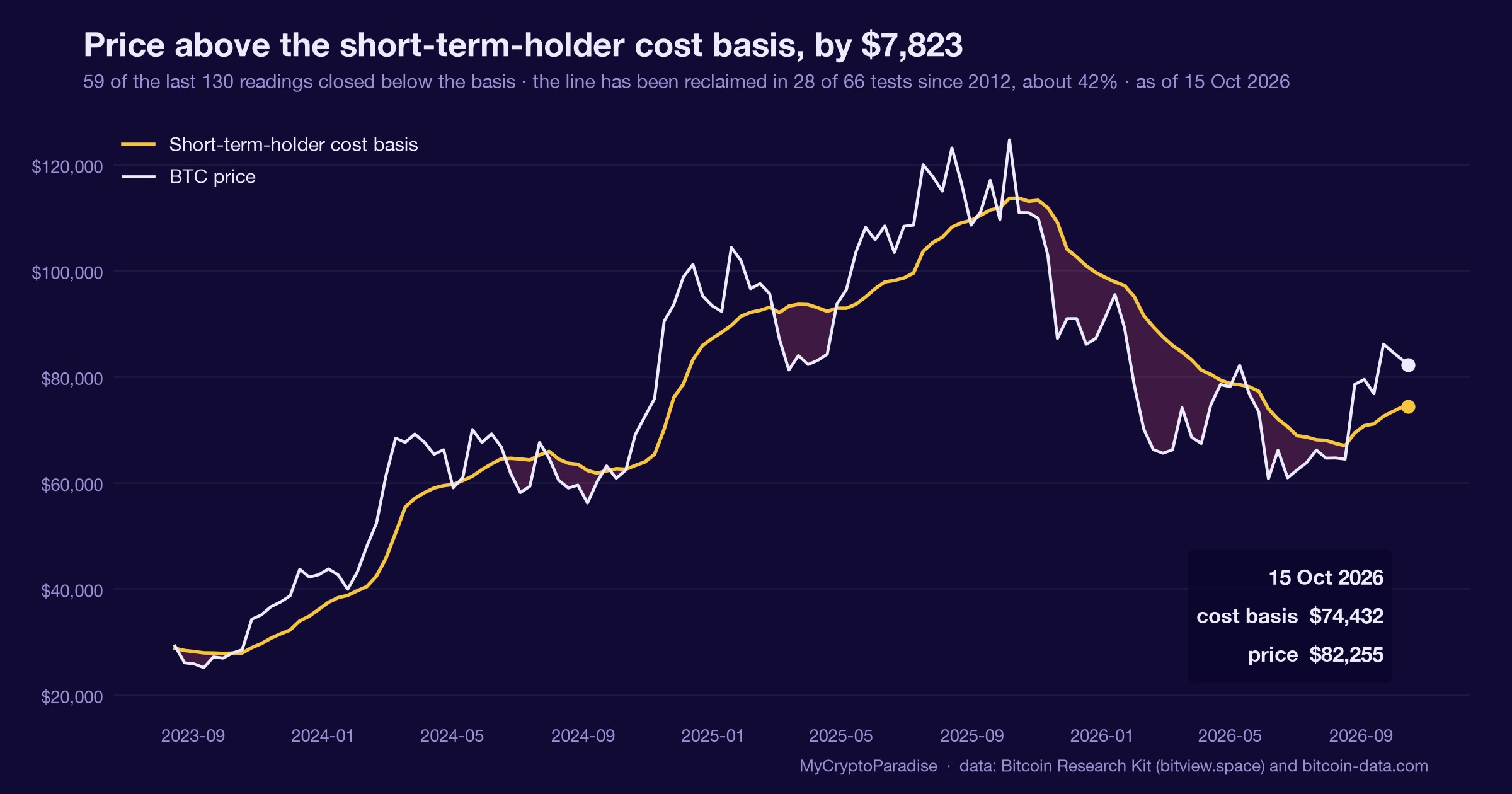
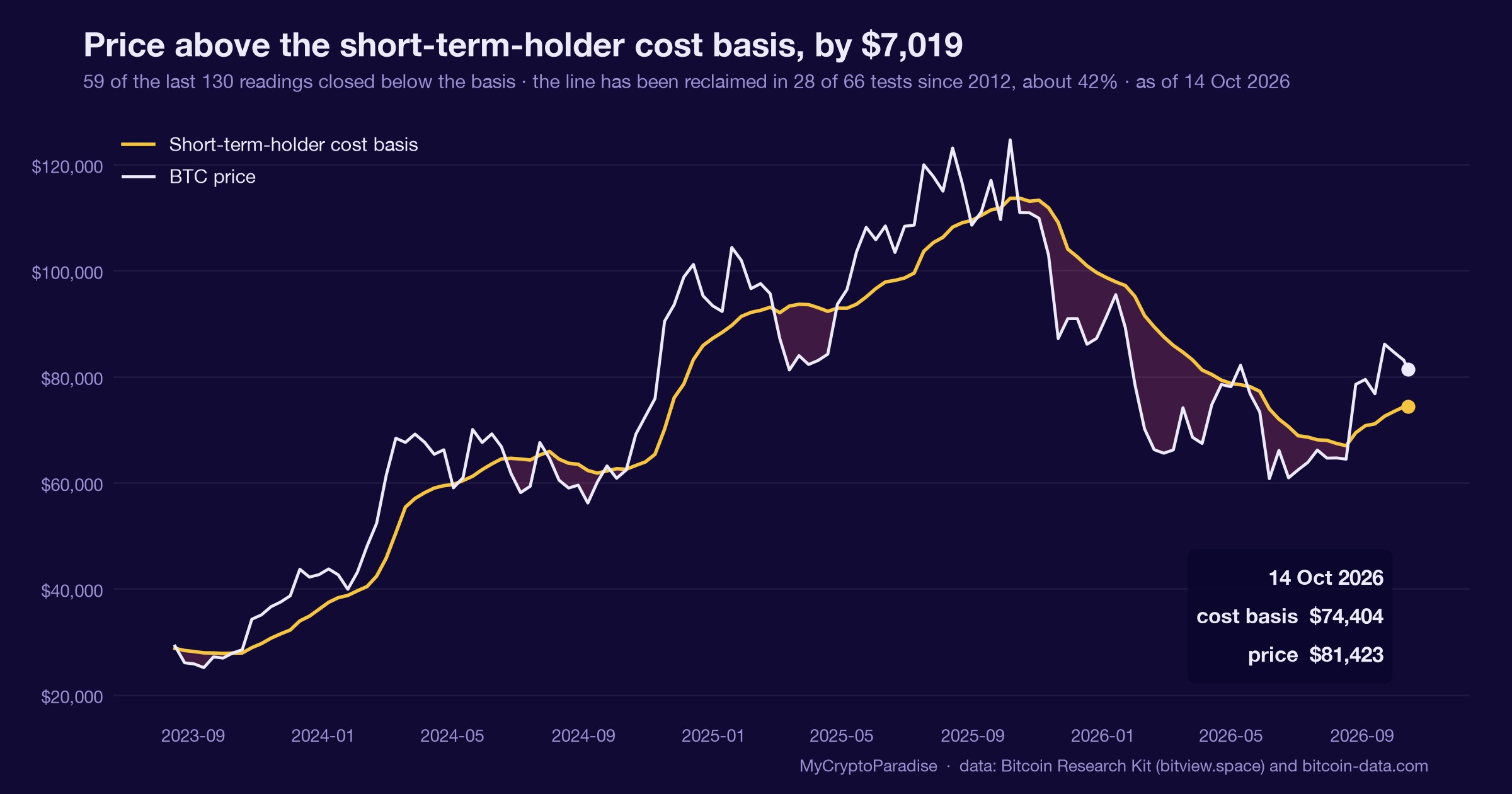
Market briefing: MSCI finalized index rules that could push Strategy and other crypto treasury firms out of global benchmarks, risking up to $2.8 billion in forced share sales. Bitcoin shrugged it off, trading near $82,422 and up 1.2 percent on the day.
- MSCI finalized rules that screen out firms whose assets are mostly non-operating, putting crypto treasury companies at exclusion risk
- Strategy could leave global benchmarks by November 30, with a final decision expected around October 16 and up to $2.8 billion in potential forced sales
- BTC held near $82,422 and ETH near $2,459, treating the change as an equity-sector issue rather than a crypto driver
MSCI index rules now put Strategy and other crypto treasury firms at risk of leaving global benchmarks. So why is Bitcoin not flinching?
MSCI has finalized index rules that could remove Strategy and other crypto treasury firms from its global equity benchmarks. The core change is simple. Companies whose assets are mainly non-operating now face a screen that can push them out. That screen points straight at the treasury model. Firms that hold large stacks of Bitcoin or Ethereum on the balance sheet, rather than running a business around them, are exactly the profile MSCI wants to filter.
A May 2026 simulation of the new rules already flagged Strategy, Metaplanet, and Yellow Cake. The Ethereum treasury firm SharpLink could feel it too. A final decision is expected around October 16, and exclusion for Strategy could begin by November 30, 2026.
The number that caught attention is $2.8 billion. That is the potential scale of forced share sales if index funds must drop Strategy. MSCI-tracking funds hold roughly 3.1 percent of its float, so the mechanical selling is real but bounded.
Michael Saylor has called the proposed rules biased. That is the expected response from a firm built on being included, not screened out.
Here is the part that matters for traders. Bitcoin did not panic. BTC traded near $82,422, up about 1.2 percent on the day, while ETH sat near $2,459. The market is reading this as an equity-structure story with a long fuse, not a crypto liquidity shock. That gap between a dramatic headline and a calm tape is the whole story.
Non-operating assets now trigger a screen
The transmission here runs through equity indexes, not through crypto order books. MSCI benchmarks sit underneath a huge pool of passive capital. When a company leaves an index, funds that track it must sell, regardless of what they think of the business.
That is why the $2.8 billion figure exists. It is not a view on Strategy. It is arithmetic. If the index drops the name, the funds follow the index, and the shares get sold into the market on a defined schedule.
The deeper signal is about how large allocators classify crypto treasury firms. By screening out companies with mainly non-operating assets, MSCI is drawing a line between an operating business and a holding vehicle for coins. That line reshapes the premium these stocks carry. Part of the treasury-firm appeal was passive index demand buying the shares automatically. Remove that bid, and the valuation leans more on the underlying crypto and less on index mechanics.
The lead time changes the weight of it all. A final decision around October 16 and exclusion no earlier than November 30 gives the market weeks to adjust, not minutes.
So the macro read is narrow by design. This pressures a specific equity sector and the perception of balance sheets stuffed with non-operating crypto. It does not tighten liquidity for spot Bitcoin or Ethereum. That separation is exactly why the crypto tape stayed calm while the headline looked heavy.
Why spot crypto ignored the equity shock
Start with where the pressure actually lands. The liquidity event sits in Strategy's stock and its treasury-firm peers, not in BTC or ETH. Forced index selling moves shares, and only indirectly touches the coins those firms hold.
That is the key distinction for a crypto trader. A fund dumping Strategy shares is not the same as a fund dumping Bitcoin. The coins on Strategy's balance sheet are not automatically sold when the equity leaves an index. So the cascade that usually scares people, driver into BTC into ETH into alts, mostly stops at the equity layer this time. BTC near $82,422 and ETH near $2,459 both traded higher on the day, which tells you the spot market agreed.
The one indirect channel is sentiment. If crypto treasury stocks sell off into year end, retail may extrapolate that weakness onto the coins themselves. That confusion, headline bearish, price green, is where mistakes happen.
Alts are the most exposed to that sentiment drift, since they move on narrative more than on flows. A wave of negative crypto-equity headlines can pressure risk appetite even when the mechanical link is thin.
For now, the honest read is resilience. The direct crypto market is treating MSCI's rules as an equity-specific problem with a late-2026 timeline. Nothing in the facts forces a spot reprice today, which is why we hold this story neutral for crypto rather than bending it to fit the drama.
Signals that turn this into a crypto issue
October 16 is the first marker. A final decision that confirms the screen as simulated keeps the clock running toward the November 30 exclusion for Strategy. A softer or delayed outcome takes pressure off the whole crypto-equity sector.
Strategy's share price is the cleanest live gauge. If the stock starts pricing in forced selling well ahead of the deadline, that is the market front-running the $2.8 billion. If it holds steady, the index funds' 3.1 percent of float is being absorbed quietly.
Watch for spillover from the equities into spot. The invalidation of our calm read would be BTC and ETH weakening in lockstep with treasury-firm stocks, especially on heavy volume. That would signal the sentiment channel turning into a real flow channel.
Confirmation of resilience looks different. It is BTC continuing to hold the $82,000 zone while Strategy wobbles, proving the market can separate an equity rule from the asset itself.
Keep an eye on the other flagged names too. Metaplanet, Yellow Cake, and the Ethereum treasury firm SharpLink give you a wider sample. If they all slide while coins stay firm, the thesis that this is equity-specific gets stronger.
The trap to avoid is trading the headline instead of the mechanism. A dramatic exclusion story with a six-week minimum lead time rarely moves spot crypto on day one. Patience beats reaction here, and the calendar tells you when the pressure actually arrives.
What the exclusion risk means for positioning
The ParadiseTeam frames this as an equity-structure story that leaves the Bitcoin tape intact for now. With BTC near $82,422 as of this read, the levels that matter are unchanged by an MSCI rule aimed at stock benchmarks.
Our market lens still centers on the $82,000 zone as critical support, with $81,000 the lower boundary and the $82,300 whale entry acting as support turned pivot. MSCI's rules do nothing mechanical to those levels, so we treat them as holding until price says otherwise.
Smart money context supports the calm. Whales have backed this V-shaped recovery, open interest sits near an all-time low, and funding rates hug a 90-day baseline. That is a market with little leverage and little greed, not one primed to break on an equity headline.
The risk the ParadiseTeam flags is perception, not flow. If retail sees crypto treasury stocks bleed into year end and assumes Bitcoin must follow, that confusion can create fake fear near support, which is often where smart money prefers to add.
To the upside, $84,000 and the $84,500 target remain the near resistance, with $90,000 the heavier wall we give a roughly 60 percent chance of rejecting price on the first test.
None of this is a signal. It is a reminder that an equity rule with a November fuse should not be traded as a spot catalyst. Respect the levels, mind the stops below $81,000, and let the October 16 decision clarify the equity side before assuming it bleeds into crypto.
The read behind this: we framed this story through our own market analysis, Bitcoin at $82K: Can Bulls Defend It?
Track it live: our Crypto Fear and Greed Index and the live crypto funding rates both update in real time, so you can watch this shift for yourself.
Related coverage
For exact entries, targets, and stop losses with full risk management, that is what ParadiseFamilyVIP is for. New to reading these moves? Start with our crypto trading strategies guide.
ParadiseTeam is monitoring the market situation closely, and we are taking these developments into consideration while building our trading tactics inside ParadiseFamilyVIP.
Crypto trading involves substantial risk. Prices are volatile and you can lose money. This article is educational and is not financial advice. Past performance does not guarantee future results.
Will MSCI exclusion risk pressure crypto treasury stocks into year end?
This is how 11 Paradisers are calling it. Tap your call.
No calls on this one yet. Tap yours to be the first.
Free account, no password. Members just sign in.












Join the discussion 1
I'm not so sure about the forced sales part... BTC held strong even with that much at risk. Seems like a lot of FUD for nothing, eh? 🤔