


Listen: the breakdown
Developing story update (September 03, 2026, 19:08 UTC):
Our sources confirm a specific instance of the Coldcard hardware wallet exploit, where a deliberately weakened researcher wallet was swept on August 28. This detail provides further insight into the active exploitation of the vulnerability previously reported.
For traders, this confirms the ongoing and targeted nature of the Coldcard vulnerability, reinforcing the need for extreme caution with hardware wallet security. While the overall August loss figures remain consistent, this specific incident underscores the persistent threat to even supposedly secure storage methods.
What to watch now: Monitor for further details on the Coldcard exploit's scope or vendor response.
Developing story update (September 03, 2026, 18:25 UTC):
A clearer scale has emerged on the hardware wallet exploit at the center of this story. Based on our sources, the attackers now control roughly $114.7 million in exposed funds, yet only about 10 percent has actually been moved. The remaining 90 percent sits untouched for now.
For traders, this is the number that matters. A large pool of stolen coins that has not yet been converted or bridged out is a potential supply overhang. If those funds start moving through swap routes such as the earlier Bitcoin to ETH conversions, it can add sell pressure and feed the fear that smart money uses to accelerate retail capitulation before lower support comes into play.
What to watch now: Watch for movement in the untouched ~90% of the $114.7M as a signal of fresh sell pressure.
Developing story update (September 03, 2026, 17:40 UTC):
Fresh on-chain tracing puts a firmer number on the Coldcard hardware wallet exploit: roughly $114.7 million in total stolen funds tied to the campaign, larger than the raw Bitcoin figure alone implied. This confirms the raid was materially bigger in dollar terms than early counts suggested.
Based on our sources, only about 10% of that amount has actually been moved so far, with close to 90% still sitting untouched on-chain. For traders, that dormant pile matters: a future attempt to launder or convert it, likely through cross-chain routes already seen in this case, could surface as sudden sell pressure or unusual flow, so this remains a live overhang rather than a closed event.
What to watch now: Watch for movement of the remaining ~90% of stolen Coldcard funds, which could signal fresh laundering-driven flow.
Developing story update (September 03, 2026, 17:18 UTC):
Based on our sources, roughly $6 million tied to the Tectonic borrowing event that drove most of August’s losses has now been moved onto Ethereum. This is the first confirmed on-chain movement of funds from that specific incident, and it suggests the actors are beginning to reposition rather than sit still.
For traders the read is unchanged: the pace and size of these fund movements will likely shape how much of the stolen value ever surfaces on exchanges, and any large conversion could add short-term supply pressure. Nothing here alters the core security picture, but it is worth tracking as an early sign of where the funds are heading.
What to watch now: Watch for further on-chain movement or exchange deposits of the Tectonic funds now bridging to Ethereum.
Developing story update (September 03, 2026, 16:33 UTC):
Update: the hardware wallet exploit at the center of this story now looks broader and less resolved than first reported. Based on our sources, at least 15 separate attackers exploited the same Coldcard vulnerability, and a deliberately weakened researcher wallet was swept on August 28 in what appears to be a test of the exploit’s reach.
For traders the key new number is on-chain flow: of the roughly $114.7 million in exposed Bitcoin, only about 10% has actually moved, with the remaining 90% still sitting untouched. That means the immediate forced-selling pressure is likely smaller than the headline figure implies, though the unmoved balance remains a standing overhang that could hit the market later.
What to watch now: Watch whether the untouched 90% of exposed BTC starts moving to exchanges or mixers, which would signal fresh sell pressure.
Developing story update (September 03, 2026, 16:11 UTC):
New detail on the August loss picture: a single $75 million borrowing event tied to Tectonic accounted for more than half of the roughly $136 million lost across the month, based on our sources. That reframes the headline number, most of the damage traced to one large event rather than being spread evenly across the 50 recorded incidents.
For traders, the takeaway is that concentration risk sits behind the scary monthly total. The hardware wallet raid and the Coldcard linked $114.7 million move remain the standout self custody story, but the bulk of the dollar losses came from a lending style event, not from wallet compromises. Position sizing and venue risk deserve as much attention as key management here.
What to watch now: Whether more of August's losses trace back to concentrated lending events rather than wallet exploits.
Developing story update (September 03, 2026, 13:32 UTC):
Our sources confirm the record hardware wallet exploit in August targeted a Coldcard vulnerability, resulting in the theft of approximately $114.7 million in Bitcoin. Crucially, the stolen BTC is now being actively swapped for Ether using the THORChain protocol, indicating ongoing efforts to launder the illicit gains.
This incident contributed to a broader landscape of crypto security losses in August, which totaled $136.3 million across 50 separate incidents. A significant portion of these losses, $75 million, stemmed from a borrowing event on Tectonic, highlighting diverse attack vectors beyond hardware wallets.
The overall frequency of crypto hacks increased by 67% in August, underscoring a heightened risk environment. This trend, alongside reports of thousands of vulnerabilities identified across Bitcoin projects, reinforces the need for extreme caution in the DeFi and broader crypto sectors.
What to watch now: Traders should monitor the ongoing movement of funds from the Coldcard exploit and assess the potential for increased regulatory scrutiny or market FUD driven by the rising frequency of hacks.
Market briefing: The largest hardware wallet exploit on record just drained 1,816 BTC, about $116 million, from over 5,200 addresses. Bitcoin held near $78,255 as of the print, but the confidence damage runs deeper than the tape.
- Attackers drained roughly 1,816 BTC, about $116 million, from more than 5,200 addresses, the largest hardware wallet exploit ever recorded
- Around 76% of Q2 losses came from compromised infrastructure and stolen keys, not broken smart contract code
- BTC held near $78,255 and ETH near $2,414 as this landed, calm price masking a widening threat map
The largest hardware wallet raid on record just drained 1,816 BTC from over 5,200 addresses. So is this fresh fear a reason to sell, or is it cover for smart money?
Attackers drained roughly 1,816 BTC, about $116 million, from more than 5,200 addresses in August. That makes it the third-largest crypto hack of 2026. It is also the largest hardware wallet exploit ever recorded. The device most people treat as their safest option became the crime scene.
We already flagged Q2 as the most hacked quarter DeFi has seen. This is that same story maturing, and it is uglier.
The pattern matters more than the number. Across Q2, 99 separate exploits set a record. Around 76% of the value lost came from compromised infrastructure, not broken smart contract code. Stolen keys and credential access did the work. That is the operational layer almost nobody audits.
This is not a bug you can patch and forget. It is a human and hardware supply chain problem. April already showed the ceiling when one exchange lost an estimated $293 million to a group possibly linked to the DPRK. Attackers now target the plumbing, and the plumbing rarely gets read.
Bitcoin sat near $78,255 as of the print, up about 2% on the day. The tape looks calm. The threat map does not.
Stolen keys, not broken code
The real signal here is trust, not the dollar figure. Hardware wallets are the promise that self-custody works. When 5,200 of them fail at once, that promise cracks. Confidence is the collateral behind every crypto position, and it just took damage.
Infrastructure attacks scale in a way contract bugs do not. A patched contract is fixed once. Stolen credentials and compromised keys can hit thousands of unrelated users at the same time. TRM Labs counted 32 price manipulation exploits in DeFi lending this year, a record. The threat is broadening, not narrowing.
Institutions read this differently than retail. They price operational risk before they price upside.
Every serious allocator now has a new line on the risk memo. If self-custody hardware can be drained en masse, custody assumptions get repriced. That tightens the flow of fresh capital into the riskier end of the market. Liquidity does not vanish, it just gets pickier.
Tie it back to the driver. More infrastructure exploits mean more risk aversion. More risk aversion means thinner bids under altcoins and DeFi tokens. Thinner bids mean any BTC wobble transmits faster down the risk curve. The hack is not just $116 million gone. It is a quiet tax on confidence across the whole stack.
Risk aversion ripples from BTC to alts
The confusing part is the green. BTC held near $78,255 and ETH near $2,414 as this landed, both up on the day. That resilience is exactly what a slow distribution phase can look like.
Here is the mechanism. Fear from a hack rarely dumps BTC first. It drains the outer ring. Capital exits DeFi tokens and thin alts, rotates into BTC or stablecoins, and shows up as strength at the core. The green candle is partly other people's panic arriving.
That flight to quality flatters Bitcoin right up until it doesn't.
ETH sits in the middle of the cascade. It is a quality asset to an alt holder and a risk asset to a Bitcoin holder. A confidence shock pulls it both ways, which is why ETH can lag on the way up and lead on the way down.
Alts and DeFi names are the pressure valve. Order books there are thin. When infrastructure fear spreads, market makers widen spreads and pull bids. A small sell then moves price a lot. That is where the $116 million headline does its real damage, long after the coins have moved.
The core looks fine. The edges are where the story bleeds.
Signals that confirm or break the flush
Reclaiming $79,000 is the first thing to watch. Price is failing there right now, and it printed a shooting star on the daily and weekly at that level. A clean daily close back above $79,000 would weaken the bearish case. Until that happens, resistance holds the story.
The downside trigger sits at $58,000. A decisive break below there opens the path lower and likely flushes the long positions crowded above. Liquidation clusters sit near $57,000 on the long side. Price tends to hunt those pools, not avoid them.
Stops are a map, and market makers read maps.
The next weekly candle close matters most. A bearish engulfing confirmation on the weekly would validate the distribution read. A strong reclaim instead would put the bears on the back foot. One candle carries a lot of weight here.
On the hack itself, watch for follow-on disclosures. If more compromised addresses surface, the confidence damage compounds. Watch stablecoin inflows too. A jump into stables alongside the fear tells you capital is hiding, not buying. That is the honest tell that risk appetite is shrinking.
Calm price with rising fear is not safety. It is a waiting room.
Liquidity read as retail piles into longs
The ParadiseTeam reads this hack as pressure applied at the worst moment for late longs. BTC was trading near $78,255 as of the print, stalling under $79,000 resistance. Bad news into failed resistance is rarely accumulation. It usually marks distribution into a crowd that is buying strength.
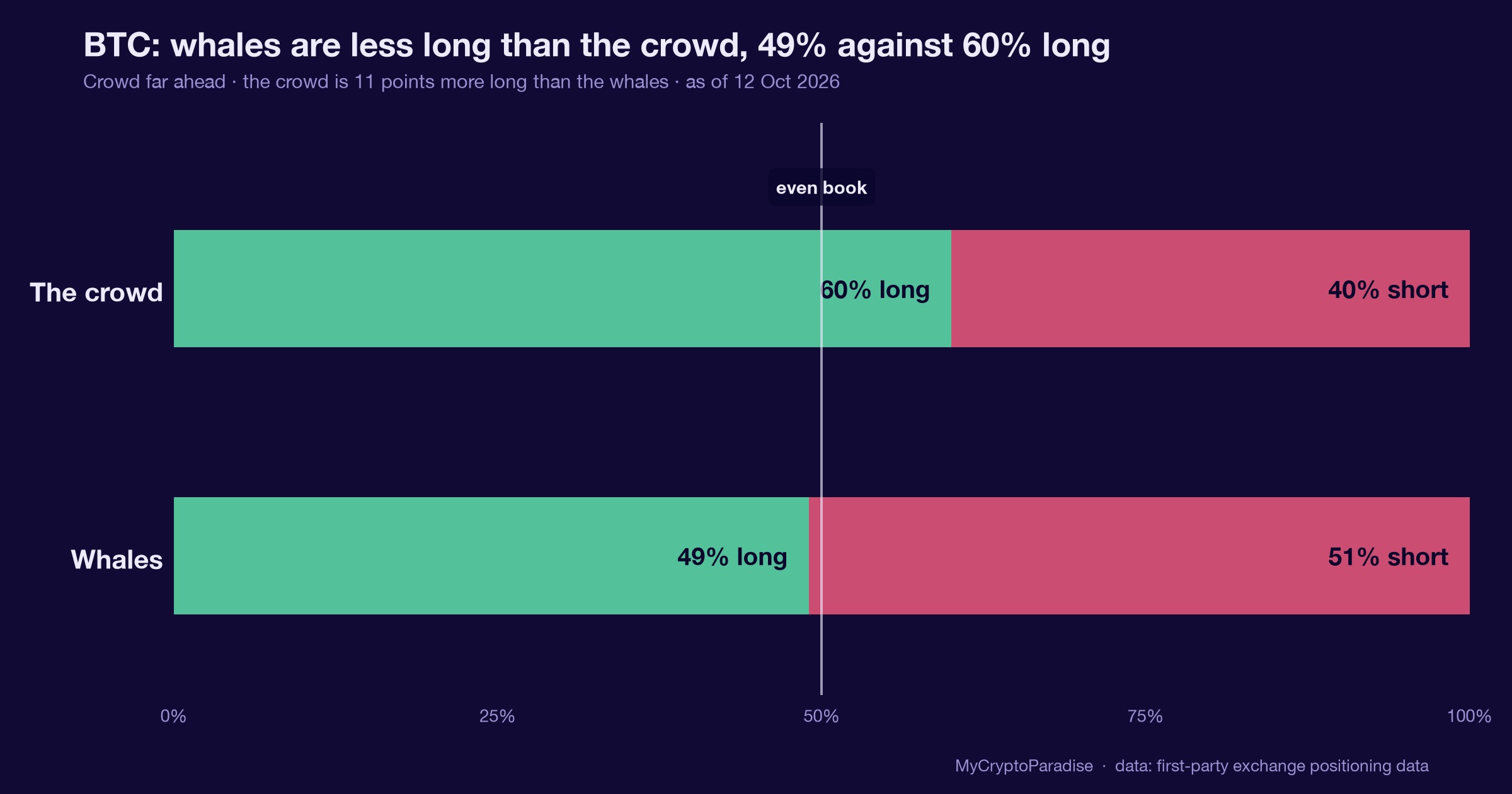
The picture under the surface favors sellers. Retail is piling into longs and calling the bear trend finished early. Smart money looks to be absorbing that pressure, not chasing it. An infrastructure hack is perfect fuel for that, because fear speeds up the capitulation distributors need.
Fear is not the enemy of smart money. It is the raw material.
The levels frame the risk. Liquidation clusters sit near $57,000 below and $83,000 above. With longs stacked overhead, the incentive tilts toward a push into the lower pool. A break below $58,000 would confirm that intent and point toward the $44,000 zone the ParadiseTeam is watching for real accumulation.
What invalidates it. A firm reclaim of $79,000 and a weekly close back above it would flip this read and shelve the flush thesis. Manage risk both ways. R:R (risk-to-reward) only works when the SL (stop-loss) is defined before you act, not after a hack headline scares you out.
The read behind this: we framed this story through our own market analysis, Bitcoin Fails at $79K: Who Is Selling?
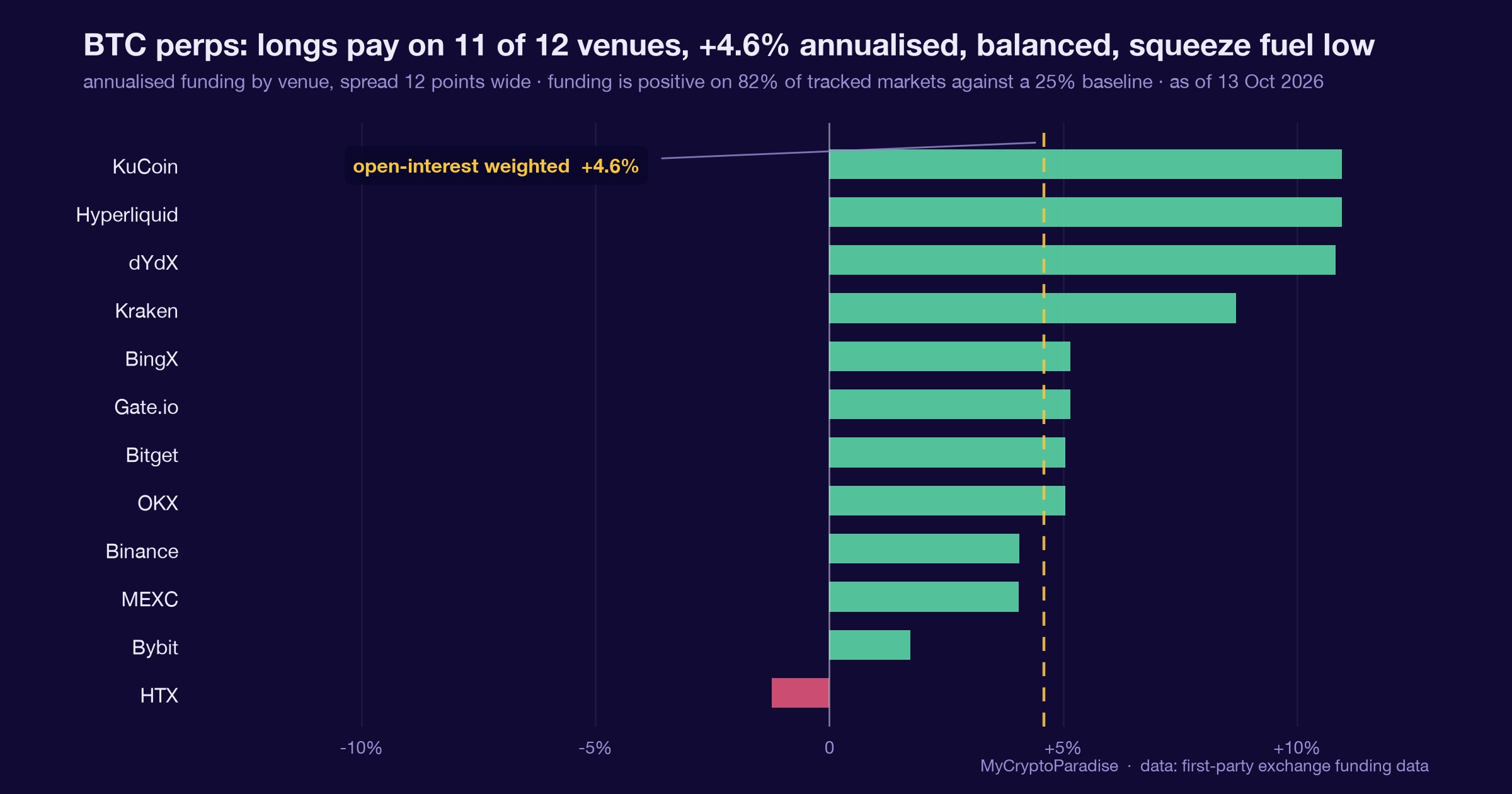
Track it live: our Crypto Fear and Greed Index and the live crypto funding rates both update in real time, so you can watch this shift for yourself.
Related coverage
For exact entries, targets, and stop losses with full risk management, that is what ParadiseFamilyVIP is for. New to reading these moves? Start with our crypto trading strategies guide.
ParadiseTeam is monitoring the market situation closely, and we are taking these developments into consideration while building our trading tactics inside ParadiseFamilyVIP.
Crypto trading involves substantial risk. Prices are volatile and you can lose money. This article is educational and is not financial advice. Past performance does not guarantee future results.
Does this hack push Bitcoin below $58,000 next, or does $79,000 get reclaimed first?
This is how 13 Paradisers are calling it. Tap your call.
No calls on this one yet. Tap yours to be the first.
Free account, no password. Members just sign in.







Join the discussion 5
This is why I always confirm my address with a small test transaction first... even if it's slow. It helps avoid big mistakes.
its a hard lesson for some to learn with self custody it only matters if its secure
i see your point about security, Tommy, but isnt the real lesson about *how* to secure it safely and correctly for small holders??
yes but its still about the security of your own funds not someone elses its not complicated to keep your keys safe
always makes me double check my backups, and why i learned to hold my own keys... it's a big part of the engine room for me.