


Listen: the breakdown
Market briefing: Electrum has patched a Bitcoin wallet flaw that could have turned a routine fee bump into theft. Price barely blinked, with BTC near $80,245, yet the fix matters for self-custody trust.
- Electrum fixed a flaw that could turn a Bitcoin fee adjustment into an unintended payment.
- The patch was disclosed on October 24 and removes a quiet theft vector in self-custody.
- BTC sat near $80,245, down 0.4% on the day, treating the fix as a non-event for price.
Source: Electrum
Electrum has patched a Bitcoin wallet flaw where a simple fee bump could redirect your coins. The code is safer, but the chart ignored it. So who actually benefits here?
Electrum has fixed a Bitcoin wallet flaw that could turn a routine fee adjustment into theft. The team disclosed the issue on October 24 and shipped the patch alongside the advisory.
The mechanism is the uncomfortable part. You bump a stuck transaction's fee to make it confirm faster. In the vulnerable flow, that one approval could become an unintended payment to someone else. A click you have made a hundred times quietly carried a new risk.
This is not a chain-level break. Bitcoin itself was never at fault. The flaw lived in how one wallet handled fee replacement, and the fix closes that gap for users who update.
Markets, for their part, could not have cared less. BTC traded near $80,245, down about 0.4% on the day and flat on the hour. A security fix that prevents theft is exactly the kind of good news that moves nothing, which tells you how the crowd ranks plumbing against price.
Still, the story matters more than the candle suggests. Self-custody is the entire promise of Bitcoin. Every flaw that converts an ordinary approval into a loss chips at the trust that keeps coins off exchanges and in private hands.
So the facts are simple and confirmed. A dangerous bug existed, it is now patched, and the market treated the repair as background noise. The read underneath is where it gets interesting.
A fee bump that could cost you coins
The danger here was its ordinariness. Fee bumping is a mundane task. You use it when a Bitcoin transaction sits unconfirmed and you want it to clear. That familiarity is precisely what made the flaw dangerous, because nobody inspects a button they trust.
Turn one safe approval into a theft vector and you attack behaviour, not code. Users do not read every byte of a signing request. They see a fee bump, they confirm, they move on. The patch restores the gap between what you intend and what you sign.
Structurally, this feeds the self-custody story that underpins Bitcoin demand. Coins held in private wallets are coins not sitting on an exchange ready to be dumped. Anything that erodes confidence in holding your own keys pushes balances back toward custodians, and custodial supply is sellable supply. So a quiet wallet fix touches the slow, boring foundation of the asset. It keeps self-custody credible.
That said, be honest about scale. One patched desktop-wallet flaw does not reprice Bitcoin. It does not alter liquidity, rate expectations, or flows. The transmission from this fix to macro is effectively zero, which is why the tape stayed asleep. We flag the structural positive without pretending it is a catalyst.
Price shrugs while the fix quietly lands
The cleanest signal from this story is the absence of one. BTC held near $80,245 with a 0.4% daily drift and barely any hourly move. A theft-prevention patch arrived and the order book did not flinch.
That silence is the honest read. There was no bid surge from relieved holders and no panic from anyone who felt exposed. The flaw never reached a scale that threatened balances across the market, so the fix never needed to.
Down the risk curve, the picture is the same. ETH and the larger alts took no cue from a Bitcoin desktop-wallet repair. There was no liquidity cascade to pass along, because nothing broke and nothing was liquidated.
So why log it as bullish? Because first-order, the direction of a security fix is positive. It removes a way to lose coins. It strengthens the self-custody rail that keeps supply illiquid. The effect is tiny and slow, but it points one way, not two.
The absurdity worth noting is how markets price safety. A fix that stops your Bitcoin walking out the door earns a shrug. A glossy partnership rumour with no balance sheet behind it can move 5%. Plumbing rarely gets applause, only the failures do.
Signs the patch actually holds up
The first thing to watch is boring and vital: adoption of the update. A fix only protects wallets that install it. Confirmation that users have patched, with no reports of the flaw being exploited before disclosure, would close this story cleanly.
The invalidation runs the other way. If follow-up advisories reveal the issue was wider, touched more funds, or was abused in the wild, the read shifts. Then it stops being quiet plumbing and becomes a trust shock, and trust shocks can push coins back onto exchanges.
Watch the self-custody signal over the slower horizon. Steady or rising exchange outflows say holders still trust their own keys. A sudden lurch of coins toward custodians after a wallet scare would be the opposite tell.
For price itself, this fix is not your trigger. Keep your eyes on the structure the market actually trades. BTC near $80,245 is the number that matters, not the patch notes.
So treat this as a confirmed, contained security win unless proven otherwise. The bullish tilt rests on the absence of exploitation and the strengthening of self-custody. New evidence of wider damage is the one development that would flip the tone, and so far there is none.
Reading a quiet security win near support
The ParadiseTeam frames this fix as structurally friendly but tactically irrelevant to the levels in front of us. It changes nothing on the chart. BTC was trading near $80,245 as of the latest read, sitting just under the $81,000 support that buyers failed to defend.
That failure is what we are actually watching, not patch notes. Smart money tried to absorb selling at $81,000 and could not hold it, and is now selling back into strength. A wallet fix does not reverse that.
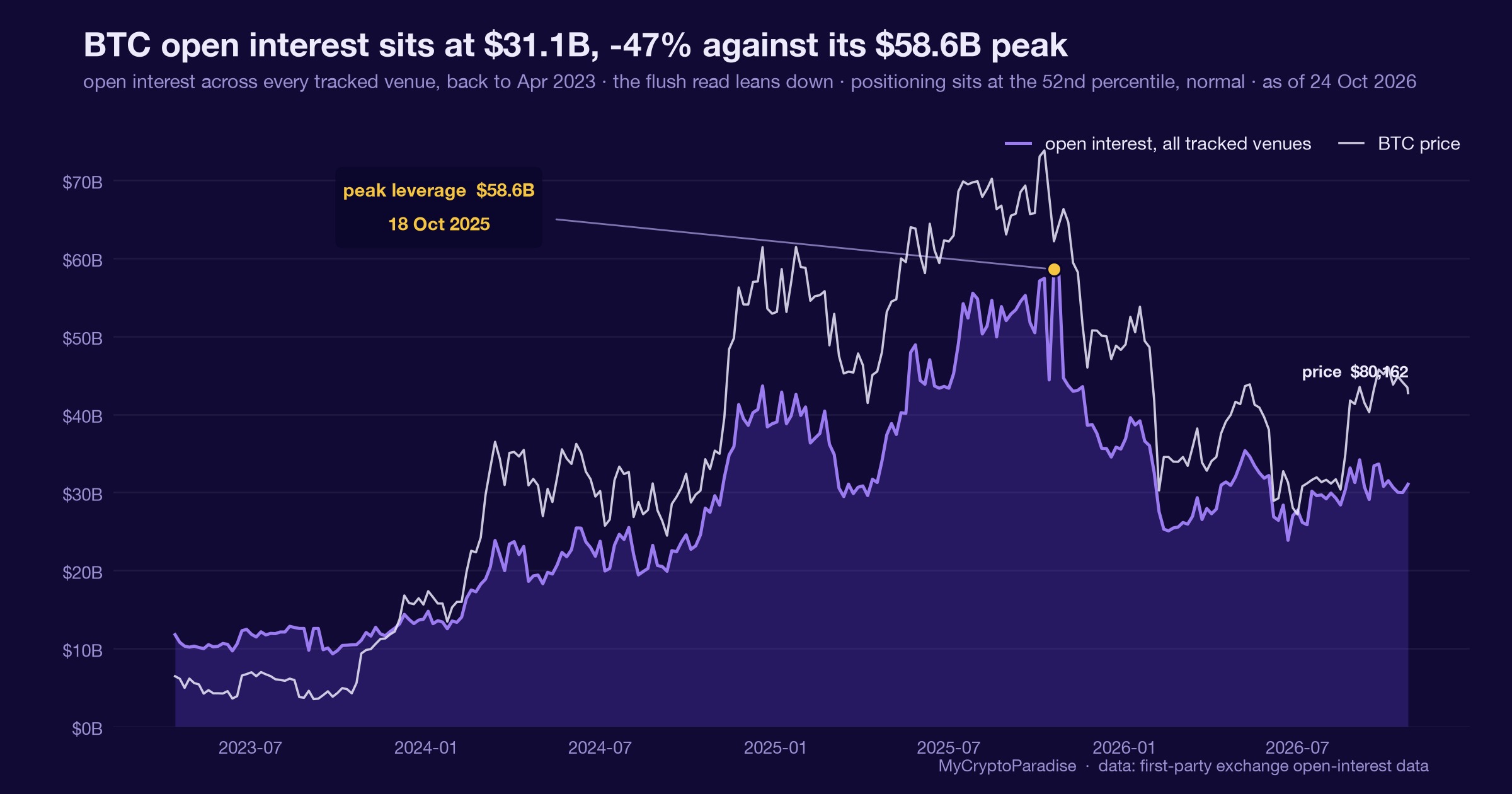
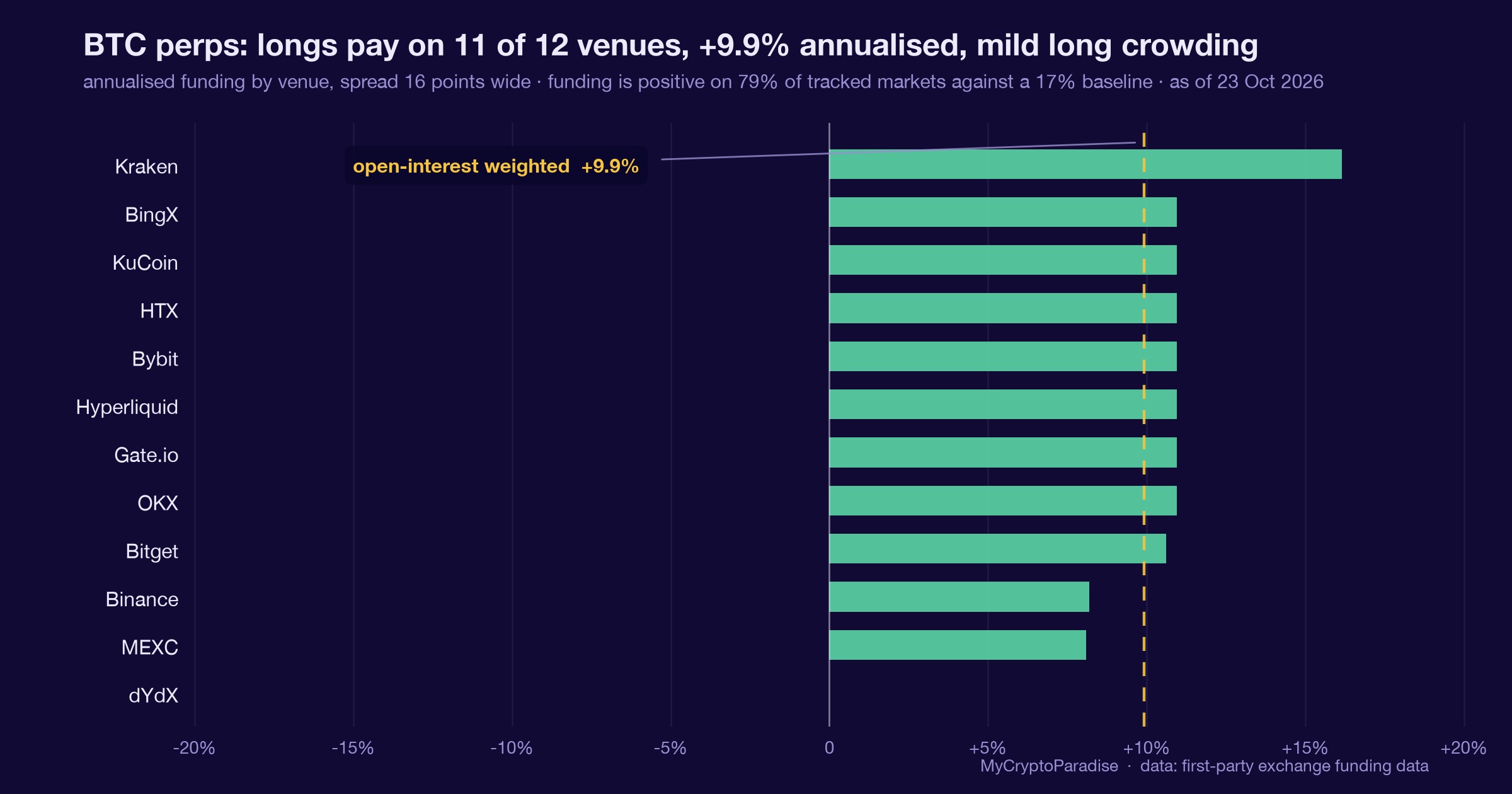
Here is the tension. Funding rates have flipped positive while price has not followed, so longs are crowding without conviction. That is the classic signature of retail leaning in while smart money stays patient. Good news like a security patch can hand that crowd a reason to stay long into a level that keeps rejecting.
Our standing structure is cautiously constructive toward a possible push to $90,000, but only while $79,000 holds. Lose $79,000 and the medium-term bullish case inverts, with $44,000 the deeper bearish objective. So we file this patch as a quiet positive for self-custody and set it aside for positioning. The signal that would matter is a full confirmation of smart money turning long, not a wallet release. Until then, respect $79,000 as the line, and treat $81,350 as where sellers have been waiting.
The read behind this: we framed this story through our own market analysis, Bitcoin at Support: Can Bulls Fight Back?
Track it live: our live crypto funding rates and the crypto liquidation heatmap both update in real time, so you can watch this shift for yourself.
Related coverage
For exact entries, targets, and stop losses with full risk management, that is what ParadiseFamilyVIP is for. New to reading these moves? Start with our crypto trading strategies guide.
ParadiseTeam is monitoring the market situation closely, and we are taking these developments into consideration while building our trading tactics inside ParadiseFamilyVIP.
Crypto trading involves substantial risk. Prices are volatile and you can lose money. This article is educational and is not financial advice. Past performance does not guarantee future results.
Does a patched wallet flaw change how much you trust Bitcoin self-custody?
This is how 1 Paradiser is calling it. Tap your call.
No calls on this one yet. Tap yours to be the first.
Free account, no password. Members just sign in.










Join the discussion
No comments yet. Members, share how you are reading this.