


Listen: the breakdown
Market briefing: Capital B reported a roughly $78 million first-half loss driven almost entirely by a non-cash Bitcoin impairment charge, yet quietly lifted its reserves to 3,538 BTC. Bitcoin traded near $82,207 at the time, up 1.1 percent on the day, barely reacting to the headline.
- Capital B booked a net loss of around $77.9 million for the first half of 2026, almost all of it a non-cash Bitcoin impairment charge with no cash leaving the business.
- The same company raised $30 million and grew its Bitcoin reserve 11 percent to 3,538 BTC, so the accounting loss sat alongside active accumulation.
- Bitcoin traded near $82,207 as the results landed on October 15, showing the market read the headline for what it was rather than a fundamental crack.
A European Bitcoin treasury just reported a $78M loss while quietly stacking more coins. So is this Bitcoin impairment loss a warning sign, or a smart-money tell?
Capital B, one of Europe's largest corporate Bitcoin treasuries, published half-year results on October 15 that read worse than they are. The company reported a net loss of 69.5 million euros for the first half of 2026, roughly 77.9 million dollars.
That number looks alarming until you open it. Almost the entire loss, about 67.5 million euros, was a Bitcoin impairment charge. It is a non-cash accounting entry. No money left the company.
Under current rules, a firm must write down its Bitcoin if the price dips below its weighted acquisition cost. Bitcoin's price was lower on June 30, so the write-down was recognised. The rules do not let the company write the value back up when price recovers. The accounting is one-directional, which is a polite way of saying it only ever tells you the bad half of the story.
Here is the part the headline skips. Over the same period, Capital B raised 30 million dollars and increased its Bitcoin holdings by 11 percent. Its strategic reserve reached 3,538 BTC and stayed there through September 30 and into October 15.
Operating revenue even grew, reaching 5.846 million euros, up 3.5 percent year on year.
So a company posted a loss and bought more of the asset that caused it. That tension, between a balance-sheet mark and a management decision, is the whole story. One is a snapshot forced by regulation. The other is a choice.
Why an accounting rule manufactured this loss
The impairment rule is doing the talking here, not the business. Current accounting standards treat Bitcoin as an intangible asset that can be marked down but not marked back up. If the June 30 price sat below Capital B's average buy price, a full write-down was mandatory. That creates a structural quirk every treasury holder faces. A paper loss appears on the income statement during any drawdown, even when the company has not sold a single coin and has no intention of doing so.
The transmission from here is narrow, and that matters for how you weigh it. A non-cash charge does not drain liquidity from the Bitcoin market. No coins were sold to cover it. No cash obligation was triggered. The impairment moves a number on a report, not a satoshi on the chain.
What it does affect is perception. Headlines compress a one-directional accounting mark into the single word loss, and that word travels faster than the footnote explaining it.
For the wider market, the signal sits in the gap between the two facts. A company absorbs a mandated write-down and keeps accumulating. That is the behaviour of a holder treating volatility as cost of entry rather than cause for exit. Multiply that posture across the growing roster of corporate treasuries, and you get a slow, price-insensitive bid that does not flinch at a red quarter.
Why markets shrugged while reserves grew
Start with the tape, because it already voted. Bitcoin was trading near $82,207 as the results hit, up 1.1 percent on the day. A genuine fundamental shock does not usually coincide with the asset ticking higher. That tells you the market parsed the report correctly. Participants who matter separated the accounting mark from the cash reality and moved on.
The cleaner read runs through accumulation, not the loss. A treasury growing its reserve 11 percent in a soft half is adding supply to cold storage, where it sits off the active float. Each coin locked into a long-term treasury is a coin not available to sell into the next rally. That tightens the effective supply at the margin, and it leans gently bullish for BTC over a medium horizon.
The effect flows outward from there. Bitcoin sets the risk tone, so a credible they-are-still-buying narrative steadies the base. ETH tends to follow BTC's confidence, and the longer tail of alts amplifies whatever direction that confidence points.
None of this is a liquidity event. There is no forced flow, no cascade, no stops being hunted by this report alone. The impact is informational. It reinforces the treasury-demand story rather than threatening it, which is why the order book barely noticed a number that looked, at first glance, like bad news.
The reserve figure that confirms the thesis
The single number worth tracking is the reserve itself. It stood at 3,538 BTC on September 30 and again on October 15. Hold that line or grow it, and the accumulation thesis stays intact regardless of how the next income statement reads.
The invalidation is equally simple. Watch for any sign the company trims the stack to raise cash, or pauses fresh buying. A treasury that stops accumulating during weakness would change the message entirely, because conviction is only proven when price is uncooperative.
Keep the accounting in its box. Future quarters will likely show more impairment swings as Bitcoin's price moves around the acquisition cost. Those marks are noise unless they are paired with actual selling. Train yourself to read the cash-flow behaviour, not the headline figure.
Zoom out to the sector. If other corporate treasuries report similar one-directional write-downs and keep buying through them, the pattern hardens into a recognisable regime: price-insensitive accumulators who treat drawdowns as entries.
The risk cuts the other way too. A broad Bitcoin decline that pressures these companies' financing, their ability to raise the next 30 million, would matter far more than any paper loss. Funding stress is the real threat to the treasury bid, not accounting rules.
So the watch list is short. Reserve direction, financing access, and whether any of them blink. The impairment line itself can be safely ignored.
What the quiet accumulation says about positioning
A loss headline landing while the company buys more is textbook smart-money-versus-retail. Retail reads the word loss and feels fear. The more informed holder reads the 3,538 BTC reserve and sees conviction. The ParadiseTeam frames the gap between those two reactions as the signal, not the loss.
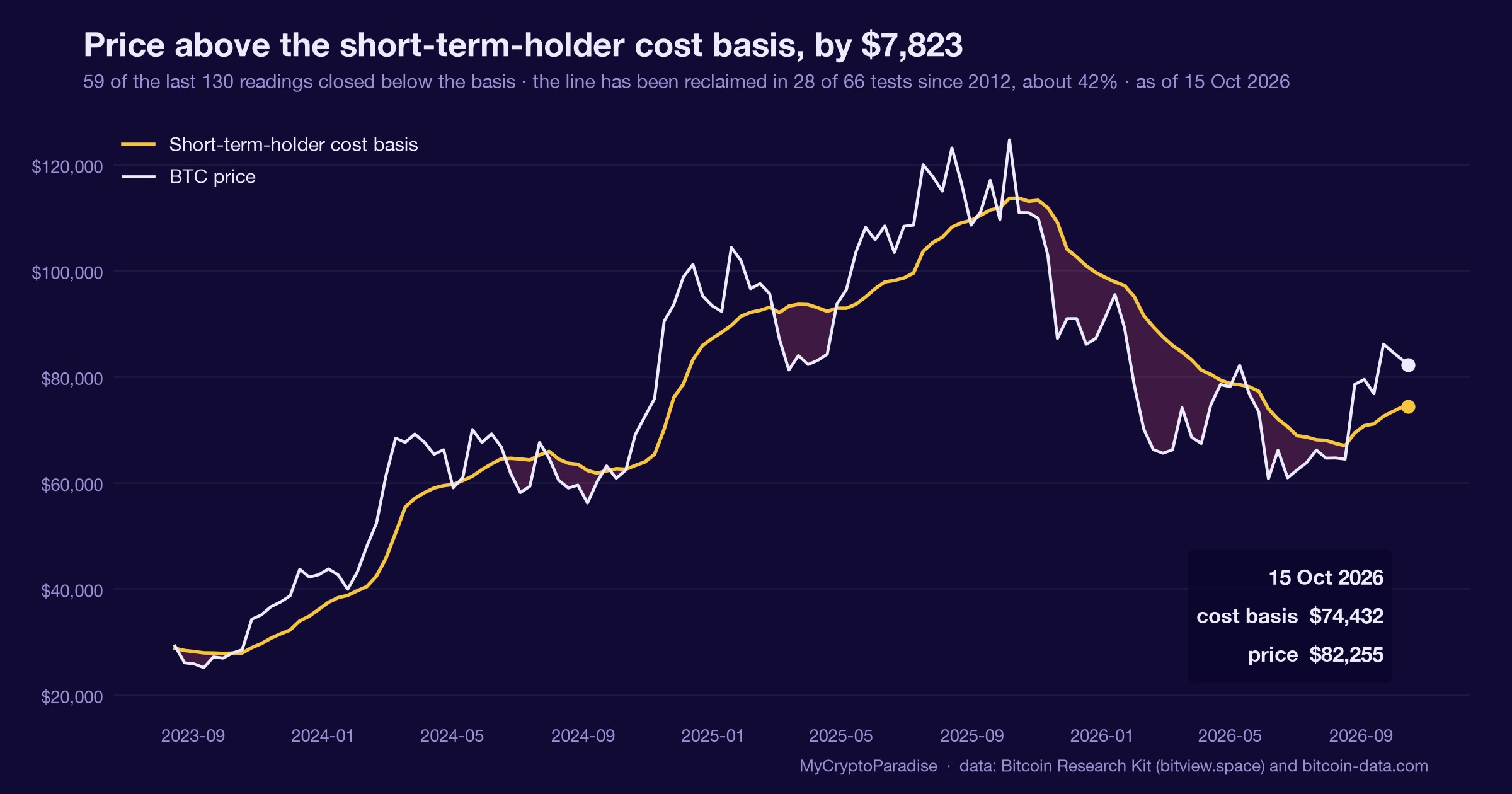
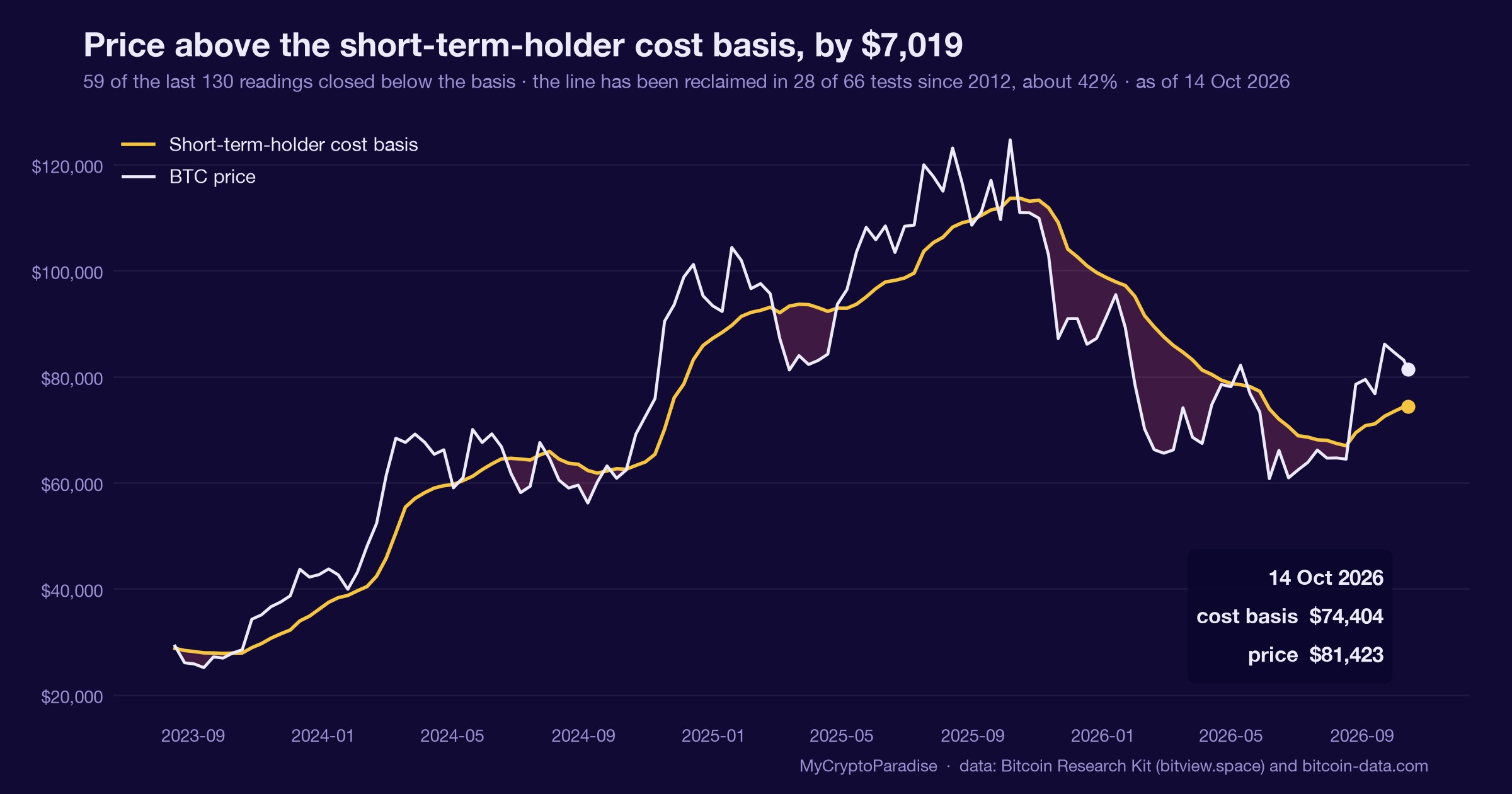
Applied to the current tape, the picture stays measured. Bitcoin was near $82,207 as this crossed, sitting just above the $78,000 support the ParadiseTeam tracks on the daily. A steady treasury bid is one reason that support has held through a soft stretch.
But caution earns its place here. Retail longs remain crowded, funding stays positive, and bearish volume divergences persist on the higher timeframe. A supportive accumulation story does not erase an overleveraged long book that remains vulnerable to a squeeze.
The ParadiseTeam's read: this report removes a false bear case rather than creating a fresh bull one. It tells you treasuries are not panic-selling into weakness, which supports the base. It does not, on its own, clear the path through resistance.
Structurally, the level map is unchanged. $90,000 is the overhead magnet and likely distribution zone; $99,000 sits above it. A loss of $78,000 would reopen the deeper macro discussion toward $44,000. This news reinforces the floor narrative; it does not give you the ceiling.
The read behind this: we framed this story through our own market analysis, Can Bitcoin Hold Its Final Support?
Track it live: our live crypto funding rates and the Crypto Fear and Greed Index both update in real time, so you can watch this shift for yourself.
Related coverage
For exact entries, targets, and stop losses with full risk management, that is what ParadiseFamilyVIP is for. New to reading these moves? Start with our crypto trading strategies guide.
ParadiseTeam is monitoring the market situation closely, and we are taking these developments into consideration while building our trading tactics inside ParadiseFamilyVIP.
Crypto trading involves substantial risk. Prices are volatile and you can lose money. This article is educational and is not financial advice. Past performance does not guarantee future results.
After this treasury update, does BTC reclaim $90K before it loses $78K?
Settles on BTC's first hourly close above $90,000 or below $78,000, at the latest Fri 23 Oct.
This is how 1 Paradiser is calling it. Tap your call.
No calls on this one yet. Tap yours to be the first.
Free account, no password. Members just sign in.
An education game, not trading advice.












Join the discussion
No comments yet. Members, share how you are reading this.