

In short
The spent output profit ratio (SOPR) measures whether the coins moving on-chain change hands for more or less than their owners paid, so a reading of 1.0 is the breakeven line where the average seller neither gains nor loses. On 14 October 2026, with Bitcoin at $81,423, our MCP Insights reading puts aggregate SOPR at 1.0007 and the seven-day short-term-holder version at 1.0009: coins are moving a hair above cost. We read that as modestly constructive, explicitly not a bottom call. Thinning seller pressure is what a reset looks like, but a reading this close to 1.0 is not a defended reset until price holds above the short-term-holder cost basis of $74,404. This is a model estimate, so we quote no calibrated win rate. This piece shows you how to read SOPR yourself, and the level that would end the lean.
Key facts
- Bitcoin price at the reading
- $81,423
- Short-term holder cost basis
- $74,404
- Price against that cost basis
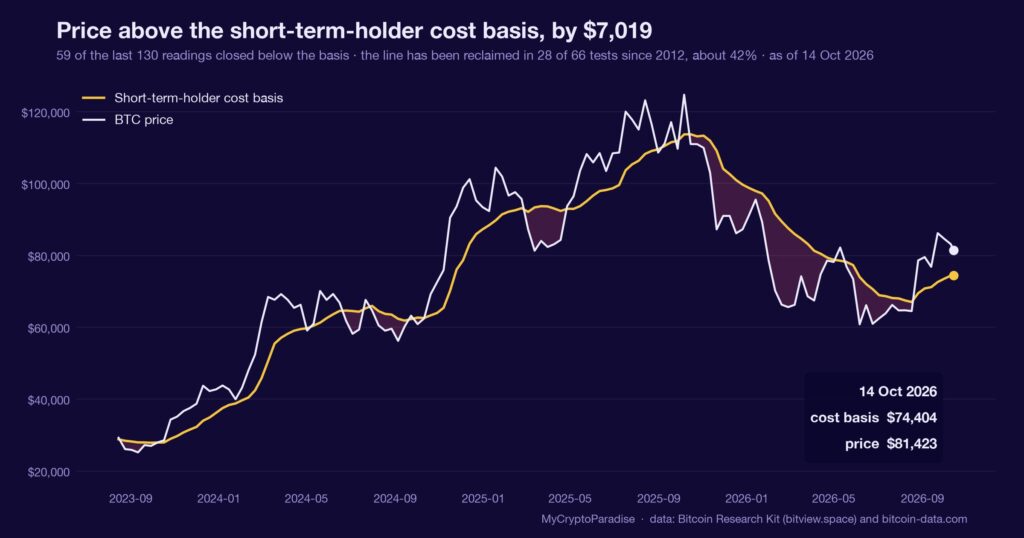
- $7,019 above
- Share of short-term holder supply underwater
- 33.1%
- State
- price above the short-term-holder cost basis
- What would prove this read wrong
- A daily SOPR close below 1.0 (short-term holders realising losses again), or a daily close beneath the short-term-holder cost basis of $74,404.
- Reading taken
- 14 October 2026
- Source
- Our MCP Insights tools, from Bitcoin Research Kit (bitview.space) and bitcoin-data.com. Upstream data published by the Bitcoin Research Kit
Breakeven is a behavioural line, not a price level
The spent output profit ratio tracks a single question for every coin that moves on-chain: was it worth more or less than when its owner last acquired it. Aggregate that answer across a day and you get one number that describes the mood of everyone who sold.
Above one, the average coin that changed hands locked in a gain. Below one, it realised a loss. The ratio is therefore a map of seller psychology rather than of price, and the two do not always move together.
When the ratio sinks below one and stays there, holders are capitulating, accepting losses to exit. When it runs far above one, the market is distributing into strength and booking large gains. Neither extreme is where this reading sits.
The interesting place is the breakeven line itself, where selling into a gain has faded and selling into a loss has not begun. A market that keeps resetting there without breaking below is one where sellers are quietly running out of reasons to sell.
The reset line is holding, for now
Per our MCP Insights SOPR reading for 14 October 2026, aggregate SOPR sits at 1.0007 and the seven-day short-term-holder measure at 1.0009, both a sliver above the breakeven line. These are model estimates, not calibrated frequencies, so we read the shape and quote no win rate.
Bitcoin trades at $81,423. The short-term-holder cost basis, the average price recent buyers paid, is $74,404, leaving spot a $7,019 cushion above it: 7.01 average daily ranges on a $1,001 range.
Realized price, the cost basis of every coin in existence, is $53,842, so spot sits 51 percent above the aggregate. Long-term-holder SOPR reads 1.0681, about a 6.8 percent realised gain, and our profile shows 31.9 percent of supply underwater.
A reset to breakeven inside a standing profit is a different event from a reset that arrives underwater. This one arrives with recent buyers barely in the green and old hands comfortable: thinning pressure, not capitulation.
What is different here
The ParadiseTeam does not read SOPR as a bottom-caller. We treat the breakeven line as a condition to be confirmed by price, not a reading to be acted on alone, and we publish the invalidation level in the same breath as the lean. The method is the restraint.
Breakeven is not a bottom, and five resets is not a sample
The tempting misread is that SOPR at 1.0 marks the low. It does not. A reset to breakeven appears near local lows, but it also appears mid-decline, moments before sellers resume realising losses and the ratio cuts clean through one.
Our own recon of the last five short-term resets shows three defended and two failed, across January, March, July and August. Three from five is not a base rate. It is an anecdote with a spreadsheet, and the honest version of this read says so out loud.
A number without an error bar is decoration. What the reading genuinely supports is narrower and more useful: seller pressure is thinning, and thinning pressure is a necessary condition for a floor, never a sufficient one. The confirmation is price, and price has not yet confirmed.
One reading among several, and the one that turned
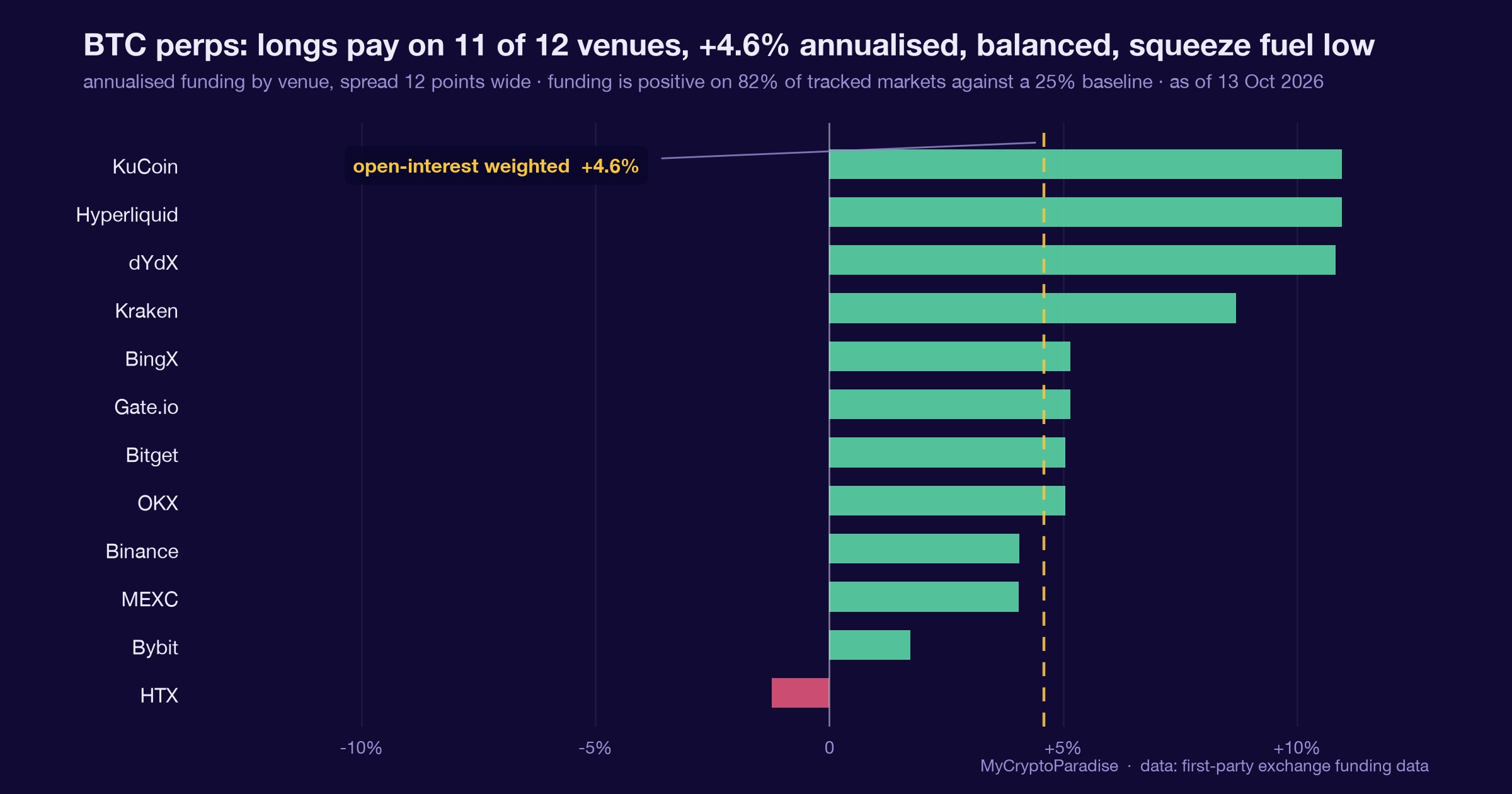
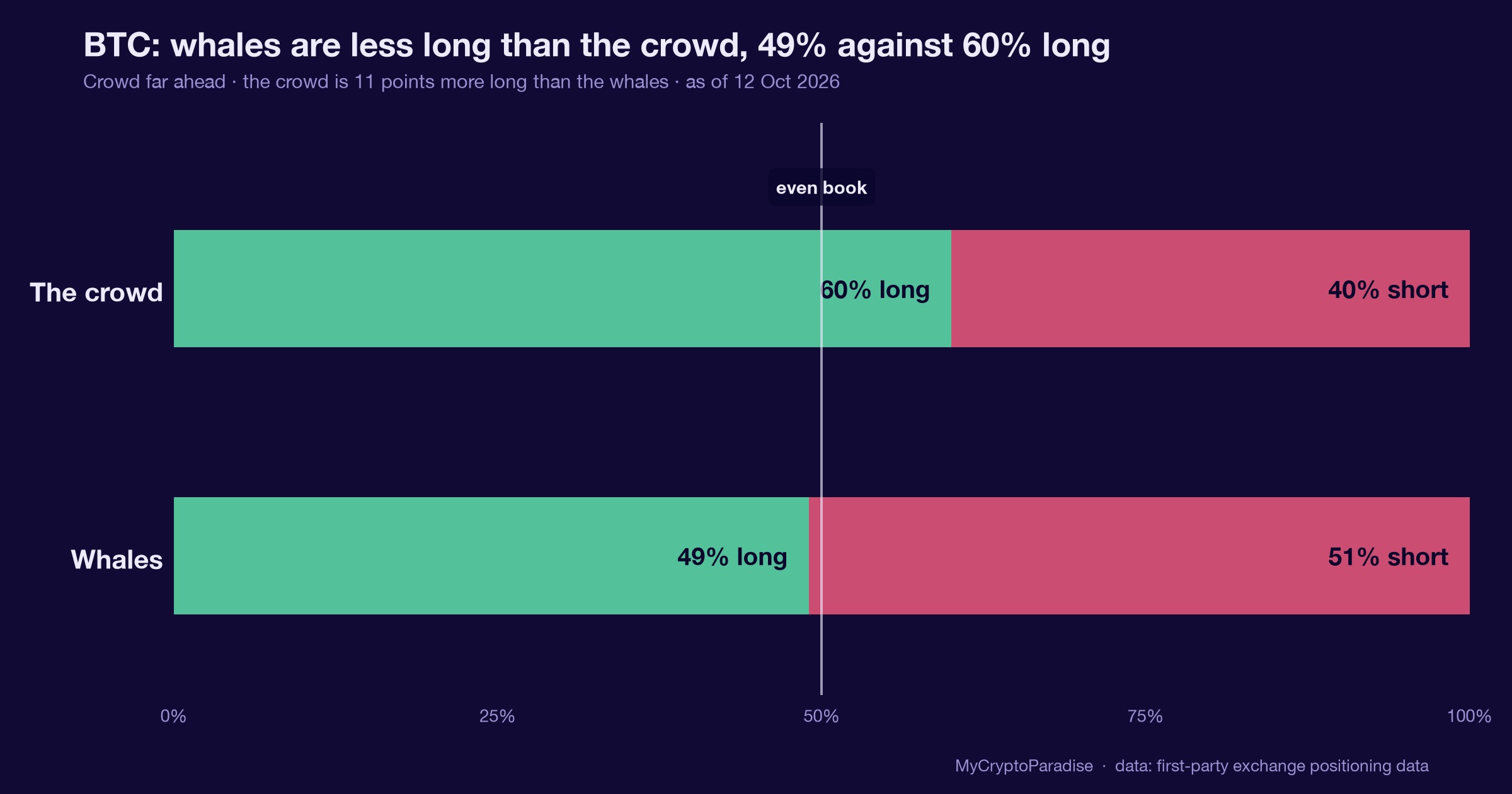
This is one input. It sits alongside funding, open interest and the broader cost-basis structure, and today it is the gauge that moved: short-term SOPR has climbed back to breakeven from the loss-taking that defined early autumn.
A fuel map or a funding grade weighs a directional bias. This reading does something narrower: it tells you whether the people selling are still paying to leave, and right now they have very nearly stopped.
Stacked together, the picture is a market that has quit capitulating without yet proving it can advance. The probability shifted; it did not resolve. A ratio resting on breakeven is a lean worth exactly one line of risk, and that line sits below.
Reading SOPR yourself, step by step
- Pull the aggregate SOPR and the seven-day short-term-holder line; a reading near 1.0 is the breakeven zone worth watching.
- Check whether the ratio approaches 1.0 from above, with profit fading, or climbs back from below, with losses easing; direction matters more than level.
- Anchor the reading to a price: find the short-term-holder cost basis and measure spot’s cushion above or below it in dollars and daily ranges.
- Separate the cohorts, because a long-term ratio well above one while the short-term line sits at breakeven is mid-cycle distribution, not euphoria.
- Write the invalidation before acting: a daily SOPR close below 1.0, or a close under the short-term cost basis, ends the lean.
The step most people skip is the fourth: a ratio above one means little until you know which cohort is selling, because old hands and recent buyers tell opposite stories.
Every number above is checkable against the live data. Start with the MCP Insights hub, then cross-read the Crypto Fear and Greed Index and the live crypto funding rates.
Act and invalidate
| Scenario | What confirms it | What kills it |
|---|---|---|
| SOPR resets and holds | Daily close back above $74,404 cost basis | SOPR daily close under 1.0 |
| Breakeven fails | SOPR closes below 1.0 and holds | Reclaim of 1.0 within two days |
| Chop around breakeven | SOPR oscillates 0.99 to 1.01 | A trending close either side |
Posture: Constructive but unconfirmed, so defensive sizing until price reclaims and holds the short-term cost basis. The highest-probability stance for most is patience, not a position.
Frequently asked questions
What does a SOPR of 1.0 actually mean?
It is the breakeven line. At exactly 1.0 the average coin that moved that day was sold for precisely what its owner paid, so the market as a whole realised neither a gain nor a loss. Readings above one mean net profit-taking; below one, net loss-taking.
Is short-term-holder SOPR constructive right now?
It is modestly constructive, not a green light. A reading of 1.0009 means recent sellers are barely in profit and selling pressure is thinning, which is a precondition for a floor rather than proof of one. Price has to confirm it before the reading means much.
Why do long-term and short-term SOPR differ?
They track different owners. Long-term holders at 1.0681 realise roughly a 6.8 percent gain on old, cheap coins, while short-term holders near 1.0 bought recently at higher prices, so the same market leaves them barely above cost. The gap is normal mid-cycle behaviour.
Can SOPR by itself predict a bottom?
No single reading can. A reset to breakeven is often present near local lows, but our recon of five recent short-term resets split three that held against two that failed, which is far too small a sample to carry any prediction on its own.
What would invalidate the constructive lean?
A daily SOPR close below 1.0, meaning sellers are again realising losses, or a daily close beneath the short-term-holder cost basis of $74,404. Either one flips the breakeven line from a floor the market defends into a ceiling it then has to reclaim.
Crypto trading involves substantial risk and is not suitable for everyone. Nothing here is financial advice; it is education only. Never risk more than you can afford to lose.
The private Extras feed, where the SOPR reset line, the short-term-holder cost basis and the realized-price cushion update daily with invalidation levels, is part of PRO Paradiser, the intelligence layer behind the ParadiseFamilyVIP strategies.











Join the discussion
No comments yet. Members, share how you are reading this.