

Listen: the breakdown
Market briefing: Bitcoin surged past $80,000, even reaching $81,600, primarily driven by a short squeeze. However, institutional conviction is notably absent, with asset managers reducing longs and ETF demand barely positive. BTC was trading near $80,329 as of this report.
- Bitcoin rallied over 5%, pushing past $81,600 briefly, fueled by a $243 million short squeeze.
- Leveraged funds reduced their net short positions by 7,275 BTC-equivalent, but institutional demand softened.
- Aggregate asset-manager longs fell, and weekly ETF demand was only marginally positive, signaling cautious smart money.
The recent Bitcoin surge above $80,000 seems impressive on the surface, briefly pushing past $81,600. But is this rally a sign of genuine strength or a tactical market maneuver fueled by something else?
Bitcoin delivered a significant rally, pushing past $80,000 and reaching as high as $81,278.78 on September 19, 2026. This upward movement saw BTC rally by nearly 4.9%, breaking past the $81,000 and even $81,600 levels briefly. This surge was predominantly driven by a substantial short squeeze across crypto exchanges. Over $243 million in Bitcoin short positions were liquidated, fueling the rapid ascent. This mechanism forced bearish traders to buy back their positions, creating upward price pressure.
Further contributing to the rally, leveraged funds reduced their net short positions by a significant 7,275 BTC-equivalent. This reduction in aggregate short exposure helped clear selling pressure, allowing price to move higher with less resistance.
Simultaneously, a large amount of previously trapped positions near the cost line were absorbed. This indicates that supply from these underwater holders found buyers, preventing a broader sell-off during the initial stages of the rally. However, the nature of these buyers remains a critical consideration.
Reading Bitcoin's strength without conviction
The recent Bitcoin rally above $80,000 occurred despite persistent macroeconomic headwinds. Ongoing interest rate discussions continue to create uncertainty in traditional markets, which typically affects risk assets like crypto. Furthermore, regulatory uncertainty, with stalled crypto bills, adds another layer of caution for large-scale investors. This rally's defiance of such macro pressures highlights a disconnect between fundamental economic conditions and short-term price action. The move appears more technical, driven by market structure and positioning, rather than a broad-based improvement in external conditions.
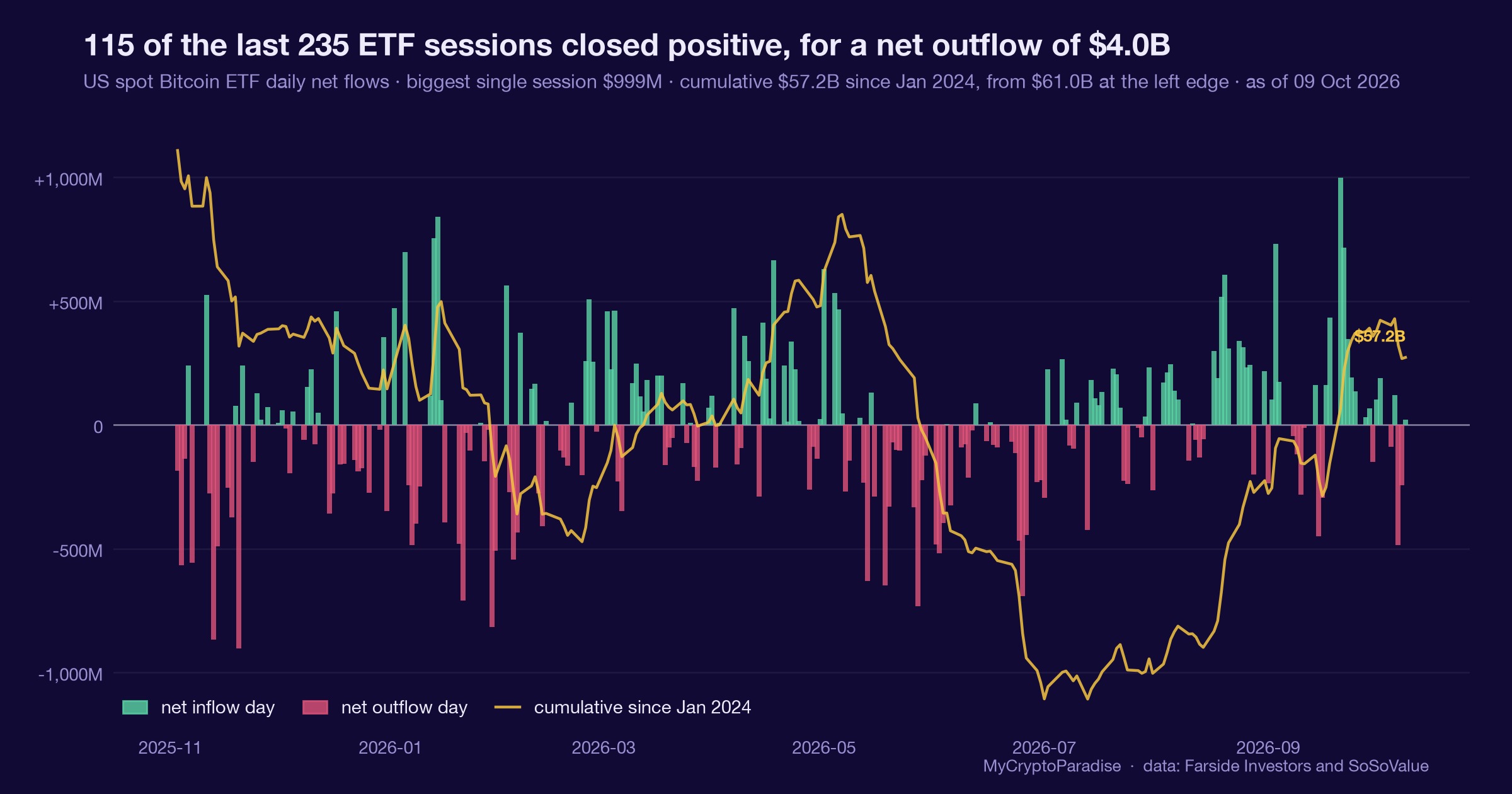
The absence of robust institutional conviction behind this rally is a key concern. Aggregate asset-manager longs actually fell during this period of price appreciation. Weekly ETF demand barely stayed positive, signaling that significant institutional inflows are not materializing to support the move.
This dynamic suggests that smart money, or sophisticated institutional players, are largely remaining on the sidelines. They are not actively accumulating at these levels, preferring to hold stablecoins like USDT while awaiting clearer market signals or a deeper price correction. The rally, therefore, lacks a foundational layer of sustained buying pressure from long-term capital.
Liquidity shifts after the $80K advance
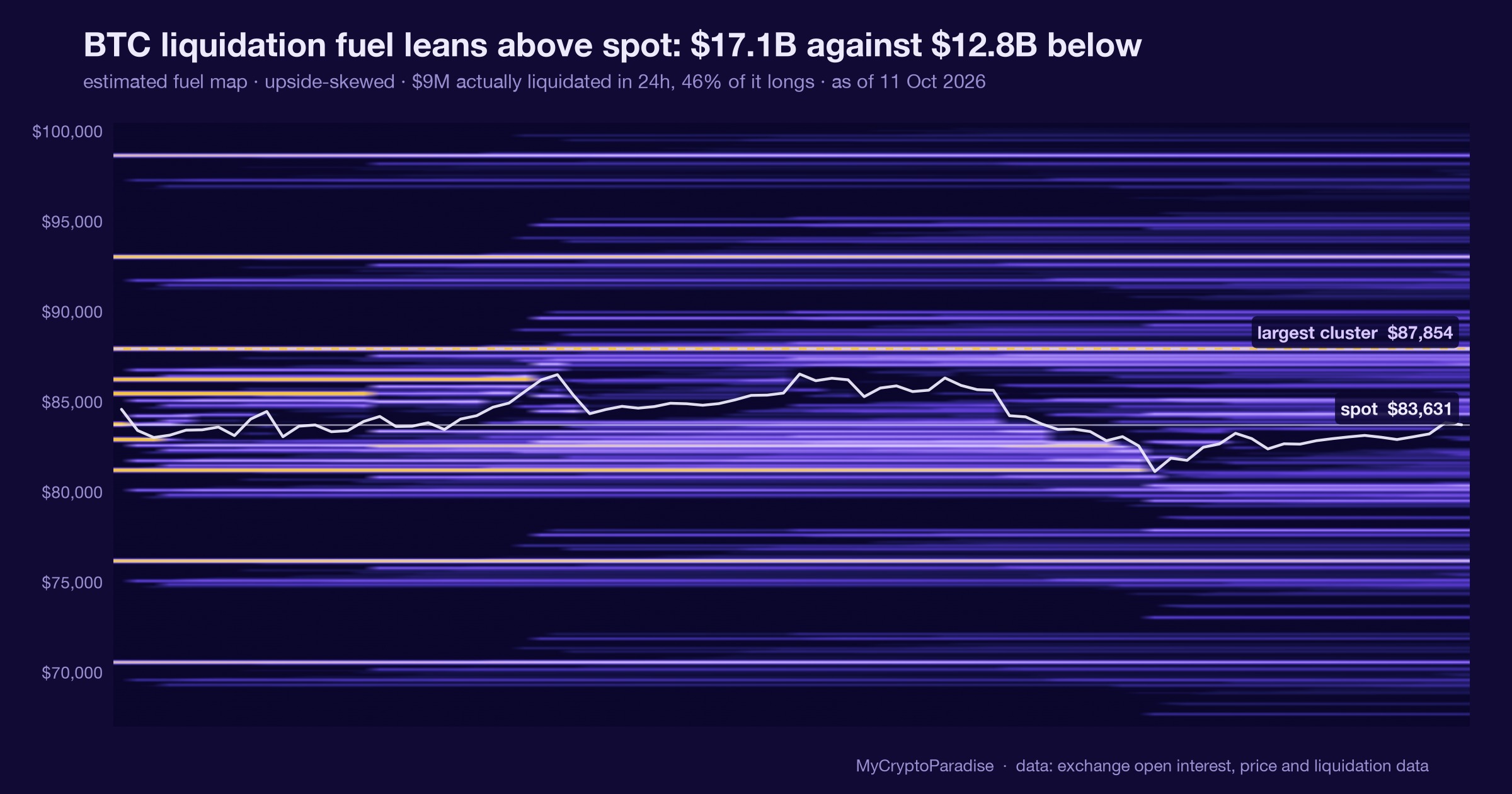
The primary liquidity impact of this rally was the clearing of short positions. The $243 million in Bitcoin liquidations flushed out leveraged bearish bets, removing immediate selling pressure and allowing price to climb rapidly. This creates a vacuum where upward momentum can be exaggerated.
For Bitcoin, this means short-term liquidity was absorbed by forced buying, but new significant demand from spot buyers did not follow. The market effectively became lighter on the sell-side due to the squeeze, but not heavier on the buy-side due to new institutional capital.
Ethereum (ETH) and altcoins often follow Bitcoin's lead on short-term liquidity shifts. While Bitcoin pushed to multi-month highs, ETH likely saw similar short-term momentum. However, without underlying institutional conviction, this move for altcoins is typically more speculative and prone to rapid reversals.
The overall market structure remains fragile without strong institutional backing. Liquidity at higher levels, particularly above the current resistance zones, is likely thin. This makes any further upward moves susceptible to sharp pullbacks if retail momentum fades or if smart money initiates distribution.
Key levels after the short squeeze peak
For confirmation of the current rally's sustainability, traders should watch Bitcoin's reaction to the daily resistance zone between $82,000 and $84,000. This range represents a critical overhead supply area where previous selling pressure emerged.
A clear and sustained reclaim of this $82,000-$84,000 zone, accompanied by increasing spot volume, would be required to suggest a genuine shift in market sentiment. Without this follow-through, the rally risks being a liquidity grab before a potential reversal.
Conversely, a rejection from this resistance zone would confirm the current rally as a short-term anomaly driven by liquidations and retail interest. Such a rejection would invalidate the bullish momentum and likely lead to a retest of lower support levels.
We are also watching for the Relative Strength Index (RSI) to retest its moving average trend line as support, followed by an uptick. This technical confirmation would signal underlying strength. A failure to hold this support, or a continued bearish divergence, would reinforce the lack of conviction.
Finally, the broader market needs to see a true capitulation phase, potentially indicated by the Net Unrealized Profit and Loss (NUPL) falling below zero. This would signal retail fear and smart money accumulation, setting the stage for a more sustainable macro bottom.
Understanding the $80K move through smart money
The ParadiseTeam maintains an overall bearish macro bias, awaiting genuine capitulation for a sustainable bottom. This recent rally past $80,000, while strong in price action, aligns with our view that smart money (spot money) is largely on the sidelines, holding USDT and awaiting deeper market flushes.
Retail Fear & Greed Index is at 80, indicating extreme greed. This suggests retail traders are likely buying into this rally out of fear of missing out (FOMO). This behavior often fuels short-term strength but can lead to distribution by more informed players.
Bitcoin's price is now pushing into a critical daily resistance zone between $82,000 and $84,000. There is also a liquidation cluster target around $83,400 just above current price. This confluence of resistance and short liquidity makes it a key area for potential rejection.
The ParadiseTeam expects a lack of follow-through on this current bullish candle through the $82,000-$84,000 resistance. A clear rejection here would confirm our cautiously bearish daily bias. Our defended support remains at $75,000, but a true macro bottom is still anticipated closer to $44,000.
Traders should observe for confirmation of rejection at current resistance. A failure to reclaim and hold above $84,000, combined with signs of bearish divergence on the RSI, would signal that this rally is more of a liquidity trap for retail than a foundational move higher. Smart money waits for better entry points.
The read behind this: we framed this story through our own market analysis, Can Bitcoin Break Resistance This Time?
Track it live: our live crypto funding rates and the crypto liquidation heatmap both update in real time, so you can watch this shift for yourself.
Related coverage
For exact entries, targets, and stop losses with full risk management, that is what ParadiseFamilyVIP is for. New to reading these moves? Start with our crypto trading strategies guide.
ParadiseTeam is monitoring the market situation closely, and we are taking these developments into consideration while building our trading tactics inside ParadiseFamilyVIP.
Crypto trading involves substantial risk. Prices are volatile and you can lose money. This article is educational and is not financial advice. Past performance does not guarantee future results.
Will Bitcoin break past $84,000 resistance this month?
This is how 21 Paradisers are calling it. Tap your call.
No calls on this one yet. Tap yours to be the first.
Free account, no password. Members just sign in.




Join the discussion 13
hmm, a short squeez does feel like a bit of a rollercoaster, Noah! 🎢 I always wait a bit for things to settle after big moves like this... gives me time to think. 🤔
That waiting period is good, Hannah. I usually look for higher volume on the next candles before I consider doing anything… 🤔
Oh, I know what you mean, Hannah! I always worry about catching the very top, or buying when it's already too high. Is there a trick to knowing when things *have* settled? przepraszam!
Short squeezes are indeed fast. Sometimes I let a retest confirm before considering a zone, even if it feels a touch slow.
that short squeeze part feels off to me a bit. who needs institutions to decide its a good time to buy.
yeah tommys right. its always about your own level or your stop
man, this short squeez reminds me of betting on a long shot at the track... easy to get caught up eh? 🎢 Gotta keep that head on a swivel.
that short squeeze pump makes me nervous now... 😬 still remembering that one memecoin all the way back down lol. 📉 i try to wait for some conviction too ✨
That lack of institutional entries is why my debits are still on the sidelines. No clean risk-reward line if smart money isn't in play, abi? 😅
i see your point Chinedu, without institutional buy-in and clarity on regulatory frameworks its hard to build a long-term thesis.
yeah, the ETF approvals felt like a big deal but now it's just individual investors pushing it... wonder what that means for long-term stability.
yeah exactly Chinedu, when institutionals are not there it's just retail trading noise 🔊 and much harder to catch the real trend. 📉😅
but lack of institushional conviction when price is already so high 🤔 feels like a bit of a chicken-and-egg situation no? 🐣 I mean, they will jump in *after* its confirmed, right? 📈