


Listen: the breakdown
Developing story update (November 24, 2026, 14:28 UTC):
Lookonchain: The "hacker" has stolen $2.57M from Ansem's wallet so far.
Interestingly, the 2.57M USDC hasn't been swapped for ETH and laundered yet – it's still sitting in wallet 0xAC33.
https://x.com/lookonchain/status/2125166373362102312
Market briefing: A well-known crypto trader confirmed his wallet was hacked through a trading terminal that held his private key, with about $2 million in memecoins force-sold. BTC was near $60,307 as of 14:05 UTC, red on the day, though that weakness is broad risk-off, not this breach.
- A trader confirmed a wallet hack via a third-party trading terminal that stored his private key
- Around $2M in memecoins were force-sold, with the ANSEM token down 39% on the day
- No mechanical link to BTC or ETH; their weakness is broad risk-off, not this breach
A six-figure crypto trader just confirmed a wallet hack after storing his private key on a third-party trading terminal, and about $2M in memecoins vanished. Who is really safe here?
A well-known crypto trader has confirmed that his wallet was hacked. He suspects the attacker reached his private key through a third-party trading terminal. That terminal is exactly where he had stored the key. One exposure point was all it took.
The result was fast and clean, in the way these drains usually are. Around $2 million in memecoins was sold off once the attacker had access. The ANSEM token now sits down 39% on the day after the forced selling.
A six-figure trader just got a very expensive custody lesson.
The mechanics here are simple and familiar. A private key stored on any connected platform is one breach away from a total loss. When the key leaks, there is no reversal, no support line to call, and no clawback. The attacker liquidated the bag and moved on.
This is the part worth sitting with. It did not happen to a careless newcomer. It happened to someone who trades for a living and should know the risk of leaving a key on someone else's software.
Structurally, this is a self-contained security failure, not a market event. One drained wallet does not move Bitcoin or Ethereum. But it lands on a red day, so it reads far louder than it actually is.
Why a single key cost $2M
The transmission here is narrow, and honesty matters. This breach has no mechanical path into Bitcoin or Ethereum. It drained one wallet and dumped one set of memecoins. Nothing about it changes major-coin supply or demand.
What it does touch is confidence, and confidence is a liquidity input. Every drain like this nudges some capital toward the sidelines. Traders who were already nervous on a red day now carry one more reason to size down and wait.
The deeper issue is custody design. A trading terminal that holds your private key is a convenience that doubles as a liability. Speed of execution arrives bundled with speed of theft the moment that key is exposed.
Convenience and security rarely sit on the same side of the table.
So the macro effect is small but real. On a calm day this story barely registers. On a day when risk is already bleeding out, it feeds the sense that the ground is less stable than it looked, which keeps marginal buyers parked and patient. That is the only channel through which a single-wallet breach reaches the wider tape, and it is a soft one.
Where the real liquidity hit landed
Start with where the damage actually sits. The liquidity hit is concentrated in thin-float tokens, and ANSEM is the clearest example. A forced $2 million sale into a shallow book drives a 39% drop with ease. That is a book-depth problem, not a market-wide one.
Bitcoin and Ethereum tell a different story. BTC was down about 5% over 24 hours and ETH down close to 6%. Those moves come from the broad risk-off tape, not from one trader's terminal.
Correlation and causation are not the same thing, even on a bad day.
On the hour, the majors barely flinched at this news. BTC moved around -0.71% and ETH around -0.72% in that window. That is background noise, not a reaction to the hack.
The real cascade runs the other way. Broad weakness pulls liquidity out of the long tail first. Memecoins like ANSEM already trade on thin bids, so any forced seller, hacker or not, finds air beneath the price. The drain simply arrived into an order book that was already thinning.
So read the impact for what it is. One wallet, one shallow token, one sharp local drop, and no real echo in the majors.
Signs this stays one wallet
The first thing to watch is scope. One drained wallet is a personal loss. A pattern across many users of the same terminal would be something far larger. Confirmation of a platform-level flaw would turn an isolated event into a genuine risk story.
So far, the evidence points to a single-account failure. The attacker reached one stored key and liquidated one bag. Nothing yet suggests a wider exploit of the terminal itself.
Invalidation of the calm read would look specific. More traders reporting the same breach, the terminal provider confirming a systemic hole, or funds moving from multiple wallets tied to one platform.
Until that appears, treat this as custody, not contagion.
On the majors, watch whether BTC and ETH keep bleeding with the broad tape or stabilize. That path has nothing to do with this hack. It is the risk-off move that matters for the big coins, and this story is a sideshow to it.
The practical takeaway is older than any token. Keep your private key off any platform you do not control. This trader learned that at a $2 million price, and the lesson keeps repeating because it keeps being ignored.
What this breach means for custody risk
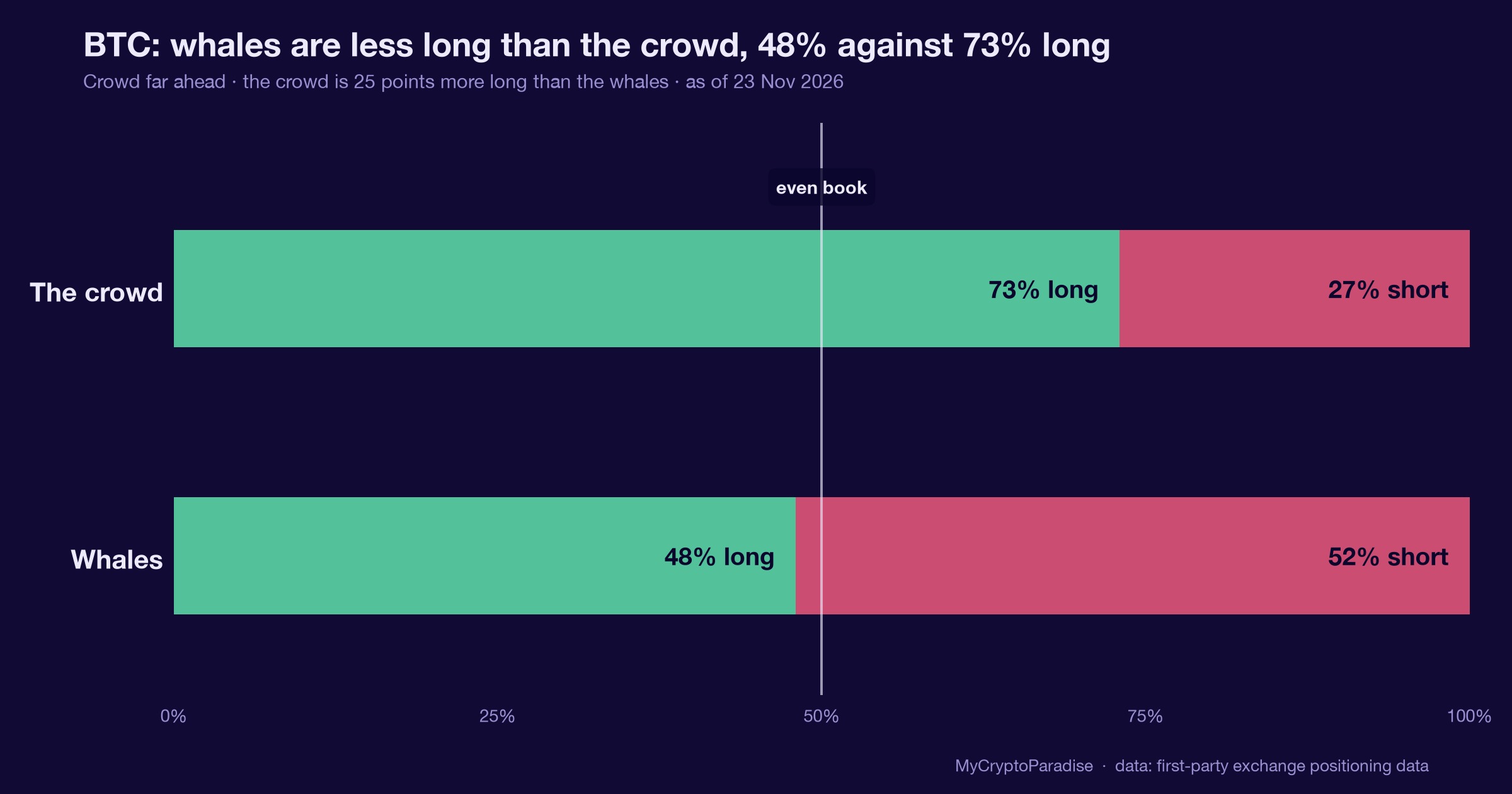
The ParadiseTeam reads this as a security event, not a market signal. There is no smart-money positioning to decode here. A key leaked, a bag got dumped, and a thin token fell. That is a drain, not distribution.
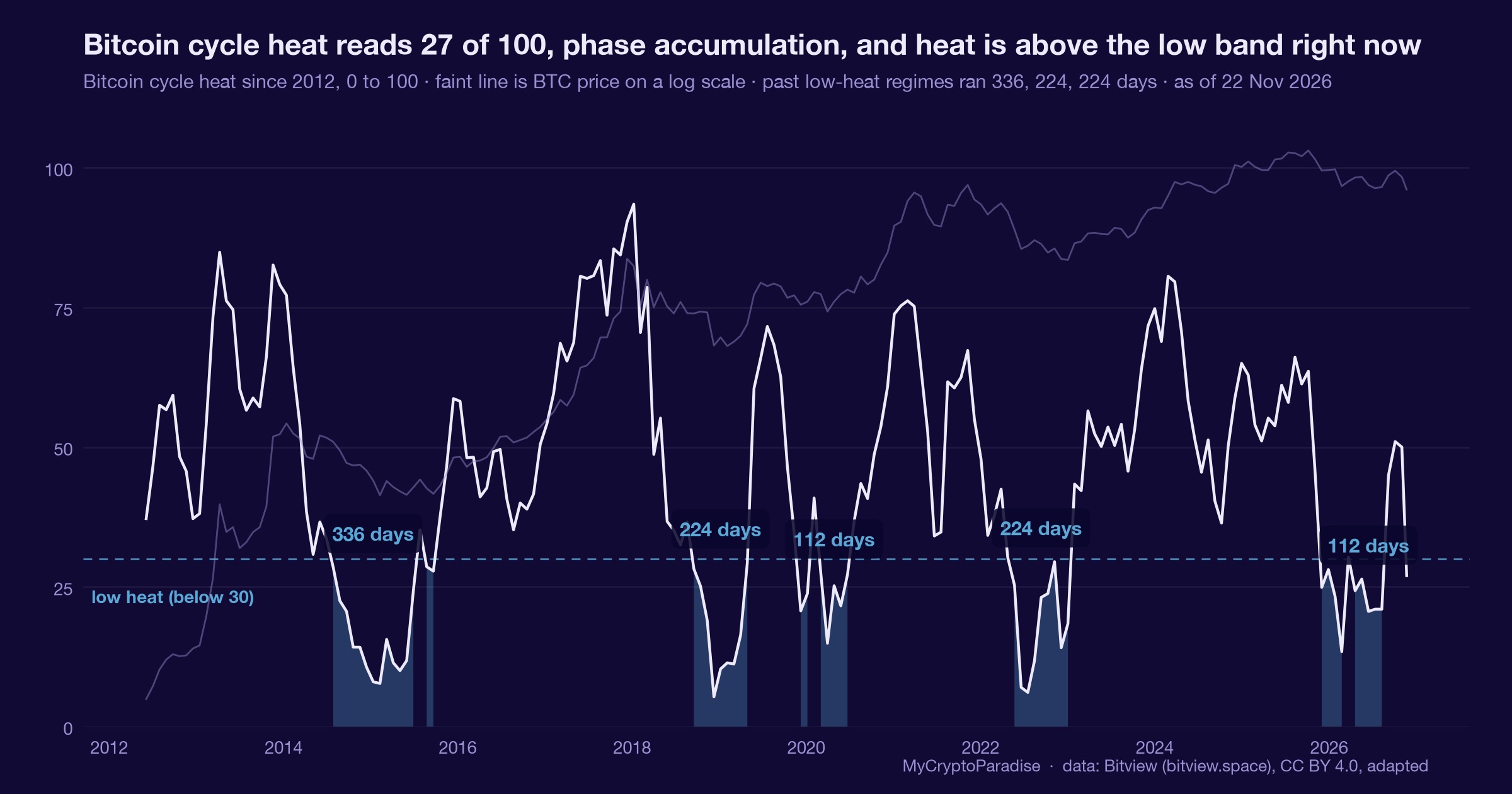
The majors matter more, and that is where our standing view applies. BTC was trading near $60,307 as of 14:05 UTC, just under the $61,000 re-accumulation level we track. That slip keeps our bias intact: we still expect one more leg lower before a real bottom is confirmed.
The ParadiseTeam sees $55,000 as the upper edge of the exchange-of-hands zone. Below it sits a 0.61 Fibonacci (Fib) confluence near $50,000. The lower boundary, the number we keep circling, is $44,000.
Here is the link to this story. The hack adds no mechanical pressure, but it feeds the fear we expect to precede capitulation. Smart money is still waiting on the sidelines for late buyers to break, not reacting to a single wallet.
A bounce back toward $55,000 would read as corrective, not a confirmed turn, until capitulation actually shows. So we keep this story in its box. A custody lesson for the trader, a small risk-off confirmation for the tape, and no change to the levels that decide the cycle.
The read behind this: we framed this story through our own market analysis, New Bitcoin Bull Market or $44K Next?
Track it live: our Crypto Fear and Greed Index and the live crypto funding rates both update in real time, so you can watch this shift for yourself.
Related coverage
For exact entries, targets, and stop losses with full risk management, that is what ParadiseFamilyVIP is for. New to reading these moves? Start with our crypto trading strategies guide.
ParadiseTeam is monitoring the market situation closely, and we are taking these developments into consideration while building our trading tactics inside ParadiseFamilyVIP.
Crypto trading involves substantial risk. Prices are volatile and you can lose money. This article is educational and is not financial advice. Past performance does not guarantee future results.
Will this breach push traders off third-party trading terminals?
How 1 Paradiser is calling it
The first call is still open
Free account, no password. Members just sign in.








Join the discussion
No comments yet. Members, share how you are reading this.