

Listen: the breakdown
Market briefing: Vitalik Buterin wants crypto security to reach the physical chips inside hardware wallets, not just keys and code. BTC was trading near $61,448 as of 04:25 UTC, drifting with the broader tape rather than this essay.
- Vitalik Buterin's November 26 essay argues security must reach the physical chips inside hardware wallets
- He wants chip makers to publish layout files so investigators can check real silicon against the design
- It is a forward-looking proposal, not a claim that any current hardware wallet is compromised
Vitalik Buterin says your hardware wallet security may not stop at keys and code. It could run all the way down to the silicon. So should traders care, or carry on?
On November 26, Vitalik Buterin published an essay with a blunt new slogan. Not your silicon, not your keys.
His argument extends a familiar idea. For years, self-custody meant controlling your private keys and trusting your software. Buterin wants that trust to go deeper, down to the physical chips inside hardware wallets and the devices around them. A clean key means little if the silicon underneath it lies to you.
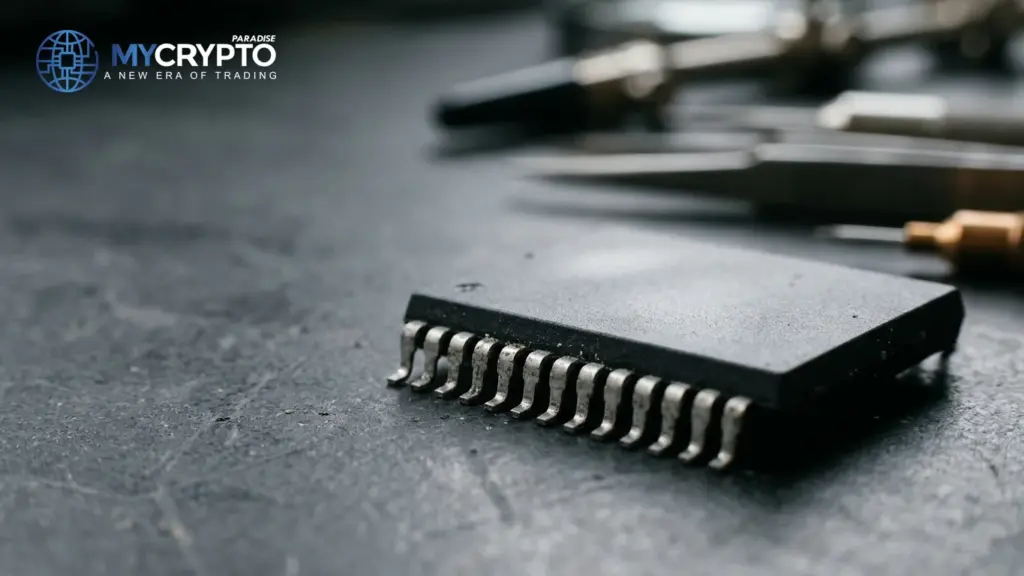
The essay asks chip manufacturers to publish physical layout files, known as GDS files. With those designs public, independent investigators could compare real hardware against what the maker claims to have built. The gap between the glossy datasheet and the actual chip, he suggests, should be something anyone can inspect.
He points to an infrared inspection method, IRIS, that can examine chips without physically opening them. It is clever, but honest about its limits: resolution constraints mean it is no universal fix. One tool, not a cure.
Here is the part that matters most for calm heads. This is a proposal, not an accusation. Buterin is not saying today's hardware wallets are compromised. He is saying the industry should build the means to check before anyone has to.
That distinction frames everything. No breach has been disclosed. No device has been named. What changed on November 26 is the conversation, not the threat level. For traders, the useful question is which wallet makers treat this as a standard to meet, and which treat it as someone else's problem.
The case for publishing chip layouts
Supply-chain trust is the quiet foundation under self-custody, and this essay pokes at it directly. Every hardware wallet rests on chips a user cannot see inside. If the silicon can be tampered with before it reaches your hands, keys and passphrases protect less than people assume. That is the risk Buterin is naming.
Publishing GDS layout files would shift the balance. Right now, verification depends on trusting the manufacturer's word. With public designs, researchers and auditors could independently check that production chips match the blueprint. Trust moves from a promise to something testable, which is a healthier place for it to sit.
The transmission here is slow, and worth saying plainly. This is a security-standards debate, not a liquidity event. It plays out over weeks through audits, vendor responses and whether chip makers actually open their designs. None of that lands in an order book the same day.
So the macro effect is cultural before it is financial. It raises the bar on what serious self-custody should mean next cycle. Wallet makers who embrace chip-level transparency may earn a durability edge with cautious capital. Those who stay opaque invite harder questions.
For now, treat it as a signal about where the industry's security conversation is heading, not a shock that reprices anything. The real risk it describes is genuine. The timeline for it mattering to flows is long.
No order book trace from this essay
The clean read is the honest one: this essay left no fingerprint on prices. There was no measurable liquidity or flow response to it in the evidence, and we would not expect one from a proposal that discloses no breach.
Look at the tape and the independence is obvious. BTC was trading near $61,448, up about 0.8% on the day as of 04:25 UTC. ETH sat near $1,730, up roughly 1.7%. Those are ordinary moves driven by broader market conditions, not a verdict on chip security.
It would be tempting to pin Ethereum's modest gain on its co-founder making headlines. We would caution against it. There is no attributable link in the evidence between this essay and ETH's drift higher. Correlation here is coincidence, and treating it otherwise invites bad conclusions.
The usual cascade from driver to BTC to ETH to alts simply does not fire, because there is no capital being pushed or pulled. No inflows, no outflows, no stops hunted, no squeeze primed. Nothing for smart money to front-run and nothing for retail to panic into.
Where a longer-dated effect could eventually show is in hardware wallet brand preference, not in today's candles. If chip transparency becomes a buying criterion, order flow toward certain makers may shift over quarters. That is a slow reallocation of trust, not a same-day market move, and it belongs in the background of your thinking rather than the front of your chart.
Which chip makers actually open their designs
The signal to track is vendor behaviour, not price. Watch whether hardware wallet makers and chip suppliers respond publicly, and whether any commit to publishing GDS layout files. Concrete moves toward open designs would turn this essay from thought-leadership into an emerging standard.
Audit activity is the second marker. If independent researchers begin running inspection techniques like IRIS against shipping devices, and publish what they find, the conversation gains teeth. Remember the method's own caveat, though. Its resolution limits mean a clean result is reassurance, not proof, and that nuance will matter if marketing teams start overclaiming.
There is also a clear invalidation for the calm read. If an actual tampered chip or a real supply-chain exploit were disclosed, this stops being a standards debate and becomes a live incident. That would be the moment flows could genuinely react, as holders reassess which devices they trust. Nothing in the current evidence points there.
Until then, the thing that would confirm this story's weight is adoption, not alarm: makers opening designs, auditors testing them, buyers asking for it. Quiet, procedural, and more durable than any price spike. So the near-term checklist is short. No named breach, no device recall, no disclosed compromise. If those stay absent, this remains a forward-looking proposal shaping how security is judged next cycle, and it should not change how you read this week's candles.
Reading a slow-burn risk against a heavy tape
The ParadiseTeam treats this as a non-event for levels, and says so without hedging. A security proposal with no disclosed breach does not move BTC or ETH, and the price action around it is unrelated background noise.
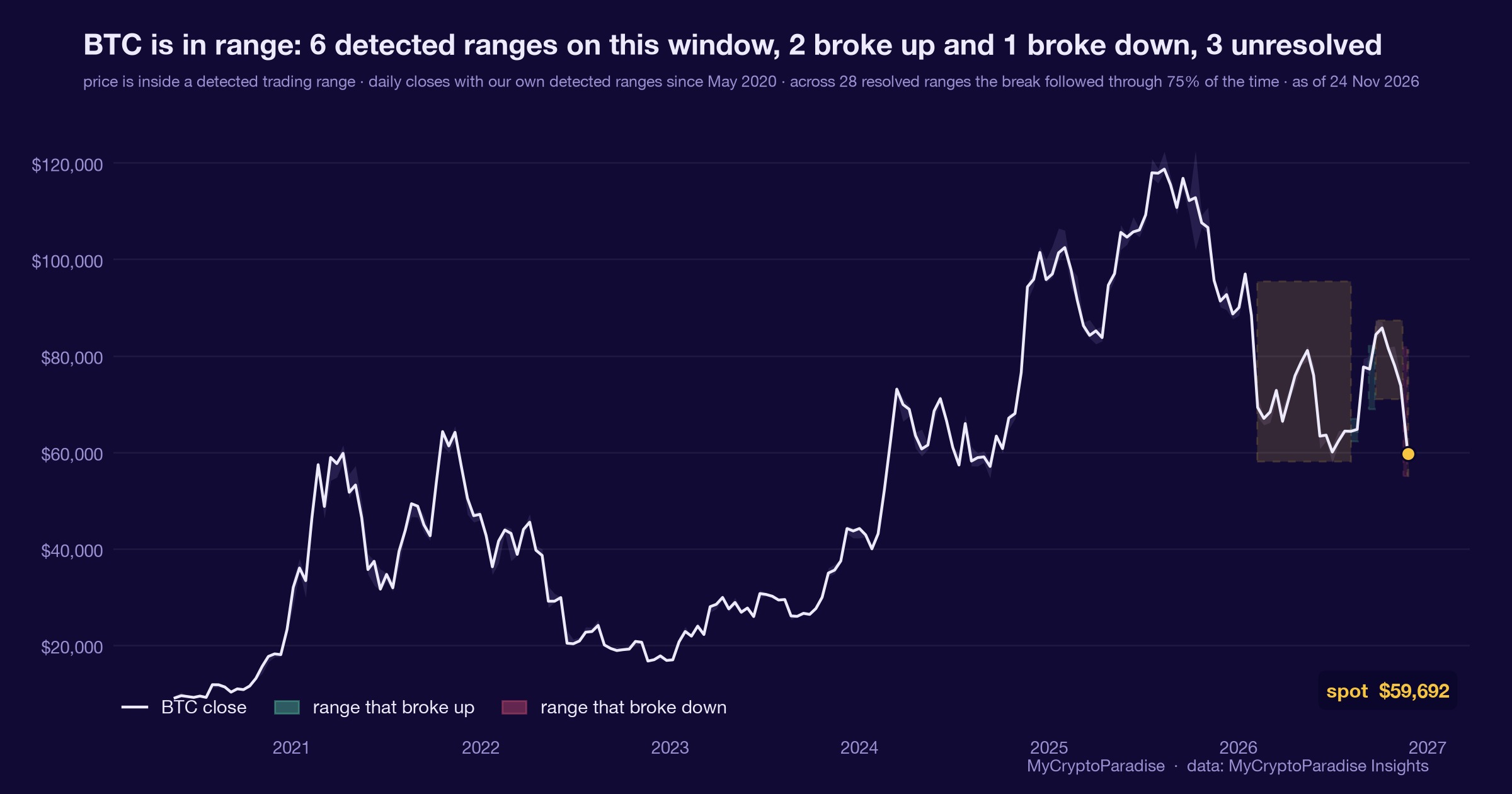
That matters for a specific reason. BTC near $61,448 sits below a level we care about more than any essay: the $64,000 zone, which flipped from support into resistance on a shooting star rejection. Our standing bias stays bearish, and a bearish engulfing daily close would raise the odds of a push toward our main weekly target around $44,000, with $34,000 possible on confluence.
None of that is driven by Vitalik's silicon argument. We separate the two deliberately. This essay is a slow-burn risk conversation; the tape is its own story, and we read the recent bounce as leverage rather than smart-money accumulation.
So do not let a founder headline soften a skeptical stance. We still see retail trapped and holding losses, with forced capitulation not yet printed. Smart money finished distributing near the top and waits to absorb the flush, not to reward a well-argued security memo.
The practical takeaway is discipline. Anchor to the $64,000 reclaim as the bullish invalidation of our bear case, and the bearish engulfing close as confirmation lower. This story changes neither line. Trade the structure, note the essay, and keep the two in separate boxes.
The read behind this: we framed this story through our own market analysis, Bitcoin Bounce Was Leverage, Not Smart Money.
Track it live: our live crypto funding rates and the Crypto Fear and Greed Index both update in real time, so you can watch this shift for yourself.
Related coverage
For exact entries, targets, and stop losses with full risk management, that is what ParadiseFamilyVIP is for. New to reading these moves? Start with our crypto trading strategies guide.
ParadiseTeam is monitoring the market situation closely, and we are taking these developments into consideration while building our trading tactics inside ParadiseFamilyVIP.
Crypto trading involves substantial risk. Prices are volatile and you can lose money. This article is educational and is not financial advice. Past performance does not guarantee future results.
Will chip transparency become a real buying factor for wallets next cycle?
How 1 Paradiser is calling it
The first call is still open
Free account, no password. Members just sign in.









Join the discussion
No comments yet. Members, share how you are reading this.