


Listen: the breakdown
Market briefing: UK energy bills are confirmed to rise 26% next year, adding close to £600 to the average home. BTC sat near $58,864 as of 09:36 UTC, down on the day but effectively unmoved by the news.
- UK energy bills will rise 26% from the start of next year
- The hike adds close to £600 a year to the average dual-fuel bill
- A cost-of-living shock, not a crypto catalyst, with no real price reaction
UK energy bills will jump 26% from the start of next year, piling almost £600 onto the average home. But does a cost-of-living shock like this really move crypto?
British households just got the number nobody wanted. Energy bills will rise 26% from the start of next year. It is now confirmed.
The increase lands hard on the average dual-fuel home. That family will pay close to £600 a year more than before the Middle East crisis began. This is not a forecast. It is a settled cost that arrives with the new year.
The root cause sits far from any trading screen. Energy prices climbed on the back of Middle East tension. Those higher wholesale costs now flow straight through to the household meter. A geopolitical risk premium has quietly become a line on a utility bill.
For crypto traders, the honest read is simple. This is a cost-of-living shock, not a crypto catalyst. It drains discretionary cash from millions of wallets. None of that cash was heading into BTC or ETH anyway.
Still, the headline matters as background. Squeezed households spend less and risk less. Retail risk appetite tends to thin when the heating bill climbs. That is a slow headwind, not a sudden liquidity event.
BTC sat near $58,864 as of 09:36 UTC, down 1.8% on the day. ETH traded around $1,638.5, down 2.8%. Both showed only a faint hourly bounce. That looks like noise, not a reaction to British gas bills.
So we treat this story with care. The facts are real and confirmed. The link to crypto price is ours, and it is interpretive. Nobody is accumulating or distributing BTC because of a utility announcement.
How a utility hike drains risk appetite
The transmission runs through household budgets, not order books. A 26% energy rise is a direct tax on discretionary income. When fixed costs climb, spare cash shrinks. Spare cash is the raw material of speculative flows.
That extra £600 a year has to come from somewhere. For most homes it comes out of savings and discretionary spending. Crypto is discretionary spending for retail buyers. So the marginal new buyer grows a little poorer and a little more cautious.
This is where the macro chain matters. Higher energy costs feed broader inflation pressure. Sticky inflation complicates the path for rate cuts. Tighter-for-longer policy keeps liquidity thin across risk assets. Thin liquidity is never kind to BTC or ETH.
But let us keep proportion. One national utility hike does not set the global crypto bid. The effect is cumulative, not immediate. It joins a wider energy and geopolitical risk premium that has been bleeding into markets for months.
The trap here is overreading the headline. A dramatic number invites a dramatic market story. The truth is duller and more useful. This squeeze shows up as weaker retail demand over quarters, not in today's candle.
So the real signal is about the buyer, not the price. A poorer, warier retail cohort is a structural drag. It makes any bounce harder to sustain. It is the kind of pressure that smart money watches patiently while retail stares at the ticker.
What squeezed wallets mean for crypto flows
The price impact today is close to nothing, and that is the point. BTC is red on the day but barely twitched on the news. ETH mirrors it. No liquidity cascade started here.
Follow the chain and you see why. The driver is a British utility bill. The first-order effect is thinner household cash. That reaches crypto last, slowly, and through sentiment rather than forced flow.
BTC usually leads any real macro move. A genuine liquidity shock would hit Bitcoin first, then drag ETH, then flush the alts. We see none of that sequence. The hourly bounce of just over 1% on BTC is ordinary noise.
ETH tells the same story. A 0.78% hourly tick against a 2.8% daily loss is not a reaction. It is a market doing its own thing while a headline passes by.
Alts are where a retail squeeze shows up eventually. Smaller tokens live on discretionary, speculative money. When households tighten, that marginal alt bid fades first. But that is a quarters-long drift, not a one-day event.
So the clean takeaway is restraint. This headline does not move crypto, and pretending otherwise would be dishonest. The energy surge is a real burden on real people. It is simply not a crypto catalyst.
Watch the retail wallet, not the ticker. The damage here is to spending power. It erodes the future bid quietly rather than printing a visible candle today.
Signs the retail squeeze reaches crypto
The thing to track is not this headline but what follows it. Watch the next UK inflation prints. If energy costs push broader inflation higher, the rate-cut path narrows. That would tighten liquidity and confirm the slow drag on risk assets.
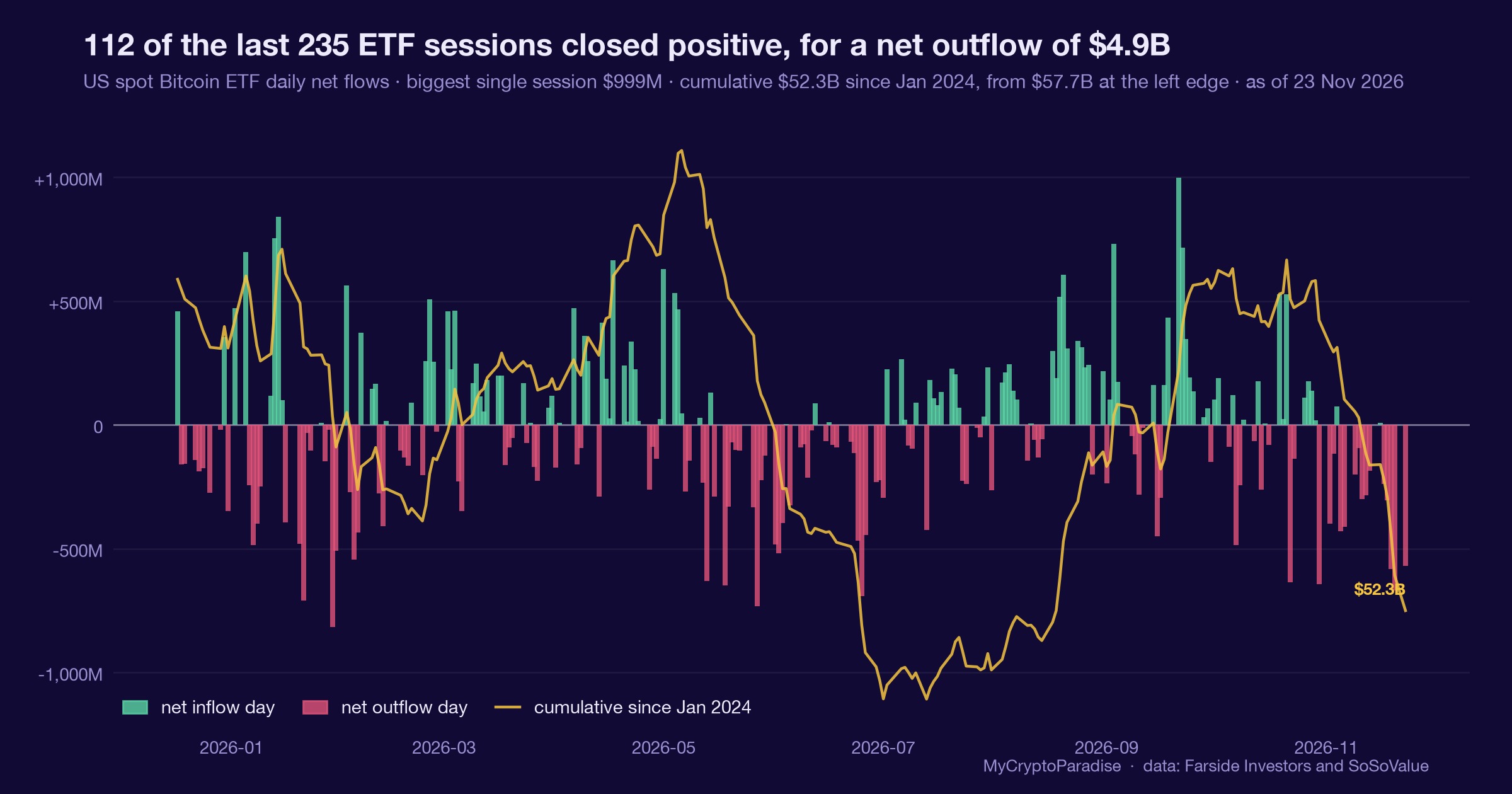
Confirmation of real pressure would look structural, not sudden. Weaker retail participation. Falling spot volume on smaller tokens. A crypto market that struggles to hold bounces because the marginal buyer stays home.
Invalidation is just as important to name. If inflation data stays soft despite the energy hike, the macro worry fades fast. Central banks keep easing. Liquidity stays supportive. Then this bill becomes a household problem, not a market one.
For crypto specifically, watch whether retail flows actually thin. On-chain accumulation by smaller wallets is the honest gauge. If small-wallet buying keeps fading, the squeeze is real. If it holds, this headline was always just noise.
Energy and geopolitics stay on the board too. The Middle East premium that drove this hike has not gone away. Fresh escalation would lift energy costs further and deepen the risk-off tone. De-escalation would ease the whole chain.
So the confirmation is slow and the invalidation is fast. A single soft inflation reading can erase the worry overnight. A string of hot ones would turn this background pressure into a genuine headwind. Patience beats reaction here.
What a thinner retail bid changes
The ParadiseTeam treats this as macro background, not a trigger. BTC near $58,864 as of 09:36 UTC sits below the levels that matter to us. This utility hike changes none of them.
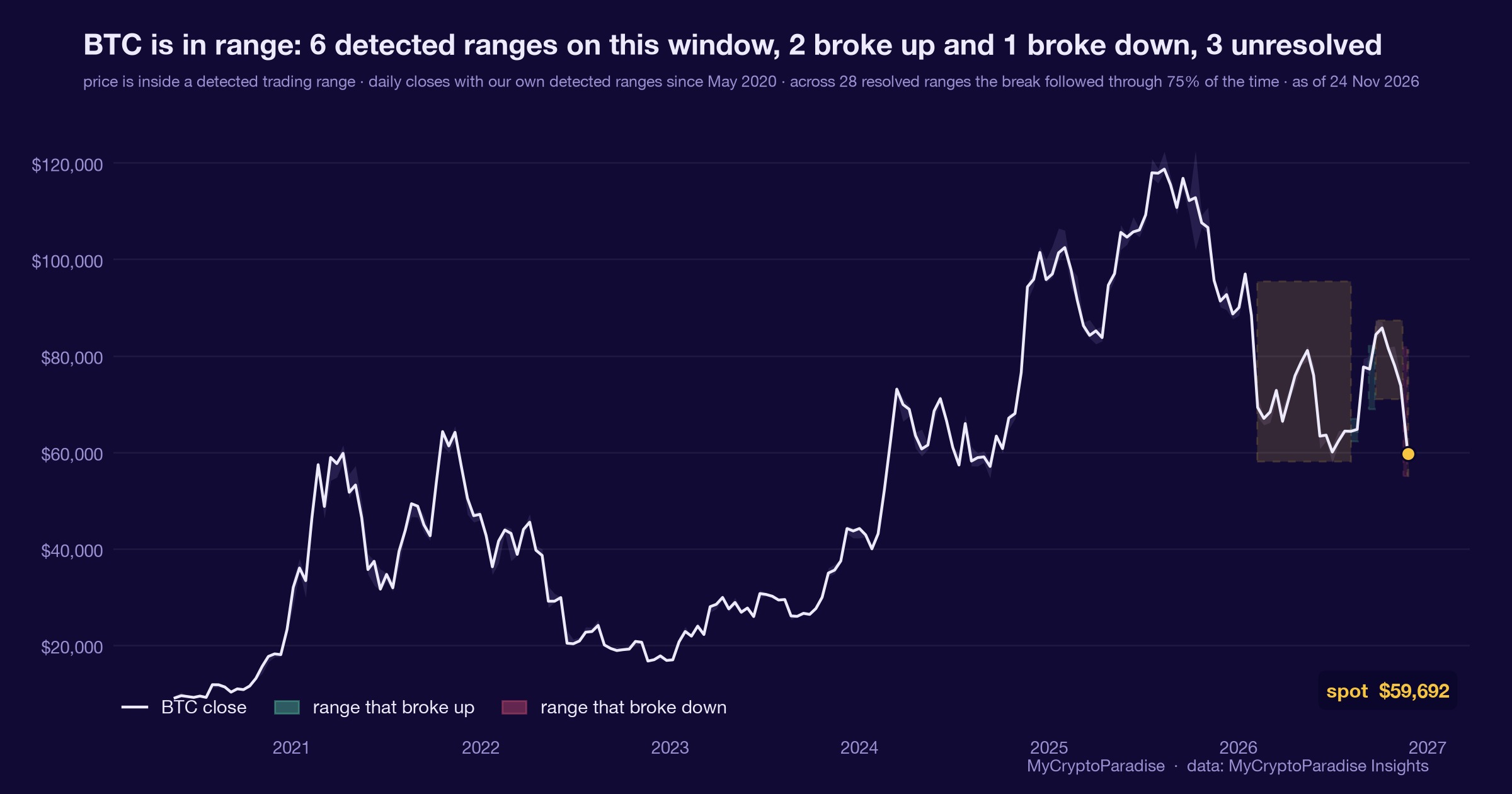
Our wider read stays cautious. We have watched $64,000 flip from support into resistance after a clear rejection there. Until price reclaims that level, strength is suspect. A squeezed retail buyer only reinforces that caution.
Here is the connection to this story. A thinner retail bid makes any bounce harder to sustain. That fits a market where the recent lift looked like leverage, not genuine accumulation. We still see weak hands trapped and patient capital waiting lower.
So where do the levels sit now. We are watching for a flush toward $44,000 as the primary target, with $34,000 possible on confluence. A poorer retail cohort does not cause that move, but it removes a buyer who might have slowed it.
The ParadiseTeam would respect $64,000 as the line that flips the whole read. A clean reclaim and hold there would force a rethink. Below it, we assume the path of least resistance stays lower.
On this headline alone, we do nothing. It is a reason for patience, not action. The smart-money logic here is simple: wait for real capitulation, let retail tire, and let the energy bill do its quiet work on the marginal wallet.
The read behind this: we framed this story through our own market analysis, Bitcoin Bounce Was Leverage, Not Smart Money.
Track it live: our Crypto Fear and Greed Index and the live crypto funding rates both update in real time, so you can watch this shift for yourself.
Related coverage
For exact entries, targets, and stop losses with full risk management, that is what ParadiseFamilyVIP is for. New to reading these moves? Start with our crypto trading strategies guide.
ParadiseTeam is monitoring the market situation closely, and we are taking these developments into consideration while building our trading tactics inside ParadiseFamilyVIP.
Crypto trading involves substantial risk. Prices are volatile and you can lose money. This article is educational and is not financial advice. Past performance does not guarantee future results.
Will a squeezed UK consumer drag crypto's retail bid over the coming months?
How 1 Paradiser is calling it
The first call is still open
Free account, no password. Members just sign in.











Join the discussion
No comments yet. Members, share how you are reading this.