

Listen: the breakdown
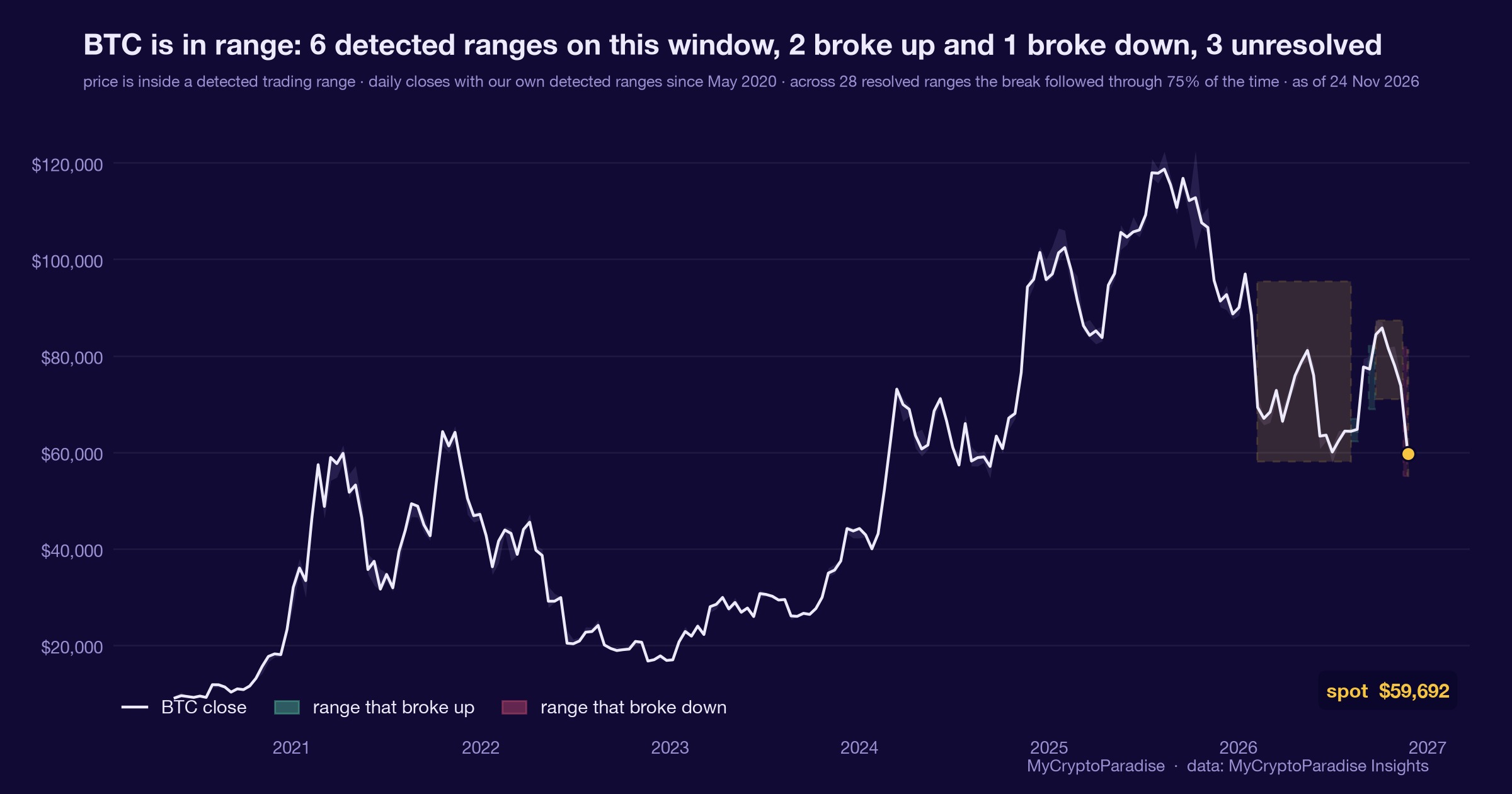
Market briefing: The U.S. Treasury's FinCEN was knocked offline by a cyberattack, pushing filing deadlines to December 30, with no word on what was breached. BTC was trading near $59,236 as of 08:38 UTC, down about 1.5% on the day.
- A cyberattack took FinCEN systems offline and halted its filing infrastructure
- Deadlines due between November 18 and December 29 now move to December 30
- FinCEN has not said which systems were breached or whether any data leaked
Source: U.S. FinCEN
A U.S. financial crime watchdog got knocked offline by a cyberattack, and its own deadlines slipped. So does the FinCEN breach actually move crypto, or is it just noise?
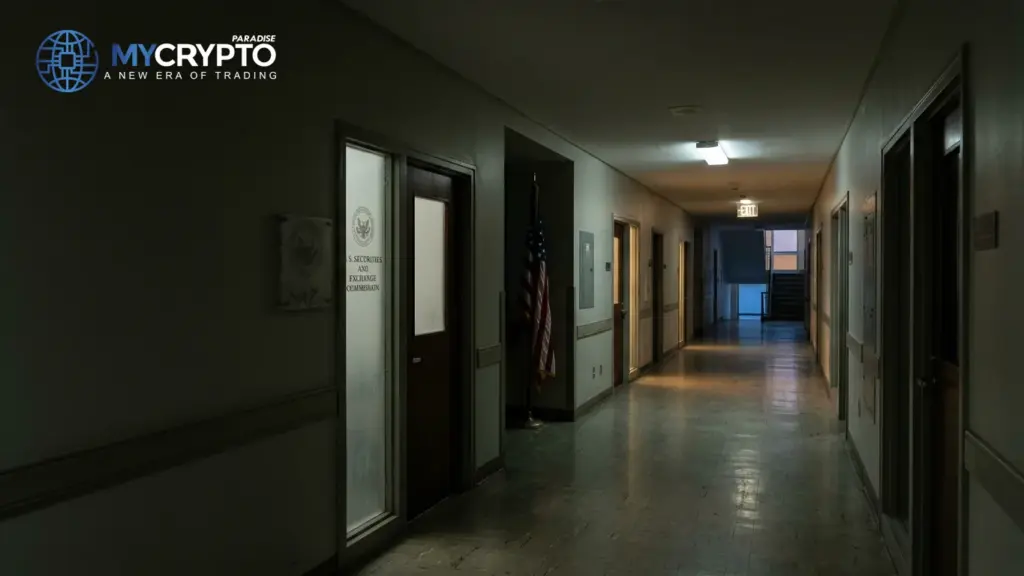
The United States Treasury's financial crime unit, FinCEN, was hit by a cyberattack that forced its systems offline. The agency built to police money laundering and suspicious transactions could not keep its own filing infrastructure running. That is the story, and it is an uncomfortable one.
Filing deadlines originally due between November 18 and December 29 have now been pushed to December 30. In practice, a month of compliance paperwork slides into a single day. The extension is the agency's answer to a backend that simply went dark.
What FinCEN has not said matters more than what it has. It has not disclosed which systems were breached. It has not confirmed whether any data leaked. The silence leaves a vacuum, and vacuums tend to fill with rumor.
A watchdog that tracks everyone else's suspicious activity getting quietly breached is a credibility problem first and a market story a distant second.
For crypto traders the direct line is thin. A deadline extension from a compliance outage does not move liquidity, rates, or risk appetite. BTC was trading near $59,236 as of 08:38 UTC, down about 1.5% on the day, but that softness lines up with the broader risk-off tape, not with this headline. We will keep the facts and our read clearly apart.
A financial crime watchdog goes dark
The transmission mechanism here is weak by design, and that is the point. A compliance agency losing its systems is an operational failure, not a monetary one. It does not change the cost of money, the supply of dollars, or how much risk investors want to hold. So the usual chain from driver to macro to liquidity to crypto mostly stops at the first link.
What it does touch is confidence in federal cyber resilience. A key piece of financial plumbing went offline, and the agency responsible for watching bad actors could not immediately say what hit it. That feeds into an already nervous mood about institutional reliability.
The deadline push to December 30 is the tell. It is the kind of quiet administrative fix that signals the problem is real but contained to paperwork, not markets. Nobody extends a compliance window for fun.
Still, the non-disclosure is the risk variable. Until FinCEN clarifies scope, traders are pricing an unknown, and unknowns at a sensitive agency invite speculation. If sensitive data later turns out to be exposed, the story could grow legs.
For now, treat this as background texture about government infrastructure, not a catalyst for flows. It sits beside the macro picture rather than driving it. The honest read is that this is a credibility event looking for a market impact it has not yet earned.
Little flow effect behind the red tape
Start with what did not happen. No exchange halted. No stablecoin wobbled. No forced selling traced back to this breach. The crypto response to a FinCEN outage has been, functionally, no response at all.
BTC near $59,236 and ETH near $1,650 are both soft on the day, down roughly 1.5% and 2.4%. That weakness is better explained by a wider risk-off session than by a filing-system outage. The timing overlaps, the causation does not.
If there were a real liquidity shock, you would expect it to hit BTC first, then ETH, then bleed into higher-beta alts as desks de-risked. We see ordinary drift, not a cascade. Open interest and funding are not screaming a regulatory panic.
ETH's slightly deeper loss is typical beta behavior in a cautious tape, not a FinCEN reaction. Alts are following the majors lower in the usual pecking order, nothing more.
The cleaner takeaway is that this headline is noise layered onto an existing downtrend. It gives nervous traders a new thing to point at, which is often how fear finds its narrative.
So we keep the verdict honest and neutral. A backend outage at a compliance agency is neither a bullish inflow nor a bearish liquidation trigger. It changes compliance calendars, not order books. Anyone trading this as a market mover is trading a story, not a flow.
The disclosure gap still unanswered
The one variable worth tracking is disclosure. Right now FinCEN has confirmed an attack and a deadline shift, and little else. That gap is where this either dies quietly or escalates.
Watch for any statement naming the systems breached. If the answer is administrative filing portals with no sensitive data exposed, the market story ends there. That would confirm our read that this is operational, not structural.
The invalidation case is a later admission that sensitive financial-intelligence data leaked. Reporting data on suspicious transactions is exactly the kind of information markets would not shrug off. That scenario would promote this from sidebar to genuine risk event.
Also watch the restoration timeline. A fast, clean return of systems supports the contained reading. A deadline that slips again past December 30 would suggest the damage runs deeper than stated.
On the price side, do not confuse correlation with cause. If BTC and ETH keep sliding, the burden is to show a mechanism linking it to this breach, and so far there is none. Treat any crash blamed on FinCEN with heavy skepticism.
The practical posture is simple. Keep this headline in the monitoring column, not the catalyst column. Let the broader tape drive your bias while you wait for FinCEN to fill the silence. If the disclosure stays blank for days, assume containment but stay alert to a late surprise.
Why this outage barely touches liquidity
The ParadiseTeam frames this one honestly: it is not a trading signal. A compliance outage does not tell you whether smart money is accumulating or distributing. It tells you a government server fell over. So we anchor positioning to structure, not to this headline.
Structure still reads cautious. BTC near $59,236 at the time of writing sits under the $64,000 shelf that flipped from support into resistance after a shooting star rejection. That level, not FinCEN, is the one that matters for the weekly picture.
Our standing bias remains lower until proven otherwise. A bearish engulfing daily close would raise the odds of a push toward the $44,000 weekly target, with $34,000 possible on confluence. This outage does nothing to change that map.
Here is the key read on who is doing what. We still see retail holding losses in fear, not true capitulation, while whales who finished distributing wait to absorb forced selling into the eventual flush. A paperwork headline does not force that capitulation. So treat any bounce on calm FinCEN updates with the same skepticism we apply to the current leverage-driven strength. Relief is not re-accumulation.
Invalidation of the bearish case stays mechanical, not news-driven: BTC reclaiming and flipping $64,000 back into support, ideally with a clean five-wave impulse up. Until then, the breach is background, and $64,000 above with $44,000 below remain the lines that decide the next move.
The read behind this: we framed this story through our own market analysis, Bitcoin Bounce Was Leverage, Not Smart Money.
Track it live: our Crypto Fear and Greed Index and the live crypto funding rates both update in real time, so you can watch this shift for yourself.
Related coverage
For exact entries, targets, and stop losses with full risk management, that is what ParadiseFamilyVIP is for. New to reading these moves? Start with our crypto trading strategies guide.
ParadiseTeam is monitoring the market situation closely, and we are taking these developments into consideration while building our trading tactics inside ParadiseFamilyVIP.
Crypto trading involves substantial risk. Prices are volatile and you can lose money. This article is educational and is not financial advice. Past performance does not guarantee future results.
Does the FinCEN breach stay a sidebar or spill into crypto sentiment?
How 2 Paradisers are calling it
The first call is still open
Free account, no password. Members just sign in.










Join the discussion
No comments yet. Members, share how you are reading this.