

Listen: the breakdown
Developing story update (November 25, 2026, 09:56 UTC):
Tether sought a 20% "reissuance fee" in some hacking cases to return frozen USDT to victims, our sources indicate, citing private emails and people involved.
Tether separately said it had reissued $1.2 billion in USDT to date and that fees charged for reissuance helped cover the process and legal costs.
Developing story update (November 25, 2026, 08:07 UTC):
Tether demands up to 20% fees from hack victims to recover frozen USDT. Bloomberg reveals Tether charges reissuance fees, citing legal costs. Bittok, which lost $50M in 2020, hasn't recovered funds after 5+ years. Tether has reissued $1.2B total. CEO Paolo Ardoino states funds are returned in stages to manage legal risks.
Market briefing: Tether has sought a 20% reissuance fee from some crypto hack victims to return their frozen USDT. BTC was trading near $59,139 as of 04:11 UTC, down about 2.1% on the day.
- Tether has sought a 20% reissuance fee from some hack victims to unfreeze their USDT.
- Singapore exchange Bittok, hit for $50 million, is among those seeking frozen USDT back.
- Today's BTC softness shows no clear link; treat this as a stablecoin trust overhang.
Tether is reportedly asking hacked crypto victims for a 20% reissuance fee to unfreeze their USDT. That rewrites the stablecoin pledge. So who really pays?
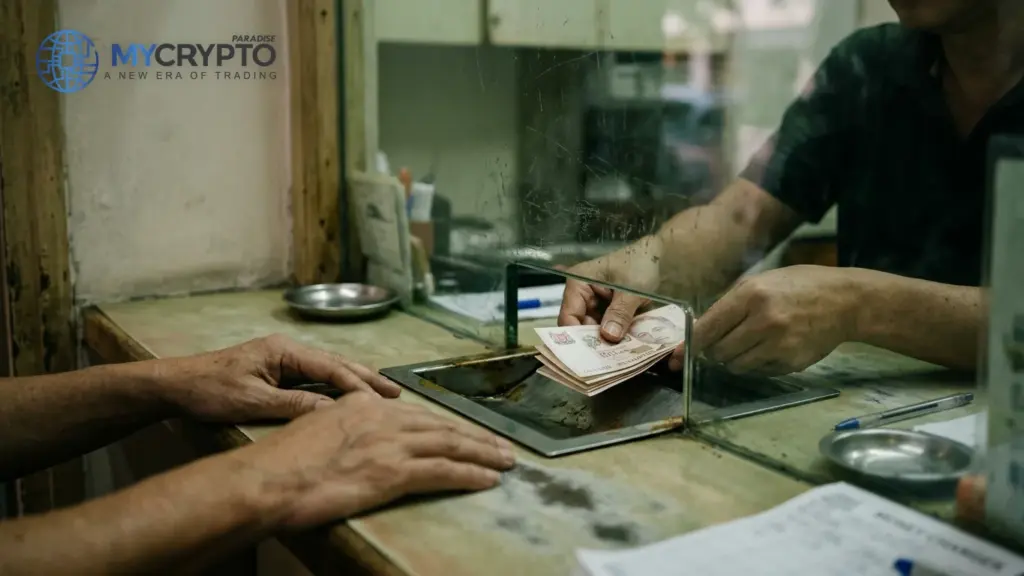
Tether has asked some crypto hack victims for a fee before it returns their frozen USDT. The fee is 20 percent. That is one fifth of money already stolen, charged simply to unfreeze what remains.
Among those seeking recovery is Bittok, a Singapore-based crypto exchange. It lost $50 million in a hack. Now it is trying to retrieve frozen USDT from Tether, and being asked to pay for the privilege.
Here is how the plumbing works. Tether can freeze USDT held on its own contracts. When tokens are stolen, victims ask Tether to lock them, then reissue clean coins. A reissuance fee turns that rescue into a transaction.
The stablecoin pitch has always been simple: fully backed, redeemable one to one, no questions asked. A 20 percent toll adds a question.
That is why this matters beyond one exchange. USDT is the dominant settlement rail across crypto. Confidence in that rail is the quiet foundation under most trading liquidity. Charge victims to access their own balances, and the pledge starts to read like fine print.
We should be clear about one thing. Nothing in today's price action ties the broader softness to this report. Treat it as a reputational overhang on USDT, not a confirmed market catalyst.
A toll booth on redeemable stablecoins
The driver here is not a price level. It is trust in the token that prices nearly everything else.
Stablecoins work because people believe the peg holds and redemption stays clean. USDT sits at the center of that belief. It is the unit most traders quote, settle, and park risk in. A fee on reissuing hacked funds pokes at the no-questions-asked promise that keeps the rail frictionless.
The macro effect runs through confidence, not through a single trade. If redemption terms look negotiable, large holders reprice the convenience they assumed was free. That does not break a peg. But it chips at the assumption that USDT behaves like cash on demand.
Liquidity is where any damage would surface. Thinner trust in the dominant stablecoin can widen spreads and slow the flow between exchanges. In calm markets nobody notices. In stressed ones, every basis point of friction counts.
So the stake is structural, not immediate. The report tests the story stablecoins tell, at a moment the market has little patience for surprises.
Stablecoin trust meets a soft tape
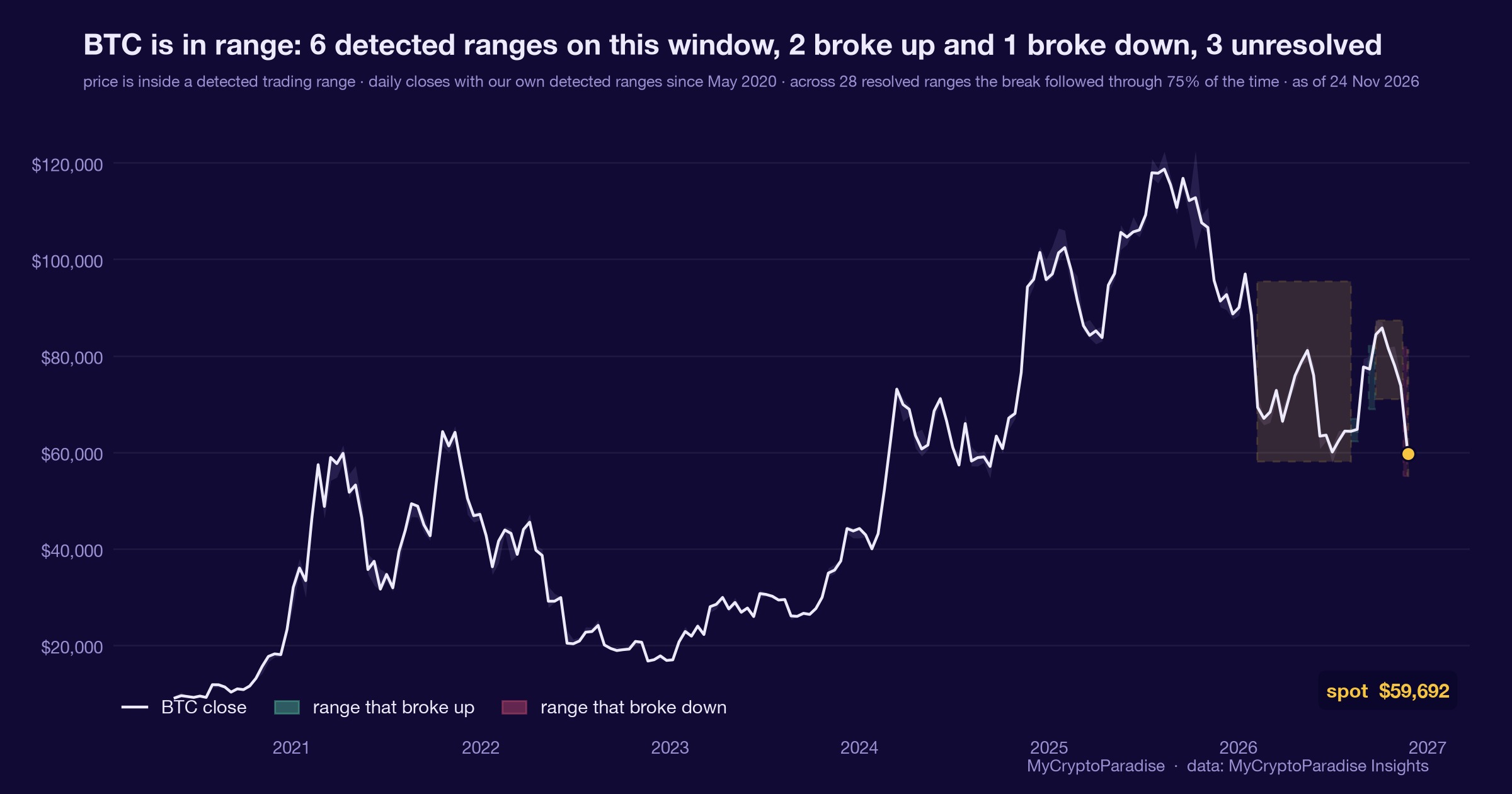
Start with the tape. BTC was trading near $59,139 as of 04:11 UTC, down about 2.1 percent on the day. ETH sat near $1,657, down roughly 2.4 percent. On shorter timeframes both barely moved, with BTC up 0.30 percent and ETH up 0.47 percent over the last hour.
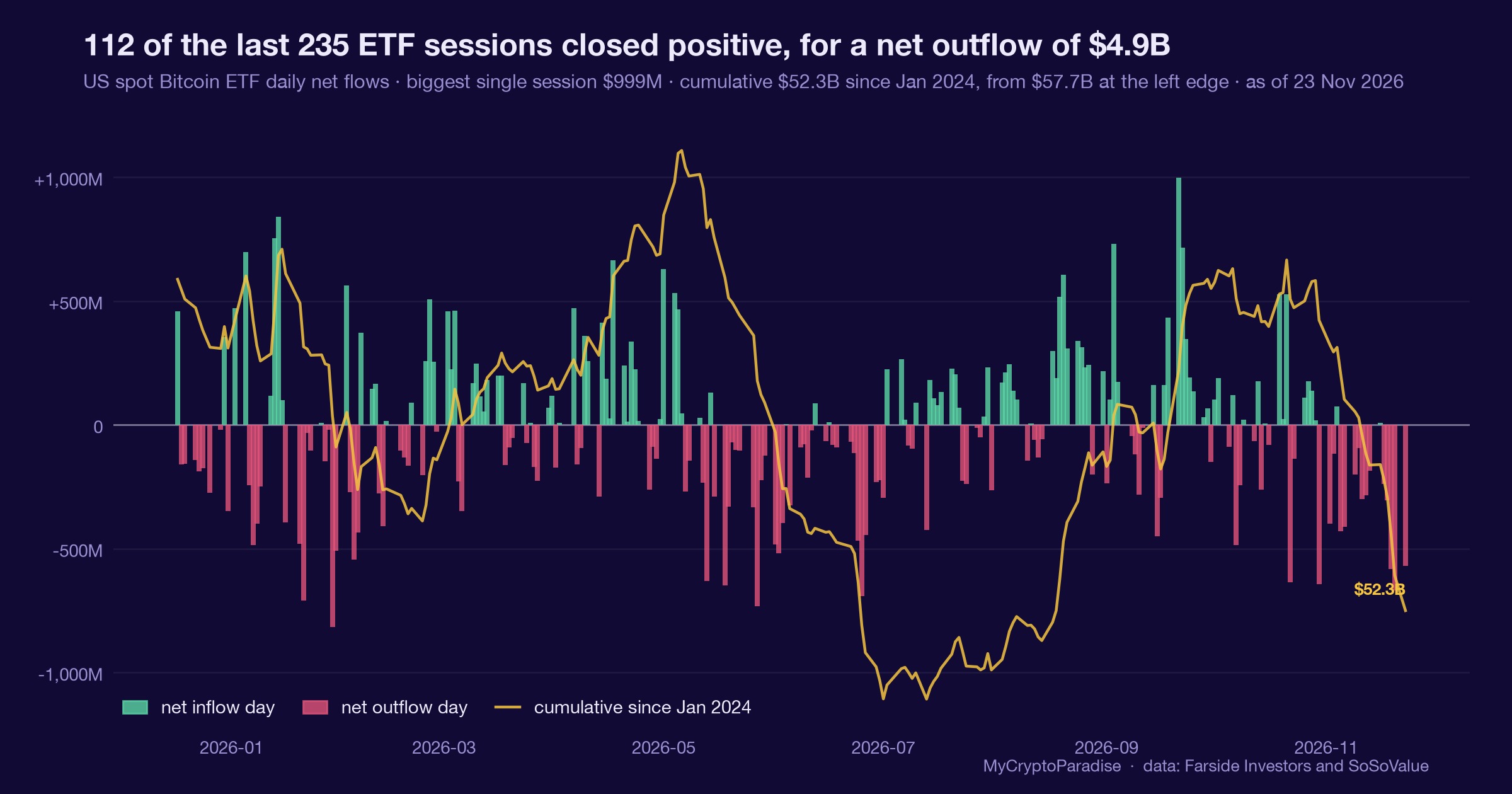
So the honest read is that this report is not driving the chart today. The softness predates it and sits on broken-support chatter and whale outflows. A stablecoin-trust headline simply lands on a market already short of conviction.
Still, the direction of risk here leans bearish. Anything that dents faith in USDT trims the confidence that funds risk-taking. BTC and ETH feel a confidence tax first, because they absorb the largest flows.
Alts would feel it more, if it spreads. Smaller tokens lean on USDT pairs for depth. When the settlement layer looks less dependable, the thinnest books wobble first.
For now the effect is a slow drip, not a cascade. The overhang is reputational, and it waits in the background rather than hitting the bid.
Signals that could widen the credibility gap
The question from here is whether the credibility gap widens or closes. Watch for more victims going public with the same 20 percent experience. A pattern looks very different from a single case.
Regulatory attention would raise the stakes. Stablecoin redemption terms sit squarely in the sights of supervisors across several jurisdictions. Any formal inquiry into how frozen funds get handled would turn a headline into a process.
Watch redemption and flow data too. Sustained outflows from USDT into rivals or into bank rails would confirm that trust is actually eroding. A quiet week, with balances steady, would say the market shrugged.
Invalidation of the bearish tilt is simple to spot. Tether framing the fee as a narrow legal or recovery cost, with clear terms, would defuse much of it. If large holders keep treating USDT as cash, the story stays noise.
Price gives the final tell. If BTC and ETH hold while this circulates, the market has filed it under reputation, not solvency.
Reading a reputational hit through liquidity
The ParadiseTeam treats this as an overhang, not a trigger. BTC near $59,139 is already inside a heavy part of the map. Our wider work places an exchange-of-hands zone between $44,000 and $55,000, with a Fib confluence near $50,000.
So price is hovering just above that zone, not reacting to Tether. Re-accumulation levels at $61,000 and $71,000 sit overhead as the first hurdles on any bounce. We read strength into them as corrective until capitulation confirms otherwise.
Here is the smart-money frame. Professional risk managers are still waiting for late buyers to give up before they absorb real supply. A stablecoin-trust scare is exactly the kind of fear that pressures weak hands. It does not change the levels. It can change who holds them.
Stops tell the story. Longs cluster under $55,000 and toward the $50,000 confluence. A USDT-confidence wobble gives any downside push a convenient excuse to run them.
Our bias stays patient. Bounces near $55,000 read as corrective, not a confirmed turn, until the $44,000 area and a capitulation signal do their work. This report is a reason for care on USDT, not a trade thesis on BTC.
The read behind this: we framed this story through our own market analysis, New Bitcoin Bull Market or $44K Next?
Track it live: our Crypto Fear and Greed Index and the live crypto funding rates both update in real time, so you can watch this shift for yourself.
Related coverage
For exact entries, targets, and stop losses with full risk management, that is what ParadiseFamilyVIP is for. New to reading these moves? Start with our crypto trading strategies guide.
ParadiseTeam is monitoring the market situation closely, and we are taking these developments into consideration while building our trading tactics inside ParadiseFamilyVIP.
Crypto trading involves substantial risk. Prices are volatile and you can lose money. This article is educational and is not financial advice. Past performance does not guarantee future results.
Does the Tether fee report meaningfully dent USDT trust from here?
How 14 Paradisers are calling it
The first call is still open
Free account, no password. Members just sign in.
Follow this topic: Stablecoin news








Join the discussion 3
Honestly, the thought of a frozen balance with a toll attached is what gets me. I watch how issuers treat frozen funds more than their peg headlines, since that shows what the trust actually rests on.
Oof, reading this on a Sunday brought back the weekend my parking money wobbled and taught me nothing is boring by default, only boring by design. I'm curious how a 20% fee looks to someone who has already lost funds to a hack?!
so where exactly is a 20 percent fee written in anyones plan before they got hacked. i learned in 2017 that an exit nobody wrote down isnt really an exit