

Listen: the breakdown
Market briefing: Binance co-founder Changpeng Zhao has flagged a convincing fake Trust Wallet website that steals funds once users connect. A separate $1.1 million iPhone exploit rides the same phishing wave. BTC was trading near $80,337, up 2.6 percent on the day, moving on its own.
- Changpeng Zhao flagged a fake Trust Wallet site that steals funds once users connect their wallet.
- A separate $1.1 million exploit targeting iPhone users is tied to the same phishing wave.
- BTC traded near $80,337 (+2.6% 24h); the scam alert is a security story, not a price catalyst.
A fake Trust Wallet site now copies the real one so well that one click can empty your funds. So who exactly is this phishing wave built to catch?
Binance co-founder Changpeng Zhao has flagged a convincing fake Trust Wallet website. It copies the real brand closely enough to fool a quick glance. Connect a wallet to it, and attackers get a direct line to your funds.
This is not a bug in Trust Wallet itself. It is a clone of its look, built to harvest the moment you approve a connection. The theft happens on your side of the screen, with your own signature.
The warning does not arrive alone. A separate exploit, reportedly draining $1.1 million from iPhone users, sits inside the same phishing wave. Mobile holders are now a named target, not an afterthought.
The mechanics are old. The packaging is new. Phishing kits that spoof a major wallet brand are cheap to spin up and easy to spread through search ads, direct messages, and unsolicited links.
What makes this worth your attention is timing. BTC was trading near $80,337, up about 2.6 percent on the day, when the alert surfaced. BNB sat near $714.97. Prices that climb tend to pull casual users back toward new apps and fresh links.
That is the quiet part. A rising market does not just lift portfolios. It widens the attack surface, because more people reconnect wallets to things they have not verified. Scammers know this cycle better than most retail traders do.
Rising prices widen the attack surface
The transmission here is behavioural, not macro. No liquidity event sits behind this story. No exchange flow, no supply shock, no policy shift. It is predation on attention, and attention rises with price.
When BTC pushes higher, dormant holders log back in. They chase new tokens, new airdrops, new apps. Each reconnection is a decision point where a cloned site can slip in. A fake Trust Wallet page only needs you distracted and slightly greedy.
That is why a security alert matters more in a green week than a red one. Fear keeps people off their keys. Optimism gets them clicking. The same enthusiasm that lifts the chart also lowers the guard.
The $1.1 million iPhone figure tells you the kits have scaled. This is not one lone page. It is an industrialised wave, spoofing a trusted brand across desktop and mobile at once.
Here is the structural point. Self-custody moves the risk from an exchange's balance sheet onto the individual. There is no help crypto exchange to call, no reversal, no insurance fund when you sign the wrong approval.
So the loss is final and it is personal. The market will not feel it in the order book. Your wallet will feel all of it. That gap, between a quiet chart and a drained individual, is exactly where these campaigns thrive.
Order books stay calm, wallets do not
For prices, the direct impact is close to nothing. This is the honest read. A phishing wave drains individual holders, not market depth, so BTC, ETH, and alts keep moving on their own drivers.
BTC near $80,337 reflects flows, positioning, and macro, not a cloned website. The +2.6 percent day is independent of this alert. Treat any attempt to link the two as noise.
The cascade, if you want to call it that, runs the other way. It starts at the retail wallet and stops there. It does not climb into ETH or filter down into the long tail of alts. There is no sell pressure mechanism, no forced liquidation, no deleveraging chain.
What can shift is confidence at the edges. Repeated wallet-drain headlines make newer users hesitant to self-custody. Some drift back to exchanges. That is a slow trust cost, not a price event, and it will not show up this week.
The asset most tied to the story, by brand, is Trust Wallet's ecosystem, not a token you trade on a chart. BNB near $714.97 moved on its own, up about 2 percent, untouched by the scam itself.
So position accordingly. Nothing here changes a thesis on direction. The only exposure that matters is whether your own keys touched a site you did not verify. That risk is real, immediate, and entirely within your control.
Verifying a connect prompt before it costs you
The thing to watch is not a chart level. It is every connect-wallet prompt that reaches you from an ad, a message, or a link you did not type yourself.
Treat those as hostile until proven otherwise. A cloned Trust Wallet page will look correct. The domain is where the lie lives, so check it character by character before you ever approve a connection.
Watch for the tells that confirm a scam. Urgency, a limited-time claim, a surprise airdrop, a sudden need to reconnect or validate your wallet. Legitimate apps do not chase you through direct messages.
The iPhone angle widens what you watch. Mobile users assumed they were safer. The $1.1 million figure says otherwise, so phone browsers and in-app links deserve the same suspicion as desktop.
Invalidation of your own safety is simple and brutal. If you signed a connection on a page you reached through an ad or an unsolicited link, assume exposure. Move funds to a fresh wallet from a known-good app.
Confirmation that you are safe is equally clear. You reached the app by typing the address yourself or through a verified source. You read every approval before signing. You never pasted a seed phrase anywhere.
And watch the pattern, not just this one site. Rising prices tend to bring more kits, not fewer. One cloned domain taken down rarely ends a wave this organised.
Reading the scam wave through market timing
The ParadiseTeam reads this as a retail-exposure story, not a trade signal. It carries no bullish or bearish weight for BTC or BNB on its own. The right response is operational security, not a position change. Still, the timing fits our standing caution. Our wider lens stays defensive on the daily and weekly, and we treat strength toward the $90,000 region as a place where selling tends to meet buyers, not confirm a reversal.
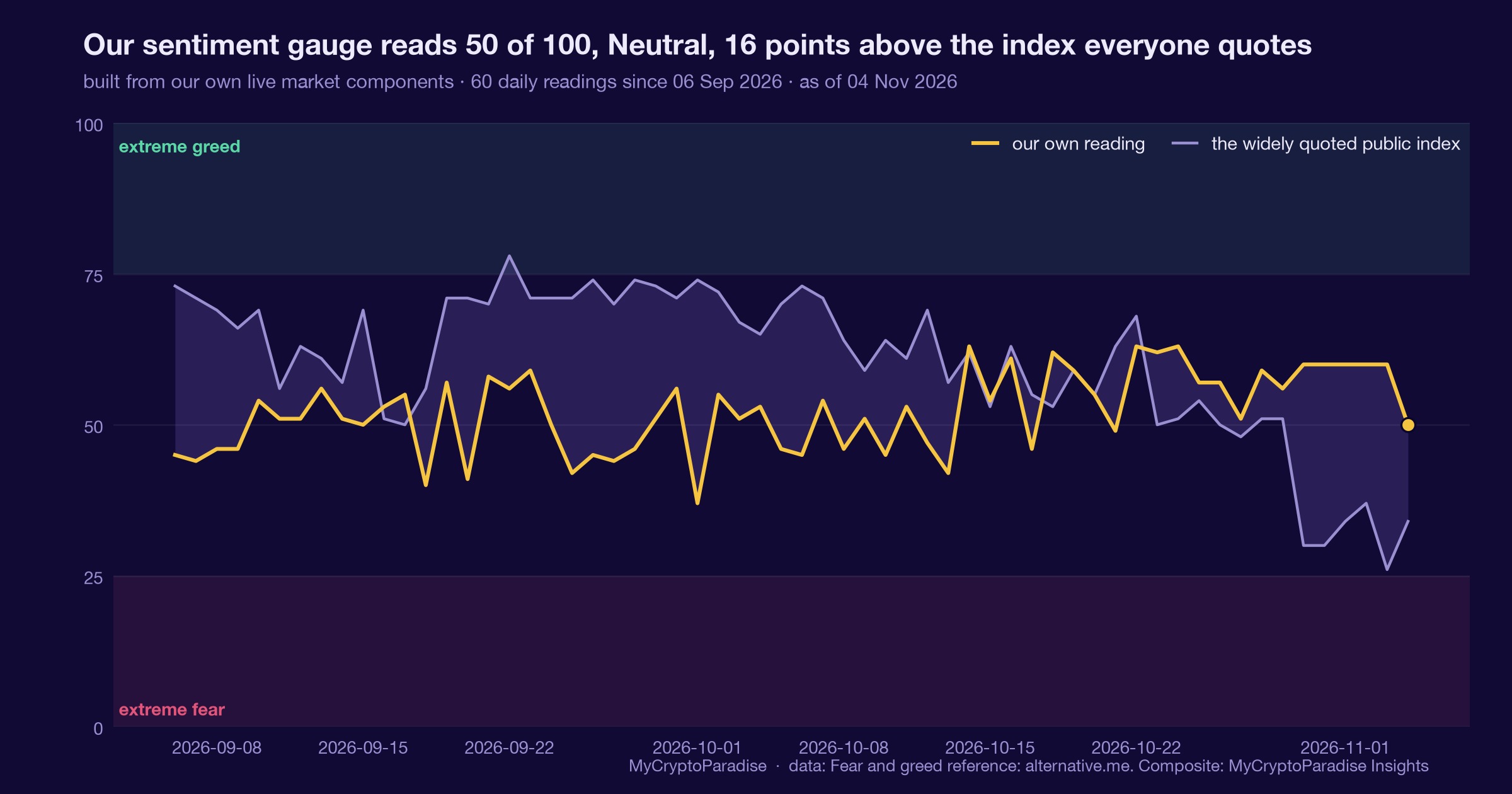
That matters here for one reason. Retail enthusiasm is rising. Social sentiment is warming while price barely follows through. The same crowd buying into resistance is the crowd most likely to click a fake connect prompt in a green week.
So the behavioural overlap is real, even if the price link is not. When the ParadiseTeam sees aggressive retail participation and crowded longs, we also expect the scam surface to widen. Euphoria and phishing feed on the same emotion.
For your own book, the read is practical. BTC was near $80,337 when this surfaced. Nothing about the alert changes our levels, our bias, or where we think liquidity sits above price.
What it changes is housekeeping. Secure the keys that hold your size. A clean chart thesis means nothing if a cloned page drains the wallet behind it. Protect the capital first, then trade the market.
The read behind this: we framed this story through our own market analysis, Bitcoin Longs Pile In While 67% of Whales Sell.
Track it live: our Crypto Fear and Greed Index and the live crypto funding rates both update in real time, so you can watch this shift for yourself.
Related coverage
For exact entries, targets, and stop losses with full risk management, that is what ParadiseFamilyVIP is for. New to reading these moves? Start with our crypto trading strategies guide.
ParadiseTeam is monitoring the market situation closely, and we are taking these developments into consideration while building our trading tactics inside ParadiseFamilyVIP.
Crypto trading involves substantial risk. Prices are volatile and you can lose money. This article is educational and is not financial advice. Past performance does not guarantee future results.
Will this phishing wave push you to tighten your wallet security this week?
How 2 Paradisers are calling it
The first call is still open
Free account, no password. Members just sign in.





Join the discussion
No comments yet. Members, share how you are reading this.