


Listen: the breakdown
Market briefing: Datavault AI says roughly 817 bitcoin sit frozen on the Biconomy exchange, a withdrawal unanswered for four months, and its stock fell nearly 50%. BTC was trading near $80,823 as the broader market shrugged.
- Datavault AI cannot withdraw about 817 BTC held on the Biconomy exchange since June 2026
- An accounting correction cut reported assets by $92.2 million and DVLT stock fell nearly 50%
- Broader BTC price barely moved near $80,823, treating the freeze as an isolated corporate failure
Datavault AI says it cannot withdraw roughly 817 BTC from the Biconomy exchange, and its stock just halved. So why did Bitcoin barely blink?
Datavault AI told the market it cannot get its Bitcoin back. Roughly 817 to 837 BTC sit on the Biconomy exchange, and the firm says a withdrawal request has gone unanswered for four months as of the filing date. The access problem has run since June 2026.
The numbers are blunt. An accounting correction cut Datavault's reported assets by $92.2 million. The company's DVLT stock fell nearly 50 percent on the disclosure. That is a brutal single session for any treasury, let alone one built on an asset that is supposed to be the easiest in the world to move.
The trail starts in September 2025. Datavault received 1,309.04 BTC from a $150 million transaction with Scilex Holding. It later sold 491.431 BTC back to Scilex for about $40.5 million in cash. The remaining Bitcoin is the part now stranded on Biconomy.
So the headline treasury was never fully under the firm's own keys. It lived on a third-party exchange, and the exit door has stayed shut.
There is a quiet irony here that every cycle reteaches. Bitcoin removes the need to trust a counterparty, right up until you hand it to one. The asset was self-custodial by design; the decision to park it elsewhere was not.
For traders the structural lesson matters more than the single stock. This is a counterparty story, not a Bitcoin story, and the market has priced it exactly that way.
Counterparty risk resurfaces for crypto treasuries
The transmission here is reputational and behavioural, not monetary. A frozen treasury does not drain liquidity from the Bitcoin network. It drains confidence from the model of parking corporate coins on a third-party exchange and calling it a treasury.
That distinction is why the macro footprint is small. No central bank moved. No funding rate repriced on this alone. The $92.2 million correction hits one balance sheet, not the broader order book, so there is no discernible impact on overall crypto market liquidity.
But the signal to institutional allocators is real. Every treasury desk now re-reads its own custody arrangements. Where does the Bitcoin actually sit? Who controls the keys? What happens if a withdrawal request simply goes unanswered for four months?
Those questions tighten due diligence. They slow the pace at which companies route coins onto unfamiliar exchanges. In the short run that is a mild drag on the marginal institutional bid, because caution and paperwork rarely arrive with a buy order attached.
The deeper point is that counterparty risk never left. It hid behind a bull market. When price rises, nobody audits the custodian. When a single filing reveals stranded coins, the audit becomes mandatory again.
So the mechanism is simple. One firm's custody failure raises the perceived cost of holding crypto through intermediaries. That is a headwind for adoption flows at the edges, even while the Bitcoin price itself stays indifferent to one company's misfortune.
Why BTC shrugged while DVLT halved
Start with the cleanest fact of the day. DVLT stock fell nearly 50 percent, and BTC was trading near $80,823, up on the session. Two assets, two completely different verdicts.
That split tells you how the market is reading this. Smart money is compartmentalising the freeze as an isolated corporate or custodial failure, not a systemic crack in Bitcoin itself. The coins are not lost to the network; they are stuck behind one exchange's silence.
So the liquidity cascade that a real contagion event would trigger never fired. There is no evidence of widespread retail panic selling and no scramble into Bitcoin as a safe exit. The order book treated it as noise.
For BTC that means minimal direct impact. The news is a story about who held the keys, not about Bitcoin's monetary properties. Price did what it does when a problem is ring-fenced: it ignored it.
For ETH and the broader altcoin complex the read is the same, just softer. These are risk assets that follow sentiment, and sentiment here stayed local to one equity ticker.
The second-order drag is slower and real. Treasury-model equities now carry a visible custody discount in investors' minds. Any firm whose pitch is we hold a lot of Bitcoin now has to answer where and under whose control, which trims the enthusiasm that once flowed into that whole category.
Signs of contagion versus a contained freeze
The first thing to watch is whether this stays one company's problem. A single stranded treasury is a cautionary tale. A second or third firm reporting frozen coins on the same exchange would turn an isolated failure into a counterparty cluster, and that is a very different market. So monitor other treasury-model equities. If they hold their ground while DVLT bleeds, the ring-fence is confirmed and Bitcoin can keep trading on its own technicals.
Watch the Biconomy situation itself. Any resolution, partial release, or official account of the four-month silence would cap the damage. Continued silence does the opposite, because an unanswered withdrawal request is the kind of fact that compounds.
On the Bitcoin chart the invalidation is simpler and separate from this story. The $79,000 level is the line that matters for the current structure. A clean loss there flips the medium-term read bearish regardless of custody headlines.
Confirmation of continued strength would be BTC reclaiming and holding above $81,000, the support it recently failed to defend. That reclaim would show spot demand is still present under the surface.
The honest caveat: there is no single confirmed same-day catalyst driving the broad tape. Framing today's calm as proof of resilience is interpretation, not fact. The cleaner statement is narrower. One firm lost access to its coins, and the Bitcoin price did not care.
What a frozen treasury signals for custody flows
The ParadiseTeam frames this as a counterparty event, not a Bitcoin event, and the price action backs that. BTC was trading near $80,823 as of the disclosure, barely moved, while a company's stock halved on stranded coins. That calm is informative. True market stress shows up as cross-asset selling and a rush for exits. We saw neither, which tells us allocators are ring-fencing this as corporate mismanagement rather than systemic risk.
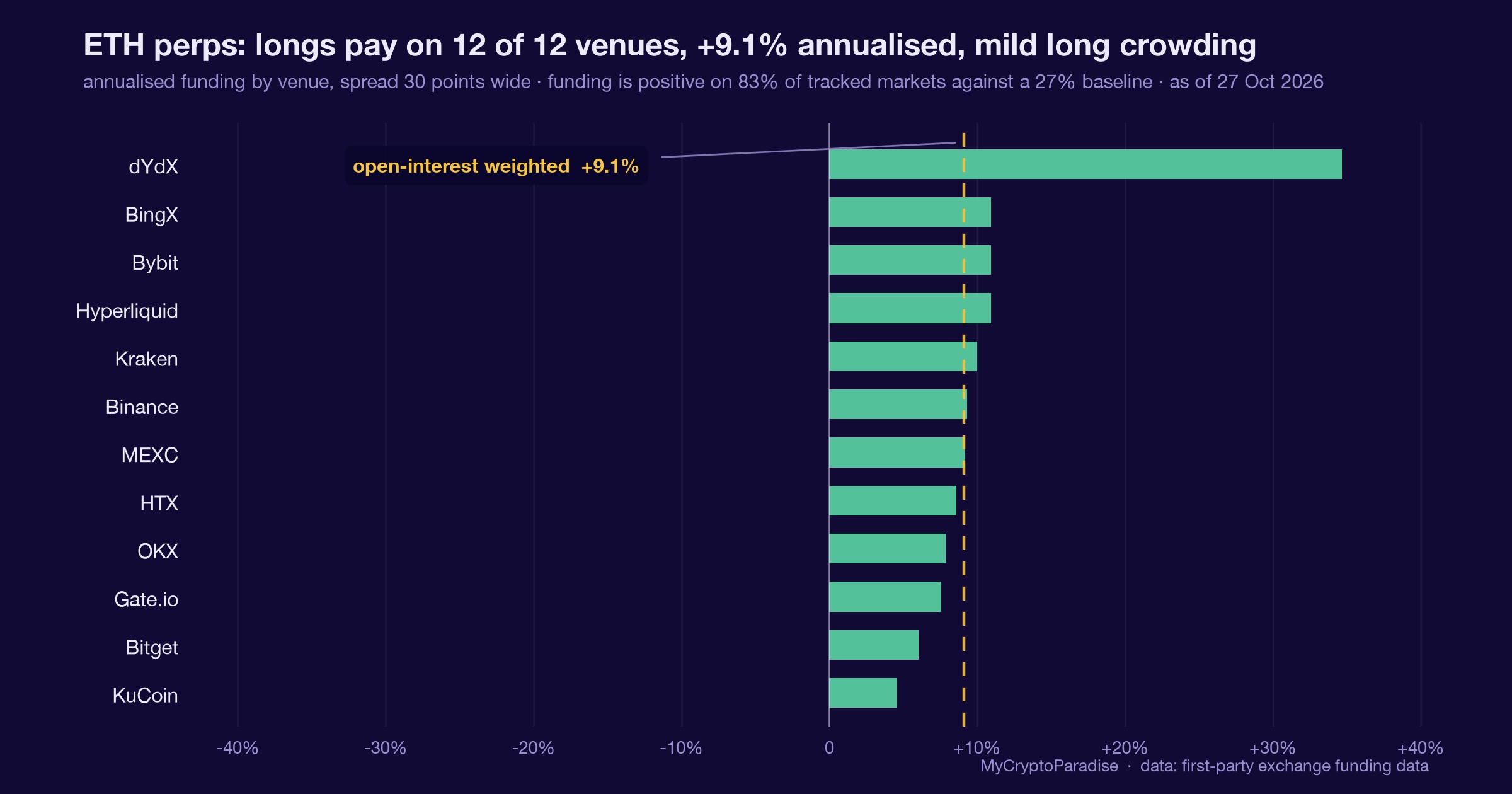
But calm is not strength. Our standing read on this tape stays cautious. Spot buyers tried to absorb selling and failed to defend $81,000, the level BTC now trades just beneath. Funding rates have flipped positive without price following, which usually means longs are crowded into a move that is not paying them.
So the custody story and our structure point the same way at the margin. Counterparty fear trims the institutional bid exactly when the chart already lacks conviction above $81,000.
The levels that frame the next move are clear. The ParadiseTeam treats $79,000 as the invalidation for the current bullish structure; lose it with intent and the deeper path toward $78,000 opens. On the upside, a reclaim and hold of $81,000, then $81,350, would be the first sign spot demand is genuinely back.
Until one of those lines breaks, this remains a reminder, not a trigger. Self-custody and due diligence are the trade; everything else is someone else's balance sheet.
The read behind this: we framed this story through our own market analysis, Bitcoin at Support: Can Bulls Fight Back?
Track it live: our Crypto Fear and Greed Index and the live crypto funding rates both update in real time, so you can watch this shift for yourself.
Related coverage
For exact entries, targets, and stop losses with full risk management, that is what ParadiseFamilyVIP is for. New to reading these moves? Start with our crypto trading strategies guide.
ParadiseTeam is monitoring the market situation closely, and we are taking these developments into consideration while building our trading tactics inside ParadiseFamilyVIP.
Crypto trading involves substantial risk. Prices are volatile and you can lose money. This article is educational and is not financial advice. Past performance does not guarantee future results.
Will counterparty failures like this keep hitting crypto treasuries?
How 1 Paradiser is calling it
The first call is still open
Free account, no password. Members just sign in.







Join the discussion
No comments yet. Members, share how you are reading this.