


Listen: the breakdown
Developing story update (October 31, 2026, 12:58 UTC):
“I Never Said Selling,” CZ Clears Up SpaceX Shares Controversy with Elon Musk. Binance co-founder Changpeng “CZ” Zhao has clarified on Saturday that he never threatened to sell SpaceX shares or pressure Elon Musk. CZ claimed he only mentioned Binance’s stake to counter comparisons with beleaguered crypto exchange FTX after the hack.
Developing story: This story is still unfolding. We are tracking it and will update this article as more details are confirmed.
Market briefing: Binance's CZ was pushed into doing public arithmetic on a roughly $6.3 billion hack, naming a SpaceX stake and the SAFU fund to cover the gap. BTC was near $77,090, down 3.7 percent, while BNB fell harder on exchange-specific fear.
- CZ publicly itemised a roughly $2 billion shortfall after a ~$6.3B hack and suspended withdrawals.
- He pointed to a ~$1B SpaceX-linked stake and the ~$1.17B SAFU fund as backstops, drawing FTX comparisons.
- BNB fell about 6 percent in 24 hours versus BTC's 3.7 percent, the live read on exchange-specific risk.
The Binance hack story moved from banter to a balance sheet when CZ did public math on the shortfall. Does a founder counting outside assets reassure traders, or worry them?
Changpeng Zhao did something exchange founders rarely do in public. He pulled out a calculator.
After a roughly $6.3 billion hack and suspended withdrawals, CZ laid out the gap line by line. His rough arithmetic ran like this: about six billion stolen, three billion frozen, and roughly $1.17 billion in the SAFU emergency fund, which is held in Bitcoin. That leaves a shortfall near two billion dollars. To cover it, he pointed to a roughly one billion dollar SpaceX-linked stake sitting outside the exchange.
The spark was Elon Musk. He answered CZ's earlier cybersecurity warning with laughing and fire emojis and the line Everyday is Zeroday. CZ replied with unusual restraint: have a lot of respect for you, but bad time to troll, please stop.
The emojis are the sideshow. The part that lands is a different exchange: one X user compared CZ's deposit reassurances to Sam Bankman-Fried during FTX's 2022 collapse, and Musk answered that with a grimace. That comparison is the story traders should read, not the social-media theatre. A founder quantifying a multi-billion-dollar hole and naming assets held outside the exchange is not a routine update. It is what happens when a simple we are fine stops doing the job.
Markets agreed with the maths, not the memes. BNB underperformed BTC by a wide margin over the day, which is exactly what exchange-specific risk looks like when it starts to price.
A founder counting outside assets in public
The transmission that matters here is confidence, and confidence is the thinnest layer of any exchange.
An exchange runs on a promise: your balance is there when you ask for it. Suspended withdrawals break that promise in real time. Once users cannot pull funds, every reassurance gets read through the lens of the last time this happened, and the last time was FTX.
That is why CZ's arithmetic matters more than his reply to Musk. When a founder reaches for a SpaceX stake and a Bitcoin-denominated emergency fund to close a two billion dollar gap, he is answering a solvency question, not a public-relations one. The market hears the question underneath the answer.
The mechanism is simple. Doubt at one large exchange raises the perceived risk of holding assets on any exchange. Traders de-risk first and ask questions later. Stablecoins move, withdrawal requests cluster, and liquidity that normally sits patient on order books turns twitchy.
There is a wry truth here that every cycle re-teaches. The louder the reassurance, the more carefully the market listens for what it is reassuring against.
None of this requires Binance to be insolvent. It only requires enough people to act as if the tail risk is real. That is the macro channel: a trust shock at a systemic exchange tightens effective liquidity across crypto, regardless of how the final SAFU math settles.
BNB bears the wound, BTC takes the bruise
The cleanest signal is the gap between two tokens. BNB fell roughly 6 percent over 24 hours while BTC fell about 3.7 percent. That spread is the market separating exchange-specific risk from broad risk-off.
BNB carries the direct wound. It is the asset most tied to the exchange's fate, so it absorbs the solvency doubt first and hardest. When a founder is doing public shortfall math, the token closest to that balance sheet is where fear concentrates.
BTC takes the bruise rather than the blow. As the reserve asset of the space, it feels the general de-risking, but it is not the thing users are fleeing. BTC was trading near $77,090 at the time of writing, down on the day but holding far better than BNB on a relative basis.
ETH sits one step further out. It inherits the risk-off tone and any withdrawal-driven selling, yet it has no direct exposure to this specific exchange's hole.
Alts are the longest leg of the whip. In a trust shock, liquidity drains from the thinnest books first, so lower-cap names tend to overshoot on both the drop and any relief bounce.
For now the hierarchy is orderly and informative: BNB worst, BTC and ETH in the middle, alts most fragile. As long as BNB keeps underperforming BTC, the market is still pricing this as an exchange problem that has not been fully contained, not a solved one.
The BNB to BTC spread tells the truth
Forget the reply thread. The honest tell is the BNB-versus-BTC spread, and it needs to close before the contagion story cools.
Containment looks like this: withdrawals resume cleanly, BNB stops bleeding relative to BTC, and the shortfall gets covered without further outside assets being named. If BNB starts recovering ground on BTC, the market is telling you it believes the backstop math.
Escalation looks like the opposite. Fresh withdrawal problems, a widening BNB discount to BTC, or new figures that enlarge the gap would confirm that users are voting with their funds, not their faith.
Watch the SAFU details too. A fund held in Bitcoin that gets tapped means Bitcoin may be sold to plug the hole, a mechanical source of BTC supply that sits on top of the sentiment hit.
Be honest about what is unproven. We cannot verify solvency from the outside, and no single confirmed catalyst explains the full move. This is an interpretive read of orderly contagion, not a settled fact.
The invalidation of the fear case is specific and clean: normal withdrawals, a shrinking BNB-BTC spread, and no new assets paraded as collateral. Until all three arrive, treat every confident reassurance as a data point to test, not a conclusion to trust. The exchange run that never happens still leaves bruises on the way to being disproved.
How exchange risk reshapes the liquidation map
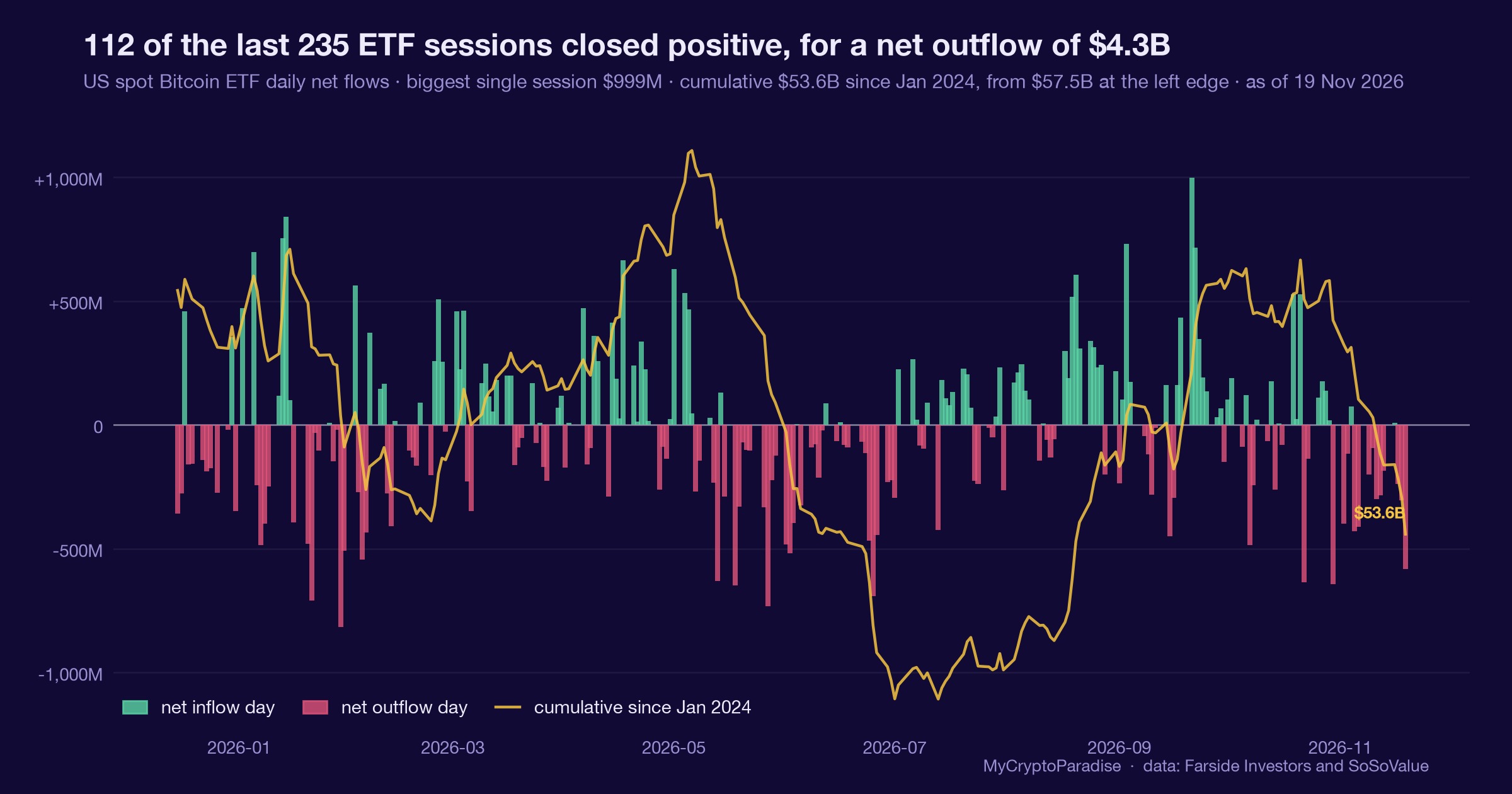
For the ParadiseTeam, this event changes who is selling, not where our map sits. The read stays that smart money has been absorbing supply at support while retail and fresh speculative money hold back.
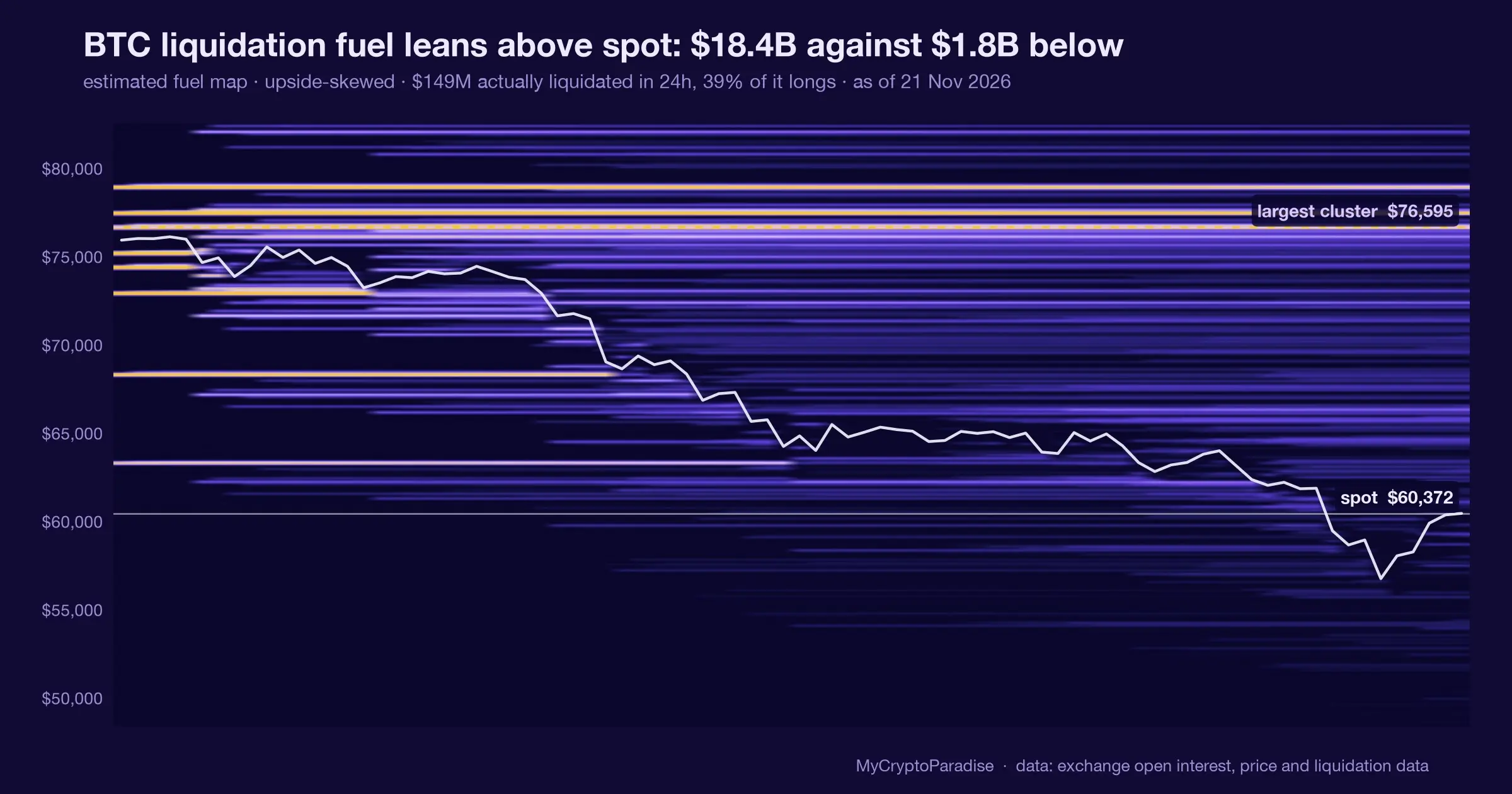
BTC was near $77,090 at the time of writing, just under the $79,000 liquidation cluster we keep flagging. That cluster is where this week's bounces have been sold in profit, so a hack-driven risk-off wave adds fuel to any rejection there rather than clearing it.
This news does not hand us a reason to chase strength into that level. Our standing bias is structurally bearish on the higher timeframes, with a reaccumulation zone far below near $44,000 to $55,000 and prior absorption marked at $71,000 and $61,000. A trust shock at a major exchange fits a deeper flush far more neatly than a clean breakout.
The liquidity imbalance still cuts both ways. More liquidation fuel sits above price than below, so a violent short squeeze toward $90,000 remains a live tail even inside bad news. Fear and forced selling can precede the sharpest squeezes.
The cleanest tell is relational, not a round number. While BNB keeps underperforming BTC, the market is still pricing exchange risk as unresolved. We would want that spread to heal, and the $79,000 ceiling to stop rejecting, before treating any bounce as more than relief.
The read behind this: we framed this story through our own market analysis, Is Bitcoin Ready for a Bigger Rally?
Track it live: our Crypto Fear and Greed Index and the crypto liquidation heatmap both update in real time, so you can watch this shift for yourself.
Related coverage
For exact entries, targets, and stop losses with full risk management, that is what ParadiseFamilyVIP is for. New to reading these moves? Start with our crypto trading strategies guide.
ParadiseTeam is monitoring the market situation closely, and we are taking these developments into consideration while building our trading tactics inside ParadiseFamilyVIP.
Crypto trading involves substantial risk. Prices are volatile and you can lose money. This article is educational and is not financial advice. Past performance does not guarantee future results.
Does Binance's backstop math steady BNB, or does exchange risk keep deepening?
How 38 Paradisers are calling it
The first call is still open
Free account, no password. Members just sign in.











Join the discussion 13
...reading settlement reports at work taught me to check the reserve line before any headline number. Withdrawal flows tell you more than a tally does.... so I'd watch those next.
What I keep asking is whether the SpaceX stake and the SAFU fund would matter as much if BNB had tracked BTC this year. Reading the whitepaper taught me to check what would change the thesis before I look at the price.
thats backwards to me. the shortfall is the thesis, not a side issue. if the exchange cant cover what got taken from users, BTC doing well doesnt help anybody who got hit
Tommy, I agree the shortfall matters, and I am not dismissing the users who were hit. My question is narrower. If the shortfall were the only problem, the fix would be a claim on the reserves and a clear audit, and that is a different thesis from whether BNB as a whole holds its value. Which specific number from the audit would make you change your view?
...I watched a withdrawal freeze overnight once, and a neat spreadsheet of who owes what doesn't unlock a single account. Show me the liquid reserves, not the stake math... liquidity decides, not opinions.
oh elif, the frozen overnight story is exactly why i stopped trusting "it's fine" posts 😅 your spreadsheet point stands, and i'd add that a corridor user never gets to ask the exchange for a math breakdown 🙏
Oh, that's a good point Elif, I'm sorry if this is a silly question!! But when a freeze happens, how do we even tell what the reserves really are before it does?
ok but when the 2021 mint money vanished, nobody gave us a breakdown like this, so why is public math suddenly the thing we trust?! 🤔
Sorry, I'm probably missing something here, but if the SAFU fund is part of the math, doesn't that make the SpaceX stake the bit people should be watching?? Tobias and Katya are both looking at funding, and I'm still stuck on why the headline number gets so much attention at all.
Tobias has the right instinct on funding, but I keep coming back to a plainer question: when CZ says the gap is covered, which wallet balances can anyone else check today? A week in 2007 taught me that a claim you cannot log is just a claim.
my bank wire to bogota sat three days last year while the peso moved 4 percent so i get why people reach for the chain, but i stopped trusting any public math that doesnt show where the reserves physically sit
sorry about the bogota wire, three days with the peso moving like that is rough. if you've found a reserves breakdown you trust, could you share the source? i'd like to check where it lines up with the on-chain flows.
the way i read a hack gap like this is through where the funding sits, not the headline number. if the perp side stayed flat while spot moved, thats a different story than basis blowing out, though i could be reading it wrong