


Listen: the breakdown
Market briefing: Blockaid has secured $40 million in funding commitments days after the $6.3 billion Binance hack, as BTC traded near $80,649, up 5.1% on the day as of 02:22 UTC. Venture money is chasing security, not fleeing crypto.
- Blockaid secured $40 million in fresh funding commitments
- The money arrived days after the $6.3 billion Binance hot-wallet hack
- Blockaid's AI reportedly flagged the drain in under two minutes
Source: Binance
Blockaid just secured $40 million in commitments days after the $6.3 billion Binance hack it reportedly flagged in under two minutes. So does venture money see opportunity where retail sees ruin?
A record exchange breach usually sends capital running for the exits. This time, some of it ran toward the fire.
Blockaid, an on-chain security and threat-prevention platform, has secured $40 million in fresh funding commitments. The money arrived in the days following the Binance hack, when roughly $6.3 billion was drained from hot wallets across Ethereum, Arbitrum and other chains on October 29. Blockaid's AI reportedly flagged those wallets being emptied in under two minutes.
That detail matters more than the headline number. A firm that watched the largest exchange hack in crypto history unfold in real time is now being handed cheques by investors who want more of exactly that.
The raise builds on an earlier round. Blockaid previously took $50 million in a Series B led by Ribbit Capital in February 2025. So this is not a first-time bet on an unproven idea. It is seasoned capital doubling down after a live stress test.
There is a quiet irony here that every cycle repeats. The breach that terrified holders became a sales pitch for the people who sell protection against it. Fear, as ever, is a business model.
Structurally, the signal is narrow but real. Institutional risk capital still treats crypto infrastructure as investable, even after a historic exchange-level loss. The money is not leaving the asset class. It is moving one layer down, into the plumbing that is supposed to stop the next drain.
Why a breach became a funding cycle
The transmission mechanism here is about where capital flows after a shock, not about price. A $6.3 billion hot-wallet hack is the kind of event that historically freezes venture appetite for months. Instead, it accelerated a specific flow: money into real-time, on-chain threat detection.
That tells you something about how institutional allocators are reading the breach. They are not treating it as proof that crypto is uninvestable. They are treating it as proof that security tooling is underbuilt and therefore underpriced.
When a platform can demonstrate it caught the largest exchange drain on record in under two minutes, it stops being a speculative pitch. It becomes a product with a reference customer problem the whole industry just lived through. That is why the commitments landed in days, not quarters.
The macro read is straightforward. Risk capital is rotating within crypto, not out of it. A breach at the exchange layer is pushing money toward the infrastructure layer, where the perceived moat just widened.
But be honest about the limits. This is a venture-funding story, confirmed as fact. The idea that it reflects broad institutional conviction is our interpretation, not a settled catalyst. No single same-day event drove the wider tape.
For traders, the practical point is simpler still. Security funding does not change BTC or ETH supply and demand. It is a signal about ecosystem confidence, not a flow into the coins themselves.
How thin the read-through to prices is
Start with the direct price impact, because it is small. A venture round for a security firm does not add or remove a single coin from circulating supply. It changes nothing about BTC or ETH order books today.
That is why we read this as neutral for crypto on its own facts. The money backs better infrastructure. It does not offset the overhang from the hack that created the demand in the first place.
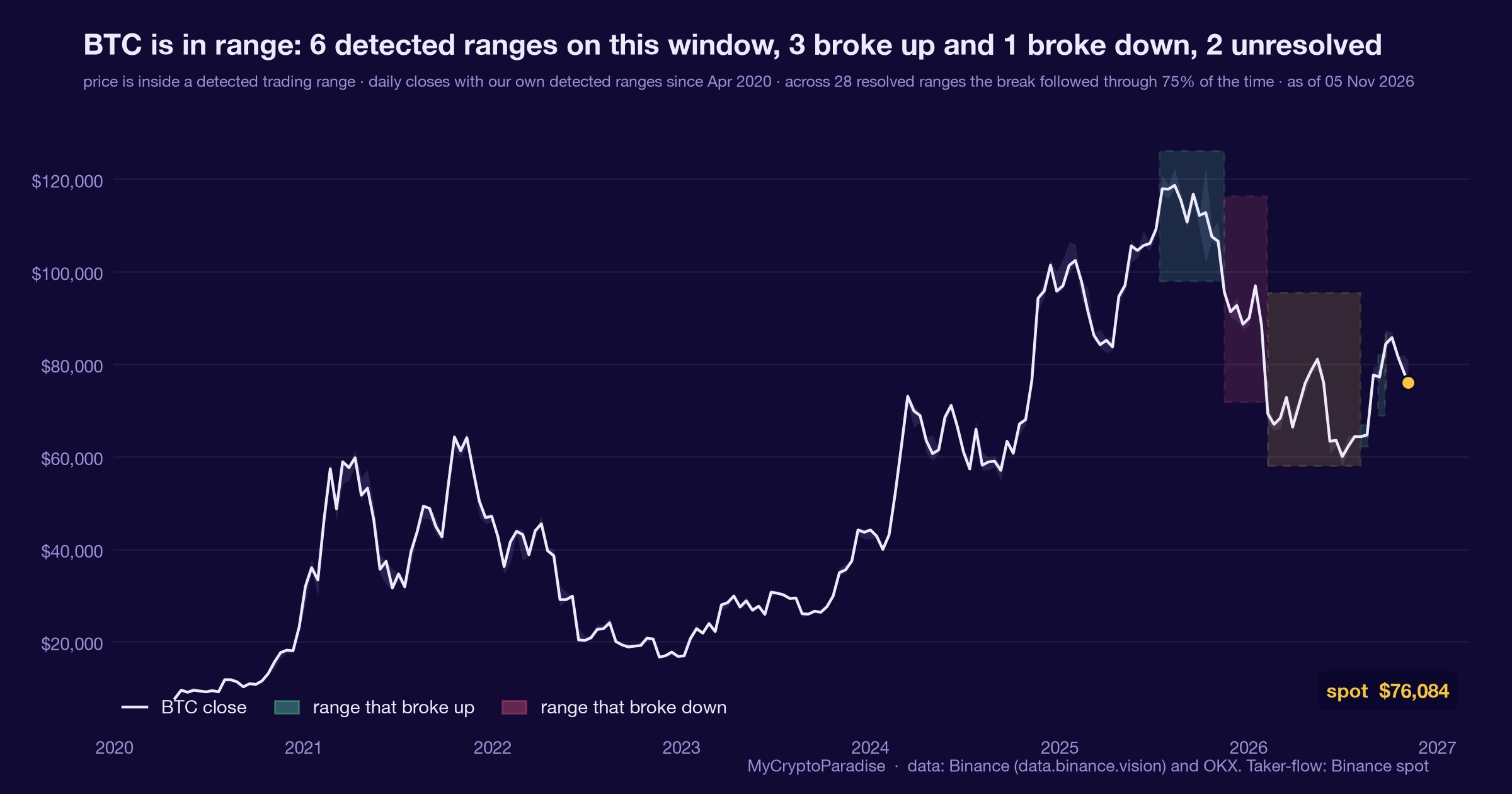
BTC was trading near $80,649, up 5.1% on the day as of 02:22 UTC. That strength is its own story. It is not a response to a $40 million commitment to a threat-detection startup, and traders should not confuse the two.
The clearest second-order link runs through BNB. BNB sat near $688.81, down 4.3% over 24 hours, while barely moving on the hour. That weakness looks tied to residual hack-narrative overhang, not to this follow-on funding news. The funding is about the fix, not the wound.
There is no meaningful cascade into ETH or alts from this item. The capital stays inside the private security corner of the ecosystem. It does not spill into liquid tokens.
So the honest framing is this. The story is constructive for crypto security infrastructure and broadly confidence-positive for the sector's long-term credibility. For the price of the coins a trader actually holds, it is close to inert, and pretending otherwise would be selling a narrative the tape does not support.
What tells us this signal is real
The thing to watch is whether this is one headline or the start of a pattern. A single $40 million round confirms appetite. A string of security raises over the coming weeks would confirm a genuine capital rotation into crypto infrastructure.
So track follow-on funding across the threat-detection and audit space. If more capital commits within the next two weeks, the thesis that a breach became a funding cycle holds. If this stays a one-off, it was a well-timed round, not a trend.
The more important variable sits elsewhere: the hack itself. History says exchange breaches take 7 to 14 days and often longer to fully clear the tape. By analogy with past large hacks, the real test is how the market behaves in the second and third week after October 29.
Watch BNB specifically. If its 24-hour weakness fades and it stabilises, the residual hack overhang is clearing. If it keeps leaking while BTC holds up, the breach is still being digested at the exchange layer.
For BTC, the confirmation question is different and bigger than this story. A clean, impulsive push with rising volume would argue the recovery has legs. Fading volume on bounces would argue the opposite.
Invalidation of the constructive-infrastructure read is simple. If security funding dries up and no further commitments appear, this headline was noise dressed as a cycle.
What the funding signals for sector confidence
The ParadiseTeam frames this as a confidence signal for crypto's plumbing, not a directional trigger for coins. Separate the two cleanly and you will not get caught trading a venture round as if it were a flow.
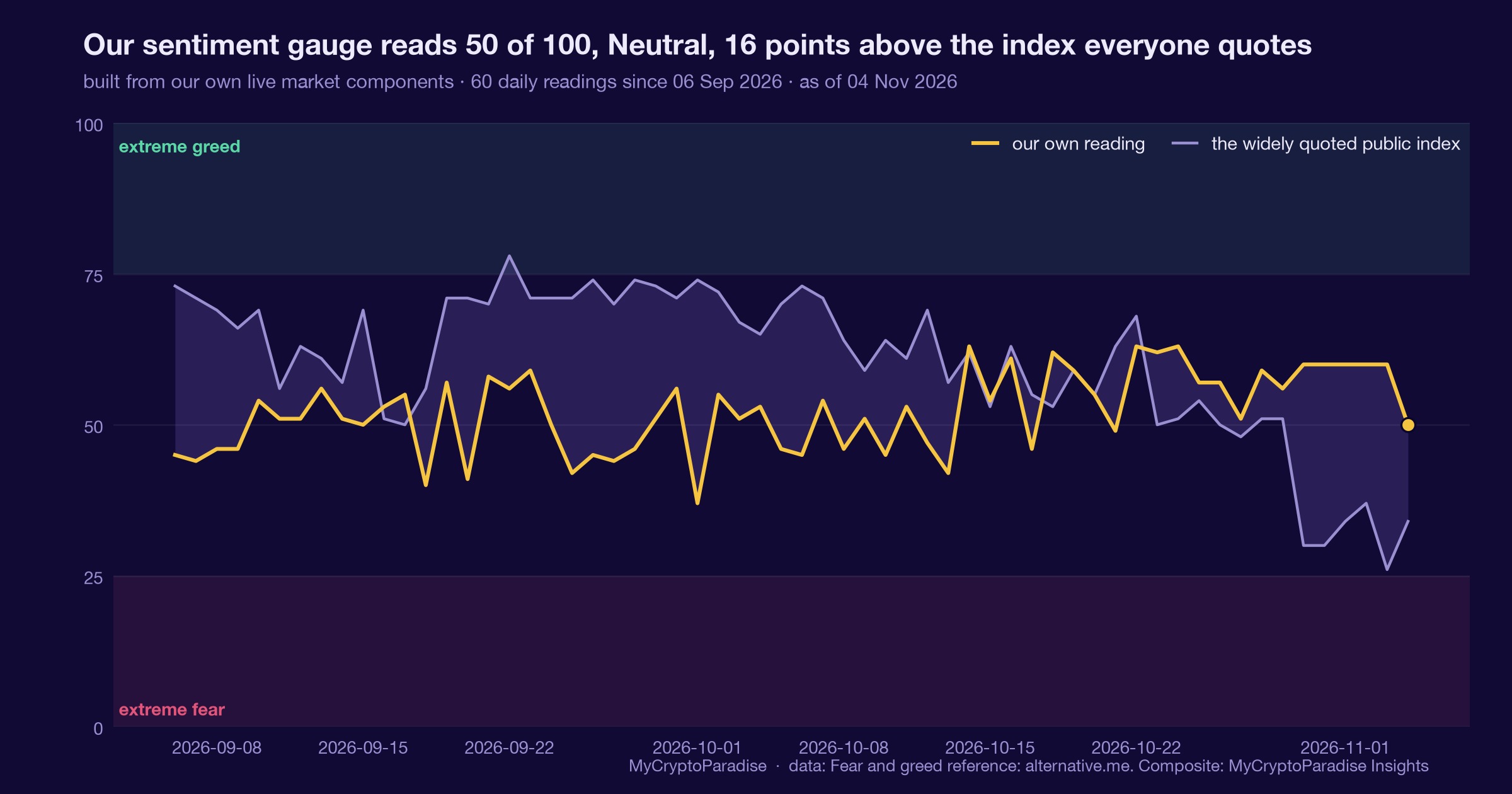
Apply our standing caution here. Retail sentiment is warming fast and buying into strength, while larger holders have been distributing into that enthusiasm. A feel-good security headline is exactly the kind of story that can get read as bullish confirmation when it changes nothing structural.
BTC near $80,649 sits inside a zone we still treat with care. We view recoveries toward the $90,000 area as more likely to meet selling than to mark a clean reversal, until price proves otherwise with a genuine impulsive move and rising volume.
Below, the levels that matter are well away from this story: a prior accumulation zone around $61,000, and deeper reference points near $55,000 and $44,000 in the bearish case. None of them move on a security raise.
Who benefits here is narrow. Private investors backing infrastructure benefit. Holders of the coins do not get a tailwind from it.
The trap to avoid is obvious. Treating ecosystem confidence as a price catalyst is how late-cycle enthusiasm gets absorbed by patient sellers. Note the signal, respect the hack overhang, and let BTC's own structure, not this headline, set your bias.
The read behind this: we framed this story through our own market analysis, Bitcoin Longs Pile In While 67% of Whales Sell.
Track it live: our live crypto funding rates and the Crypto Fear and Greed Index both update in real time, so you can watch this shift for yourself.
Related coverage
For exact entries, targets, and stop losses with full risk management, that is what ParadiseFamilyVIP is for. New to reading these moves? Start with our crypto trading strategies guide.
ParadiseTeam is monitoring the market situation closely, and we are taking these developments into consideration while building our trading tactics inside ParadiseFamilyVIP.
Crypto trading involves substantial risk. Prices are volatile and you can lose money. This article is educational and is not financial advice. Past performance does not guarantee future results.
Does VC money keep flowing into crypto security after the Binance hack?
How 1 Paradiser is calling it
The first call is still open
Free account, no password. Members just sign in.










Join the discussion
No comments yet. Members, share how you are reading this.