


Listen: the breakdown
Developing story update (November 02, 2026, 04:22 UTC):
Spot bitcoin ETFs see largest daily outflows in four months following record Binance hack
Developing story update (November 02, 2026, 01:18 UTC):
Spot bitcoin ETFs recorded $643.3 million in net outflows on Friday following the Binance hack, marking their largest single-day outflow since Jun 25.
Spot ether ETFs also saw $155.9 million in net outflows, their largest since Oct. 7. BTC ETH
Market briefing: Bitcoin ETFs shed $643.2 million in one session after the record Binance hack, pushing October to roughly $516 million in net outflows. Yet BTC was trading near $77,935, up about 0.5%, so the fund channel is bleeding while spot stays calm.
- Bitcoin ETFs saw $643.2 million in single-day outflows, the first full session after the $6.4 billion Binance hack
- October closed with roughly $516 million in net Bitcoin ETF outflows
- Spot held firm as BTC traded near $77,935 and BNB near $713.82, both green on the day
Bitcoin ETF investors pulled $643 million in one session after the Binance hack, yet BTC barely moved. So is the money running scared the start of a breakdown, or just a narrow slice of flows?
Bitcoin ETF investors pulled $643.2 million in a single day. The redemptions hit Friday, the first full trading session after the record $6.4 billion Binance hack. That one session alone dragged October to roughly $516 million in net outflows.
The timing is not subtle. A security shock at the largest exchange landed, and the newest, most headline-reactive slice of Bitcoin demand headed straight for the exits. Spot ETFs are the clearest window into how traditional finance feels about holding Bitcoin. Right now, part of that base treats an exchange breach as a reason to trim, not to buy the dip.
Here is the part that does not fit the panic. BTC was trading near $77,935, up roughly 0.5% on the day. BNB sat near $713.82, up about 1.2%. The wrapper bled money. The underlying price refused to break.
Forum discussion noticed the same gap, asking why Bitcoin only slipped a few percent on a $6.4 billion theft. It is a fair question. When a disaster headline meets a shrug in spot, the flow story and the price story have quietly split apart. That split is the real news, not the outflow number itself. Money left the fund, but it did not leave the market.
ETF flows now set institutional demand
ETF flows are the cleanest read we have on traditional-finance appetite for spot Bitcoin. So a $643.2 million single-day redemption, landing right after a record exchange hack, tells us something specific. Part of the institutional and retail ETF base treats a security shock as a signal to reduce, not to accumulate.
That matters because of who holds this exposure. ETF money arrived through advisors, wealth platforms, and allocators who answer to compliance and risk committees. When a $6.4 billion breach dominates the headlines, those seats reach for the sell button first and ask structural questions later.
The transmission is direct. Redemptions force fund issuers to shed underlying Bitcoin, which should, in theory, press spot lower. Yet spot did not fold. BTC closed the day green, which means the selling stayed contained inside the ETF channel rather than spilling into the broader order book.
That is the tell. This looks like a localized flow exodus from a headline-reactive cohort, not broad distribution across the whole market.
October's roughly $516 million net outflow frames the mood. Demand from the TradFi side cooled across the month, and the hack simply handed the nervous money a reason to act. The question now is whether this narrow de-risking stays narrow, or whether a second and third session of redemptions finally forces the spot market to confirm the fear.
Money leaves the wrapper, spot stays green
On its own facts, this is a risk-off event. A record hack pulled money out of the Bitcoin ETF channel, and institutional outflows rarely signal confidence. So the near-term lean is bearish, and the pressure point sits squarely in the fund wrapper.
If redemptions continue, the mechanism is simple. Issuers sell the underlying to meet outflows, and that supply has to find a bid somewhere in spot. For now the market absorbed it. But a second heavy session would test whether spot can keep soaking up forced selling without cracking.
Bitcoin is the first domino. A sustained ETF bleed pressures BTC, and BTC sets the tone for everything beneath it. ETH typically feels the drag next, because it carries the same institutional attention and the same headline sensitivity.
Alts sit most exposed of all. They have no ETF bid to lose, so they inherit the fear without the structural support, and liquidity thins fastest there when risk appetite drops.
Here is the honest counterweight. BNB, the token at the center of the hack, was up over 1% on the day. A $46 million routing of stolen funds into Bitcoin earlier barely moved the tape either. That resilience does not cancel the bearish flow signal, but it does cap how far the panic has spread so far. The redemptions are real. The breakdown, for now, is not.
Reclaiming $79,000 is the real test
One session does not make a trend, so the next few days of ETF data carry the weight here. A single $643 million exit reads as a reaction. A string of them reads as a decision.
Confirmation of the bearish case is straightforward. Watch for continued redemptions, then watch spot. If BTC starts leaking below current levels while flows keep draining, the ETF fear has finally reached the order book. ETH softening and alts bleeding faster would complete that picture.
Invalidation looks different. If outflows stabilize or flip back to inflows within a session or two, this becomes a one-day scare that a nervous cohort already absorbed.
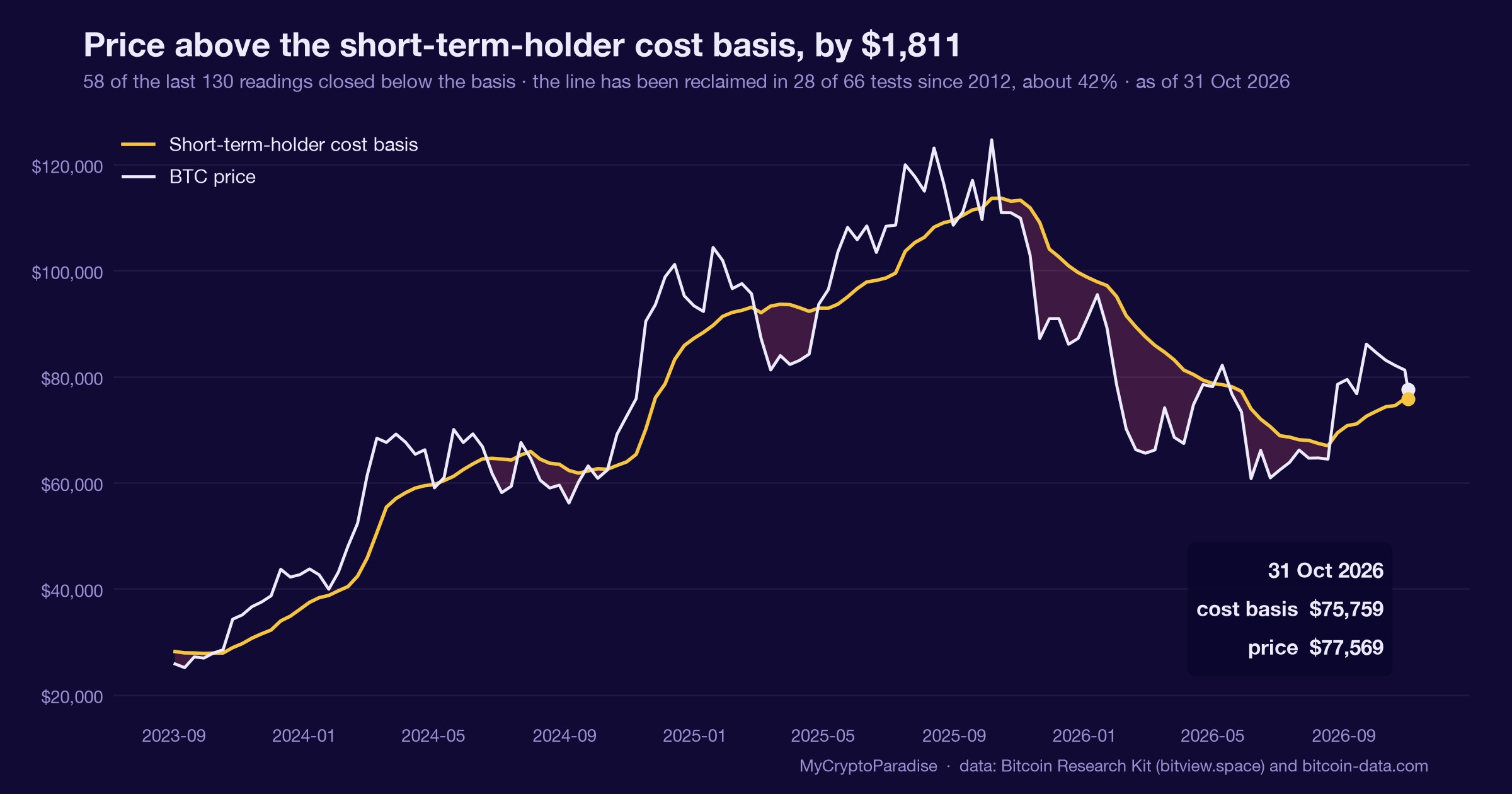
The cleanest price marker sits just overhead. BTC was trading near $77,935, a short reach under the $79,000 area that once acted as support and now sits as a decision point. A clean reclaim of that zone as resistance would tell us demand is stepping back in despite the headlines.
Fail there and the story tilts the other way. Strength that stalls just under $79,000, while ETF money keeps leaving, is exactly how a shaky bounce rolls over. So the trigger to respect is the gap between flows and price. As long as it stays open, spot is quietly disagreeing with the panic. The moment both point the same way, the market has made up its mind.
Reading a narrow exodus against steady spot
The ParadiseTeam reads this as a catalyst, not a cause. The outflows did not break Bitcoin. They simply accelerated a repositioning that structure had already set in motion well before the hack landed.
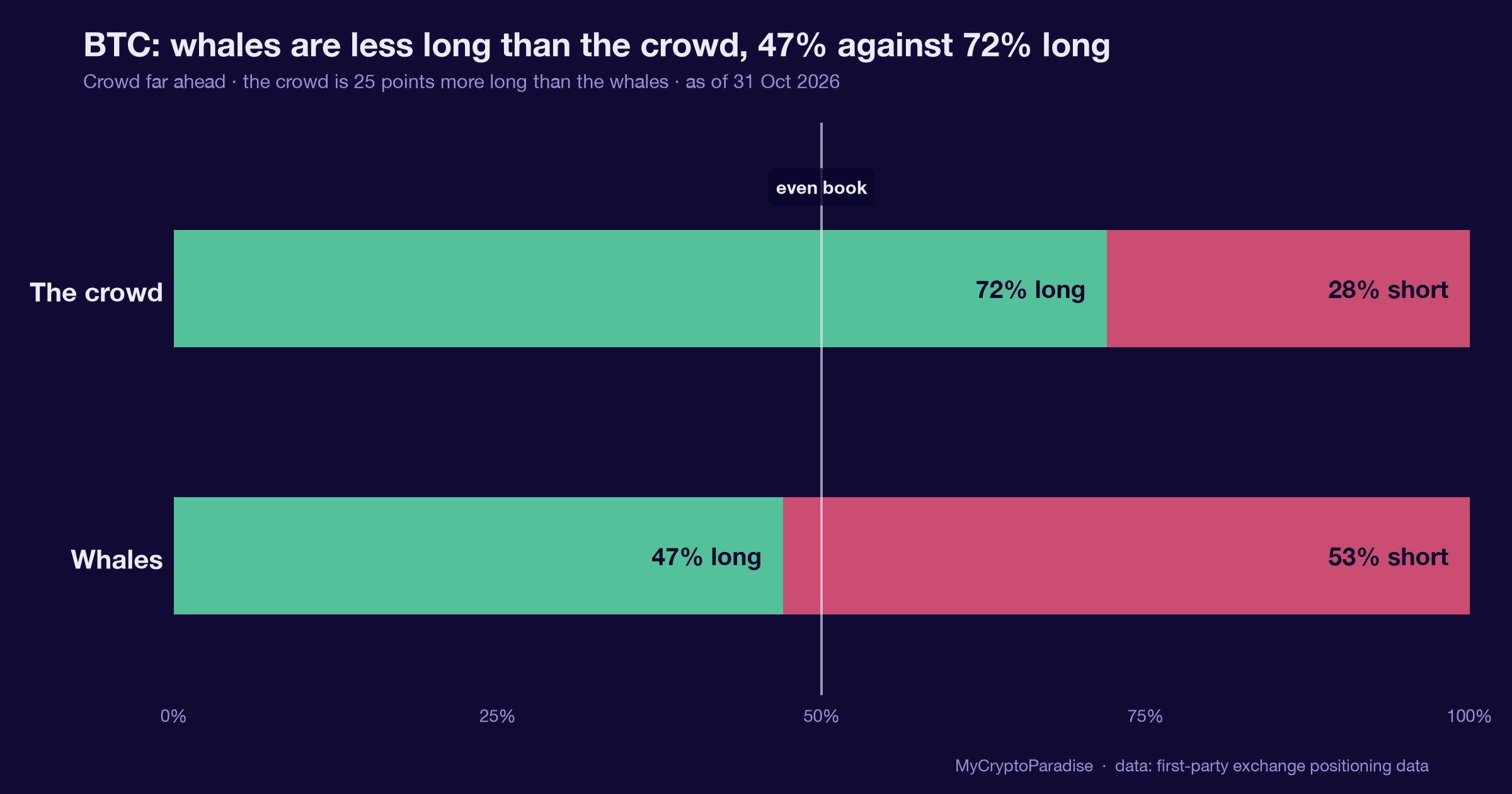
Consider who moved and when. A closely tracked whale closed its Bitcoin long on October 28, right before the breach, then flipped short. That is smart money acting on structure days ahead of the headline, while ETF holders redeemed days after it. The sequence tells you who was early and who was reacting.
For the levels that matter, our focus stays on $79,000. BTC was trading near $77,935, just under that former support zone, now neutral and best treated as resistance. A reclaim there raises the odds of a push toward the top of the first wave. Lose the grip, and this bounce is vulnerable.
Above that, the 0.618 Fibonacci retracement is the line we respect. Reclaim it and price discovery becomes the live scenario. Until then, strength can still meet sellers near resistance, which keeps us cautious rather than convinced.
So the honest read is nuanced. We are not calling the ETF exodus confirmed accumulation, because the flow signal is genuinely risk-off. But we are also not treating resilient spot as a decisive bearish turn. Retail is selling the fear through the fund wrapper. The structure, meanwhile, was already positioned long before the news arrived.
The read behind this: we framed this story through our own market analysis, Binance Hack: Is Bitcoin's Small Drop Bullish?
Track it live: our Crypto Fear and Greed Index and the live crypto funding rates both update in real time, so you can watch this shift for yourself.
Related coverage
For exact entries, targets, and stop losses with full risk management, that is what ParadiseFamilyVIP is for. New to reading these moves? Start with our crypto trading strategies guide.
ParadiseTeam is monitoring the market situation closely, and we are taking these developments into consideration while building our trading tactics inside ParadiseFamilyVIP.
Crypto trading involves substantial risk. Prices are volatile and you can lose money. This article is educational and is not financial advice. Past performance does not guarantee future results.
Does the ETF exodus spread into real spot selling over the next sessions?
How 24 Paradisers are calling it
The first call is still open
Free account, no password. Members just sign in.
Follow this topic: Bitcoin ETF news












Join the discussion 5
ah the flows are what i actually keep an eye on lol, price can sit still while the etf numbers tell a different story 👀 marta i get the nerves, i've been on the receiving end of a rug 😅
Sorry, I'm probably reading this wrong, but $643 million leaving ETFs after a hack still makes me nervous!! I remember staring at my first tiny buy after a night shift, hands shaking, so I get why people run.
nah people pulling out after a hack is not the same as the coin being broken. binance got robbed, the money still sits in the wallets, and the etf guys run for the exit anyway. i dont buy that logic
Hmm, the Binance hack is what I keep coming back to, because in 2013 I printed the whitepaper at an internet cafe and nobody was pulling money out of anything yet. Maybe the outflows say more about who was positioned long than about the hack itself.
honestly the people pulling out after one exchange incident are reacting to headlines. where I live I measure everything by what it does to purchasing power over years... a few bad weeks barely register on that scale.