

Listen: the breakdown
Update on this developing report (November 26, 2026, 14:05 UTC):
New detail sharpens the picture on this nine-year holder. Based on our sources, the wallet first built its position in 2017, accumulating 23,412 ZEC near $215 a coin for a cost basis just above $5 million. With ZEC changing hands around $723 at the time of the transfer, that position sits on an unrealized gain of roughly 236%.
The 15,750 ZEC sent to Kraken represents about two-thirds of that original stack, not the entire holding. Moving size after a gain like this reads more like a holder testing liquidity or preparing to realize part of the position than panic selling into strength. A deposit is still not a confirmed sale: there is no on-chain fill, so treat any distribution framing with caution until size actually clears the book.
What to watch now: Watch for more dormant ZEC wallets reactivating and hitting exchanges, which would point to early-cycle supply returning.
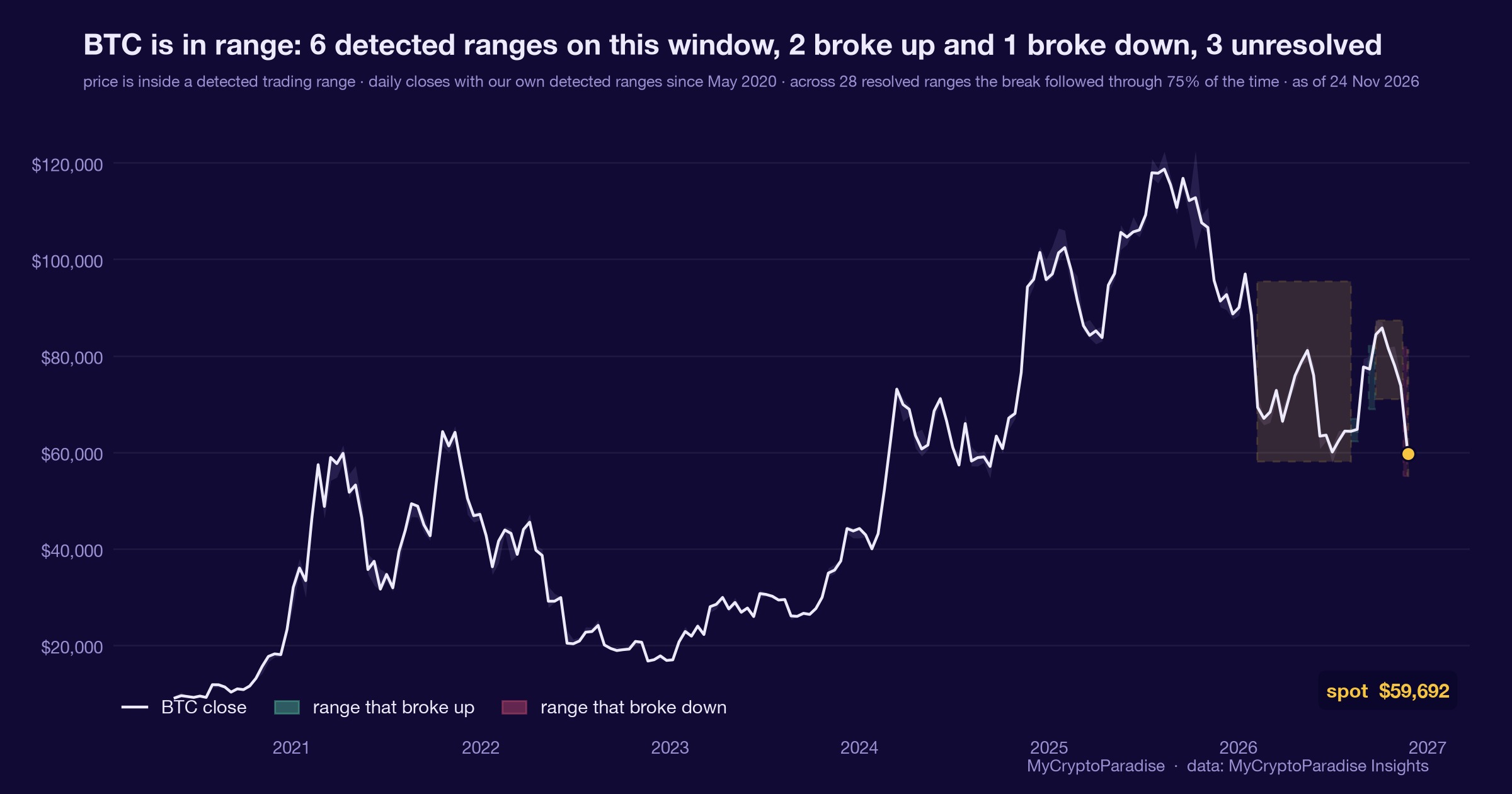
Market briefing: A Zcash wallet dormant for nine years just sent 15,750 ZEC, about $11.39 million, to Kraken. BTC was trading near $60,789, up 4.2% on the day, as of 13:37 UTC.
- A nine-year dormant Zcash whale moved 15,750 ZEC to Kraken
- The deposit is worth roughly $11.39 million at current prices
- The stack sits on an estimated 236% unrealized gain versus 2017 cost
A Zcash whale has woken after nine years and sent $11.39 million in ZEC to Kraken. Is this an early holder quietly preparing an exit?
A Zcash wallet sat untouched for nine years. This week it moved. The holder sent 15,750 ZEC, worth roughly $11.39 million, straight to Kraken.
The backstory makes the move interesting. The same wallet reportedly bought 23,412 ZEC back in 2017, paying around $215 a coin. That was a little over $5 million at the time. Today those coins trade near $723 each, so the deposit carries an estimated unrealized gain of about 236%.
That is the kind of return most holders only talk about at parties. This one appears ready to do something about it.
Notice the size of what moved. The whale did not send everything. The 15,750 ZEC on Kraken is roughly two-thirds of the original stack, which means a third still sits off-exchange. Partial, not full. That detail matters when you try to read intent.
We should be precise about what is confirmed and what is not. The transfer is real and on-chain. The 2017 purchase price is an estimate, not a verified record. And a deposit to an exchange is not proof of a sale; it is proof of liquidity being staged, nothing more.
Still, the profile is familiar. A long-dormant buyer, an enormous paper gain, and a sudden move to the one place where coins become cash. Early holders rarely bridge to an exchange to admire the view. The question for the market is whether this is one wallet or the first of several.
A nine-year holder derisking into strength
Dormant supply is the quiet variable in every market. When coins sit still for nine years, the float that actually trades shrinks, and prices can move on thinner volume. This deposit reverses a small piece of that. It takes 15,750 ZEC that were effectively out of circulation and parks them where they can hit the order book at any moment.
That is the real transmission mechanism here. Not a headline, but available supply.
The timing sharpens it. This whale is sitting on roughly a 236% gain, and it chose to stage liquidity while the broader tape runs hot. Risk-on days are when buyers show up willing to absorb size. An early holder who wants out would rather sell into that strength than into a panic.
There is a second-order worry for Zcash specifically. Old wallets tend to move in cohorts. One nine-year holder cashing a life-changing gain can nudge others watching the same chart to do the same. If a few more legacy stacks follow this one onto exchanges, the supply overhang grows faster than new demand typically arrives.
None of that is destiny. A third of the position stayed home, and the holder may simply want optionality rather than an exit. But structurally, coins on an exchange are coins that can be sold, and coins in cold storage are not. That shift, from idle to sellable, is why a single old wallet deserves a second look.
Supply pressure on ZEC, little BTC spillover
Start with where this lands and where it does not. This is a ZEC-specific flow. It adds potential sell pressure to Zcash, but the read-through to Bitcoin and Ethereum is thin. BTC printed just +0.27% on the hour and ETH +0.39% as this crossed, both drifting on their own broader momentum rather than reacting to one alt wallet.
So the cascade here is narrow, not market-wide.
For ZEC itself, the risk is straightforward. If the whale sells, roughly $11.39 million in supply needs fresh buyers to absorb it. In a deep, liquid market that gets digested quietly. In a thinner alt, the same size can press the bid and pull price lower before demand catches up.
Bitcoin and Ethereum, meanwhile, are living in a different story today. Both posted solid daily gains, with BTC near $60,789 and up 4.2% on the session as of 13:37 UTC. Liquidity is clearly flowing into majors, not draining out, which is the opposite backdrop to a liquidity squeeze.
That split is the point. This news does not threaten the broad market. It threatens one coin's local supply-demand balance. Traders who conflate a single whale's exit prep with a market-wide signal will mis-size the risk. The honest framing is small and specific: one old holder derisking, with the pressure concentrated on ZEC and the majors carrying on regardless.
Signs this deposit turns into selling
Confirmation is simple to define here, so watch for it rather than assume it. The deposit alone changes nothing on the chart. What changes the picture is the coins actually leaving the whale's control and hitting the order book.
The cleanest tell is Kraken outflow or distribution, not just the inflow we already saw. If those 15,750 ZEC sit on the exchange untouched for days, the holder may only want liquidity on standby. If they start moving in sell-sized clips, the exit thesis firms up.
Watch the other third, too. The whale kept roughly a third of the original stack off-exchange. If that remainder follows onto an exchange, read it as escalation. A holder trimming keeps a core; a holder exiting sends the rest.
The cohort signal matters more than any single wallet. Keep an eye on whether other long-dormant ZEC addresses light up in the same window. One nine-year holder is an anecdote. Three or four is a trend, and a trend in old-supply mobility is what actually caps price.
Invalidation of the bearish read would be equally clear. Fresh large wallets stepping in to absorb these coins, or the whale redistributing back into cold storage, would argue accumulation rather than exit. We have no evidence of either yet. Until the coins move again, this stays a staged position, not a confirmed sale, and we should treat it exactly that honestly.
What the deposit means for ZEC liquidity
The ParadiseTeam reads this as a legacy holder derisking into strength, not smart money building a position. Two-thirds of the stack moved, the gain is enormous, and nothing in the flow suggests fresh accumulation. That is the behaviour of someone testing an exit, not someone loading up.
The ParadiseTeam frames it inside a cautious tape, where bounces have looked more like leverage than conviction. BTC was near $60,789 and up on the day as of 13:37 UTC, but our standing view keeps $64,000 as resistance after it flipped from support, with risk still skewed toward a deeper flush toward $44,000 and possible confluence near $34,000. That backdrop matters for how you weigh this news. On risk-on days, old holders find the buyers they need to sell into. Strength is where distribution happens, not where it stalls.
The ParadiseTeam's edge call is to resist the reflex that a trending whale story is automatically bullish. Here the facts point the other way: supply moving toward sellability, no absorbing demand visible, a position already up around 236%.
For ZEC specifically, treat rallies with suspicion until the deposit resolves. If the coins sell and others follow, local supply overwhelms demand. If they go quiet or return to cold storage, the pressure lifts. The ParadiseTeam waits for the coins to move again before upgrading this from staged liquidity to a confirmed exit, and sizes risk for the bearish case until proven otherwise.
The read behind this: we framed this story through our own market analysis, Bitcoin Bounce Was Leverage, Not Smart Money.
Track it live: our Crypto Whale Alert and Tracker and the Crypto Fear and Greed Index both update in real time, so you can watch this shift for yourself.
Related coverage
For exact entries, targets, and stop losses with full risk management, that is what ParadiseFamilyVIP is for. New to reading these moves? Start with our crypto trading strategies guide.
ParadiseTeam is monitoring the market situation closely, and we are taking these developments into consideration while building our trading tactics inside ParadiseFamilyVIP.
Crypto trading involves substantial risk. Prices are volatile and you can lose money. This article is educational and is not financial advice. Past performance does not guarantee future results.
Does the Zcash whale sell the ZEC or let it sit on Kraken?
How 2 Paradisers are calling it
The first call is still open
Free account, no password. Members just sign in.











Join the discussion
No comments yet. Members, share how you are reading this.