


Listen: the breakdown
Market briefing: Tether says its wallet freezes slashed Iran-linked stablecoin volume by 94 percent, pushing back on a U.S. senator's compliance critique. BTC sat near $82,063 and barely moved.
- Tether disputes a U.S. senator's reading of its sanctions compliance record.
- The firm claims wallet freezes cut Iran-linked stablecoin volume by 94 percent.
- BTC held near $82,063 with no meaningful reaction to the stablecoin headline.
Tether says wallet freezes cut Iran-linked stablecoin volume by 94 percent, firing back at a U.S. senator. Does a compliance win actually move crypto prices?
Tether pushed back hard against a U.S. senator this week, and the number it chose to fight with was 94 percent.
Chief executive Paolo Ardoino disputed Senator Richard Blumenthal's analysis of the company's sanctions compliance. The core claim is simple: Tether says its own wallet freezes have reduced Iran-linked stablecoin transaction volume by 94 percent. That is a large figure for the issuer of the world's most-used dollar token to put on the record, and it was clearly meant to be read as a line in the sand.
The framing matters more than the back-and-forth. Tether is no longer defending USDT purely on reserves or redemptions. It is now defending the token as a policed network, one where addresses get frozen and flows get cut.
Strip away the political theatre and you are left with a structural shift. The largest stablecoin is presenting itself as an enforcement partner rather than a passive issuer. That reframes the whole argument around systemic risk.
Markets, for their part, barely looked up. BTC traded near $82,063, down about 0.6 percent on the day, and ETH sat around $2,410. A headline that would have rattled traders two cycles ago now reads as routine housekeeping.
That calm is the real tell. Regulatory noise around stablecoins has become so constant that the market treats a fresh compliance claim as background hum, not breaking news. We would not call this a catalyst. It is a defensive move in a long argument that is far from settled.
The sanctions test every stablecoin now faces
USDT is the plumbing, so its compliance posture is a crypto-wide question, not a Tether-only one.
Most spot and perpetual pairs on major exchanges settle in dollar stablecoins. When the largest issuer claims it can freeze addresses and collapse illicit flows by 94 percent, it is really describing how much control sits above the market. That control is reassuring to regulators and uncomfortable for anyone who bought crypto expecting fewer gatekeepers.
The transmission chain runs through confidence, not price. A credible sanctions-enforcement story lowers the odds of a sudden, forced clampdown on the token everyone trades against. Lower tail risk on USDT means steadier liquidity, tighter spreads, and fewer reasons for institutions to stay on the sidelines. That is the bull case for taking compliance seriously.
The counterweight is just as real. Every freeze is a reminder that a private company can switch off balances at will. For a sector built on self-custody rhetoric, that centralisation is an awkward fact, and it caps how far this news can lift sentiment.
So the macro read is genuinely two-sided. De-risking the dollar rail is constructive for the ecosystem's long-term standing with policymakers. Yet it hands no new capital to BTC or ETH today and underlines who holds the kill switch. That is why a 94 percent claim can be important for the stablecoin debate while changing almost nothing on the chart this week.
Muted tape meets a compliance headline
The price action already told the story: nothing much happened.
BTC changed hands near $82,063, off roughly 0.6 percent over 24 hours, while ETH hovered around $2,410 on a similar move. For a headline involving sanctions, Iran, and the biggest stablecoin on earth, that is a remarkably flat response. The market read it as operational, not directional. That muted reaction is the honest signal here. There is no single confirmed catalyst driving today's tape, and this Tether dispute is not it either.
Walk the usual cascade and it simply does not fire. A genuine USDT confidence shock would hit stablecoin liquidity first, then drag BTC, then bleed harder into ETH and the long tail of alts. We saw none of that sequence. Spreads held, and the dollar rail kept working as normal.
If anything, the lack of stress is quietly constructive for liquidity. A clean compliance narrative removes one excuse for institutions to question USDT depth, which keeps the exchange plumbing steady beneath BTC and ETH. But steady is not the same as bullish. Alts, which need fresh risk appetite and new inflows to run, get nothing actionable from a sanctions-enforcement claim.
So the near-term impact lands as neutral. The news reduces a slow-burn regulatory worry without adding a dollar of buying pressure. On its own facts, it stabilises confidence at the margin and leaves the trend to be decided by other forces entirely.
Where freezes become a liquidity question
The thing to track is not the price today, but whether this compliance claim turns into a policy response.
Confirmation that this matters would look like formal follow-through: a regulator or lawmaker escalating, or Tether disclosing more detail on frozen addresses and methodology. If the 94 percent figure becomes a reference point others accept, the stablecoin de-risking narrative strengthens, and that is a slow positive for institutional trust in the dollar rail.
Invalidation looks different. If the dispute hardens into a real enforcement threat against USDT itself, the calm we see now could break fast.
Watch stablecoin behaviour for the first sign of stress. Any sustained USDT depeg, a spike in redemptions, or thinning depth on major pairs would flip this from a non-event into a genuine liquidity problem for BTC and ETH. None of that is visible yet.
Keep an eye on whether this stays a one-off headline or becomes a recurring theme. A single rebuttal from a chief executive is noise. A pattern of regulators probing stablecoin sanctions compliance is a slow-moving risk worth respecting.
For now, the cleanest tell is still the tape. BTC refusing to react to a sanctions-and-Iran headline tells you the market has filed this under routine. So watch the structure, not the soundbite. The level that decides direction this week lives in Bitcoin's own chart, not in a compliance dispute. Treat this story as context for how durable USDT liquidity is, and let price confirm the rest.
What 94 percent means for USDT trust
The ParadiseTeam treats this as a confidence item, not a trade trigger, and keeps the focus on Bitcoin's own structure.
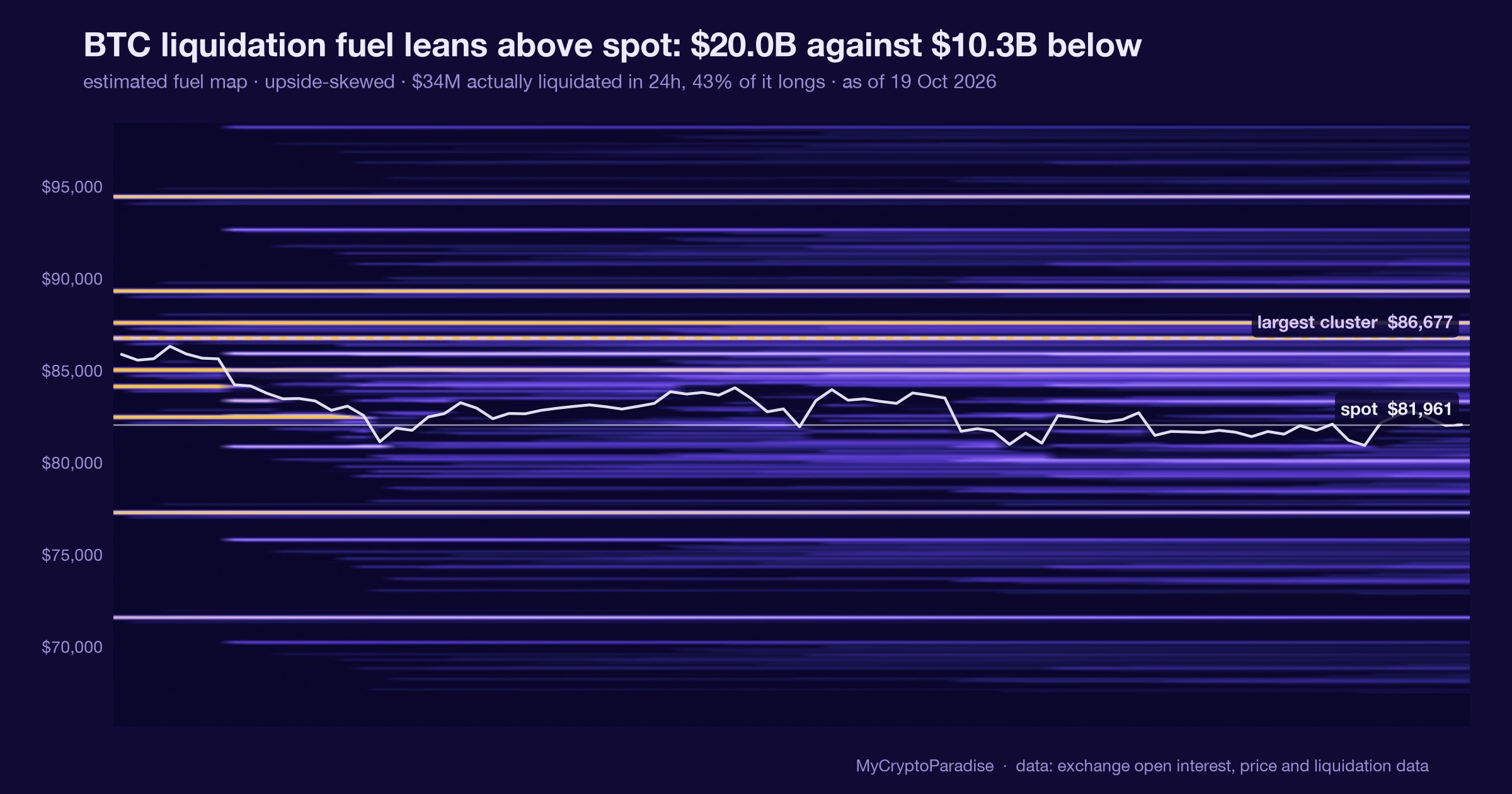
With BTC trading near $82,063 as of the latest read, the market sits just above the zone we care about. Our lens still frames $78,000 to $79,800 as the key support band, where a cluster of overleveraged longs sits exposed. A clean USDT compliance story matters here because it removes one reason for liquidity to vanish if price revisits that zone. That is the real link. Stable dollar-rail confidence means a dip toward $79,000 is more likely to be absorbed than to spiral.
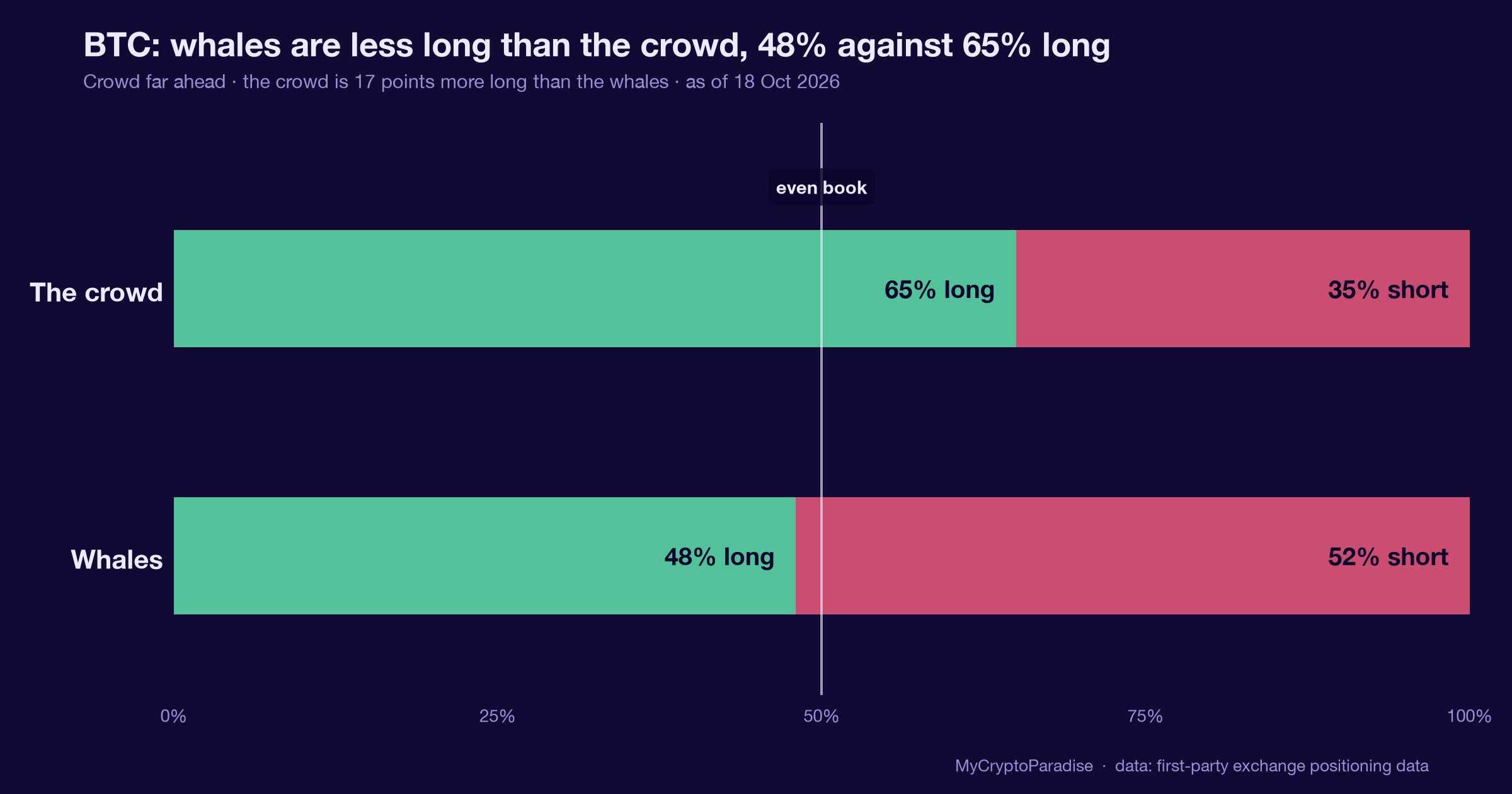
We read the standing picture as smart money accumulating while retail micro-capitulates. Spot buying has been carving higher lows, and momentum divergences suggest sellers are tiring even on lower price lows. A non-threatening stablecoin headline does nothing to break that pattern.
On the upside, our map keeps $85,000 and $88,400 as short-liquidation pockets, with $90,000 the stretch target. Note the caution: strength into those levels can meet distribution, so we do not assume a straight line up. This news changes none of those levels. It simply lowers the odds of a liquidity shock derailing the setup while the $78,000 to $79,800 support holds.
So the ParadiseTeam files Tether's 94 percent claim as background that supports stable conditions, not as a signal. Price at support, not a compliance soundbite, decides the next move.
The read behind this: we framed this story through our own market analysis, Can Bitcoin Rally Back to $90K?
Track it live: our live crypto funding rates and the Crypto Fear and Greed Index both update in real time, so you can watch this shift for yourself.
Related coverage
For exact entries, targets, and stop losses with full risk management, that is what ParadiseFamilyVIP is for. New to reading these moves? Start with our crypto trading strategies guide.
ParadiseTeam is monitoring the market situation closely, and we are taking these developments into consideration while building our trading tactics inside ParadiseFamilyVIP.
Crypto trading involves substantial risk. Prices are volatile and you can lose money. This article is educational and is not financial advice. Past performance does not guarantee future results.
Does Tether's 94 percent freeze claim lift institutional trust in USDT?
This is how 1 Paradiser is calling it. Tap your call.
No calls on this one yet. Tap yours to be the first.
Free account, no password. Members just sign in.
Follow this topic: Stablecoin news







Join the discussion
No comments yet. Members, share how you are reading this.