

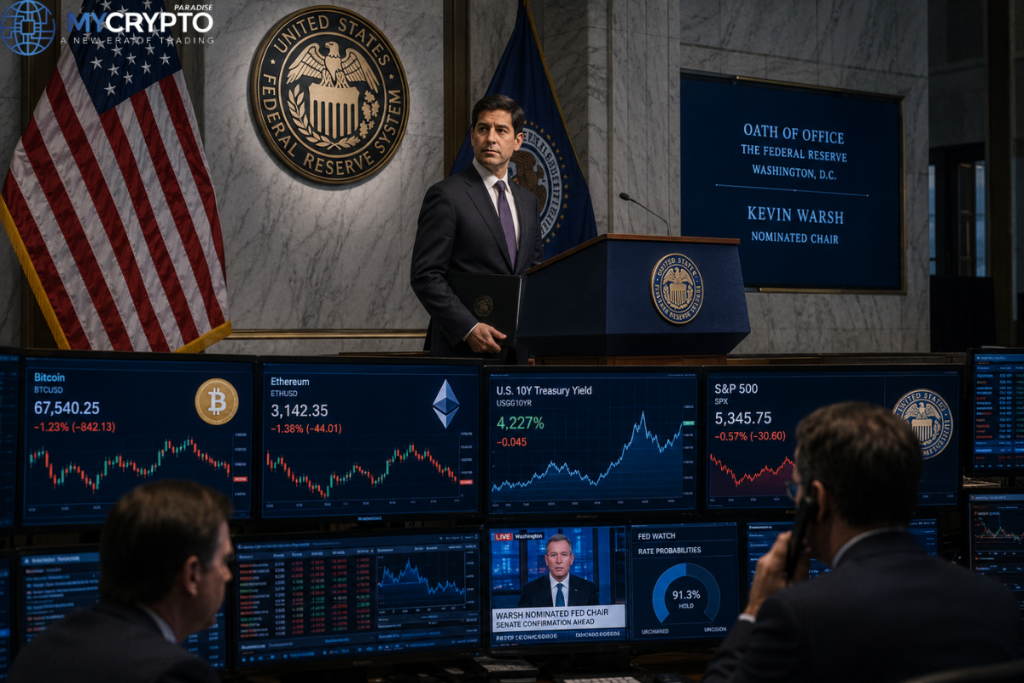
- Kevin Warsh officially replaces Jerome Powell as Fed Chair Friday
- Markets now watch for shifts in rates, liquidity, and Fed tone
- Crypto traders eye whether Warsh leans growth friendly or inflation hardline
The Federal Reserve rarely changes leadership without markets rewriting expectations almost immediately. Is Kevin Warsh about to reshape the liquidity backdrop driving Bitcoin and crypto risk appetite?
President Donald Trump will officially swear in Kevin Warsh as Federal Reserve Chair on Friday, completing a transition process that began in mid 2025 and ended last week with Senate confirmation largely along party lines.
Kevin Warsh replaces Jerome Powell. He becomes the 11th modern Fed chair and the wealthiest to hold the role.
That detail matters less for symbolism and more for perception. Markets do not just price policy. They price personality, ideology, and probability. Central banking is partly economics and partly theater with unusually expensive consequences.
Kevin Warsh takes over at a tricky time. Inflation is lower, but growth and liquidity risks remain. Markets want to know if he will support stability or prioritize fighting inflation.
Why Kevin Warsh Matters for Crypto
Kevin Warsh matters for crypto because Federal Reserve leadership directly influences liquidity conditions, interest rate expectations, and overall risk appetite across global markets.
The macro transmission mechanism is straightforward. Fed policy affects rates, rates affect liquidity, liquidity affects investor risk tolerance, and crypto remains one of the most liquidity sensitive asset classes in the world.
If Kevin Warsh is seen as more flexible, BTC and alts could rise. If he’s more hawkish, risk assets may come under pressure.
This transition also arrives while Bitcoin trades below major psychological highs and broader crypto participation remains selective. In that environment, changes in Fed tone can have an outsized impact on capital rotation and speculative appetite.
For Bitcoin, Fed leadership matters primarily through real yields and dollar liquidity expectations. BTC tends to perform best when investors anticipate improving monetary conditions or declining confidence in fiat purchasing power.
Ethereum and altcoins usually react even more aggressively because they sit further out on the risk curve. Easier liquidity tends to flow first into BTC before expanding into ETH and speculative sectors.
Market Impact of the Warsh Fed Transition
The initial market impact will likely be driven more by expectations than immediate policy changes. Traders will parse Kevin Warsh’s language closely for signals on rate direction, balance sheet policy, and financial stability priorities.
Bond markets will likely react first. Treasury yields remain one of the clearest transmission channels into crypto liquidity conditions. Lower yields generally support risk assets by reducing the opportunity cost of speculative positioning.
Bitcoin traders are watching whether the leadership transition strengthens expectations for future monetary easing. Even subtle shifts in Fed communication can materially affect liquidity sensitive assets.
Ethereum and altcoins could see amplified reactions if markets begin pricing a more accommodative policy path. Crypto has an unusual habit of front running liquidity before liquidity technically arrives.
There is also a second order effect around confidence. A smooth transition at the Federal Reserve with clear, predictable messaging tends to stabilize financial conditions. Uncertainty or inconsistent policy signals, by contrast, can tighten risk appetite quickly.
What to Watch Next After Warsh Takes Over
The first critical signal will come from how Kevin Warsh communicates and frames policy in upcoming Federal Reserve appearances and meetings. Traders will closely watch how he discusses inflation, the labor market, balance sheet policy, and how tight he believes financial conditions should be.
Rate expectations remain the dominant variable. If traders begin pricing earlier or deeper easing cycles under Warsh, crypto markets could respond positively through expanding liquidity expectations.
The dollar index is another key metric to monitor. A softer dollar environment often improves conditions for Bitcoin and broader crypto participation.
Macro data will still matter enormously. One Fed Chair does not override inflation reports, employment data, or bond market stress. But leadership changes can alter how markets interpret those signals.
The regulatory tone is also worth watching indirectly. While the Fed is not the primary crypto regulator, shifts in institutional attitudes toward financial innovation can influence broader market confidence.
Insights for Traders on the Warsh Transition
The Warsh transition is ultimately a liquidity story before it becomes a political story. Traders should focus less on headlines and more on how markets price future monetary conditions under new leadership.
For Bitcoin, the key question is whether real liquidity conditions improve enough to support sustained institutional inflows and stronger macro positioning.
Ethereum and altcoins remain more sensitive to risk on rotations. If traders interpret Warsh as market friendly or growth conscious, speculative appetite could expand beyond BTC relatively quickly.
More defensive positioning may persist, however, if inflation concerns keep the Fed structurally cautious despite leadership change. Markets sometimes expect pivots faster than central banks are willing to deliver.
Bullish crypto needs lower yields, better liquidity, and stronger risk appetite. If inflation stays high or the Federal Reserve stays hawkish, that’s negative. Fed chairs matter less for who they are and more for what traders think they’ll allow.
ParadiseTeam is monitoring the market situation closely, and we are taking these developments into consideration while building our trading tactics inside ParadiseFamilyVIP.










Join the discussion
No comments yet. Members, share how you are reading this.