


Listen: the breakdown
Developing story update (November 06, 2026, 11:00 UTC):
Binance’s $6.3B hack leaves questions over hot wallet safeguards. Experts say blockchain records show repeated wallet drains but cannot establish Binance’s internal signing controls or transaction limits.
Developing story update (November 06, 2026, 04:38 UTC):
The scope of the Binance breach is materially larger than first reported. Based on our sources, the full attack spanned ten blockchains and reached roughly $6.3B to $6.36B in total losses, well above the $2.5B single hot-wallet figure, with the exfiltration beginning October 29 and the core transfers executed in about 20 minutes between 8:24pm and 11:56pm UTC.
Attribution is now firming up: a portion of the stolen funds has been traced into Chinese money-laundering networks previously associated with North Korean hacking groups. Separately, issuers have frozen a meaningful share of the proceeds, reported near $2.84B, which likely caps the attacker’s realizable take and reduces near-term forced-selling pressure tied to this event.
For traders, BNB remains orderly around $691.97 (-3.3% 24h, -0.39% 1h), suggesting the market is still treating this as a known event rather than a fresh shock. The larger loss figure and state-linked attribution raise reputational and regulatory tail risk worth monitoring rather than an immediate liquidity threat.
What to watch now: Whether more frozen funds are recovered and if the North Korea-linked attribution draws a formal response from Binance or regulators.
Developing story: This story is still unfolding. We are tracking it and will update this article as more details are confirmed.
Market briefing: Reports say attackers spent $15 to drain $2.5 billion from Binance in a single hit. BNB slipped near $692.85 while BTC sat near $75,815 as of 03:43 UTC, the tape far calmer than the headline.
- Reporting describes a $2.5 billion drain from Binance executed for roughly $15
- BNB trades near $692.85, down 3.28% on the day but up 0.27% on the hour
- Loss is not yet confirmed on-chain, so the tape and the headline disagree
A fresh Binance exploit headline claims hackers paid $15 to drain $2.5 billion in one hit. So why is BNB down only 3.28% and already ticking green on the hour?
A $15 outlay. A $2.5 billion drain. That is the arithmetic now circulating around a reported Binance exploit, and on paper it reads like the kind of breach that should vaporise an exchange token.
The facts we can stand behind are narrow. Reporting describes attackers spending roughly $15 to drain $2.5 billion from Binance in a single hit. That is the claim. The on-chain confirmation, the mechanism, the recovered funds: none of that sits in front of us yet.
So we separate the headline from the ledger, because they are not the same thing.
Here is what the ledger says. BNB trades near $692.85. It is down 3.28% over the past day and, tellingly, up 0.27% over the past hour. A token supposedly sitting on a $2.5 billion hole is not supposed to behave like that. It is supposed to gap lower and keep going.
This also lands inside a week already thick with Binance security news and a broad risk-off tape, so traders are primed to sell first and verify later. We have watched that reflex in every cycle.
The gap between the size of the claim and the size of the reaction is the actual story. Either the $2.5 billion figure is overstated, the loss is still unverified against the chain, or sellers were absorbed faster than the headline spread. None of those are confirmed. All of them matter more than the number in bold.
Counterparty trust is the real collateral
Exchange trust is the quiet collateral behind every crypto position. When a headline attacks that trust, the transmission runs straight through counterparty confidence, not through any single price feed.
The mechanism is simple. A breach on a major exchange makes every participant ask the same question at once: are my funds, my margin, my open orders still safe here? That question tightens perceived liquidity even before a single coin moves, because people pre-emptively reduce exposure.
A near-costless exploit sharpens the fear further. Fifteen dollars to move two and a half billion implies a structural flaw, not a sophisticated, resource-heavy operation. Structural flaws feel repeatable. Repeatable risk is what sours sentiment and widens the discount traders demand to hold the native token.
That is the bearish first-order read, and we hold it honestly: security and solvency doubt on the largest exchange is a negative for its token and a drag on broad risk appetite. But transmission needs confirmation to accelerate. A verified on-chain loss, a halted withdrawal, an official acknowledgement: those are the triggers that turn a headline into a liquidity event. We do not have them.
Until trust is actually withdrawn in size, the macro channel stays theoretical. The market is pricing a claim, not yet a confirmed shortfall, and those two things move capital very differently.
BNB wears it before the majors
BNB is the shock absorber here, and so far it is absorbing more calmly than the headline would predict. Down 3.28% on the day, up 0.27% on the hour: that is a token digesting bad news, not one in free fall.
The usual cascade would run exchange token first, then majors, then alts. An exchange-specific security scare normally hits its own coin hardest while BTC and ETH wobble on sentiment rather than mechanics.
In the available data, that spillover is not visible. We have BNB price action and little else. No confirmed BTC or ETH reaction tied directly to this exploit sits in front of us, so we will not manufacture one.
Still, the backdrop is already heavy. The broader tape is risk-off, BTC was near $75,815 as of 03:43 UTC, and liquidations across the market have been brutal this week. Into that mood, an unconfirmed $2.5 billion drain adds fear, and fear compresses bids across the board. That is why we hold the bearish verdict on the event itself. The first-order effect of a major-exchange breach is negative for its token and for risk appetite, full stop.
The nuance is pace. A -3.28% day that is already stabilising looks like an initial flinch that found buyers, not an accelerating drain. The headline screams catastrophe. The order book, for now, is merely nervous. Those two readings cannot both be right, and the tape usually settles the argument.
On-chain proof settles the argument
On-chain confirmation is the single thing that turns this from a scary headline into a real liquidity event. Watch the chain, not the chatter.
Confirmation looks like verified movement of the drained funds, a Binance acknowledgement, paused or throttled withdrawals, or a widening gap between BNB on different exchanges. Any of those would validate the bearish case and likely open a sharper leg lower in the token.
Invalidation looks different and, frankly, more probable right now. BNB stabilising and reclaiming its recent range, no corroborating on-chain flow, a clarification that shrinks or disputes the $2.5 billion figure: each of those would mark the headline as overstated and the drop as already absorbed.
The tape is the tie-breaker. If the claim were as clean as written, BNB would not be ticking up on the hour. Markets are not always efficient, but they rarely shrug off a genuine, confirmed two-and-a-half-billion-dollar hole.
Watch the hourly behaviour over the next sessions. A failure to make fresh lows, paired with silence from the chain, tells you sellers finished and the fear outran the facts.
Also watch the analogy. Past major-exchange breaches took seven to fourteen days to reveal their real damage. The first print is rarely the full story, in either direction, so we treat the next week of BNB action as the honest verdict rather than the opening headline.
The claim and the tape disagree
The ParadiseTeam is watching one gap above all: the distance between a $2.5 billion claim and a 3.28% reaction. That gap, not the headline, is where the information lives.
We will not call this smart-money accumulation or distribution in BNB. We have no whale-flow or order-book data for the token in front of us, and inventing a narrative there would be guessing dressed as analysis. The honest read is simpler: price is not yet confirming the headline, so we trade the tape, not the number in bold.
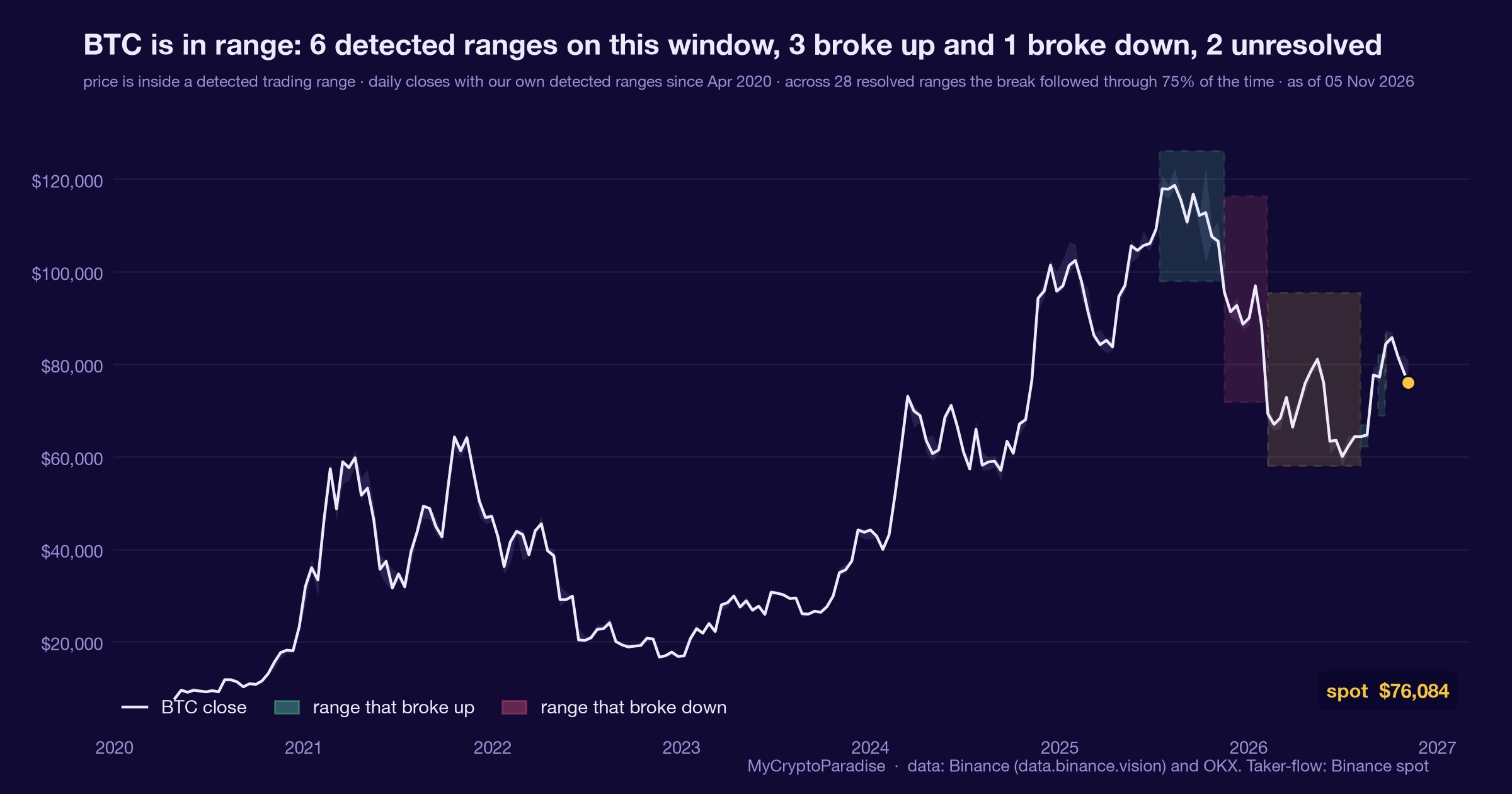
On the broader picture, our standing lens stays bearish on the daily and weekly. BTC was near $75,815 as of 03:43 UTC. We still treat recoveries toward the $79,000 bounce area, and any stretch toward the $90,000 scenario, as strength to fade rather than a trend change, with the deeper exchange-of-hands zone near $55,000 still on the map.
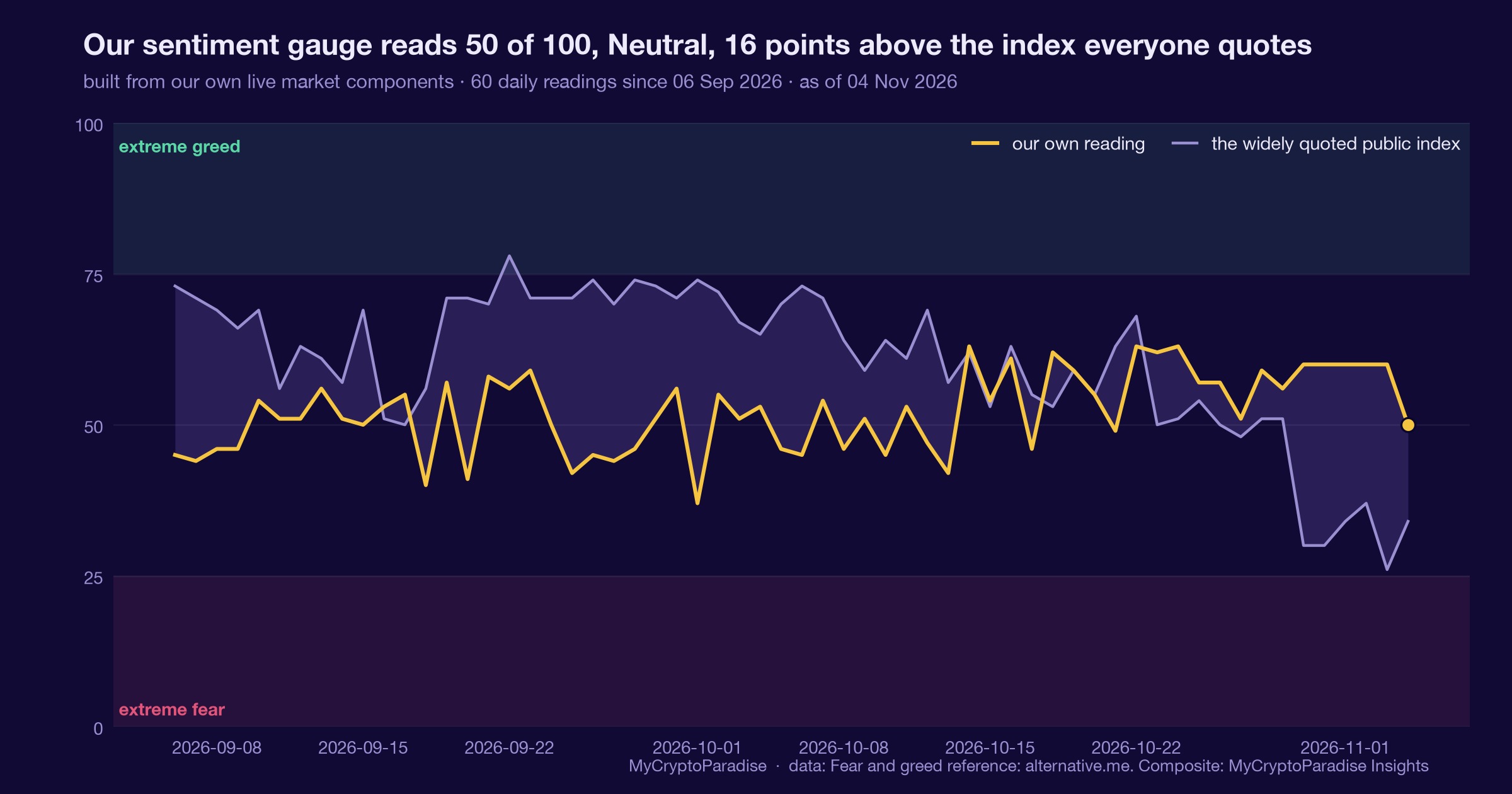
That lens matters here for a reason. Retail sentiment has been turning hopeful into resistance while whales keep offloading. A scary exchange headline that fails to crater its token is exactly the kind of event that can spark a relief tick, and relief ticks into a distribution tape are where late buyers get absorbed. So our posture is risk-first. Respect the bearish first-order risk of the exploit, demand on-chain proof before sizing into it, and do not confuse a calm hourly candle with an all-clear.
The read behind this: we framed this story through our own market analysis, Bitcoin Longs Pile In While 67% of Whales Sell.
Track it live: our Crypto Fear and Greed Index tracks this in real time, so you can watch it play out for yourself.
Related coverage
For exact entries, targets, and stop losses with full risk management, that is what ParadiseFamilyVIP is for. New to reading these moves? Start with our crypto trading strategies guide.
ParadiseTeam is monitoring the market situation closely, and we are taking these developments into consideration while building our trading tactics inside ParadiseFamilyVIP.
Crypto trading involves substantial risk. Prices are volatile and you can lose money. This article is educational and is not financial advice. Past performance does not guarantee future results.
Does the $2.5 billion Binance exploit get confirmed on-chain this week?
How 7 Paradisers are calling it
The first call is still open
Free account, no password. Members just sign in.











Join the discussion 3
so the $15 for $2.5b part is what i keep staring at. bnb only moving 3.28 says the desk isnt treating it as a real drain, or the number is wrong somewhere. i'd want to see which one before i believe either.
honestly the $15 vs $2.5b thing made me think of coincheck in 2018, when i had holdings there and couldn't sleep for weeks. the gap between the headline and the tape is what i'd want to see the timestamps on first.
i keep coming back to that exact gap too. if a bnb move that size is all the desk shows, what would the tape need to look like before you'd call it a real exploit? the coincheck memory is rough, glad you could still get to a node log back then