



Elliott Wave Mistakes
In short
Common Elliott Wave mistakes include confusing impulse and corrective waves, breaking core rules, labeling waves too early, and forcing counts to fit a bias. Specifically, Wave B retracements and Wave 4 overlaps are frequent errors. These mistakes can be avoided by reading higher timeframes, strictly following rules, and confirming counts with tools like RSI, MACD, and volume.
- Common mistakes in Elliott Wave often result from misreading wave patterns and ignoring the core principles of the theory.
- Always follow Elliott Wave core rules strictly and avoid forcing wave counts to fit bias.
- Combine Elliott Wave with confirmation tools like RSI, MACD, and higher timeframe analysis to improve accuracy and avoid costly errors.
Common mistakes in Elliott Wave Theory often come down to misreading waves, skipping rules, or attempting to force wave counts that don’t fit. These errors can throw off your entire analysis and lead to poor trade setups.
After going through the full framework of Elliott Wave, understanding where traders often go wrong is just as important. In this article, we’ll break down the most frequent mistakes traders make and how to avoid them.
What are Common Elliott Wave Mistakes?
Mistakes in Elliott Wave Theory typically occur when traders misinterpret the wave structure or attempt to force patterns that aren’t actually present. The theory itself is based on a clean structure of impulses and corrections, but in live markets, things aren’t always textbook.
Some of the most common errors include mixing up impulse and corrective waves, breaking core rules, or labeling waves too early without confirmation. These slip-ups can throw off your entire analysis and lead to poor trade decisions.
Recognizing these mistakes is the first step toward using Elliott Wave more effectively.
Where Do Common Mistakes in Elliot Wave Occur?
Most mistakes show up in complex or unclear parts of the Elliott Wave Structure. These are the areas where traders most often slip up when applying Elliott Wave Theory:
Wave B of Corrections
Wave B is part of the corrective A-B-C pattern and often confuses because it can look like the start of a new trend. This wave typically retraces a significant portion of Wave A, sometimes even extending. which may mislead traders into thinking the previous trend is resuming. However, Wave B is usually just a temporary counter-trend move within a larger corrective phase. Misinterpreting Wave B as a breakout or trend reversal can lead to premature entries or exits, resulting in losses or missed opportunities.
Wave 4 of an Impulse
Wave 4 is corrective in the five-wave impulse sequence that must not overlap with Wave 1’s price range. Overlapping breaks Elliott Wave rules and suggest an invalid count or complex pattern. It often appears as sideways consolidation, which can be mistaken for a reversal. Correct identification involves recognizing typical corrective shapes like flats, zigzags, or triangles.
Sideways Markets
Sideways markets lack clear trends and often form complex corrective patterns such as flats, triangles, or combinations like double or triple threes. These sideways moves with overlapping swings make labeling difficult in real time. Mislabeling can lead to premature trades or wrong assumptions about market direction. Traders should be patient, wait for wave completions, and use tools like volume and support/resistance to confirm counts.
Complex Corrections
Complex corrections like double or triple threes combine multiple corrective patterns, making wave counts more complicated. Traders often overanalyze these, trying to fit every small swing into the count. This can cause confusion and hesitation, leading to missed opportunities. Keeping the count simple and focusing on the larger structure helps avoid overcomplication.
Understanding where mistakes commonly occur helps crypto traders refine their approach and improve accuracy, making it easier to identify the wave structure and anticipate market moves correctly.
Why Is It Important to Get the Wave Structure Right?
Understanding impulse and corrective wave structures is fundamental to Elliott Wave Theory. Impulse waves always unfold in a clear 5-wave sequence labeled 1, 2, 3, 4, 5, while corrective waves are a 3-wave structure labeled A, B, C. Confusing these distinct structures can lead to misreading market direction and undermine the accuracy.
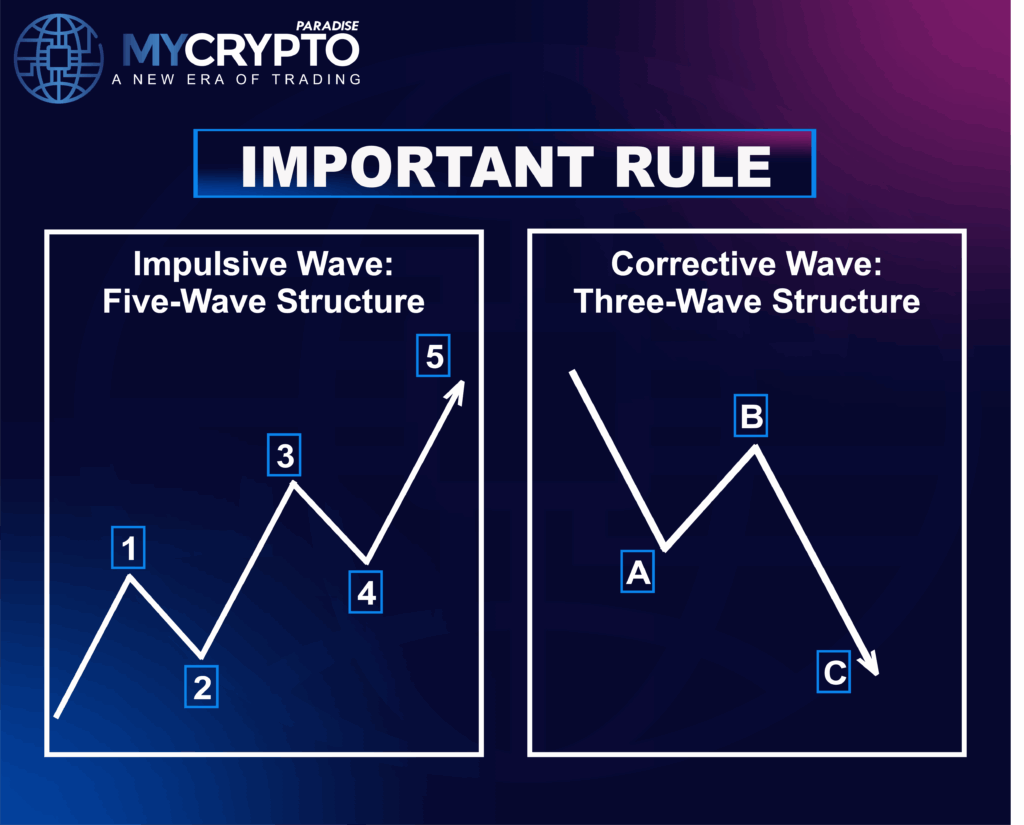
Wave structure is the backbone of Elliott Wave. If you misidentify the structure, your entire analysis risks being off track. What may appear to be a trending market could be a corrective phase, causing you to trade against the real direction. Elliott Wave isn’t just about spotting patterns; it’s about knowing exactly where you stand within those patterns.
Common Mistakes in Elliott Wave Analysis
To apply Elliott Wave Theory effectively, traders must respect its structural rules and avoid misreading wave behavior.
Wave Representation & Misidentifying Wave Counts
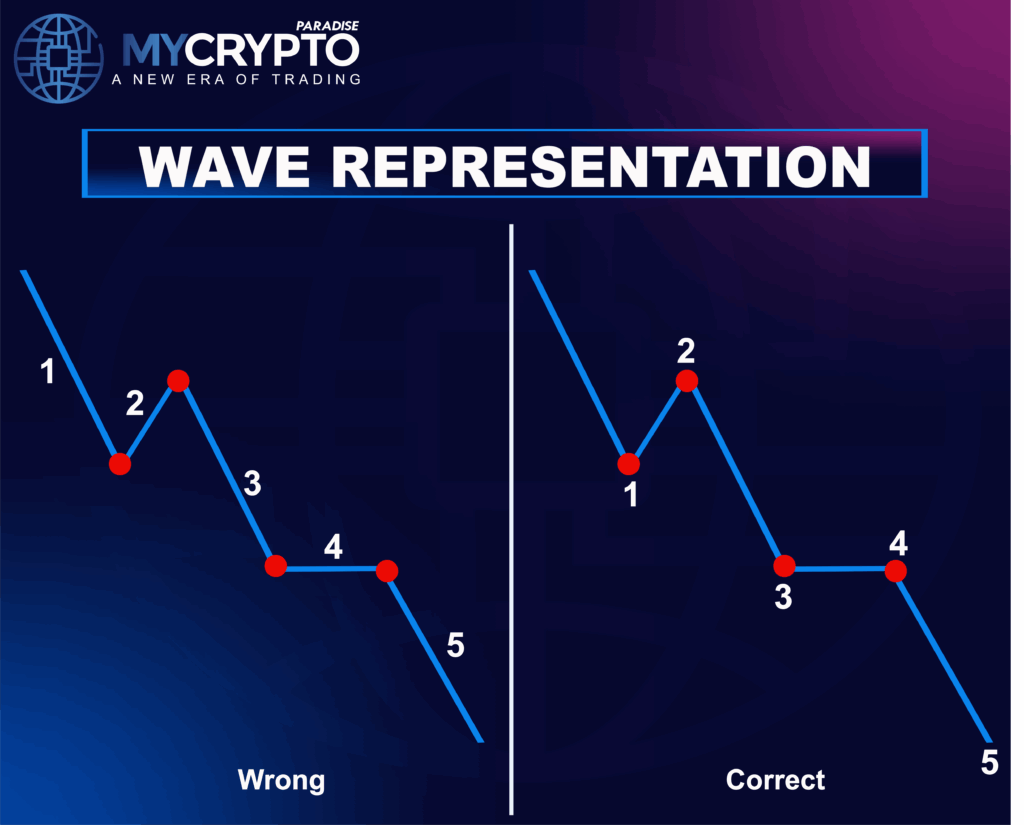
Proper labeling is crucial in Elliott Wave Theory; wave numbers and letters must be placed only at the end of each wave, never mid-swing. Mislabeling distorts the structure and causes confusion. Beginners often confuse corrective and impulse waves or miscount sub-waves, leading to incorrect wave counts and faulty predictions.
Corrective Wave Mistaken as Full Reversal
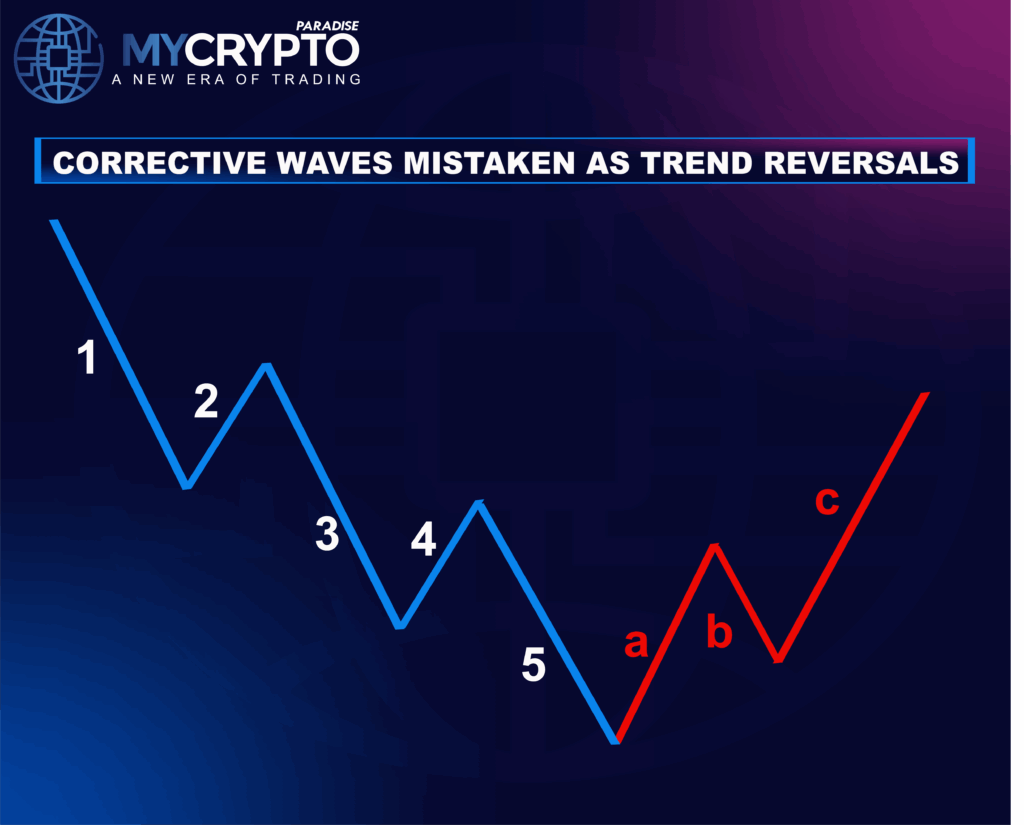
A classic mistake is interpreting a correction (like an ABC zigzag) as a complete trend reversal. Corrective waves tend to be sharp and deep, often tricking traders into thinking a new trend has begun. This leads to poor entries and premature exits.
Ignoring Elliot Wave Rules and Guidelines
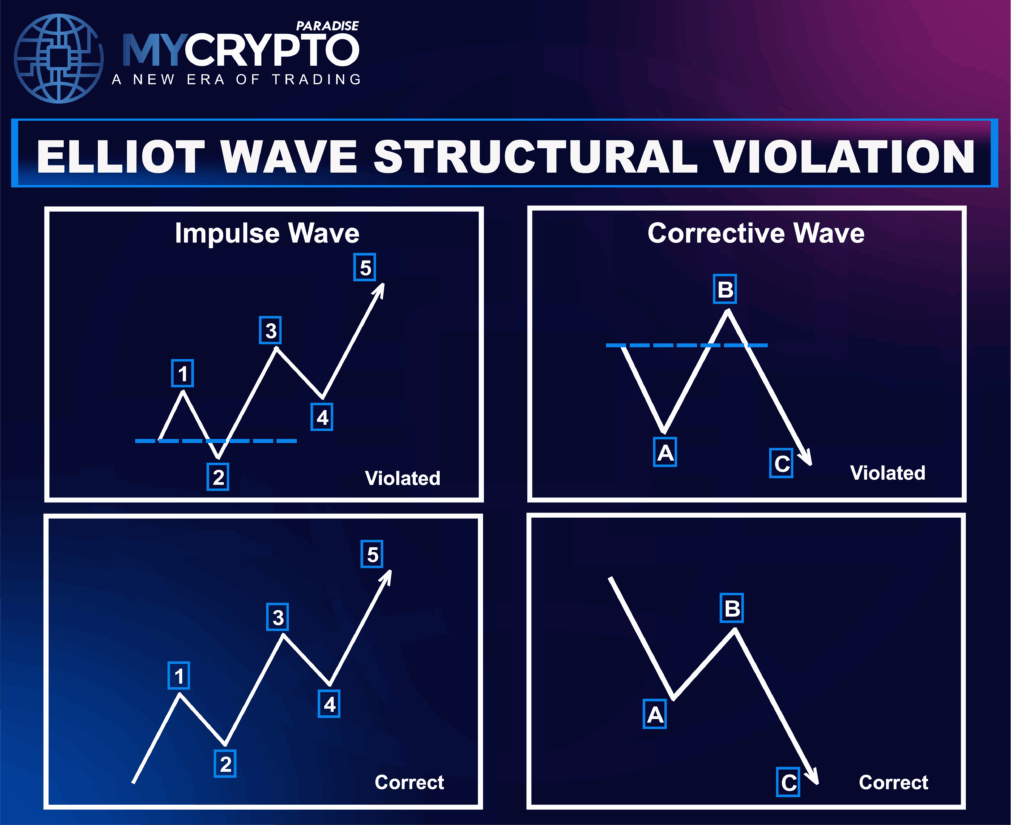
A common mistake in Elliott Wave analysis is overlooking the essential rules that define valid wave patterns. For example, Wave 2 should never retrace more than 100% of Wave 1, and in a corrective structure, Wave B should not retrace beyond the start of Wave A.
Overcomplicating Counts
Many traders fall into the trap of creating multiple alternate wave counts to cover every possible scenario. While having alternatives can be helpful, juggling too many different counts often causes confusion and indecision. This overcomplication makes it difficult to commit to a clear analysis, leading to hesitation or missed opportunities
Forcing the Pattern
Another common mistake is trying to force the price action to fit a preconceived Elliott Wave pattern, even when the market doesn’t support it. This often happens when traders want to justify a particular bias or trade idea. Forcing a pattern distorts the natural wave structure and results in inaccurate counts.
How to Avoid Common Mistakes in Elliott Wave
Avoiding mistakes in Elliott Wave Theory comes down to staying disciplined, following a structured approach, and not jumping to conclusions. Below are key practices to help keep your analysis clean and reliable.
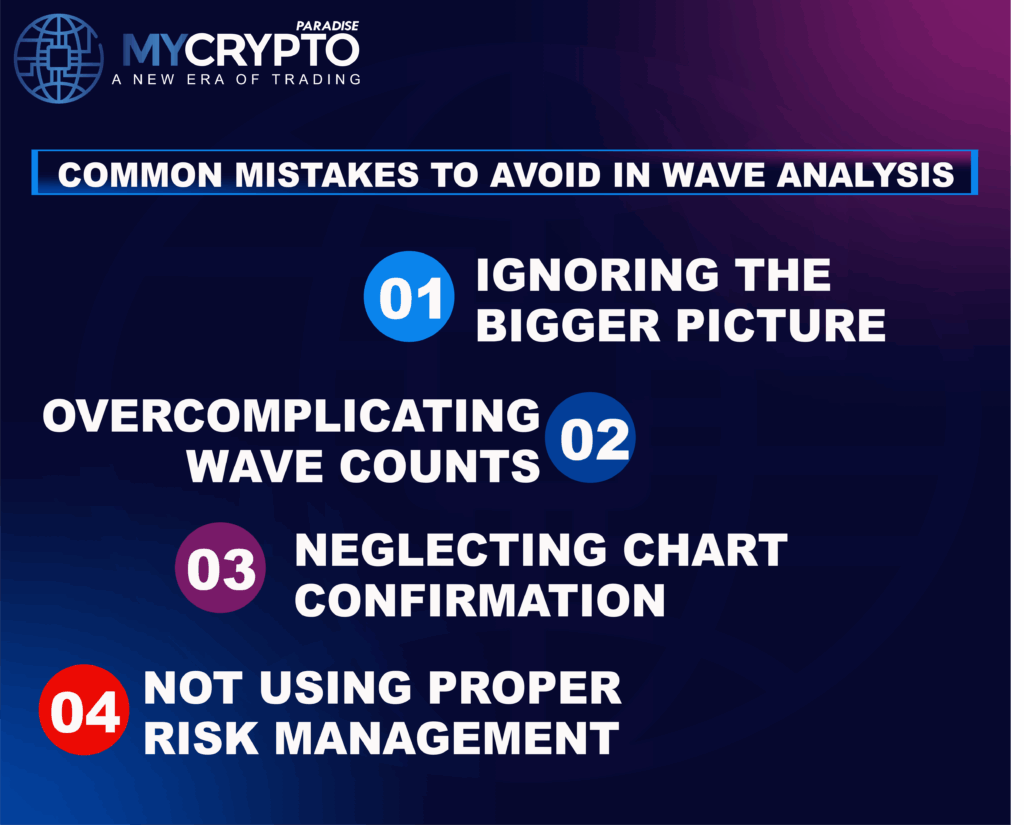
Ignoring the Bigger Picture
Many traders get too focused on small timeframes and miss the overall market direction. A wave that looks like a reversal on a 15-minute chart might be just a minor pullback on the 4-hour or daily chart. Always start with a top-down view, identify the larger wave structure first, then zoom in to refine the count.
Overcomplicating Elliot Wave Counts
Adding too many alternate counts or labeling every small swing can lead to confusion. If your chart looks messy, it probably is. Stick to the most probable scenario that follows the core rules. Simplicity improves decision-making and helps you stay objective when the market moves.
Neglecting Chart Confirmation
Wave theory should not be used in isolation. Always confirm your count with key tools like RSI, MACD, volume, or major support/resistance zones. If the market structure doesn’t align with your wave count, it’s a sign to recheck your analysis before entering a trade.
Not Using Proper Risk Management
No wave count is guaranteed to play out. That’s why risk management matters more than being right. Use stop-losses, and know your position size. A solid setup means nothing without proper risk management.
In the next section, we’ll explore practical steps to improve your Elliott Wave analysis by focusing on discipline, simplicity, and confirmation to enhance accuracy and trading confidence.
Additional Tips to Improve Your Elliott Wave Analysis
The following tips will help you refine your Elliott Wave approach and enhance your trading accuracy:
Start With Higher Timeframes: Always analyze the broader market first. Higher timeframes reduce noise and give better context, helping you avoid mistaking small pullbacks for full trend reversals.
Stick to the Core Rules: Never bend Elliott Wave rules. Strictly following the guidelines ensures your wave counts remain valid and reliable, improving the quality of your trade.
Use Confirmation Tools: Combine your wave analysis with indicators like RSI, MACD, or volume. These tools help confirm your counts and highlight when you need to rethink your setup.
Keep It Simple: Avoid labeling every small swing or juggling too many alternate counts. Clear, straightforward wave counts are easier to trade and adjust as the market evolves.
Review Past Mistakes: Learn from your previous analyses and trades. Reflecting on errors is key to improving your wave interpretation and making smarter trading decisions going forward.
By applying these practices consistently, crypto traders can build stronger Elliott Wave skills and trade with greater confidence.
Elliott Wave Mistakes FAQ
What are the most common Elliott Wave mistakes?
The most frequent errors are mixing up impulse and corrective waves, breaking core rules, labeling waves before they complete, and forcing price action to fit a preferred count. These distortions throw off the entire structure and lead to poor entries and exits.
Why is Wave B so often misread?
Wave B sits inside the corrective A-B-C pattern and often retraces a large portion of Wave A, sometimes extending. That deep counter-trend move can look like a new trend starting, leading traders to enter early or exit a position too soon.
What core Elliott Wave rules should never be broken?
Wave 2 should never retrace more than 100% of Wave 1, Wave 4 should not overlap Wave 1's price range in an impulse, and Wave B should not retrace beyond the start of Wave A. Violating these signals an invalid count.
How can traders avoid Elliott Wave errors?
Start with a top-down view of the higher timeframe, keep the count simple instead of juggling many alternates, and confirm with tools like RSI, MACD, volume, and support or resistance. Pair this with stop-losses and position sizing since no count is certain.
Crypto trading involves substantial risk of loss. This article is educational and is not financial advice. Past performance does not guarantee future results. Always do your own research.
What is different here
Most guides stop at the theory. The MyCryptoParadise team shares the live trades, and the reasoning behind each one, inside ParadiseFamilyVIP. Everything here is education, not financial advice.
Crypto trading involves substantial risk and is not suitable for everyone. Nothing here is financial advice; it is education only. Never risk more than you can afford to lose.











Join the discussion
No comments yet. Members, share how you are reading this.