


Listen: the breakdown
Developing story: This story is still unfolding. We are tracking it and will update this article as more details are confirmed.
Market briefing: Bitcoin is trading near $62,741, down about 1.6%, after a third round of US strikes on Iran closed the Strait of Hormuz and pushed Brent crude up 4.5%.
- Bitcoin slipped to $62,741, down 1.6% on the day, as Middle East tensions escalated.
- US strikes on Iran and a declared Strait of Hormuz closure sent Brent crude up 4.5%.
- The $63,000 to $64,000 support zone is now the level that decides the next move.
Bitcoin fell below $63,000 as fresh strikes on Iran closed the Strait of Hormuz and sent oil up 4.5%. Is this the kind of headline panic that smart money quietly buys?
Bitcoin slipped below $63,000 as the Middle East lit up again. The United States launched a third round of strikes on Iran. Tehran answered by declaring the Strait of Hormuz closed until further notice.
Bitcoin was trading near $62,741 as of the latest read, down about 1.6% on the day. The move looks orderly, not a rout.
Oil did the shouting. Brent crude jumped 4.5% as weekend futures opened. Roughly a fifth of the world's seaborne oil passes through that strait, so traders priced the threat fast.
Earlier this week we noted the strait staying open while Bitcoin drifted near support. That calm is over. The escalation is the new fact, and it reprices risk across every screen.
Here is what changed structurally. Bitcoin now sits inside the $63,000 to $64,000 zone it recently reclaimed as support. A geopolitical shock is testing that floor in real time.
Retail sees a war headline and a red candle and reaches for the exit. That reaction is understandable. It is also usually early.
The deeper story is not the strike itself. It is who buys the fear, and at what level.
Why an oil shock reaches Bitcoin
The transmission runs through oil, not through crypto directly. The Strait of Hormuz carries roughly a fifth of the world's seaborne crude. Close it, even in words, and every barrel gets more expensive.
Higher oil feeds inflation. Inflation complicates any path toward easier policy. Markets that were hoping for looser liquidity suddenly price a harder road.
That matters for Bitcoin because Bitcoin trades as a liquidity asset first. When the cost of money looks set to stay high, the marginal buyer of risk steps back.
So the chain is clean. Strikes raise oil, oil raises inflation risk, inflation risk tightens expected liquidity, and tighter liquidity pressures the highest-beta assets. Bitcoin sits near the top of that beta list.
There is a second channel too. A genuine war scare pushes money toward perceived safety for a day or two. Bitcoin is not yet that safe haven for most institutions, whatever the brochures say.
The result is a reflexive de-risking. Positions get trimmed, leverage comes down, and the tape thins out over a weekend when desks are lightly staffed.
None of this is a verdict on Bitcoin itself. It is the mechanical reaction of a risk asset to a fresh geopolitical premium. The real question is whether that premium sticks or fades.
How the selloff moves through crypto
The first move showed up in oil and then in leverage. Bitcoin's 1.6% dip is modest, but weekend liquidity is thin. Small flows push price further than they would on a busy Tuesday.
Bitcoin leads the cascade. It is the most liquid crypto asset, so it reprices first and fastest when risk sentiment turns.
Ethereum tends to follow with a lag and a slightly heavier hand. When Bitcoin drops 1.6%, Ethereum often gives back a touch more, as traders cut the second position after the first.
Altcoins sit at the end of the whip. They are thinner, more leveraged, and more owned by retail. A calm Bitcoin dip can still trigger sharper alt liquidations as stops stack up below obvious levels.
Watch where those stops sit. Under $63,000 there is a shelf of recent long entries. A flush through it would hunt that liquidity before any recovery.
The oil spike also matters for correlation. If crude keeps climbing, traditional risk assets wobble, and crypto rarely decouples from a genuine equity risk-off day.
For now the damage is contained. This is a controlled bleed, not a cascade. The tape is nervous, not broken, and that distinction is what matters most for the patient.
Signals that decide the next move
The first thing to watch is oil, not Bitcoin. If Brent gives back its 4.5% jump, the risk premium fades and crypto pressure eases with it.
Confirmation for the bulls is simple. The $63,000 to $64,000 zone needs to hold as support on a daily close. A defended floor here says the dip was absorbed.
A reclaim of $64,000 would be the first real tell. Above it, the path opens toward the $65,000 to $67,000 band where sellers have leaned before.
Invalidation is equally clean. A decisive daily close back under $63,000 breaks the reclaimed support and shifts the near-term odds lower.
Watch the pace of any bounce too. A slow, grinding recovery on falling volume is weaker than a sharp reclaim on real participation.
The Strait headline is the wildcard. A closure that becomes physical, not just declared, would keep the oil bid alive and the risk-off tone with it.
An off-ramp is just as possible. Ceasefire talk has collapsed once already this cycle, but geopolitics can reverse in a single headline.
So keep two scenarios live. Either support holds and Bitcoin builds from here, or $63,000 fails and the market goes looking for lower liquidity. Flexibility beats conviction while the news is still moving.
What this shock means at support
The ParadiseTeam is treating this dip as a test of reclaimed support, not a trend change.
The $63,000 to $64,000 zone was resistance not long ago. It flipped to support on the way up. A geopolitical shock is now pressing on that exact floor, which is where the read gets interesting.
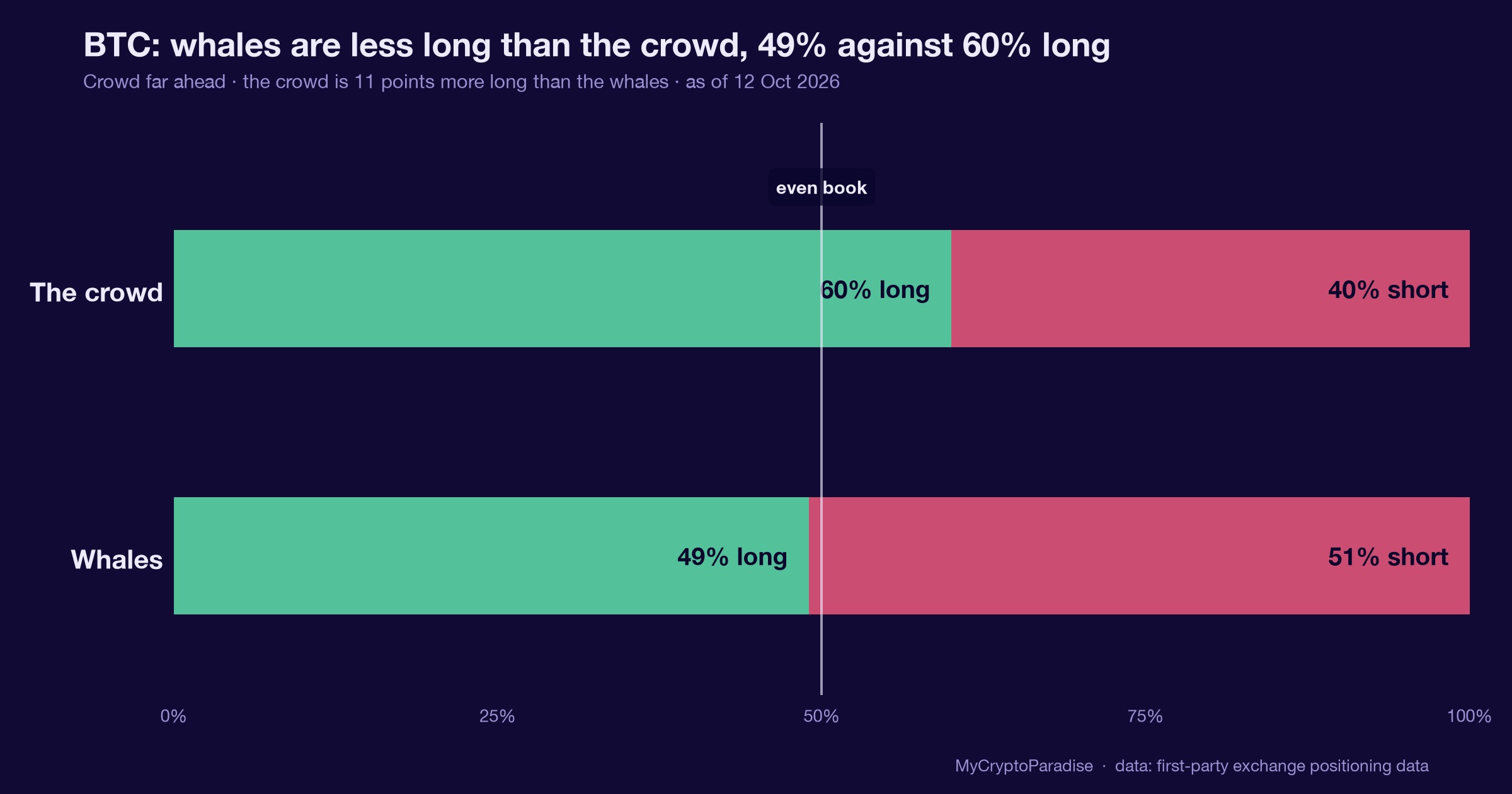
Bearish news arriving at fresh support, with retail already reaching for the exit, is the classic pattern for accumulation. The crowd sells the headline. Disciplined money asks where the stops sit.
The ParadiseTeam bias remains an immediate push higher while this support holds. First resistance sits at $64,000, then the $65,000 to $67,000 band, with $66,400 and $69,000 above that. The stretch target for this leg is $79,000.
That upside is framed as a move inside a larger corrective structure. The same map still points to an eventual decline toward $44,000 once this push exhausts. This is probabilities, not a promise.
So the near-term read leans constructive while $63,000 defends. The invalidation is a daily close below it, which would tilt the odds back to the crowd's side.
The edge here is patience. Retail fights the tape and overtrades the fear. The ParadiseTeam waits for the level to prove itself and adapts as the news moves.
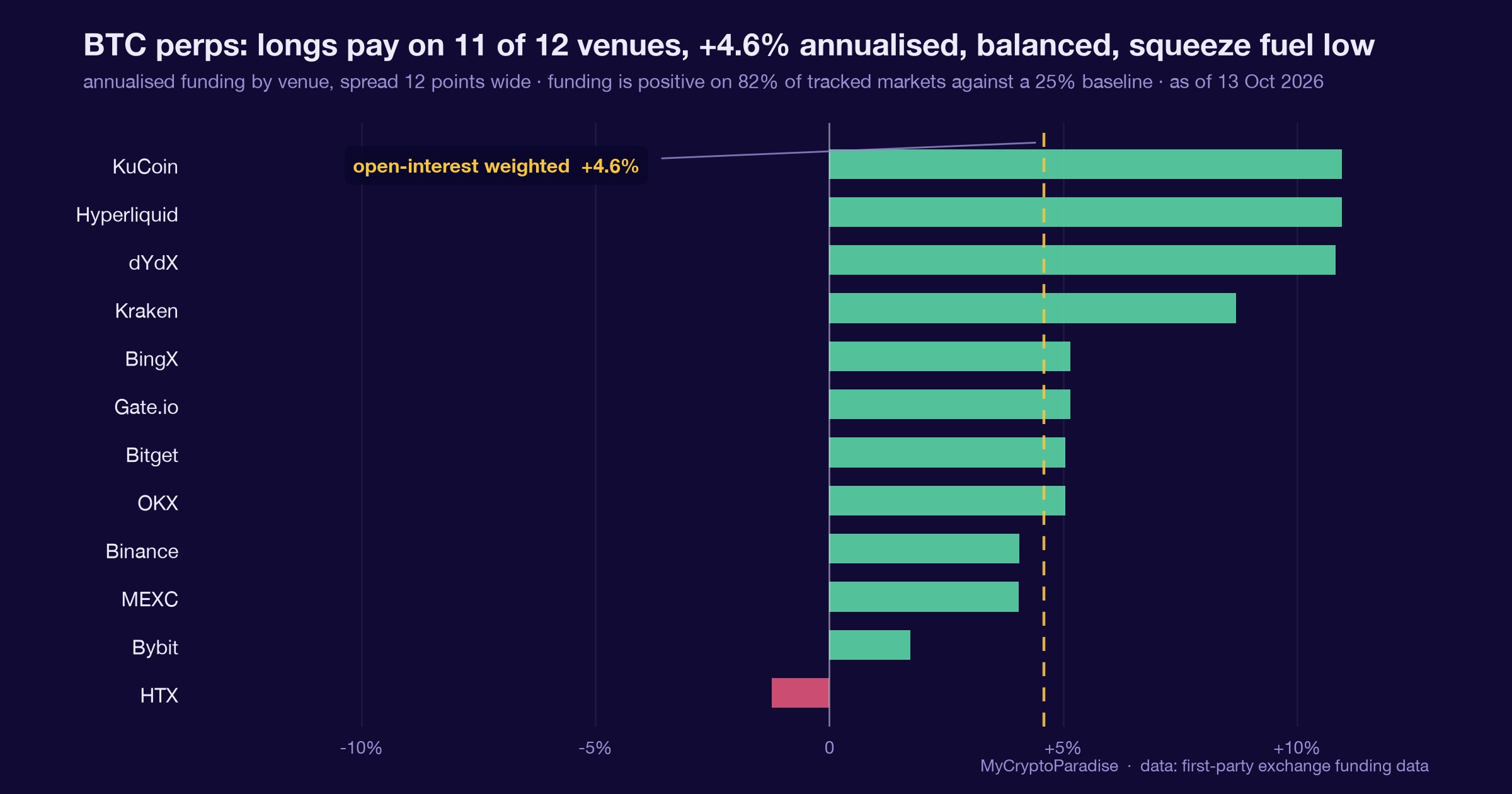
Track it live: our Crypto Fear and Greed Index and the live crypto funding rates both update in real time, so you can watch this shift for yourself.
Related coverage
For exact entries, targets, and stop losses with full risk management, that is what ParadiseFamilyVIP is for. New to reading these moves? Start with our crypto trading strategies guide.
ParadiseTeam is monitoring the market situation closely, and we are taking these developments into consideration while building our trading tactics inside ParadiseFamilyVIP.
Crypto trading involves substantial risk. Prices are volatile and you can lose money. This article is educational and is not financial advice. Past performance does not guarantee future results.
Where does Bitcoin go next from this $63K support zone?
This is how the Paradisers are calling it. Tap your call.
No calls on this one yet. Tap yours to be the first.
Free account, no password. Members just sign in.










Join the discussion
No comments yet. Members, share how you are reading this.