

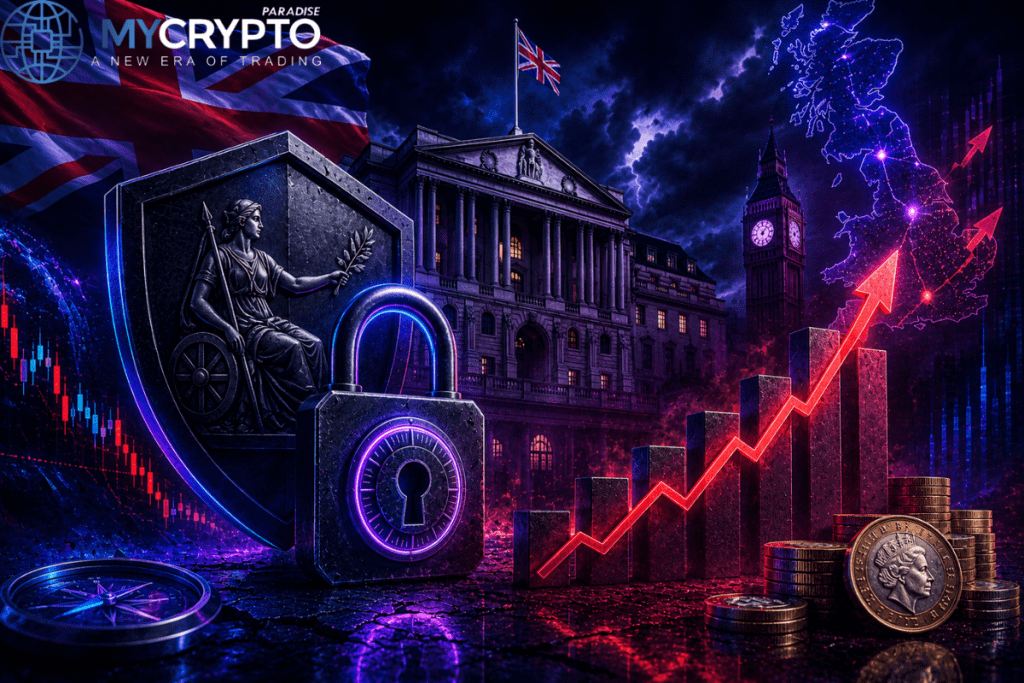
- Bank of England kept rates at 3.75% in a 7-2 vote.
- Inflation is still expected to rise above 3% later this year.
- Falling oil prices reduced some of the worst inflation risks.
Sometimes the most important decision is doing nothing. The Bank of England rate hold signals caution, not comfort. Has the inflation battle become slower than markets expected?
The Bank of England kept interest rates unchanged at 3.75%, but policymakers warned inflation is still expected to rise above 3% later this year. Falling oil prices after the U.S.-Iran agreement eased some pressure, yet the central bank remains cautious about lingering energy driven inflation risks.
The Bank of England opted to leave its benchmark interest rate unchanged at 3.75%, choosing patience over action as policymakers continue navigating an uncertain inflation environment.While the decision was widely expected, the message behind it carried more weight than the rate itself. Seven members of the Monetary Policy Committee voted to keep rates unchanged, while two members argued for an increase to 4%.
The split revealed that inflation remains a live concern despite recent improvements in energy markets. Governor Andrew Bailey acknowledged that oil prices have retreated following the U.S.-Iran agreement and the reopening of the Strait of Hormuz, but emphasized that energy costs remain higher than before the conflict began. That distinction matters because inflation often arrives with a delay.
Higher energy prices from previous months continue working their way through supply chains, transportation costs, and consumer prices. While the Bank now expects inflation to remain below some of its worst-case forecasts from April, it still sees consumer inflation climbing above 3% later this year, well above its 2% target. For crypto markets, this is fundamentally a liquidity story.
The driver is the Bank of England rate hold. The macro effect is a slower path toward monetary easing. The liquidity effect comes from borrowing costs remaining elevated for longer, influencing capital allocation decisions across global markets. From there, the impact extends to Bitcoin, Ethereum, and broader risk assets.
Why Bank of England Rate Hold Matters for Crypto
The Bank of England rate hold matters because central banks remain one of the most powerful drivers of global liquidity. Crypto investors often focus on industry-specific developments, but monetary policy continues shaping the environment in which digital assets compete for capital. The driver is the decision to keep rates at 3.75%. The macro effect is the continuation of restrictive monetary conditions.
The liquidity effect emerges because higher rates encourage investors to remain selective rather than aggressively pursue risk assets. The significance extends beyond the United Kingdom. Global markets increasingly move together when major central banks signal similar concerns. The Federal Reserve maintained a hawkish tone this week. The Bank of Japan recently raised rates to a 31 year high.
The European Central Bank has also shifted toward tighter policy. Together, these developments suggest that easy money conditions remain distant. Bitcoin is often the first digital asset to react to changing liquidity expectations. Institutional investors evaluate Bitcoin alongside other risk assets when deciding where to allocate capital. If borrowing costs stay elevated and inflation remains stubborn, some investors may continue favoring defensive positioning.
Ethereum faces similar pressures, though its growing role in tokenization, stablecoins, and financial infrastructure provides additional demand drivers. Even so, liquidity conditions remain critical. Altcoins typically feel the greatest impact because they sit furthest down the risk spectrum. When capital becomes more cautious, speculative assets often struggle first. Conversely, when liquidity expands, altcoins tend to benefit disproportionately.
Market Impact of Bank of England Rate Hold
The immediate market impact of the Bank of England rate hold was relatively muted because investors largely anticipated the decision. However, markets often respond more to future expectations than current actions. The key message from policymakers was that inflation risks have eased but not disappeared. Falling oil prices helped reduce some of the most severe inflation scenarios previously considered by the Bank. Yet officials remain concerned that earlier energy shocks will continue influencing prices through the remainder of the year.
For financial markets, this creates a complicated environment. Lower oil prices are supportive for growth and consumer spending. At the same time, inflation remaining above target limits the central bank’s ability to ease policy aggressively. That tension creates uncertainty around future liquidity conditions. Bitcoin’s reaction is likely to depend less on the rate hold itself and more on how investors interpret the future path of policy.
If markets believe inflation is gradually coming under control, Bitcoin could benefit from improving risk sentiment. If inflation remains stubborn, expectations for tighter monetary policy may weigh on speculative assets. Ethereum faces a similar balancing act. Improved macro stability supports adoption narratives, but restrictive financial conditions can slow capital deployment.
Altcoins remain particularly sensitive to shifts in risk appetite. They often require abundant liquidity to sustain strong rallies. A world where central banks remain cautious may support selective opportunities rather than broad based speculative enthusiasm. The market heard “hold.” What matters next is whether that eventually becomes “cut” or “hike.”
What to Watch Next After the Rate Decision
The most important variable now is inflation itself. Policymakers have made it clear that future decisions will depend heavily on whether price pressures continue easing or begin accelerating again. Energy markets deserve special attention. While oil prices have fallen following the U.S. Iran agreement, they remain above pre conflict levels. Any renewed disruption to energy supplies could quickly alter inflation expectations and central bank policy.
Labor market data will also be critical. The Bank noted signs of gradual cooling in employment and wage growth. Continued moderation could strengthen the argument for eventually lowering rates. Strong wage growth, however, risks keeping inflation elevated. For crypto traders, monitoring global liquidity indicators may prove more valuable than focusing on any single central bank.
The Federal Reserve, ECB, Bank of Japan, and Bank of England are collectively shaping the environment for risk assets. Confirmation of the bullish liquidity thesis would involve falling inflation, stable energy prices, and growing confidence that rate cuts remain possible. Invalidation would emerge if inflation surprises to the upside or energy costs begin climbing again. Markets can tolerate high rates. What they struggle with is uncertainty about where rates are headed next.
Insights for Traders on the Bank of England Rate Hold
For traders, the Bank of England rate hold reinforces a lesson that has defined markets throughout the past several years, liquidity remains king. The driver is a central bank choosing caution over action. The macro effect is the continuation of restrictive financial conditions. The liquidity effect is slower capital expansion and more selective risk taking across markets.
Bitcoin remains the key asset to watch because it often acts as the first receiver of changes in liquidity expectations. Recent market structure continues highlighting the importance of internal liquidity mechanics as well. Large liquidation clusters, institutional accumulation, and technical reclaim levels frequently exert greater influence on short-term price action than individual headlines.
Professional traders understand that markets move toward liquidity. Even when central banks dominate the macro narrative, actual price movement often depends on positioning, supply-demand imbalances, and liquidity pools. Ethereum remains supported by growing institutional interest in tokenization and digital finance, but it is not immune to broader liquidity conditions. Altcoins may continue experiencing greater volatility because they depend more heavily on expanding risk appetite.
Confirmation of a constructive market outlook would involve easing inflation, improving liquidity conditions, and continued institutional participation. Invalidation would emerge if inflation remains stubborn enough to force additional tightening. The best traders do not predict central banks. They adapt to the liquidity conditions central banks create.
ParadiseTeam is monitoring the market situation closely, and we are taking these developments into consideration while building our trading tactics inside ParadiseFamilyVIP.
Following the BoE's rate hold, what's next for crypto asset prices?
This is how the Paradisers are calling it. Tap your call.
No calls on this one yet. Tap yours to be the first.
Free account, no password. Members just sign in.








Join the discussion
No comments yet. Members, share how you are reading this.