

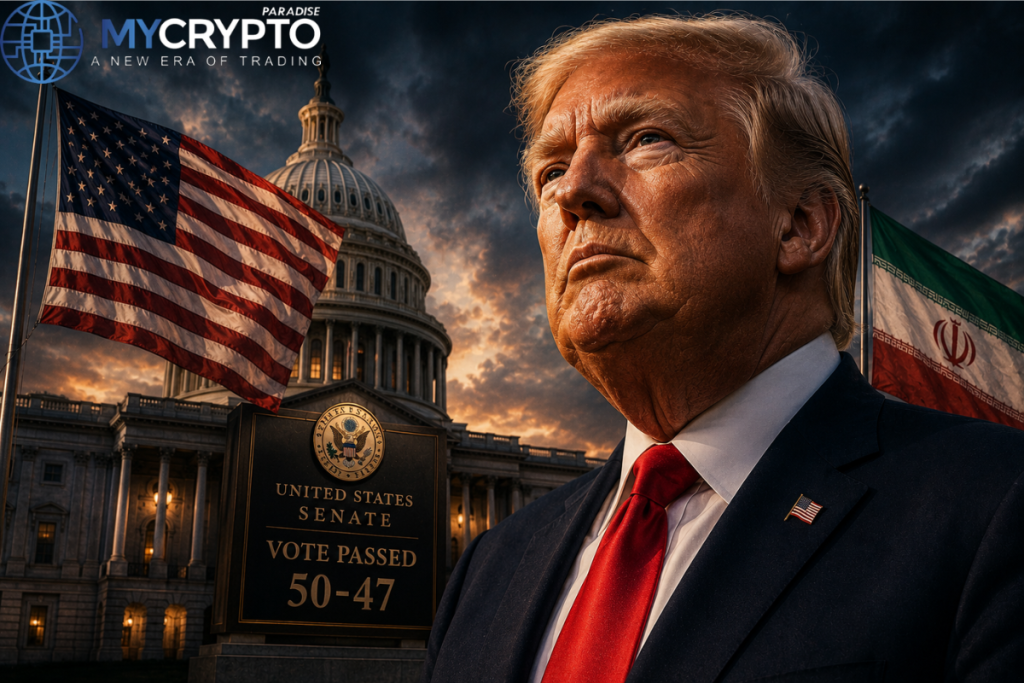
- US Senate advanced a measure challenging Trump’s Iran war powers
- Easing conflict risks could lower oil prices and improve liquidity sentiment
- Bitcoin markets remain cautious as geopolitical uncertainty continues
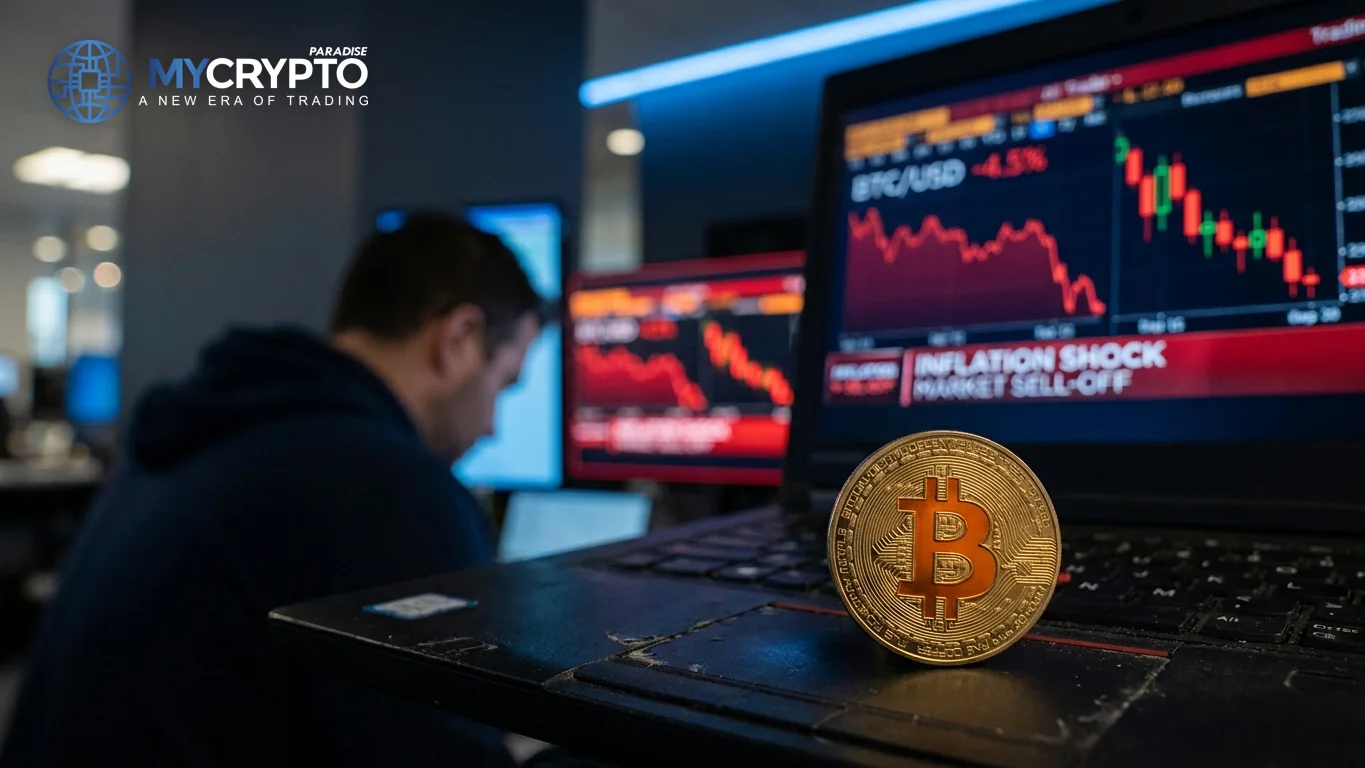
The US Senate just challenged Trump’s Iran war powers as markets closely watch oil and liquidity risks. Could crypto regain the liquidity momentum it has been missing?
The Senate voted 50-47 to move forward with a war powers resolution, which could force President Trump to get Congress’s okay before taking more military action against Iran. This was the first time the measure actually got through after a bunch of failed tries earlier this year.
All this happened after months of friction between the US, Israel, and Iran, which rattled global energy markets and piled more pressure on inflation. With the Strait of Hormuz blocked and military tensions rising, oil prices shot up, and that’s made it harder for folks at the Fed to figure out whether rate cuts are a smart move.
Riskier investments have felt the strain too. Sure, the resolution has a long road ahead, it needs approval in the House, and Trump’s likely to veto it. But markets aren’t just watching politics. They’re eyeing what easing tensions might mean for liquidity.
Because when you’re talking about macro markets, oil isn’t just oil. It turns into inflation, interest rates, liquidity, and even crypto.
Why Iran War Risks Matter for Crypto
People should care about the risk of war with Iran because energy prices feed directly into inflation and shape what central banks do next. When oil prices jump, inflation usually rises with them. And if that inflation just won’t come down, interest rates stay high too.
Expensive money dries up liquidity, suddenly it’s much harder for riskier things like Bitcoin to gain ground. That’s been holding crypto back for a while now. Bitcoin keeps getting stuck, it hasn’t really broken out, and a big reason is that tensions in the Middle East have kept oil prices stubbornly high.
That messes with hopes for the Fed to cut rates soon. But something’s shifting. If tensions simmer down and oil prices start to fall, inflation could ease up, so would Treasury yields and investors’ urge to play it safe. That’s huge for crypto, since Bitcoin and other riskier bets usually do well when people expect easier money, not a tighter squeeze.
There’s more to this than just markets. On the political side, Congress is starting to push back, which means the White House will have a tougher time carrying on any long military campaign without broader support. Sure, markets don’t really care about the ins and outs of constitutional debates.
What they do care about is whether political obstacles can help bring down oil prices. That’s the real story.
Market Impact of Iran De-Escalation Risks
Bitcoin still reacts sharply to changes in global liquidity. If things calm down geopolitically, people might feel more optimistic about crypto overall. Cheaper oil usually means inflation cools off, which makes it easier for the Fed to relax rates later this year.
More liquidity usually boosts Bitcoin, Ethereum, and other risky assets. Ethereum and smaller coins would likely get an even bigger lift if traders jump back into riskier bets, especially as the macro environment improves. Still, people aren’t exactly all in right now.
Lawmakers are divided, the path forward isn’t clear, and any trouble in the Middle East could flip market sentiment fast. Oil’s impact on crypto is pretty direct. If crude prices stay low or start dropping, crypto could pick up steam. But if geopolitics heat up again, you’ll see liquidity dry up just as fast.
Honestly, sometimes Bitcoin acts less like a tech breakthrough and more like anxious global money with a WiFi connection.
What to Watch Next After the Senate Vote
The spotlight now shifts to whether the Senate bill actually makes it to a final vote, and if the House jumps on board with the same energy. At the same time, people are watching talks between Iran and the Gulf states, especially since word got out that Trump held off on more military action after some diplomatic nudging.
Oil prices are a big deal right now. If crude keeps dropping, that can shake up inflation forecasts and drive Treasury yields in a whole new direction over the next few weeks. What the Federal Reserve does is just as important. If tensions abroad start to cool and inflation data softens, markets might go right back to expecting rate cuts.
But really, policy unpredictability is still the wild card. Congress can keep pushing, but a single headline from overseas can swing the markets in no time.
Insights for Traders on Iran War Risks
For traders, it’s really about liquidity, not just politics. Crypto still lives and dies by big picture economic forces. When things flare up around the world, you see it straight away in inflation and energy costs. Lately, Bitcoin hasn’t been able to break out, mostly because inflation keeps hanging around and yields are still high. That just kills people’s appetite for risk.
If tensions actually settle down and oil prices drop, maybe crypto finally catches a break. Watch crude oil, Treasury yields, and what the Fed says about easing up. If those start to shift, that’s your green light. But if conflict fires up again and inflation won’t quit, well, expect more pain.
Honestly, markets don’t wait for perfect peace before moving higher. They just need to see things aren’t getting worse. When the pressure eases, money starts to flow back in.
ParadiseTeam is monitoring the market situation closely, and we are taking these developments into consideration while building our trading tactics inside ParadiseFamilyVIP.
Follow this topic: Crypto regulation news






Join the discussion
No comments yet. Members, share how you are reading this.