

Key Highlights
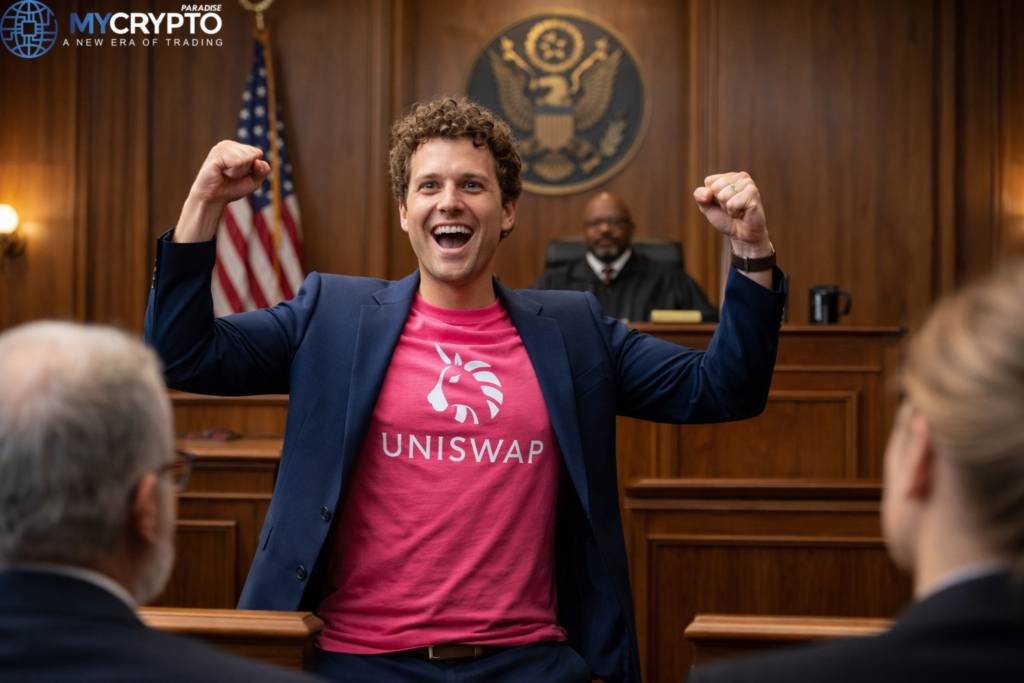
• Federal judge dismisses all remaining claims against Uniswap Labs and CEO Hayden Adams
• Court rules developers are not liable for third-party scam tokens on a decentralized protocol
• UNI token rises about 5% following the landmark decision
Yello Paradisers! A U.S. District Judge in the Southern District of New York has dismissed with prejudice the remaining claims in a class action lawsuit against Uniswap Labs, CEO Hayden Adams, and several venture capital backers. Is this the legal clarity DeFi has been waiting for?
The plaintiffs alleged they suffered losses from so-called rug pulls and pump-and-dump tokens traded on the Uniswap protocol. Because the token creators were unidentified, they attempted to hold Uniswap and its leadership responsible for facilitating those trades.
Judge Katherine Polk Failla rejected that argument. She ruled that developers who write open-source smart contract code cannot be held liable for third-party misuse of a decentralized, permissionless protocol. In her words, it “defies logic” to hold the drafter of computer code responsible for how unknown actors use it.
The case, originally filed in April 2022, had already seen federal securities claims dismissed. The latest ruling ends the matter at the district court level.
Following the decision, Uniswap’s UNI token rose roughly 5%, though it remains trading within a short-term range between $3.6 and $4.2.
Why It Matters
This is one of the earliest precedent-setting rulings directly addressing liability in decentralized finance.
The court recognized a structural distinction between centralized intermediaries and autonomous smart contract protocols. If upheld in future cases, this reasoning may significantly influence how courts treat developer responsibility in DeFi.
The decision may also impact broader regulatory debates, including safe harbor protections for open-source developers under pending crypto legislation such as the CLARITY Act.
Second-order effects matter here. Reduced legal overhang can improve capital confidence in DeFi infrastructure projects. Venture funding and protocol development may benefit from clearer liability boundaries.
Market Impact
UNI: Immediate positive sentiment reaction with a 5% move, though still range-bound.
DeFi sector: Legal clarity may reduce systemic risk perception across decentralized exchanges and lending protocols.
Regulatory narrative: Strengthens arguments that code authorship alone does not equal operational control.
The ruling does not eliminate regulatory scrutiny, but it shifts the liability conversation.
What to Watch Next
Monitor whether plaintiffs appeal the ruling.
Watch how this reasoning influences ongoing and future cases involving decentralized protocols.
Track legislative progress on developer protections under U.S. crypto market structure bills.
Observe whether institutional flows increase toward DeFi infrastructure tokens.
Insights for Traders
Big players are watching legal risk premiums closely.
When legal uncertainty declines, valuation models shift. Reduced litigation risk can lower discount rates applied to DeFi tokens, especially those tied to protocol revenue.
However, traders should separate legal clarity from immediate revenue growth. A favorable court ruling supports sentiment, but sustained price appreciation requires volume, usage, and fee expansion.
Legal tailwinds can fuel momentum, but fundamentals must follow.
ParadiseTeam is monitoring the market situation closely, and we are taking these developments into consideration while building our trading tactics inside ParadiseFamilyVIP.
Follow this topic: Crypto regulation news










Join the discussion
No comments yet. Members, share how you are reading this.