

Listen: the breakdown
Market briefing: South Korean stocks just shed ₩170 trillion as the Kospi fell 3.5%, led by AI-chip names. BTC held near $82,018 and barely moved, but a risk-off mood in a major economy rarely leaves crypto untouched for long.
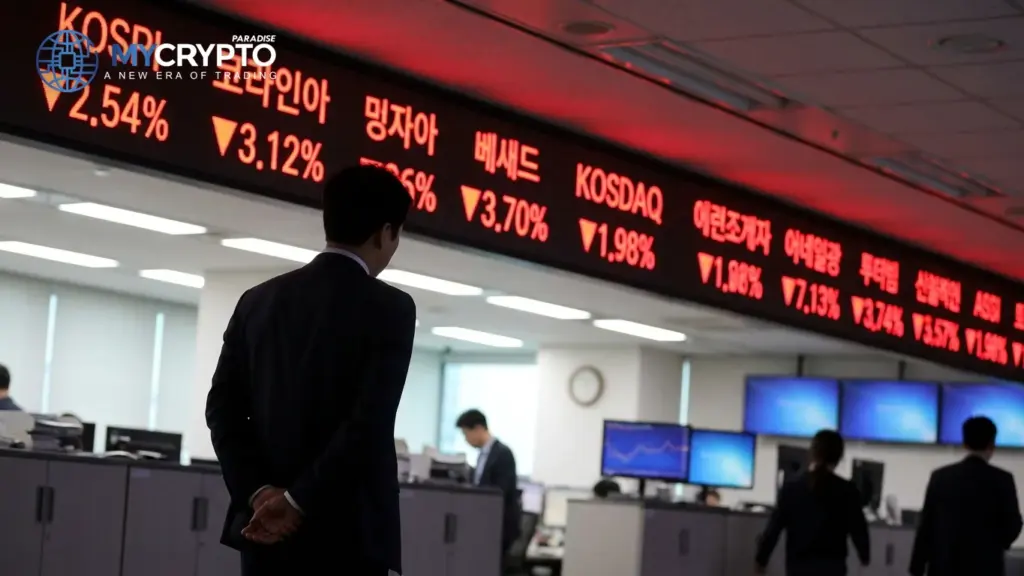
- South Korea's Kospi plunged 3.5%, wiping roughly ₩170 trillion from local stocks.
- SK Hynix fell as much as 5.6% and Samsung Electronics dropped 2.6% on debt infrastructure fears.
- BTC near $82,018 barely moved, but a risk-off shock in a major economy keeps the near-term lean bearish.
South Korean stocks just shed ₩170 trillion in a single Kospi session while Bitcoin barely twitched. Does a regional risk-off shock still reach crypto?
South Korean stocks fell hard. The Kospi index dropped 3.5% in one session. Roughly ₩170 trillion vanished from local share values.
The damage concentrated in the AI-chip complex. SK Hynix sank as much as 5.6% on the day. Samsung Electronics fell 2.6% alongside it. Both names carry heavy index weight, so their slide dragged the whole market lower in a hurry.
The stated trigger was growing fear over debt infrastructure, the borrowing stacked up to fund the AI buildout. That worry did not arrive alone. Middle East tensions and rising oil prices added to the anxiety already in the room.
What makes the move notable is its timing. It landed despite a tech-led rally on Wall Street overnight. Global tech investors were buying while Seoul was selling. That split tells you this was a largely regional story, not a synchronised global unwind.
We should be honest here: no single confirmed same-day catalyst explains all of it. The debt and geopolitical fears are the cited reasons, but this reads as several pressures arriving at once rather than one clean shock.
Crypto, for its part, shrugged. Bitcoin traded near $82,018, down about 0.5% over 24 hours, with a faint positive tick in the last hour. Ethereum sat near $2,410, down a similar fraction. A ₩170 trillion equity wipe, and the two majors barely blinked. The question is whether that calm holds or simply arrives late.
₩170 trillion gone in one trading session
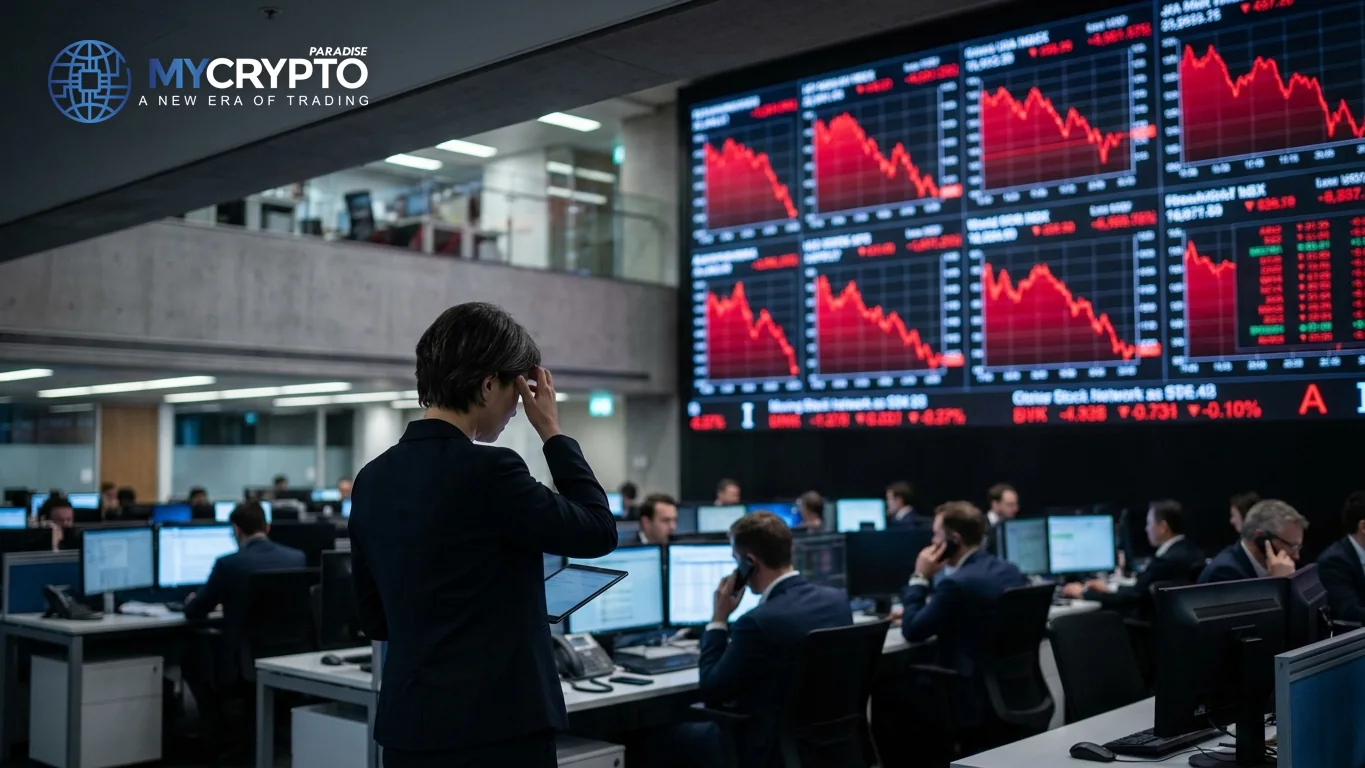
This matters because of what the selloff is really about. The fear is debt, specifically the borrowing behind the AI buildout. When a market this size questions whether that debt can be serviced, it is questioning the whole AI-growth story that has carried risk assets.
That transmission runs through sentiment, not direct crypto exposure. South Korean chipmakers do not move Bitcoin. But a sharp repricing of AI-linked debt in a major economy shifts how global investors think about leverage everywhere.
Rising oil prices sharpen the problem. Higher energy costs feed inflation expectations. That complicates the easier-liquidity path markets have been pricing, and tighter-for-longer liquidity is a headwind for every risk asset, crypto included.
Middle East tensions sit underneath all of it. Geopolitical stress pushes capital toward safety and away from speculation. Crypto still trades as a high-beta risk asset when fear spikes, whatever the long-term thesis says.
The decoupling from Wall Street's overnight rally is the tell. It shows the anxiety is regional for now, concentrated in one debt story and one geography. Regional stress can stay contained. It can also be the first crack that spreads once other markets stop looking the other way.
So the real signal is not the Kospi number itself. It is that a major economy just repriced AI-debt risk aggressively, and that the mood behind it, oil and geopolitics, is the kind that travels.
Crypto barely flinched while Seoul bled
The immediate crypto reaction was almost nothing. Bitcoin held near $82,018, Ethereum near $2,410, both down roughly half a percent on the day. A regional equity market lost ₩170 trillion, and the majors moved less than a normal lunchtime wobble.
That calm can be read two ways. The generous read is decoupling: crypto liquidity is global and did not depend on Seoul. The cautious read is that risk-off shocks often reach crypto on a delay, not in the first hour.
We lean cautious here, and the reason is structure. BTC leads, and it is already sitting in a soft patch, down on the day with the broader mood turning risk-off. When fear builds in a major economy, Bitcoin usually absorbs the first wave before alts.
Ethereum would follow BTC's lead, as it almost always does on a macro-driven move. Its near-identical 24-hour dip shows the two are trading as one risk block right now.
Alts sit at the dangerous end of this chain. They carry the thinnest liquidity and the highest beta. If risk-off does spread from equities into crypto, smaller caps take the sharpest hit, and overleveraged longs there get flushed first.
For now the cascade has not fired. But the raw ingredients, a major-economy plunge, higher oil, geopolitical fear, are exactly the mix that pressures crypto rather than lifts it. The muted tape looks less like immunity and more like a market that has not fully priced the shock yet.
Where the $79k support zone gets tested
The first thing to watch is whether crypto's calm survives the next sessions. Decoupling that holds for a day is interesting. Decoupling that holds through a weekly close while equities stay stressed is real evidence the shock stayed regional.
Watch oil and the geopolitical headlines above all. These are the channels that carry this story into crypto. If oil keeps climbing and Middle East tensions escalate, the risk-off mood deepens, and that is the path that drags BTC lower.
For confirmation of the bearish lean, watch Bitcoin lose its footing on rising volume. A break below the mid-$79,000s to high-$78,000s zone, driven by fear rather than drift, would signal the equity stress has crossed into crypto.
Invalidation looks different. If BTC holds the $78,000 to $79,800 band and reclaims ground on fading sell volume, the decoupling thesis wins. That would say smart money absorbed the risk-off wave rather than joining it.
Keep one eye on whether Wall Street's own tech names start to crack. The Kospi split from them once. If U.S. AI-linked stocks begin repricing the same debt fears, the regional story stops being regional, and crypto's correlation reasserts fast.
The honest frame is patience. No single confirmed catalyst drove this, so no single level resolves it. Let price and volume tell you whether this was a contained foreign tremor or the opening move of a broader risk unwind.
Reading regional risk-off through smart money flows
The ParadiseTeam reads this as a risk-off headline arriving while Bitcoin sits in a decision zone, not a fresh crypto catalyst. BTC traded near $82,018 as this hit, well inside the range we have been mapping.
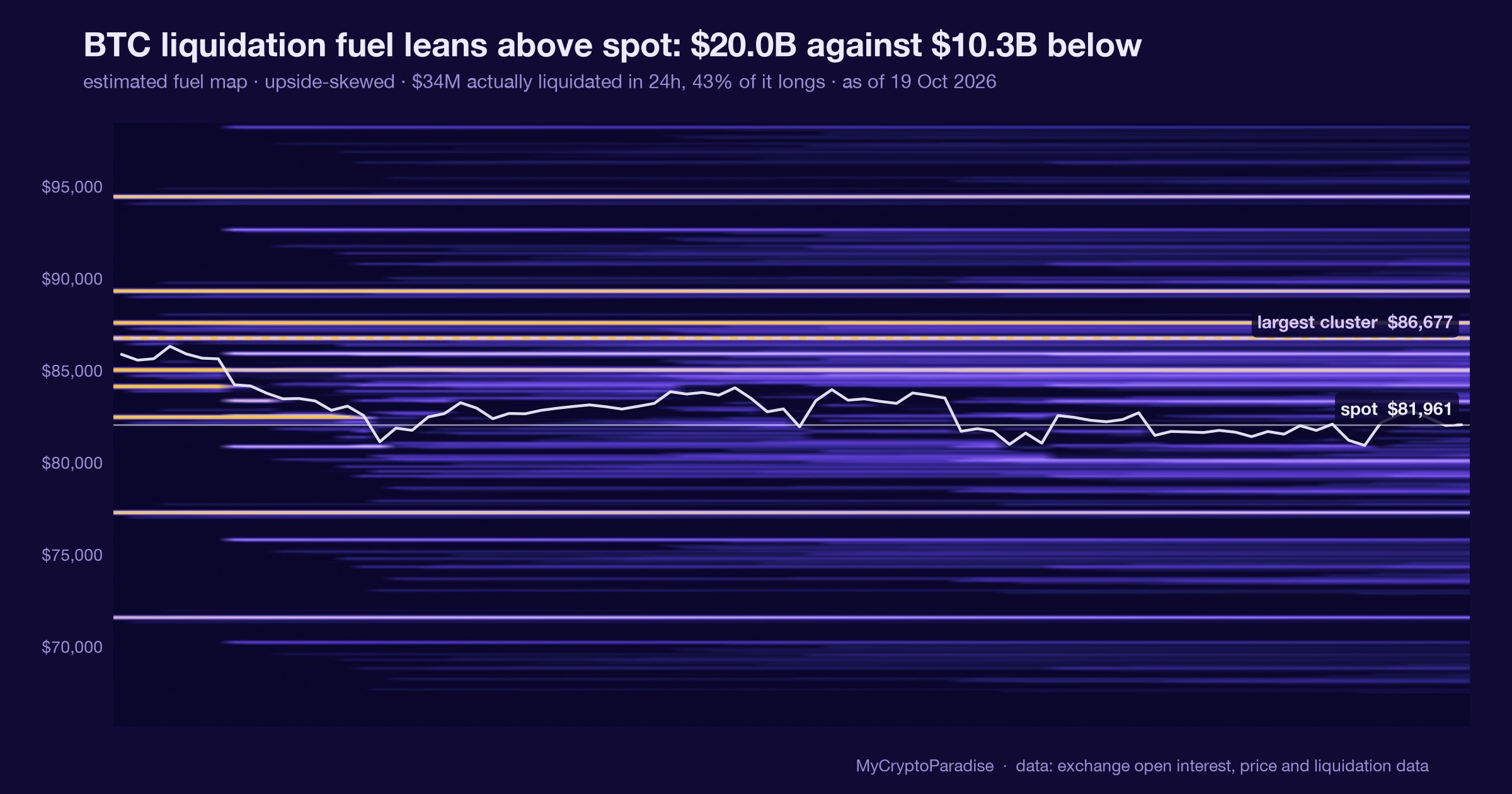
Our standing structure still centres on the $78,000 to $79,800 support band. That zone holds a long-liquidation cluster and key Fibonacci levels. A regional risk-off shock is exactly the kind of outside pressure that can push price down to test it.
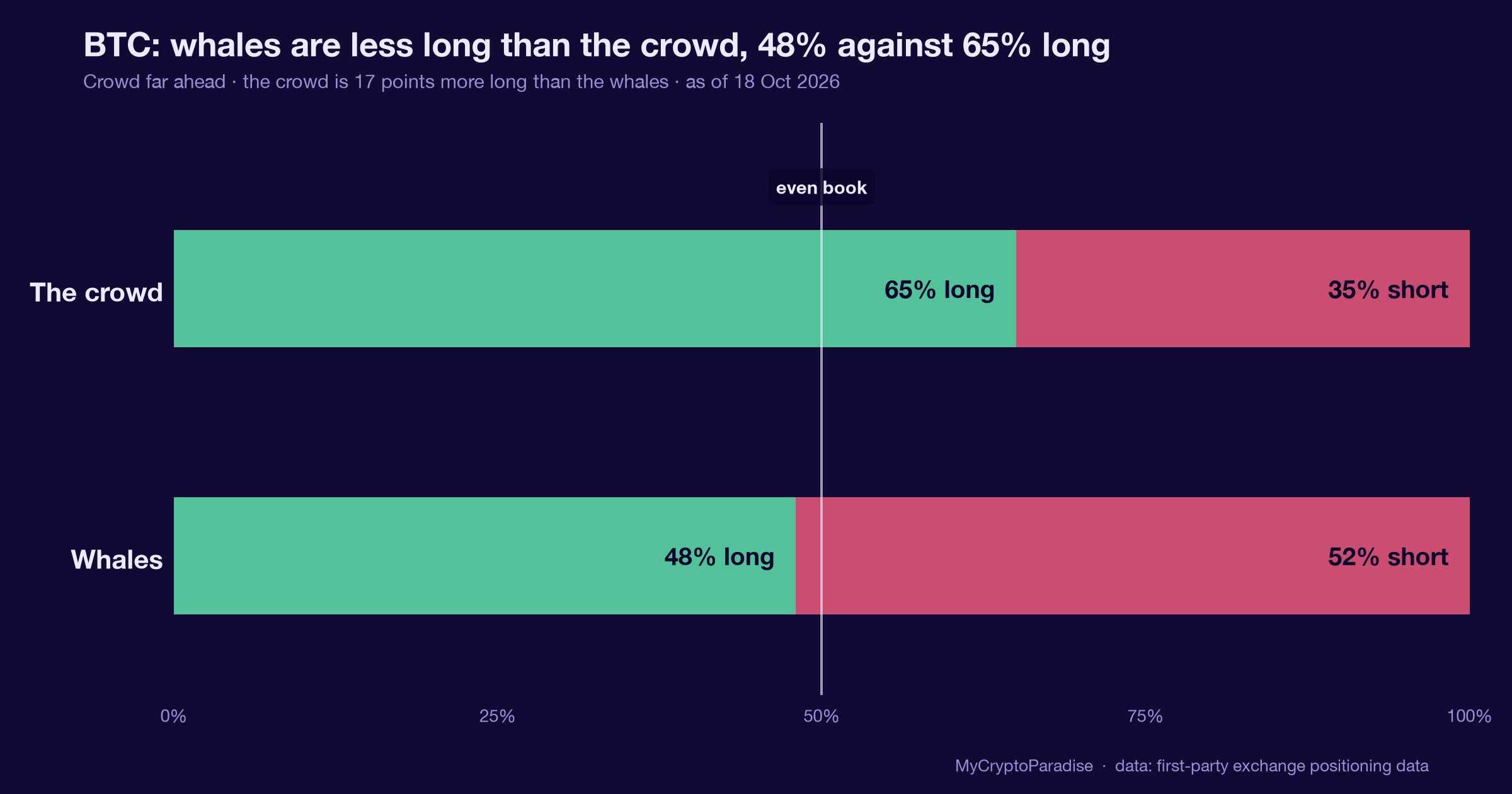
Here is the nuance. Spot cumulative volume delta, CVD (cumulative volume delta), has been printing higher highs and higher lows. That points to smart money and whales quietly absorbing selling while retail flinches at every scary headline.
So a dip into $79,000 on this kind of fear would not surprise us. It would flush the overleveraged longs stacked there. The ParadiseTeam treats that flush as a liquidation event inside a range, not automatic proof the trend has broken.
The lines are clear. Holding the $78,000 to $79,800 zone keeps the structure intact. Losing it on strong volume is the real warning this regional stress went global.
Reclaiming and defending $85,000, the next short-liquidation cluster, would argue the decoupling held and the shock stayed in Seoul. Until price resolves, we stay risk-first: respect the bearish mood this story brings, size for a possible $79k test, and let volume confirm which side of the range wins.
The read behind this: we framed this story through our own market analysis, Can Bitcoin Rally Back to $90K?
Track it live: our Crypto Fear and Greed Index and the live crypto funding rates both update in real time, so you can watch this shift for yourself.
Related coverage
For exact entries, targets, and stop losses with full risk management, that is what ParadiseFamilyVIP is for. New to reading these moves? Start with our crypto trading strategies guide.
ParadiseTeam is monitoring the market situation closely, and we are taking these developments into consideration while building our trading tactics inside ParadiseFamilyVIP.
Crypto trading involves substantial risk. Prices are volatile and you can lose money. This article is educational and is not financial advice. Past performance does not guarantee future results.
Does Korea's equity selloff spill into crypto over the next few sessions?
This is how 1 Paradiser is calling it. Tap your call.
No calls on this one yet. Tap yours to be the first.
Free account, no password. Members just sign in.








Join the discussion
No comments yet. Members, share how you are reading this.