



Elliott Wave Triangles
In short
A skewed triangle correction is a five-wave (A-B-C-D-E) Elliott Wave pattern where the trendlines tilt in the direction of the dominant market trend. All five waves within this pattern are corrective, signaling a continuation of the prevailing trend rather than a reversal. It typically forms in specific positions such as Wave B of a zigzag or Wave 4 of an impulse.
- A Skewed Triangle Correction is a five-wave sideways pattern that slopes with the dominant trend, signaling continuation rather than reversal.
- All 5 waves are corrective, and the triangle’s trendlines must tilt in the direction of the prevailing market force, either up or down.
- Identifying a Skewed Triangle early sets traders up for a strategic entry, as the breakout after Wave E often comes fast and in line with the dominant trend.
Skewed Triangle Correction is a distinctive variation within Elliott Wave Theory, offering valuable insight into how strong market forces can reshape typical corrective structures. Rather than unfolding sideways like traditional triangles, a skewed triangle forms along the path of the prevailing trend, either sloping upward or downward, depending on the market direction.
In this article, we will explore the structure and rules of the skewed triangle correction and practical strategies for identifying and trading it confidently in trending markets.
What is a Skewed Triangle Correction?
A Skewed Triangle Correction is a five-wave corrective pattern in Elliott Wave Theory, labeled A, B, C, D, E. Unlike horizontal triangles that unfold sideways, the skewed triangle develops with a slope in the same direction as the dominant market trend, either upward or downward.
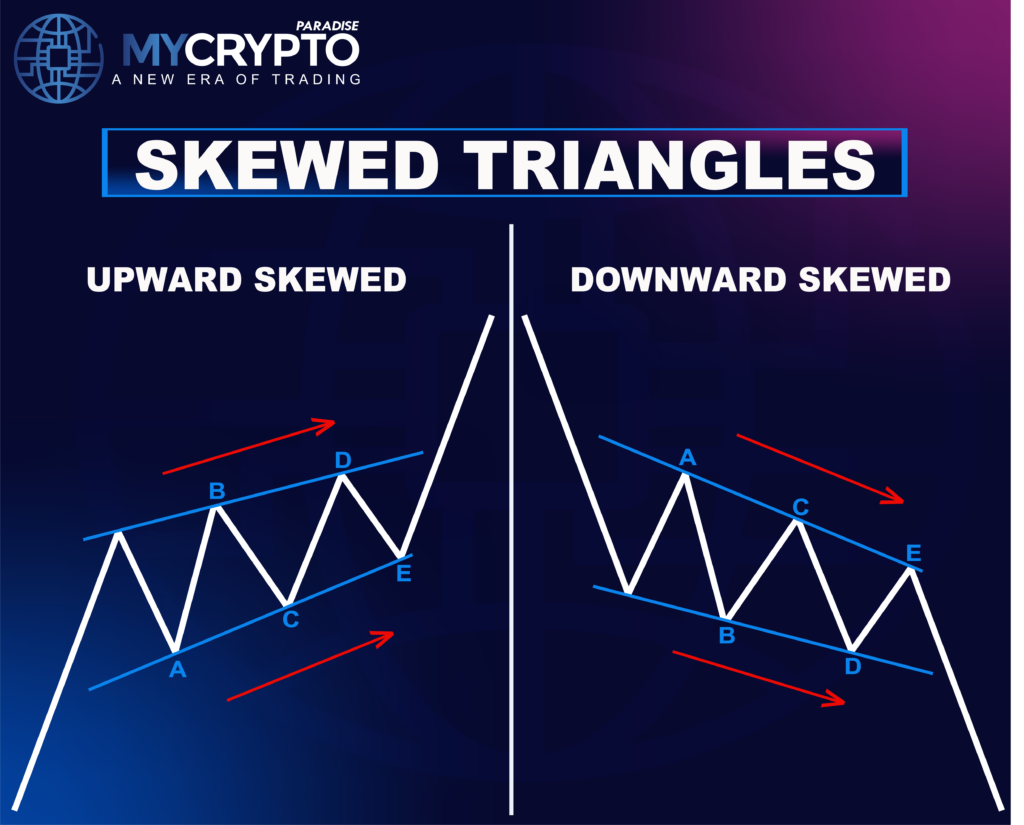
This pattern appears when the dominant trend applies enough pressure to tilt the triangle, preventing a horizontal correction from forming. The pressure from buyers or sellers forces the triangle to stretch along the trend, rather than develop sideways.
Wave Structure of a Skewed Triangle
Just like other triangle patterns in Elliott Wave Theory, a skewed triangle consists of five corrective sub-waves:
- Wave A: Corrective.
- Wave B: Corrective.
- Wave C: Corrective.
- Wave D: Corrective.
- Wave E: Corrective.
All 5 waves move in a tilted consolidation phase rather than a traditional sideways triangle.
How the Skewed Triangle Takes Shape
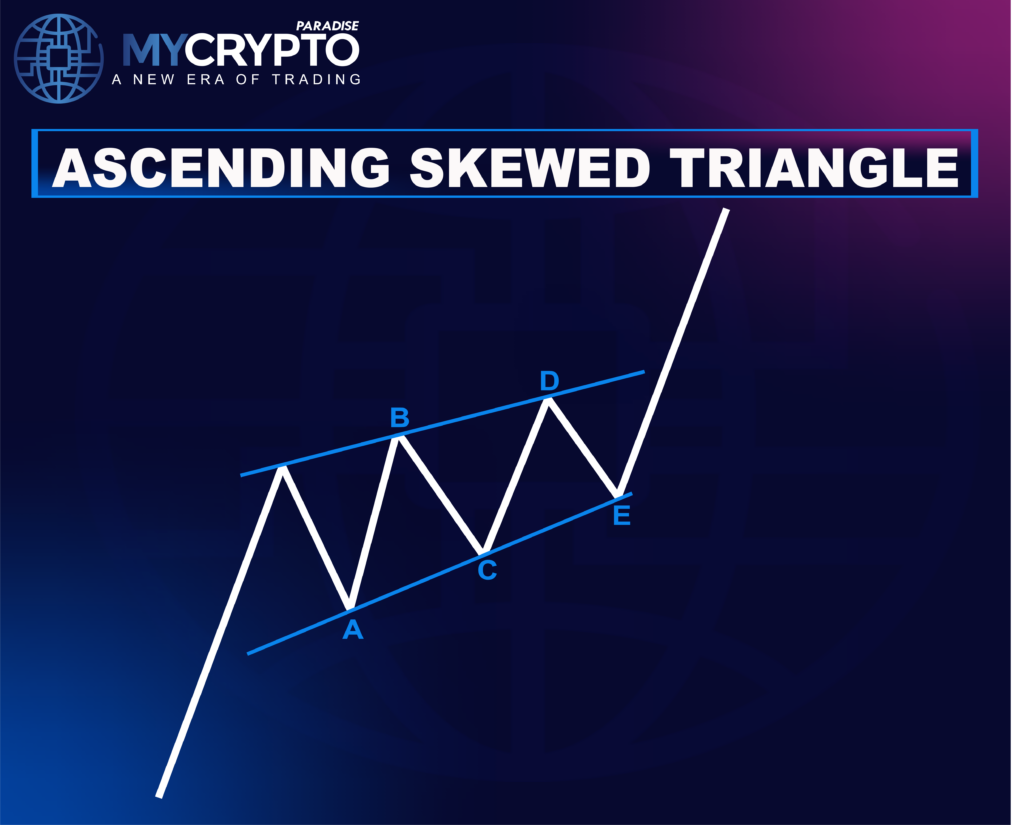
The unique shape of a skewed triangle comes from its generating lines. The generating lines are drawn through the highs and lows of its waves. In this pattern, both lines slope in the same direction as the trend.
- In an uptrend, the upper and lower boundaries of the triangle both slope upward.
- In a downtrend, these lines slope downward together.
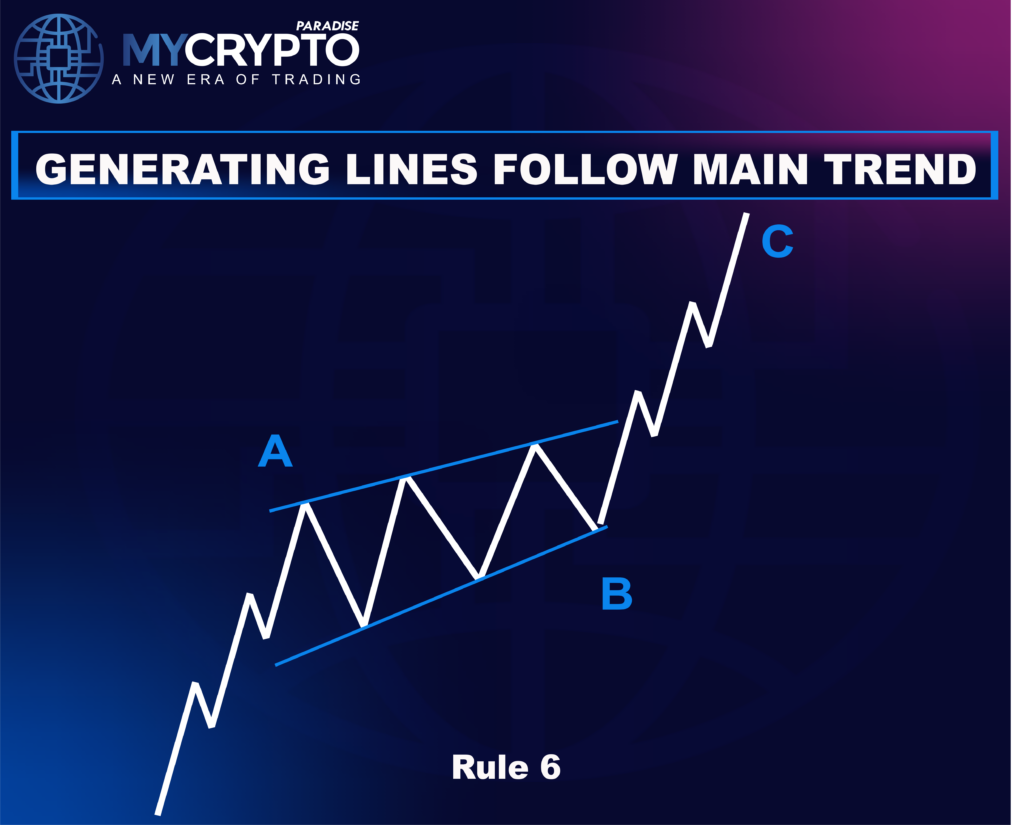
This structure is a defining characteristic of the pattern. It’s important to note that if the triangle structure slopes against the dominant trend, it should not be classified as a skewed triangle. Correctly identifying this distinction is essential to avoid mislabeling complex corrective phases
Why is Skewed Triangle Correction Important?
The Skewed Triangle Correction is important because it reflects a market that is too strong to allow for a neutral or sideways pause. Instead of forming horizontally, the correction bends in the direction of the prevailing trend, showing that either bullish or bearish forces remain in control.
This pattern offers clarity during what may seem like choppy or tilted price action. Recognizing a skewed triangle helps avoid misinterpretations and prepares traders for a powerful breakout once the pattern concludes.
Where Does the Skewed Triangle Correction Appear?
The skewed triangle typically forms in the next-to-last position within a larger wave structure. This includes:
- Wave B of a Zigzag
- Wave 4 of an Impulse
- Wave XX of a Triple Zigzag
Recognizing this location helps crypto traders better anticipate the direction of the breakout and align with the trend’s final move. When used correctly, the skewed triangle becomes a reliable signal for trend continuation, especially after prolonged market consolidation.
Rules of Skewed Triangle Correction
Let’s look at the rules that define this pattern:
Five-Wave Corrective Structure

A skewed triangle always unfolds in five sub-waves, labeled A, B, C, D, E. These waves form the backbone of the pattern and confirm that the market is undergoing a structured pause, not a reversal.
All Waves Are Corrective
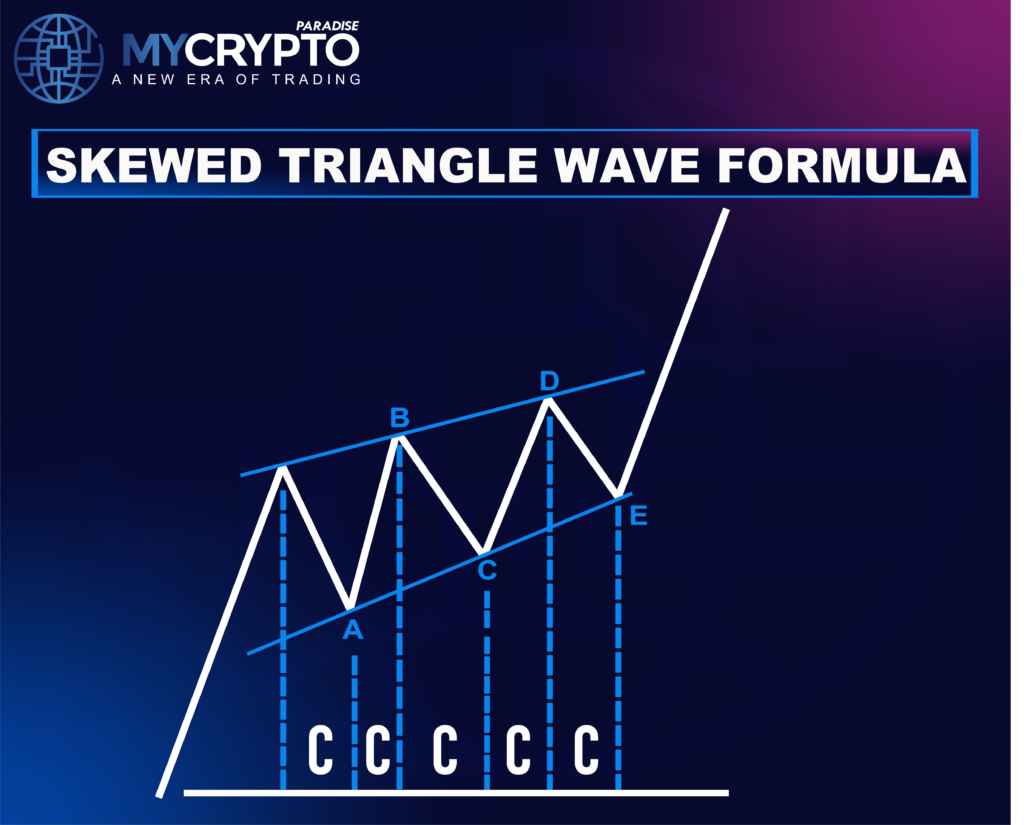
Each wave within a skewed triangle is corrective in nature. This means none of the sub-waves should be impulsive. The entire structure reflects a controlled consolidation, where the market is pausing before continuing its trend.
Wave C is Shorter Than Wave B
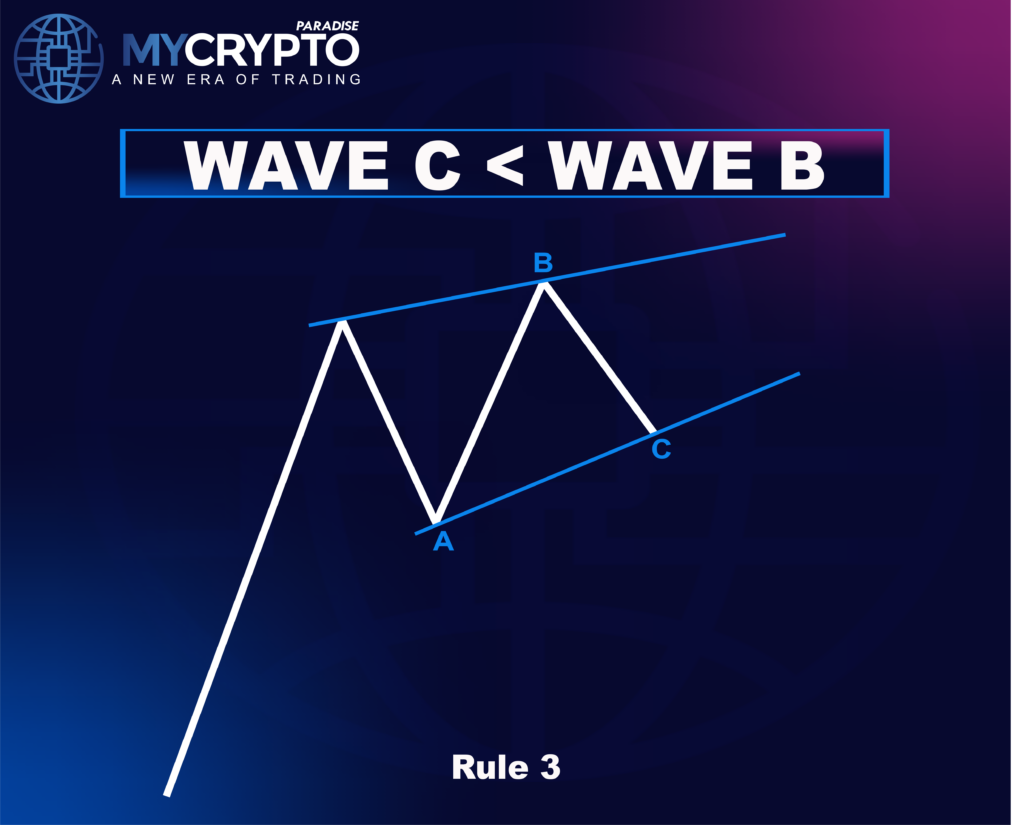
Wave C must always be shorter than Wave B. This ensures that the triangle doesn’t stretch disproportionately and maintains its compressed, corrective appearance.
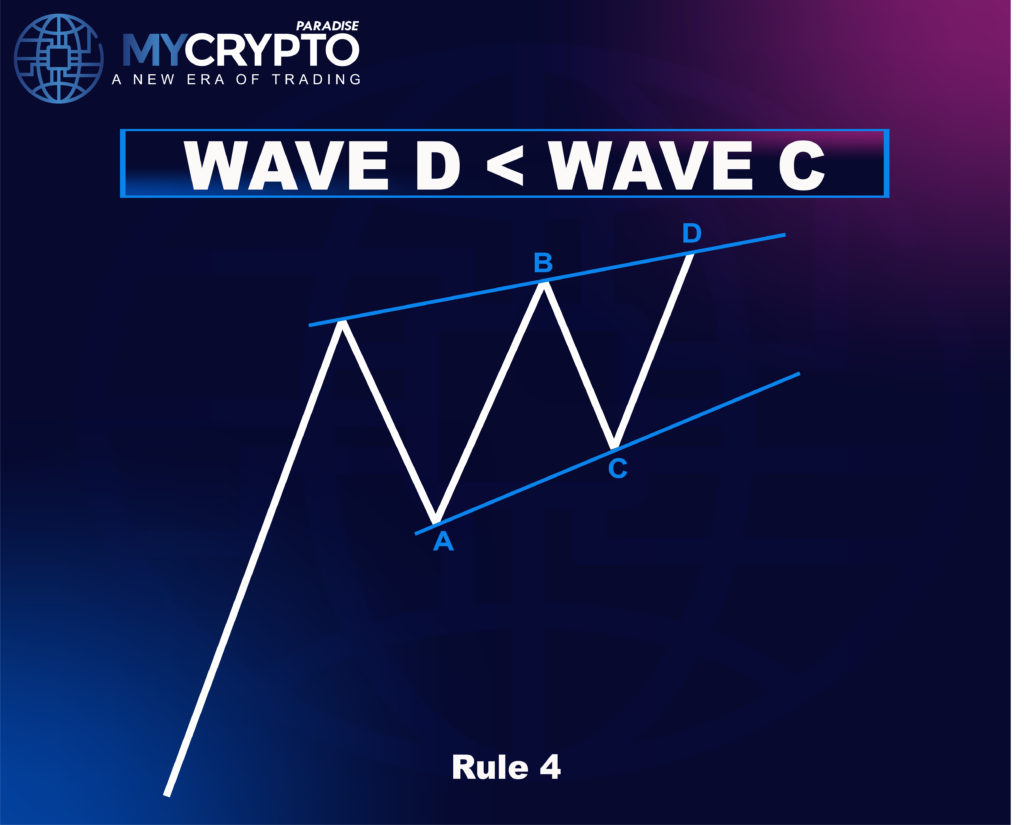
Wave D < Wave C
In this rule, Wave D must extend beyond Wave C, creating a visible progression within the structure.
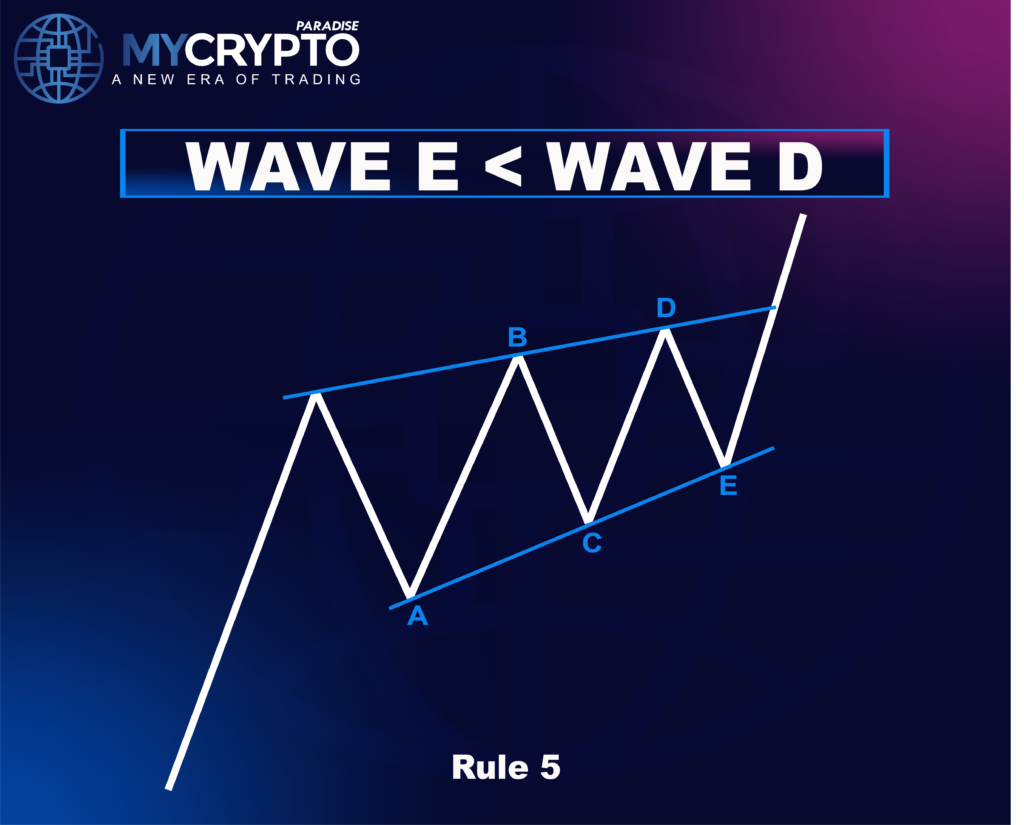
Wave E is Shorter Than Wave D
The Wave E is the final and typically the shortest wave in the sequence. It completes the triangle and usually signals the market’s readiness to break out in the direction of the existing trend.
By following these structural rules, traders can accurately identify skewed triangles and use them as a reliable signal for trend continuation, particularly in complex market conditions where clarity is hard to find.
Wave B Can Vary in Size
Wave B may be longer or shorter than Wave A, and both variations are acceptable. This flexibility does not violate the pattern, as long as the structure continues to respect the overall triangle formation.
Always Slopes With the Trend
One of the most important visual cues of a skewed triangle is that both generating lines, the top and bottom, must slope in the same direction as the dominant trend. If the market is trending upward, the triangle leans upward; if it’s in a downtrend, the triangle slopes down. This directional tilt is a signature feature.
Descending Skewed Triangle Correction
A Descending Skewed Triangle Correction is a variation of the skewed triangle that forms in a downtrend, where both trendlines slope downward. This pattern reflects sustained bearish pressure that prevents a neutral, sideways correction from unfolding. Instead, the triangle tilts in the direction of the ongoing decline, maintaining the momentum while consolidating price action.
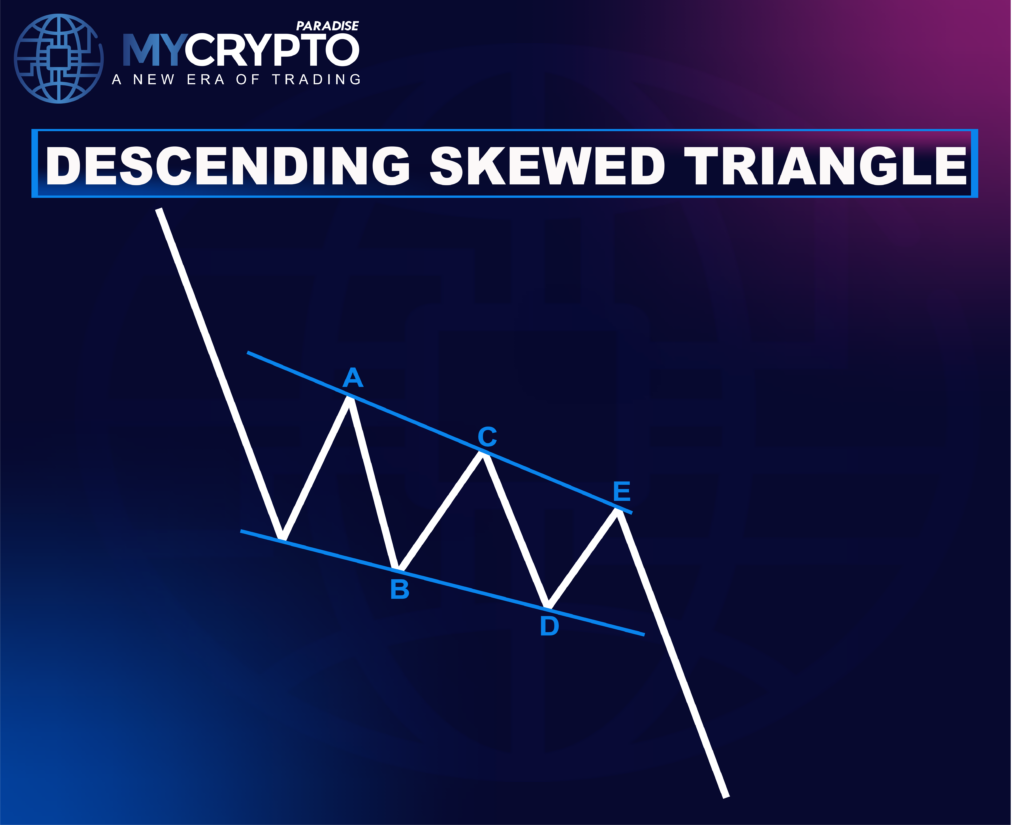
Unlike sideways triangles that signal balance between bulls and bears, the descending skewed triangle shows that sellers are firmly in control. The pattern unfolds as a five-wave corrective structure, and once it completes, it often leads to a sharp continuation of the downtrend.
Rules of Descending Skewed Triangle Correction
To confirm a valid descending skewed triangle, traders should look for these structural rules:
- Five-Wave Corrective Structure: The pattern consists of five sub-waves: A, B, C, D, E.
- All Waves Are Corrective: Each wave is corrective, not impulsive, signaling that the market is in a consolidation phase within a broader downtrend.
- Wave B Can Be Any Length Relative to Wave A: Wave B has flexibility in size. It may extend beyond or fall short of the end of Wave A. This variation is allowed.
- Wave C is Shorter Than Wave B: Wave C must always be smaller than Wave B, remaining confined within its range.
- Wave D is Larger Than Wave C: Wave D extends beyond the end of Wave C, progressing the structure further in the direction of the downtrend.
- Wave E is Shorter Than Wave D: Wave E completes the triangle and remains within Wave D’s range.
- Trendlines Slope Downward: Both the upper and lower generating lines must slope downward, in alignment with the dominant bearish trend.
By understanding these rules, crypto traders can use the descending skewed triangle to anticipate high-probability breakdowns and position themselves with the prevailing bearish momentum.
How to Trade a Skewed Triangle Correction
Skewed triangles may look irregular, but they follow a structured path and often signal a strong trend continuation.
Here’s how to trade them effectively:
Recognize the Pattern Early
Look for five corrective sub-waves labeled A, B, C, D, E. Both trendlines should slope in the same direction as the dominant trend, upward in bull markets, downward in bear markets. These patterns typically appear in Wave B of a Zigzag, Wave 4 of an Impulse, or Wave XX of a complex correction.
Entry Strategy
The ideal entry in a skewed triangle comes after the completion of Wave E, which marks the final point of the five-wave correction. Entering before this wave finishes is risky, as price action remains choppy and uncertain inside the triangle. Traders should look for confirmation signals, such as reversal candlestick formations, weakening momentum, or touches near the trendline boundaries, to support the idea that Wave E is ending.
Once the price begins to break out of the triangle with momentum, either upward in an ascending triangle or downward in a descending one, it signals the return of the dominant trend. This breakout becomes the primary entry trigger, giving traders a structured and timely position with minimal lag.
Exit Strategy
After the breakout from Wave E, price typically accelerates in the direction of the prior trend. To manage the trade effectively, traders can set targets using Fibonacci extensions, with the 1.618 extension being a common objective, especially if the breakout is strong. Additionally, identifying support or resistance zones near the projected breakout path can offer more precise exit points.
By waiting for a clean Wave E breakout and aligning exits with measured targets, traders can approach skewed triangles with both precision and confidence.
Want to trade skewed triangle corrections with confidence? Our team at ParadiseFamilyVIP🎖️ shares live setups, entry and exit levels, and PRO insights to help you catch these moves safely.
Skewed Triangles FAQ
What is a skewed triangle correction?
It is a five-wave corrective Elliott Wave pattern, labeled A through E, whose upper and lower trendlines both slope in the same direction as the dominant trend. Unlike a horizontal triangle, it tilts up in an uptrend or down in a downtrend, signaling trend continuation rather than reversal.
What are the main rules of a skewed triangle?
All five sub-waves must be corrective, not impulsive. Wave C is shorter than Wave B, Wave D extends beyond Wave C, and Wave E is the shortest, completing the pattern. Both generating trendlines must slope in the direction of the prevailing trend.
Where does a skewed triangle usually appear?
It typically forms in the next-to-last position of a larger structure, such as Wave B of a zigzag, Wave 4 of an impulse, or Wave XX of a triple zigzag. This placement helps traders anticipate the trend's final move.
How do you trade a skewed triangle correction?
Wait for Wave E to complete before entering, since price stays choppy inside the triangle. Look for confirmation such as reversal candles, weakening momentum, or trendline touches, then enter on a momentum breakout in the direction of the dominant trend. Manage risk with a stop loss.
Crypto trading involves substantial risk of loss. This article is educational and is not financial advice. Past performance does not guarantee future results. Always do your own research.
What is different here
Most guides stop at the theory. The MyCryptoParadise team shares the live trades, and the reasoning behind each one, inside ParadiseFamilyVIP. Everything here is education, not financial advice.
Crypto trading involves substantial risk and is not suitable for everyone. Nothing here is financial advice; it is education only. Never risk more than you can afford to lose.











Join the discussion
No comments yet. Members, share how you are reading this.