

Key Highlights
• The SEC has officially classified XRP as a digital commodity, confirming it is not a security under U.S. law
• XRP now joins Bitcoin, Ethereum and Solana, as regulators introduce a new five-category crypto framework
Yello Paradisers! After years of courtroom drama and regulatory confusion, XRP finally gets a clear label from the SEC. But is this just clarity, or the beginning of a much bigger institutional shift?
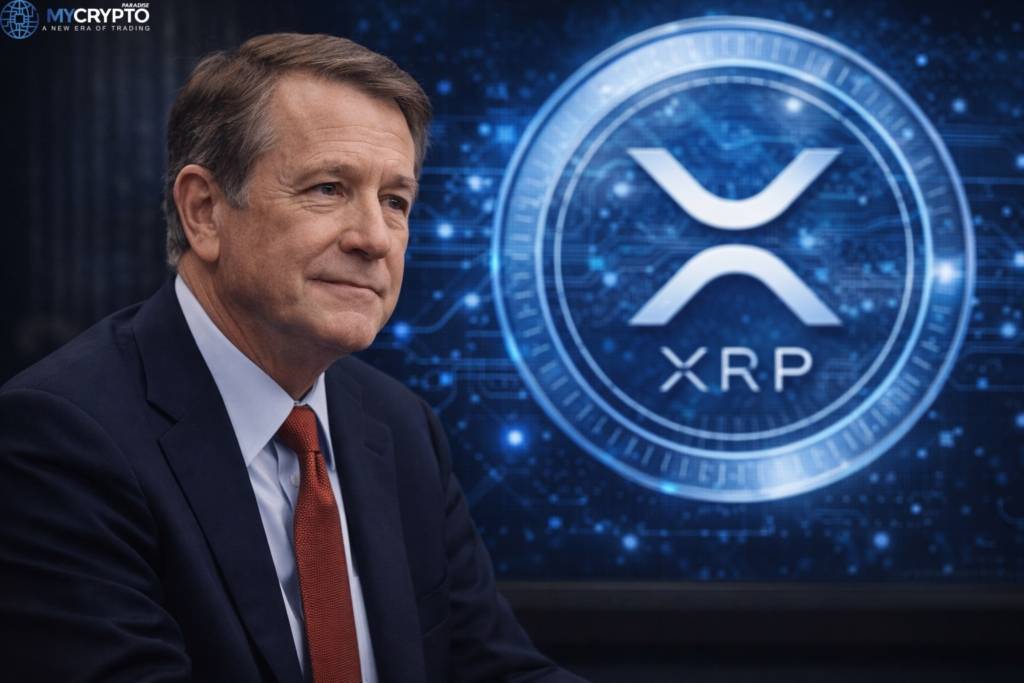
The U.S. Securities and Exchange Commission has officially classified XRP as a digital commodity, placing it alongside major crypto assets like Bitcoin, Ethereum and Solana under its newly introduced crypto taxonomy.
This classification confirms that XRP is not a security under federal law, marking a significant turning point after years of legal uncertainty and enforcement battles.
Under the new framework, the SEC has divided crypto assets into five categories: digital commodities, digital collectibles, stablecoins, digital tools and digital securities. Only digital securities fall under strict securities regulation.
The SEC clarified that digital commodities derive value from the functionality of decentralized networks, rather than the managerial efforts of a central entity. XRP was recognized as playing a core role in facilitating transactions within its network.
The framework also signals a shift away from the traditional Howey Test, with regulators stating that most crypto assets are not securities by default. Activities such as staking, mining and airdrops were also clarified as generally not constituting securities transactions.
The CFTC has aligned with this classification, confirming that digital commodities will be overseen under existing commodities law, further strengthening regulatory clarity across U.S. markets.
Why It Matters
For years, XRP lived in regulatory uncertainty.
And markets dislike uncertainty more than they dislike bad news.
Now, with a clear classification, XRP moves from “legal question mark” to “defined asset class” almost overnight.
That shift does not just change how regulators see XRP. It changes how institutions are allowed to interact with it.
Market Impact
The classification significantly reduces regulatory risk around XRP, particularly for exchanges, institutional investors and financial products.
Exchanges can now list XRP with greater confidence, while institutions can explore derivatives, ETFs and structured products without the overhang of securities violations.
More broadly, the SEC’s framework signals that most major cryptocurrencies are not securities, which could unlock broader participation across the market.
This also strengthens the position of the United States as a more attractive environment for crypto innovation and capital inflows.
What to Watch Next
Watch for increased exchange listings and liquidity expansion for XRP.
Monitor whether financial institutions begin launching XRP-based products such as ETFs or derivatives.
Observe how regulators apply this framework to smaller or emerging tokens.
Pay attention to how global regulators respond to the U.S. classification model.
Insights for Traders
Big players do not just care about price. They care about permission.
This decision gives institutions something they value even more than upside, which is clarity.
The second-order effect is capital flow. When regulatory risk drops, capital that was previously waiting on the sidelines tends to move in.
For traders, this shifts XRP from a speculative legal bet to a more structurally investable asset.
And markets often reprice assets not when they become better… but when they become easier to understand.
ParadiseTeam is monitoring the market situation closely, and we are taking these developments into consideration while building our trading tactics inside ParadiseFamilyVIP.
Follow this topic: Crypto regulation news · XRP news







Join the discussion
No comments yet. Members, share how you are reading this.