

Key Highlights
• Revolut files for a U.S. national bank charter with the OCC and FDIC
• Fintech giant appoints Cetin Duransoy as new U.S. CEO to lead expansion
• License would allow insured deposits, lending products, and direct payment network access
Yello Paradisers! When one of the world’s largest fintech firms pushes for a U.S. banking license, is it preparing for the next stage of financial competition?
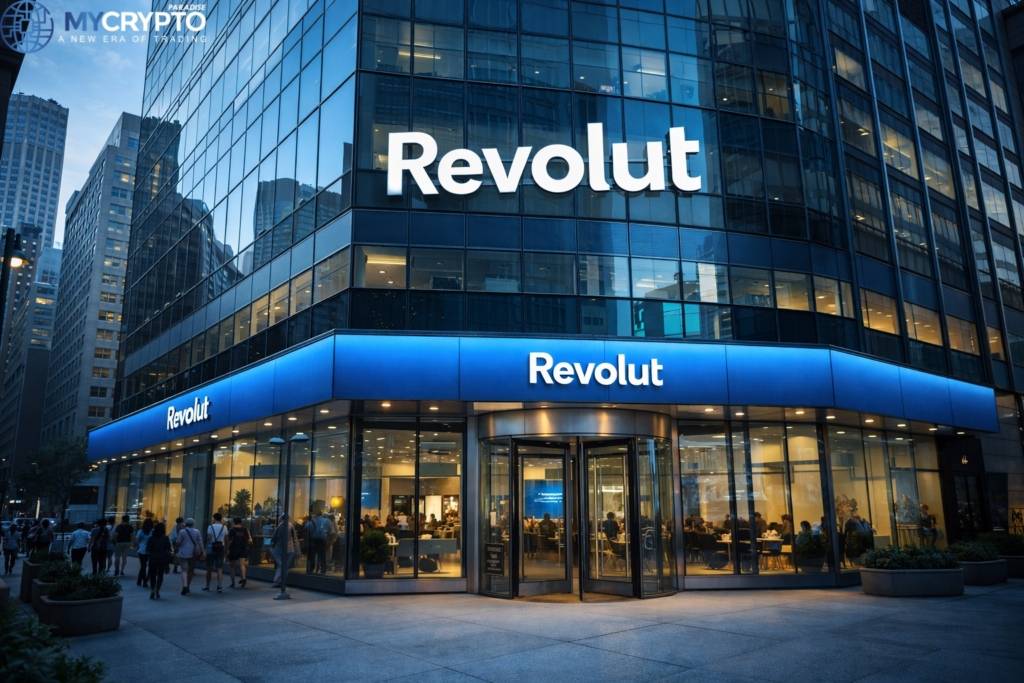
Global fintech company Revolut has filed a new application for a U.S. national bank charter as part of its renewed expansion strategy in North America.
The London-based firm submitted its application to the Office of the Comptroller of the Currency and the Federal Deposit Insurance Corporation to establish “Revolut Bank US, N.A.” If approved, the charter would allow the company to operate under a unified federal regulatory framework across all 50 states.
The move marks Revolut’s second attempt to secure a U.S. banking license. The company previously sought approval through California regulators in 2021 but withdrew the application in 2023 after encountering regulatory hurdles and internal control concerns.
Alongside the application, Revolut appointed fintech executive Cetin Duransoy as its new U.S. CEO. Duransoy brings more than two decades of experience in banking, payments, and financial technology, including leadership roles at the fintech marketplace Raisin.
Revolut currently serves more than 70 million users globally across over 40 markets. The company was valued at approximately $75 billion following a secondary share sale completed in November 2025.
Why It Matters
A U.S. banking charter would significantly expand Revolut’s capabilities in the American market.
Currently, Revolut relies on partner institutions such as Lead Bank to offer FDIC-insured deposits. A charter would allow the fintech to hold deposits directly, access key payment networks like Fedwire and ACH, and introduce new products such as personal loans and credit cards.
The move also reflects a broader trend. Fintech and crypto companies are increasingly seeking direct banking licenses to reduce reliance on traditional financial intermediaries.
Market Impact
Fintech sector: Increased competition with traditional banks in the U.S. consumer finance market.
Payments infrastructure: Direct access to Fedwire and ACH could enhance transaction speed and reliability.
Crypto ecosystem: Revolut’s crypto integrations may benefit from clearer regulatory alignment under a banking framework.
Banking industry: Traditional banks face growing competition from technology-driven financial platforms.
What to Watch Next
Monitor the regulatory review process by the OCC and FDIC.
Watch whether Revolut expands lending and credit products in the U.S. following approval.
Track additional fintech and crypto firms pursuing national bank charters.
Observe how the evolving regulatory environment affects fintech expansion strategies.
Insights for Traders
Big players are positioning around financial infrastructure rather than short-term market cycles.
Second-order effects are important. When fintech companies obtain full banking licenses, they gain control over deposits, payments, and lending pipelines. That increases their ability to compete directly with traditional banks and integrate digital assets into mainstream financial services.
As more fintech firms pursue charters, the line between banking institutions and technology platforms continues to blur.
ParadiseTeam is monitoring the market situation closely, and we are taking these developments into consideration while building our trading tactics inside ParadiseFamilyVIP.












Join the discussion
No comments yet. Members, share how you are reading this.