


- Michael Saylor labeled Illinois’ crypto tax proposal a “big mistake.”
- Critics argue the measure could discourage crypto innovation.
- The debate reflects broader tensions over crypto regulation and taxation.
Money moves where it is treated best. The Illinois crypto tax debate is raising a bigger question than revenue alone. Could aggressive taxation push digital asset innovation elsewhere?
Michael Saylor, executive chairman of Strategy and one of Bitcoin’s most prominent advocates, has publicly criticized Illinois’ proposed crypto tax measures, describing them as a “big mistake.” His comments come as lawmakers explore new ways to regulate and tax digital asset activity, a trend that is becoming increasingly common across the United States and other major economies.
The proposal has attracted attention because it extends beyond a simple discussion about government revenue. Supporters argue that crypto-related activity should contribute to public finances in the same way as other financial sectors. Critics counter that excessive taxation risks discouraging innovation, reducing investment, and driving businesses toward more favorable jurisdictions.
Saylor has consistently argued that governments should focus on encouraging digital asset adoption rather than creating additional barriers to participation. His latest criticism fits within a broader industry concern that poorly designed tax policies may slow growth in a sector that remains in the early stages of development.
For crypto markets, the significance lies in the precedent rather than the immediate financial impact. The driver is the Illinois crypto tax proposal. The macro effect is the growing regulatory and fiscal scrutiny facing digital assets. The liquidity effect could emerge if investors, companies, and entrepreneurs adjust capital allocation decisions based on changing tax environments.
The debate ultimately reflects a larger question facing policymakers worldwide: how to capture economic value from digital assets without undermining the industry’s growth potential.
Why Illinois Crypto Tax Matters for Crypto
The Illinois crypto tax debate matters because taxation directly influences capital flows, business formation, and investment decisions. Markets often focus on regulation, but tax policy can have an equally powerful effect on where innovation develops and where liquidity accumulates.
The driver is the proposed Illinois crypto tax framework. The macro effect is increasing government involvement in shaping the economics of digital asset activity. The liquidity effect occurs when investors and businesses reassess where capital can generate the highest after-tax returns.
History provides a useful lesson. Financial innovation frequently gravitates toward jurisdictions that balance oversight with competitiveness. Regions that become excessively restrictive often struggle to attract entrepreneurs, developers, and investors. Regions that provide clarity while maintaining competitive conditions tend to attract capital.
Bitcoin could be affected indirectly because taxation influences investor behavior. If higher costs reduce participation, demand growth could slow over time. However, Bitcoin’s global nature means capital can often relocate more easily than traditional businesses.
Ethereum faces similar dynamics, particularly because much of its ecosystem involves active participation in decentralized finance, tokenization, and blockchain-based applications. Tax treatment can significantly influence activity levels across those sectors.
Altcoins may be even more sensitive because emerging projects often rely on favorable conditions to attract early-stage capital. Increased taxation can raise the hurdle for investment and innovation.
The broader issue extends beyond Illinois. Policymakers around the world are watching how different approaches influence economic outcomes. The decisions made today could shape where the next generation of crypto businesses chooses to operate.
Market Impact of Illinois Crypto Tax
The immediate market impact of the Illinois crypto tax proposal is likely to be limited. Bitcoin is not moving because of a single state-level tax discussion. However, the longer-term implications deserve attention because tax policy influences market structure over time.
The first impact is sentiment. Investors generally prefer certainty and predictability. Whenever new taxes are proposed, markets begin evaluating how they might affect participation, profitability, and future growth.
The second impact involves competitiveness. States and countries increasingly compete for digital asset businesses. Jurisdictions that create attractive environments may attract exchanges, miners, developers, and investors. Less competitive environments risk losing economic activity to neighboring regions.
The liquidity implications become more significant when viewed collectively. One tax proposal rarely changes an industry. A broader trend toward higher costs and greater complexity can gradually influence where capital flows and where innovation occurs.
Bitcoin remains relatively insulated because of its global liquidity and institutional adoption. Ethereum may experience more direct effects if tax policies influence decentralized finance activity, staking participation, or blockchain development.
Altcoins often feel these pressures more acutely because smaller ecosystems depend heavily on investment and entrepreneurial activity. Regulatory and tax uncertainty can discourage capital from moving into higher-risk sectors.
A second-order effect involves institutional adoption. Large investors carefully evaluate legal and tax frameworks before deploying capital. Policies perceived as hostile to innovation can slow participation, while balanced approaches can encourage growth.
What to Watch Next After Saylor’s Criticism
The most important development now is whether Illinois lawmakers modify, advance, or abandon the proposed tax measures. Public criticism from influential figures such as Michael Saylor can influence the broader debate, but policy outcomes ultimately depend on legislative decisions.
Traders should watch for responses from industry groups, exchanges, investment firms, and local crypto businesses. Tax proposals often evolve significantly during the legislative process, especially when stakeholders provide feedback.
Another key area to monitor is whether other jurisdictions pursue similar measures. The significance of this story increases substantially if it becomes part of a broader national trend rather than an isolated state-level initiative.
Institutional reactions may also provide useful signals. Large investors tend to evaluate the cumulative effect of taxation, regulation, and compliance requirements when deciding where to allocate resources.
The broader macro environment remains important. Regulatory and tax developments often have greater impact when markets are already sensitive to liquidity conditions. If crypto adoption continues expanding, policymakers may face increasing pressure to balance revenue goals with competitiveness.
Confirmation of the bearish interpretation would involve additional restrictive tax proposals, declining business activity, or evidence that companies are relocating operations. Invalidation would emerge if policymakers adjust the framework to address industry concerns while maintaining competitiveness.
The market rarely fears taxes themselves. It fears uncertainty about what comes next.
Insights for Traders on Illinois Crypto Tax
For traders, the Illinois crypto tax story should be viewed primarily through the lens of long-term capital formation rather than immediate price action.
The driver is proposed crypto taxation. The macro effect is increased government involvement in digital asset economics. The liquidity effect comes from how investors, businesses, and institutions respond to changing incentives.
Bitcoin remains the benchmark asset because it attracts the largest share of institutional and global capital. Recent market behavior also reinforces an important lesson: liquidity often matters more than headlines. While tax discussions can influence sentiment, Bitcoin’s strongest moves frequently emerge from market structure, positioning, and liquidity dynamics.
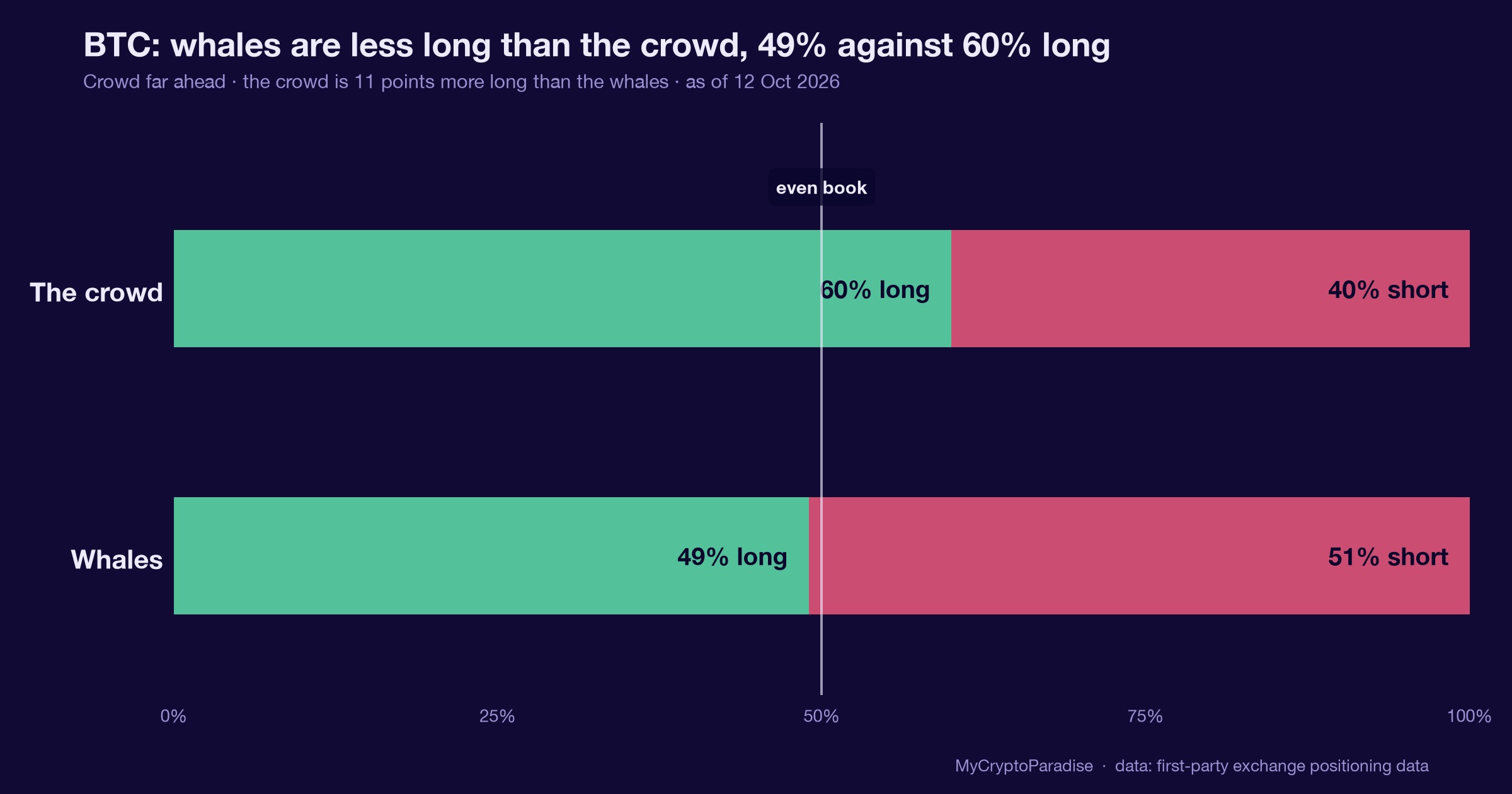
Professional traders continue monitoring whale accumulation, liquidation clusters, and major support zones because those factors often determine near-term direction. Large pools of liquidity above and below the market frequently exert greater influence than individual policy headlines.
Ethereum could experience indirect effects if taxation influences blockchain activity and digital asset participation. Altcoins may be more sensitive because they depend heavily on entrepreneurial growth and speculative capital.
Confirmation of a negative long-term impact would require evidence that taxation is reducing participation, investment, or innovation. Invalidation would occur if the market absorbs the changes without meaningful effects on adoption or liquidity.
Saylor’s criticism highlights a reality policymakers cannot ignore. Capital is increasingly mobile. In the digital age, attracting innovation may prove just as important as taxing it.
ParadiseTeam is monitoring the market situation closely, and we are taking these developments into consideration while building our trading tactics inside ParadiseFamilyVIP.
Will Illinois' crypto tax hinder its state's innovation and investment?
This is how the Paradisers are calling it. Tap your call.
No calls on this one yet. Tap yours to be the first.
Free account, no password. Members just sign in.












Join the discussion
No comments yet. Members, share how you are reading this.