

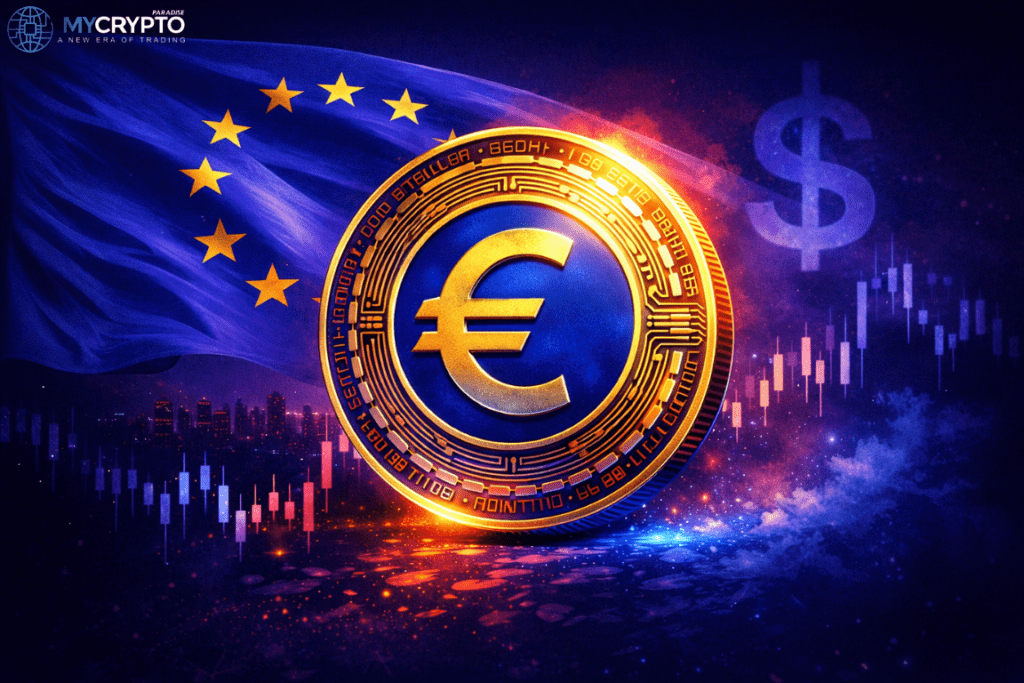
- France backs euro stablecoin push with 12 major EU banks
- Qivalis consortium targets launch under MiCA framework in 2026
- Euro stablecoins remain under 1% of on-chain activity
Euro stablecoins and dollar dominance is heating up with a new push by the French government, but can Europe really reclaim relevance in a market where it barely exists today?
France’s sudden pivot to euro-backed stablecoins is more than a policy noise, it is a structural change. On April 17, 2026, Finance Minister Roland Lescure publicly endorsed euro-denominated stablecoins at a Paris crypto conference and urged banks to speed up tokenized deposits and blockchain-based euro assets. This is in direct contrast to the last government that completely rejected private stablecoins.
At the center of this push is Qivalis, a consortium of twelve major European banks including BNP Paribas, ING, and UniCredit. Their plan is to produce a bank-deposit and short-term government securities-backed euro stablecoin which will be in complete compliance with EU’s MiCA regulatory framework. The timeline is clear, with a target launch in the second half of 2026.
The motivation is equally clear. The market is dominated by dollar-backed stablecoins with over $300 billion in circulation and euro stablecoins are under $1 billion. The gap does not represent a mere number. It indicates control over digital settlement rails. Europe wants to stop the digital infrastructure gap from becoming a permanent feature.
Why Euro Stablecoin Push Matters for Crypto
The underlying reason is currency competition through stablecoin infrastructure.
The more euro stablecoins, the more the euro gets involved in cross-border use which means lesser dependence on dollar-based rails, diversification of capital flows and eventually changing the liquidity structure of the crypto market.
Successful implementation by Europe will mean that stablecoin markets will no longer be based around the dollar, but will encompass multiple currencies. That is not only changing the way payments are made, but also the origin and settlement of liquidity.
Market Impact of Euro Stablecoin Push
BTC remains neutral but benefits from broader liquidity expansion, and as more fiat systems enter blockchain rails, bitcoin dominance strengthens alongside its role as a global reserve asset.
ETH and other infrastructure layers directly converge. The growth of stablecoins leads to more transaction demand, which in turn strengthens networks supporting tokenized settlement.
Alts are divided based on the utility factor. Projects focused on payments and tokenization become more significant while speculative assets are offered a more selective environment.
The market reaction is quiet. The implication is not.
What to Watch Next After Euro Stablecoin Push
Observe regulatory developments under MiCA. The timeliness of approvals will dictate the speed of this transition from idea to reality.
Keep a close eye on Qivalis. Both its licensing and technical aspects will indicate whether it gets operational or stays at a strategic level.
Stay abreast of euro stablecoin trading volumes. Even a small uptick would be seen as a sign of early usage.
Don’t forget to look at the worldwide reaction as well. If other parts of the world start hastening their stablecoin plans, the competition curve steepens.
Insights for Traders on Euro Stablecoin Push
If euro stablecoins become popular, liquidity will no longer be centered around dollar-based systems only. This will lead to new flows of capital as well as reduced dependence on a single currency.
If the adoption is slow, then the dollar dominance will be maintained. On the other hand, if the adoption is fast, then the market will start to price in a liquidity system with multiple currencies.
This is not a sprint. It is an arrangement.
ParadiseTeam is monitoring the market situation closely, and we are taking these developments into consideration while building our trading tactics inside ParadiseFamilyVIP.
Follow this topic: Stablecoin news









Join the discussion
No comments yet. Members, share how you are reading this.