

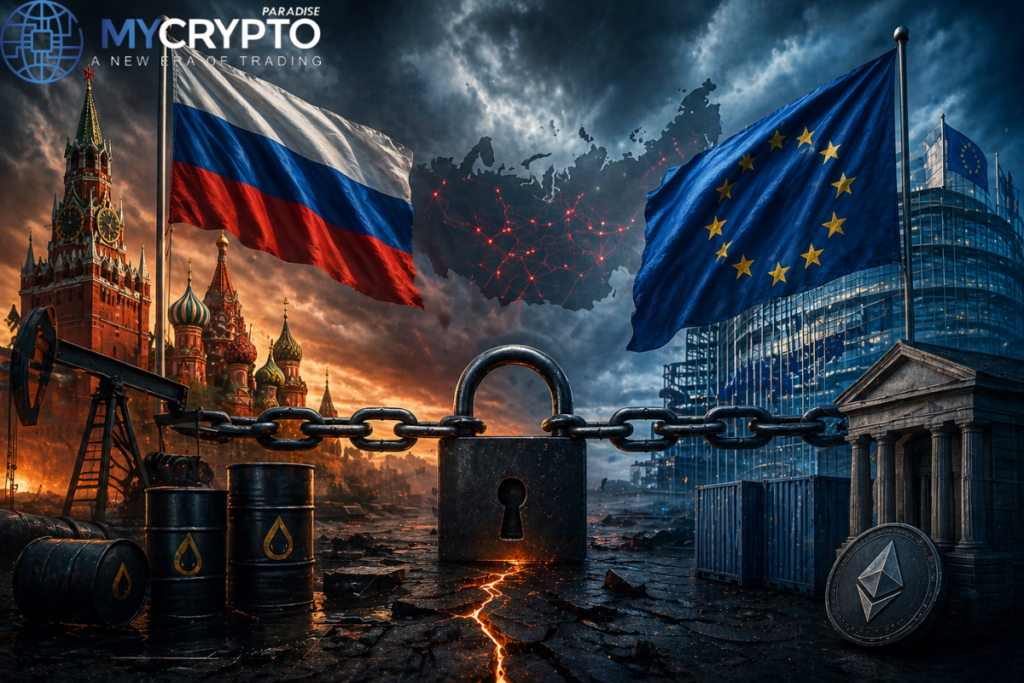
- EU rolls out 20th sanctions package targeting energy, banks, and crypto
- Full ban placed on Russian crypto platforms and digital ruble access
- Over 120 entities hit, including banks, oil firms, and military suppliers
The European Union just rolled out its 20th round of sanctions against Russia. Will the EU’s latest sanctions on Russia disrupt global crypto liquidity or simply reroute capital flows?
Europe has rolled out its 20th sanctions package against Russia, targeting over 120 entities across energy, banking, military, and crypto sectors, marking one of the broadest enforcement moves yet. For the first time, the package directly restricts Russian crypto platforms and digital asset channels alongside traditional financial systems, tightening how capital moves across borders and expanding enforcement into digital finance.
They’re doing more than blocking oil deals or freezing banks. The EU is tightening its grip on crypto pathways Russia uses to dodge past restrictions. The latest sanctions bring a total ban on Russian crypto platforms, tough limits on the digital ruble, and penalties for exchanges helping with sanctioned transactions. The message is clear, the EU wants to close every loophole and shut down the tools Russia uses to sidestep the financial system.
Why EU Crypto Sanctions Matter for Markets
It all begins with regulation, not price. When governments clamp down on crypto access, they’re basically changing how money gets from point A to point B, especially in countries that depend on alternative payment methods because of sanctions.
Tougher sanctions squeeze access to crypto networks, which cuts down on transaction options and makes it more difficult for people to move their money around. Eventually, this jams up liquidity, mostly in places already struggling with restrictions. It’s not just another flip in the market, it’s a problem fueled by regulation, and it doesn’t disappear quickly.
Market Impact of EU Sanctions on Crypto
Bitcoin’s built to last, but where people use it can change fast. If some countries block access, trading doesn’t just stop, it slips away to less obvious places, making things messier and harder to track. That shakes up short term liquidity.
Ethereum and DeFi feel these changes more sharply since they count on everyone having open access and money moving freely across borders. Sanctions mess with how people use these platforms, so activity drops in those areas. Altcoins get caught up in the mix, too, because when trading feels risky, people pull back from speculating, especially where regulations get strict.
Broader Implications of Crypto Sanctions Expansion
This move shows that crypto isn’t on the sidelines anymore, it’s right in the middle of geopolitical decision making. Governments aren’t just watching digital assets from afar. Now, they’re stepping in, making rules, and putting limits on them as part of their bigger financial game plans.
With more countries taking this path, the market starts to break up. Each region sets its own rules, so things like liquidity, access, and who gets to participate start to look really different depending on where you are. That’s going to shape the way global crypto markets grow.
What to Watch Next After EU Sanctions
Keep an eye on how these sanctions actually play out. Announcing new rules doesn’t move markets, what really matters is how those rules get enforced. The big question is whether these restrictions actually block access or if people find ways around them.
And don’t forget to watch what other big economies do. If more countries jump in with similar steps, this could quickly turn into a global effort. Then, you’d see an even bigger shake up in liquidity and capital flows, not just in Europe.
Insights for Traders on Sanctions Impact
This isn’t something that’ll move prices right away. It’s more of a fundamental change in how crypto works around the world. Traders should realize that liquidity won’t shift overnight, but it could get tougher to access coins in some places as rules tighten.
If regulators clamp down hard, we’ll probably see crypto markets break up a bit, with liquidity scattered and sudden, local swings in price. Maybe people will find ways around these restrictions, so the short term impact stays small. Still, the bigger picture shows regulators taking more control over crypto movement, and that’s a trend that’s not going away.
ParadiseTeam is monitoring the market situation closely, and we are taking these developments into consideration while building our trading tactics inside ParadiseFamilyVIP.



Join the discussion
No comments yet. Members, share how you are reading this.