


- ETH fell more than 5% and dropped toward $1,660.
- Over $700 million in crypto liquidations were reported during the selloff.
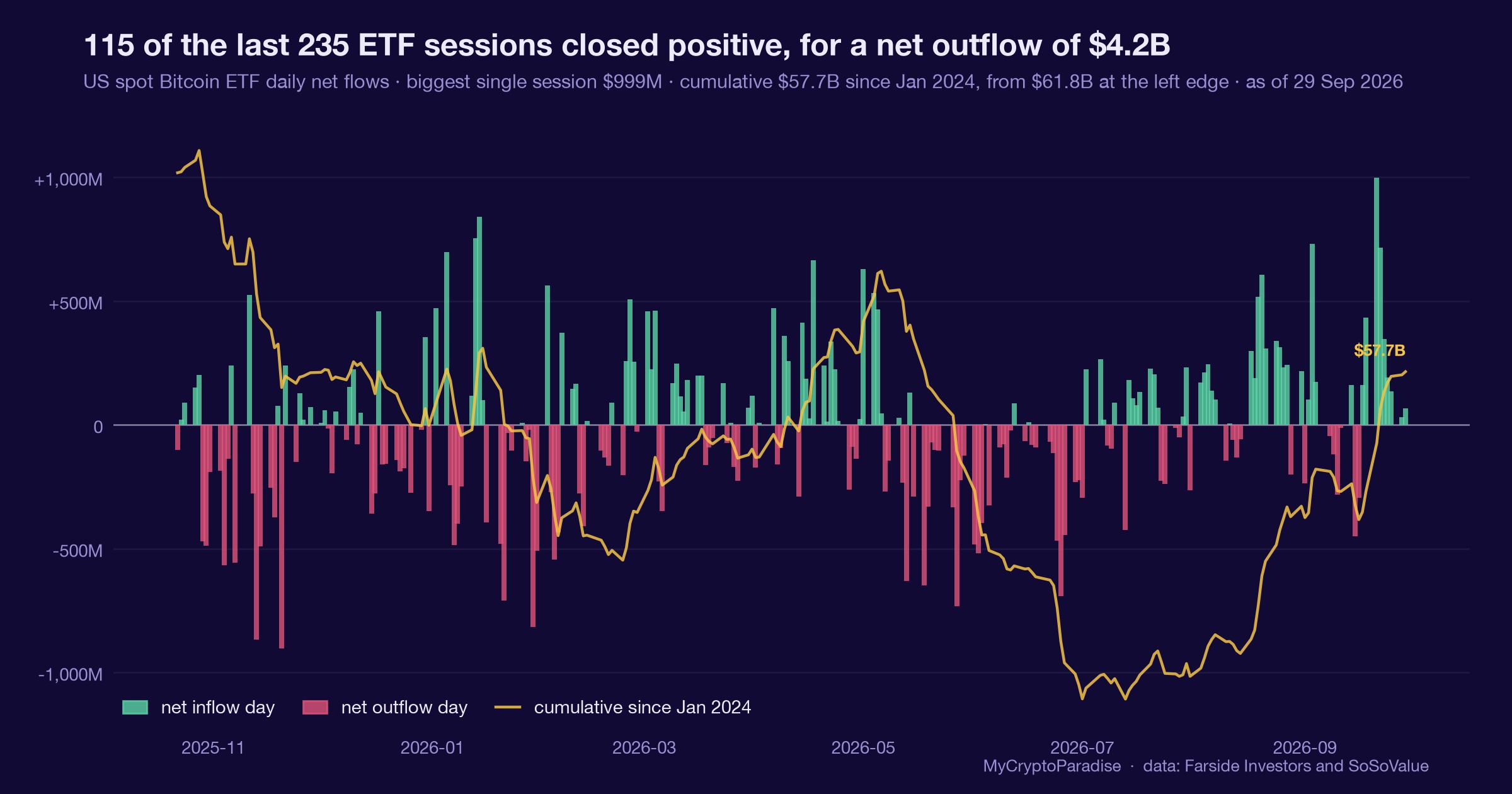
- ETF outflows and weak risk appetite added pressure across major assets.
A market can ignore bad news for only so long. As ETF outflows add pressure to Ethereum, traders are asking whether this selloff is merely a flush or something more durable?
Ethereum became the focal point of a broad crypto retreat after sliding more than 5% over a twenty four hour period. While Bitcoin declined roughly 3.9% and traded near $62,400, Ethereum’s move toward $1,660 stood out because it crossed the major move threshold that often forces traders to reassess risk. Solana and Dogecoin were also under pressure, each losing nearly 6% as weakness spread across the digital asset market.
Unlike many sharp market moves, there was no single headline responsible for the decline. Instead, several bearish forces appeared to converge at the same time. Market participants continued digesting a higher for longer interest rate environment following recent Federal Reserve signals, while reports pointed to ETF outflows and more than $700 million in liquidations across crypto markets.
The result was a market that looked increasingly defensive. Institutional demand signals weakened, leverage began unwinding, and risk appetite deteriorated. None of these developments alone fully explain the move, but together they created a backdrop where sellers maintained control.
For traders, the key issue is not simply that Ethereum fell. The more important question is whether ETF outflows add pressure temporarily through liquidation driven weakness or signal a deeper shift in market positioning.
Why ETF Outflows Add Pressure Matters for Crypto
ETF outflows add pressure because they affect one of the market’s most closely watched demand channels. Crypto ETFs have become important bridges between institutional capital and digital assets, making flow data a useful indicator of broader sentiment.
The driver behind the current weakness is not purely Ethereum specific. ETF outflows emerged alongside a still hawkish macro backdrop and fading risk appetite. Together, these factors influence how capital moves throughout financial markets. When institutional investors reduce exposure and liquidity conditions tighten, speculative assets often struggle first.
The macro transmission mechanism begins with interest rate expectations. Higher for longer policy signals encourage investors to seek safer returns in traditional markets. Treasury yields become more attractive, risk tolerance declines, and capital allocation becomes more selective. Crypto typically feels the effects through slower inflows and weaker momentum.
The liquidity effect is amplified when ETF outflows coincide with leveraged positioning. Reduced demand weakens support levels while liquidations create additional selling pressure. This combination can turn an orderly decline into a sharper move as forced sellers enter the market.
Bitcoin often absorbs part of the pressure because it remains the market’s primary liquidity benchmark. Ethereum becomes more vulnerable when institutional flows weaken because it sits at the intersection of crypto speculation and broader investment themes. Altcoins frequently experience even greater volatility because they rely heavily on favorable liquidity conditions.
That is why traders pay attention to ETF flows. They are not perfect predictors of price, but they often provide clues about where larger pools of capital are heading.
Market Impact of ETF Outflows Add Pressure
The market impact of ETF outflows add pressure extends beyond Ethereum’s daily decline. The move reveals how sensitive crypto remains to changes in liquidity and institutional sentiment.
Ethereum’s drop below key psychological levels matters because it occurred during a broader market selloff. Bitcoin weakened, Solana fell harder, and Dogecoin followed the risk off trend. This confirms that the market was not reacting to an isolated ETH event. Instead, investors were reducing exposure across multiple segments of the crypto ecosystem.
The liquidation effect played a significant role. Reports of more than $700 million in liquidations suggest that leverage became part of the story. When positions are forced closed, markets often move further and faster than fundamentals alone would justify. Liquidation driven selling can create temporary dislocations that amplify volatility.
For Bitcoin, the impact appears more contained because BTC remains the preferred asset during periods of uncertainty. Ethereum’s larger decline raises questions about whether it could continue underperforming if institutional demand remains weak. The answer depends heavily on future ETF flows and broader macro conditions.
Altcoins face the most challenging environment. Assets such as Solana and Dogecoin typically outperform during risk on conditions, but they often experience sharper declines when liquidity contracts. That pattern was visible during this move.
The broader takeaway is that crypto remains highly connected to liquidity dynamics. ETF outflows, liquidation pressure, and macro uncertainty may originate from different sources, but together they create a powerful market force.
What to Watch Next After the Selloff
The next phase of this story depends on whether the selloff stabilizes or develops into a more prolonged period of weakness. Traders should focus on a handful of indicators that can help distinguish between a leverage reset and a deeper structural shift.
ETF flow data remains at the top of the list. If outflows begin slowing or reversing, confidence could return relatively quickly. Persistent outflows, however, would reinforce concerns that institutional demand is weakening.
The second factor is liquidation activity. Markets often recover after large leverage flushes because excess risk has already been removed. If liquidation volumes decline while prices stabilize, it could signal healthier market conditions. Continued forced selling would point in the opposite direction.
Ethereum’s relative performance versus Bitcoin also deserves attention. If ETH continues underperforming while BTC remains comparatively resilient, traders may conclude that Ethereum faces unique demand challenges. Stronger relative performance would suggest the recent decline was primarily driven by market wide risk reduction.
The Hyperliquid whale short should remain on watchlists as well. Large directional positions can influence sentiment even when they are not the primary market driver. Traders often react to perceived smart money positioning.
Ultimately, confirmation of recovery would come from improving ETF flows, stabilizing leverage metrics, and stronger price action. Without those signals, caution may remain the market’s preferred strategy.
Insights for Traders on ETF Outflows Add Pressure
For traders, ETF outflows add pressure because they arrive at a time when crypto is already navigating macro uncertainty. Context matters. A single red day is rarely important by itself, but a major move occurring alongside weakening institutional demand deserves attention.
The bullish interpretation is that this represents a temporary liquidity flush. Large liquidations often clear excessive leverage from the market, creating conditions for healthier price discovery. If ETF flows stabilize and risk appetite improves, Ethereum could recover quickly from current levels.
The bearish interpretation is more concerning. Persistent outflows combined with restrictive monetary conditions would suggest that capital is becoming less willing to hold risk assets. Under that scenario, Ethereum may continue facing pressure even if liquidation activity subsides.
Bitcoin remains the key benchmark. If BTC stabilizes while Ethereum regains relative strength, confidence could return across the market. If Bitcoin weakens further and Ethereum continues underperforming, traders may need to prepare for a more defensive environment.
Confirmation of the bullish case would come from stronger inflows, reduced liquidation activity, and improved market breadth. Invalidation would emerge through continued outflows, additional leverage stress, and deteriorating support levels.
Markets rarely fall because of a single reason. More often, several small pressures align at the same moment. That appears to be exactly what happened here.
ParadiseTeam is monitoring the market situation closely, and we are taking these developments into consideration while building our trading tactics inside ParadiseFamilyVIP.











Join the discussion
No comments yet. Members, share how you are reading this.