

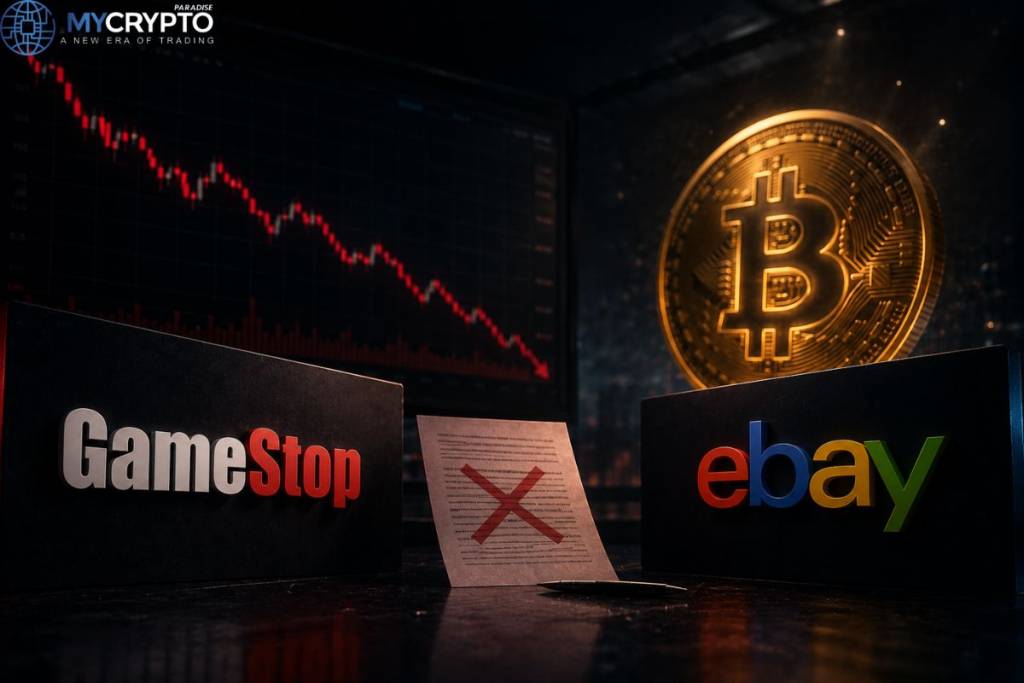
- eBay rejected GameStop’s $56B takeover bid outright.
- Markets questioned how GameStop could realistically fund it.
- Bitcoin exposure is back at the center of the debate.
When GameStop’s takeover ambitions collide with balance sheet reality, crypto traders pay attention fast. Is bitcoin becoming collateral for corporate risk again?
eBay rejected GameStop’s $56 billion half cash, half stock takeover proposal, calling the offer “neither credible nor attractive” while pointing to financing concerns and confidence in its own strategy. The market response was immediate and revealing.
eBay shares traded well below GameStop’s implied $125 per share offer, while both stocks slipped after the rejection, signaling skepticism that the deal was ever realistically close to happening.
What pulled crypto into the conversation was not the merger drama itself. It was the funding question sitting underneath it. GameStop’s sizable bitcoin options exposure, limited discretionary assets, and existing concerns around dilution and debt suddenly became central to the market narrative.
Michael Burry’s earlier warnings about leverage and financial engineering also returned to the spotlight. In markets, confidence is cheap until financing arrives. Then the spreadsheet starts asking difficult questions.
Why GameStop’s Bitcoin Exposure Matters for Crypto
GameStop’s bitcoin exposure matters because it reconnects crypto with corporate balance sheet risk at a time when institutional positioning remains fragile.
The chain here is straightforward: a contested financing structure increases scrutiny on speculative assets, which can tighten risk appetite, which then affects liquidity flows into BTC, ETH, and high beta altcoins.
This is not about GameStop suddenly moving bitcoin markets by itself. It is about perception. When a company linked to crypto exposure pursues a massive acquisition with uncertain financing, investors begin reassessing how sustainable leveraged crypto linked strategies really are.
Bitcoin was meant to avoid traditional finance problems. Now it’s judged the same way leverage, dilution, liquidity. The system didn’t disappear; it adapted.
Market Impact of GameStop’s Bitcoin Exposure
For Bitcoin, the impact is more sentiment driven than structural for now. Bitcoin tends to react negatively when markets perceive rising financing stress or speculative excess tied to crypto linked entities.
If traders interpret GameStop’s failed bid as another example of unstable corporate risk taking around bitcoin exposure, BTC could face temporary pressure through broader risk off positioning.
At the same time, there is an important distinction. Spot bitcoin demand from ETFs and institutional allocators remains fundamentally different from leveraged corporate maneuvering. That separation matters. Markets may punish speculative financing while still maintaining long term conviction in bitcoin as an asset.
Ethereum is more sensitive to risk. If markets get cautious, it can drop as investors cut exposure. But unless the stress spreads wider, its long term story around tokenization and infrastructure is still solid.
Alts are where second order effects become sharper. Speculative tokens generally suffer most when markets start questioning liquidity quality. If traders become more defensive around crypto linked equities and leveraged balance sheets, weaker altcoin narratives may struggle to attract capital.
What to Watch Next After eBay Rejected GameStop’s Bid
The next catalyst is whether GameStop escalates the situation with a revised or hostile offer. Markets will closely watch any signs of new financing arrangements, debt issuance, equity dilution, or asset backed structures tied to its bitcoin exposure.
Investors should also monitor how management frames crypto positioning going forward. If GameStop leans more heavily into bitcoin related narratives to restore investor enthusiasm, volatility could increase quickly.
Markets tolerate ambitious stories right up until funding conditions tighten. Then optimism suddenly requires documentation.
Another important signal is whether broader equity markets start reassessing crypto linked corporate strategies. If this remains an isolated event, the damage likely stays contained. But if investors begin questioning balance sheet quality across other companies holding speculative crypto exposure, the liquidity impact could widen.
Insights for Traders on GameStop’s Bitcoin Exposure
Big numbers grab attention, but funding matters more. Markets care less about the headline and more about how the money shows up. In crypto, confidence in liquidity often moves prices more than the story itself.
BTC traders should watch whether broader risk sentiment deteriorates around crypto linked equities. If fear around leverage spreads, bitcoin could briefly trade more like a speculative asset than a macro hedge.
If markets compartmentalize the event as a GameStop specific issue, BTC likely stabilizes quickly.
ETH traders should monitor whether institutional liquidity remains concentrated in higher quality assets while speculative exposure weakens underneath. That kind of split market tends to favor majors over thinner altcoin ecosystems.
For alt traders, this is another reminder that not all crypto exposure is equal. Companies attaching themselves to bitcoin narratives without strong financing foundations can create volatility that spills into weaker parts of the market first.
Confirmation would show up as rising financing stress, growing dilution concerns, or broader skepticism toward crypto linked balance sheets. In that environment, even assets like Bitcoin and Ethereum can feel second order pressure through weaker liquidity confidence.
Invalidation is simpler: GameStop steps back, funding concerns ease, and markets shift focus back to macro liquidity rather than corporate balance sheet risk.
ParadiseTeam is monitoring the market situation closely, and we are taking these developments into consideration while building our trading tactics inside ParadiseFamilyVIP.



Join the discussion
No comments yet. Members, share how you are reading this.