

Listen: the breakdown
Market briefing: A whale with a track record of buying ETH dips just spent 22 million dollars near 2,038. BTC traded near $73,612, down 1.9% on the day, as risk-off pressure dragged ETH lower.
- The '7 Siblings' wallet bought 10,792 ETH for about $22M at an average of $2,038.
- The buy followed a roughly 15% ETH pullback, after the same wallet banked ~$10.49M selling into August strength.
- It marks a return to ETH buying after a three-month absence, a disciplined dip signal, not proof the decline is over.
An Ethereum whale with a proven dip-buying record just put $22M back into ETH after a 15% drop. Is this early accumulation near a bottom, or another trade the same wallet unwinds on the bounce?
A wallet the market has watched for a while just made its move. Known as '7 Siblings', it spent roughly $22 million to buy 10,792 ETH at an average price of $2,038. The purchase landed about nine to ten hours before we flagged it, and it followed a short-term ETH decline of around 15%.
This is the part that matters. The same entity sold 18,500 ETH at an average of $2,356 back in August, after a 20% rally, and walked away with about $10.49 million in profit. It did not guess. It followed a pattern: add after double-digit drops, distribute after double-digit pops.
Now it is back, breaking a roughly three-month absence from the buy side. For a wallet that has done little but buy fear and sell greed, silence usually means it saw no discount worth taking. The $22M buy says that changed.
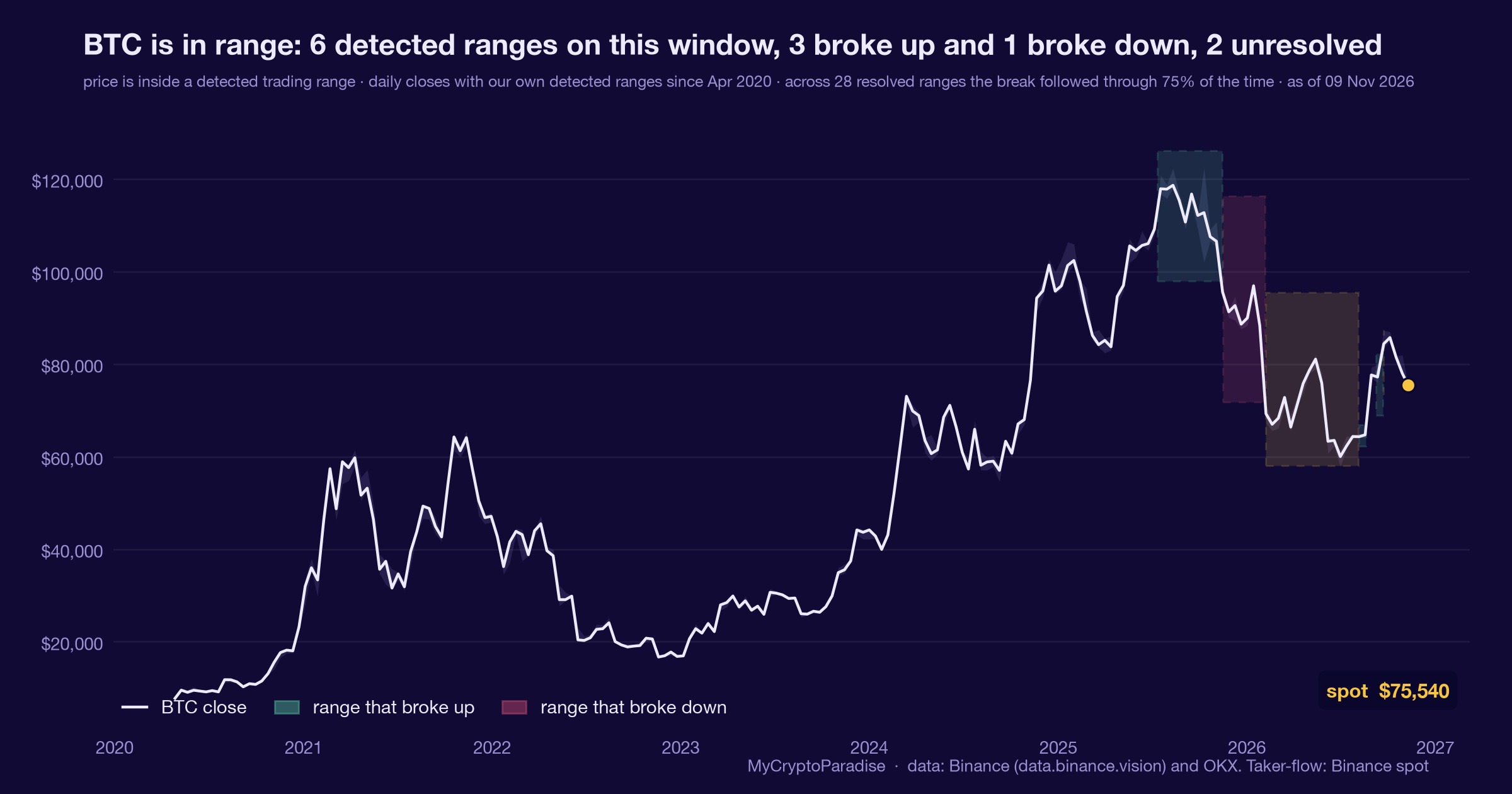
ETH was trading near $2,055 as this went out, down more than 3% on the day, consistent with the broader risk-off tone that has pressured crypto. BTC was near $73,612, down 1.9%, as the same mood squeezed weak hands across the board.
So the confirmed facts are narrow and clean. One sophisticated wallet treated a 15% drawdown as an invitation, not a warning. That is a demand signal worth reading. It is not, on its own, a bottom. One buyer stepping in tells us where smart money sees value, not that the rest of the market agrees yet.
What a repeat dip-buyer tells us
The transmission here is about who sells and who buys when price falls fast. A 15% ETH decline in a short window flushes leverage and frightens retail. Stops get hit, margin gets called, and forced sellers hand their coins to whoever is patient. That transfer is the whole mechanism.
'7 Siblings' is positioned on the patient side. The wallet's documented habit is to wait for double-digit drawdowns, then accumulate while the crowd is busy capitulating. Its August exit, roughly $10.49 million booked after a 20% rally, shows the other half of the loop: it sells the greed back to the same crowd that panicked at the lows.
That is why a single $22M buy carries weight beyond its size. It is not a random bid. It is evidence that a buyer with a working rulebook sees $2,038 as a level worth owning. In a risk-off tape, that distinction between emotional selling and rules-based buying is the signal.
But we stay honest about the limits. One wallet accumulating does not fix macro, reverse the trend, or guarantee the low is in. The broader pressure that dragged ETH down has not lifted.
What it does change is the character of the selling. When known accumulators absorb retail panic near a defined level, the path of least resistance can quietly shift. The decline may not be over, but the discount is now being bought.
Where the $22M buy lands first
The direct effect sits on ETH, not the whole market. This is on-chain demand concentrated in one asset, so the first-order read is a modest bid under Ethereum, right where a patterned buyer has drawn its line near $2,038.
That has a liquidity consequence. When a large buyer absorbs forced selling, the available supply at these prices thins out. Fewer coins for sale into the panic means the next downside push needs more fuel to break lower. The seller pool shrinks while one patient bid grows.
Spillover to BTC is limited and indirect. BTC was trading near $73,612, down 1.9%, moving on its own macro story rather than on one ETH wallet. A single $22M purchase does not move Bitcoin; it barely registers against BTC's daily liquidity.
Alts are even further down the chain. They tend to follow ETH strength only once ETH itself confirms a floor and leadership returns. Until ETH stabilises, this buy does little for the long tail.
So the cleanest framing is narrow and bullish for ETH specifically. Smart money is accumulating a 15% discount while retail sells it. That is a supportive signal for Ethereum's immediate structure.
The honest caveat stays attached. This is one wallet's conviction, not broad market strength. It tells us where sophisticated money sees value today, not that the broader risk-off wave has finished washing through.
The signals that confirm accumulation
The first thing to watch is whether ETH holds the area the whale just bought. Acceptance above roughly $2,038, with the price building rather than bleeding, would suggest this bid is doing real work and other buyers are joining.
The cleaner confirmation is behavioural, not just a candle. We want to see selling pressure dry up: fewer forced liquidations, stabilising daily ranges, and ETH refusing to make fresh lows while retail sentiment stays sour. That divergence, price firming while the crowd stays fearful, is classic accumulation.
Invalidation is just as clear. A decisive break and acceptance back below $2,038 would say the 15% drop was only the first leg, and even a patient buyer caught an early knife. One whale is not a floor, and a level that fails to hold is a level that was wrong.
The second tell is the whale itself. This wallet's edge is that it sells into strength. If ETH rallies hard toward its August distribution zone near $2,356 and this entity starts unloading again, that is the pattern repeating, and it would cap the upside rather than extend it.
So the window is defined on both ends. Below $2,038 losing hold warns the dip-buy was early. A grind that holds, then builds toward the old distribution shelf, confirms accumulation is winning. Everything in between is the market deciding whether to follow the patient money or keep feeding it cheap coins.
Reading the whale's cost basis near support
The ParadiseTeam reads this as a smart-money footprint, not a green light to chase. The $2,038 average is now a reference the whole market can see, which makes it a magnet for both defenders and liquidity hunters.
Here is the mechanism. A visible accumulation level invites two crowds. Patient buyers treat it as support; predators treat the stops just beneath it as fuel. So a brief flush under $2,038 that snaps straight back would not surprise us. It would be the market tapping the whale's stops before continuing, a shakeout, not a trend change.
The upside reference is the old distribution shelf near $2,356. That is where this same wallet sold in August, so it doubles as a logical place for strength to meet supply. We would respect it as resistance until proven otherwise, and we would watch whether the whale distributes there again.
BTC sets the mood. It was near $73,612, down 1.9%, and while this is an ETH story, a sharp BTC leg lower would drag ETH through the whale's level regardless of conviction.
So our standing caution holds alongside the bullish read: strength can still meet selling into resistance, and one buyer does not outrank macro. The edge here is positioning information, where sophisticated money sees value, not a promise. Let price confirm acceptance above $2,038 before trusting the floor, and treat $2,356 as the level that tests whether this is a bottom or just another trade.
Track it live: our Crypto Whale Alert and Tracker and the Crypto Fear and Greed Index both update in real time, so you can watch this shift for yourself.
Related coverage
For exact entries, targets, and stop losses with full risk management, that is what ParadiseFamilyVIP is for. New to reading these moves? Start with our crypto trading strategies guide.
ParadiseTeam is monitoring the market situation closely, and we are taking these developments into consideration while building our trading tactics inside ParadiseFamilyVIP.
Crypto trading involves substantial risk. Prices are volatile and you can lose money. This article is educational and is not financial advice. Past performance does not guarantee future results.
Is the 7 Siblings ETH buy an early bottom bid or another short-term trade?
How 1 Paradiser is calling it
The first call is still open
Free account, no password. Members just sign in.











Join the discussion
No comments yet. Members, share how you are reading this.