• U.S. says it struck Iranian drone, radar, and command sites in Goruk and Qeshm Island
• Iran claims it retaliated by targeting a U.S. air base linked to recent strikes
• Strait of Hormuz negotiations remain stalled, keeping oil and crypto markets on edge
Could another round of U.S.-Iran strikes push the Strait of Hormuz crisis into a deeper escalation, or will both sides return to negotiations before markets face a larger shock?
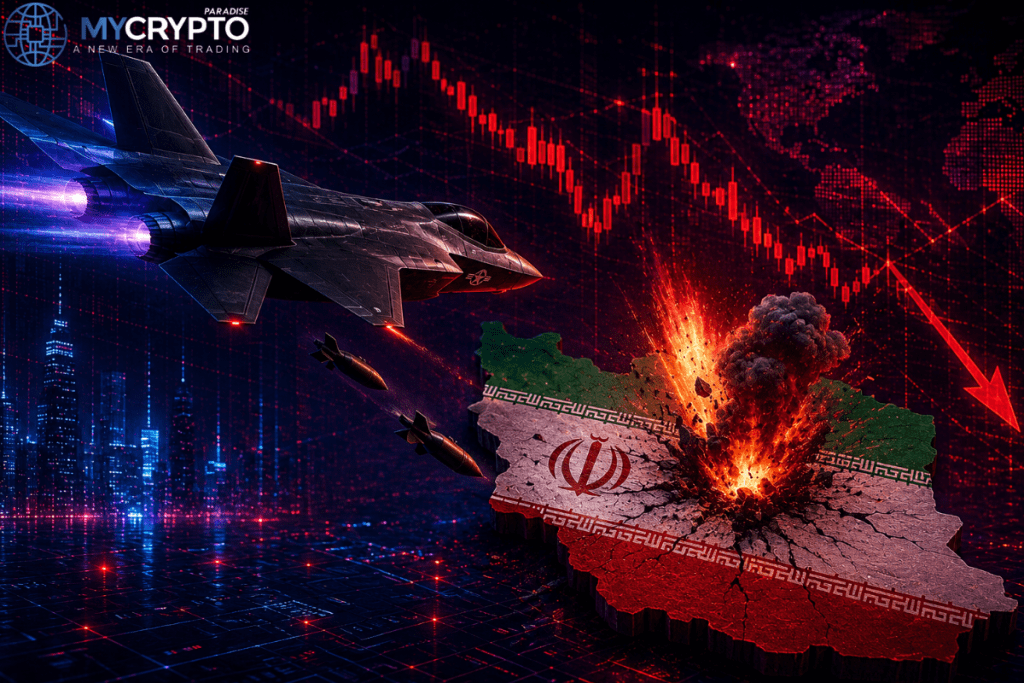
The conflict around the Strait of Hormuz intensified again after both the United States and Iran reported new military actions over the weekend. U.S. Central Command stated that American forces conducted what it described as self-defense strikes against Iranian military assets in Goruk and Qeshm Island after Iran allegedly shot down a U.S. MQ-1 drone operating over international waters.
According to CENTCOM, U.S. fighter aircraft destroyed Iranian air-defense systems, a drone command station, and two one-way attack drones that were viewed as threats to ships moving through regional waters.
Iran quickly responded with its own account of events. The Islamic Revolutionary Guard Corps (IRGC) said its aerospace force targeted a U.S. military air base that was allegedly used to launch strikes against an Iranian telecommunications tower. Iranian officials warned that any future U.S. military action would trigger a significantly stronger response.
The latest exchange marks the third major escalation within a week and comes after negotiations aimed at ending months of conflict reportedly failed to advance over the weekend.
Why U.S.-Iran Strikes and Strait of Hormuz Tensions Matter
The importance of this story extends far beyond military activity.
The Strait of Hormuz remains one of the most critical economic chokepoints in the world, with roughly 20% of global oil and liquefied natural gas shipments normally passing through the route.
Markets had hoped that recent negotiations between Washington and Tehran would create a pathway toward reopening Hormuz and reducing regional tensions. Instead, traders are now dealing with another round of military escalation while negotiations remain unresolved.
Reports suggest the latest proposed agreement included a 60-day cessation of violence, the reopening of the Strait of Hormuz, and a framework for future nuclear negotiations. However, Iranian negotiators reportedly rejected portions of the proposal, stating that Iran’s rights must be fully secured before any agreement can move forward.
For financial markets, the concern is not simply military activity itself. The concern is that every new strike reduces confidence that a durable agreement can be reached in the near term.
When uncertainty rises around Hormuz, energy prices immediately become more volatile, inflation expectations rise, and risk assets often face additional pressure.
Market Impact of U.S.-Iran Strikes and Strait of Hormuz Uncertainty
Energy markets remain the most direct transmission channel.
The de facto trade restrictions and security concerns around the Strait of Hormuz have already created upward pressure on global fuel prices. Every new military exchange raises fears that oil and LNG flows could face further disruptions.
For equities, rising energy costs create another challenge at a time when investors are already balancing inflation concerns, central bank policy uncertainty, and geopolitical risk.
Crypto markets are increasingly reacting to the same macro forces.
Bitcoin and other digital assets have shown growing sensitivity to major geopolitical developments, particularly when those developments affect inflation expectations and global liquidity conditions. Recent volatility around Hormuz has repeatedly triggered risk-on and risk-off reactions across both traditional and digital markets.
The market’s concern is not necessarily today’s strikes. It is whether the current cycle of escalation creates a broader confrontation that keeps energy prices elevated for an extended period.
That would have implications for inflation, monetary policy, and global risk sentiment simultaneously.
What to Watch Next for U.S.-Iran Strikes and Strait of Hormuz
The next major catalyst remains diplomacy.
Market participants will closely monitor whether Washington and Tehran resume productive negotiations or whether additional military actions occur in the coming days.
Investors should also watch developments involving the proposed reopening of the Strait of Hormuz. Any signs of progress toward restoring normal shipping activity could quickly ease pressure on oil markets and improve risk sentiment.
Conversely, additional attacks, new sanctions, or further restrictions on shipping traffic would likely increase volatility across commodities, equities, and cryptocurrencies.
Kuwait’s announcement that it was intercepting hostile missile and drone activity highlights how quickly regional tensions can spread beyond the immediate U.S.-Iran conflict.
The broader the conflict becomes, the greater the potential market impact.
Trader Insights on U.S.-Iran Strikes and Strait of Hormuz Risk
Professional traders are increasingly treating Hormuz as a macro liquidity indicator rather than simply a geopolitical headline.
The first-order effect is obvious: military escalation pushes energy prices higher.
The second-order effect is where larger opportunities and risks emerge. Higher energy prices can influence inflation expectations, alter central bank policy expectations, impact bond markets, and eventually affect liquidity conditions across all risk assets.
Large institutional players are therefore watching oil futures, Treasury yields, and shipping developments just as closely as the military headlines themselves.
Right now, markets remain trapped between two competing narratives. One narrative assumes negotiations eventually succeed and Hormuz reopens, reducing inflation pressures and supporting risk assets. The other assumes further escalation keeps energy markets stressed and introduces additional volatility into already fragile global conditions. Until one narrative clearly wins, expect heightened volatility across multiple asset classes.
ParadiseTeam is monitoring the market situation closely, and we are taking these developments into consideration while building our trading tactics inside ParadiseFamilyVIP.