In 2026, yield farming isn’t the wild west anymore. It’s quieter now. More organized. Less about chasing outrageous APYs and more about figuring out where returns really come from. The traders who made it through previous cycles picked up something key. High yield without understanding? That’s not opportunity, it’s exposure.
But the opportunity hasn’t vanished. It’s just become more selective. Yield still exists in crypto; it’s just hiding behind complexity, fragmented liquidity, and systems that reward those who know how capital shifts across ecosystems. The real question in 2026 isn’t where yields are highest. It’s about which yields are sustainable enough to justify the risk.
What Yield Farming Really Means in 2026
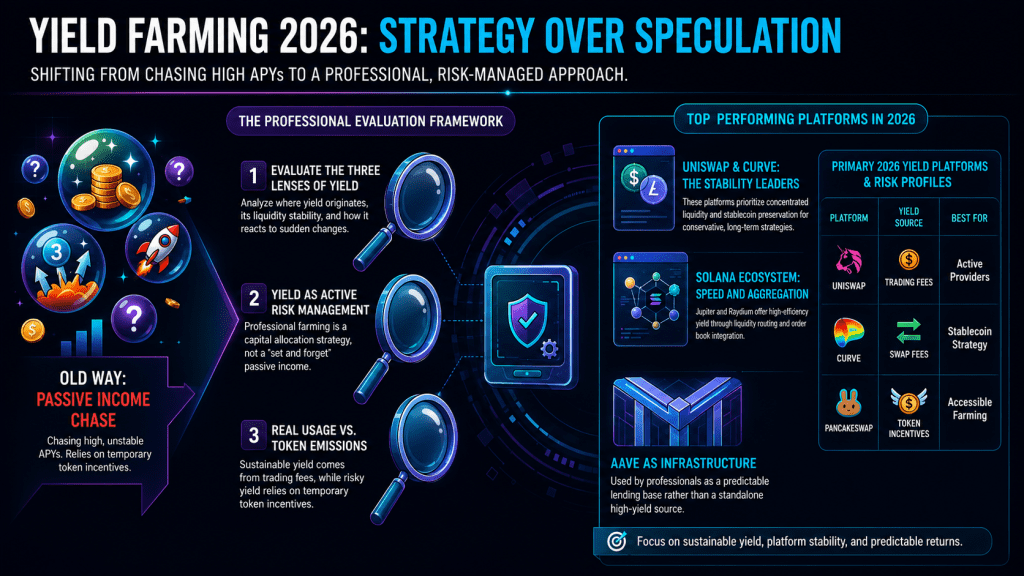
Yield farming often gets a bad rap as passive income. Look, it’s really active risk management masquerading as passive return. At its heart, yield farming means providing liquidity, staking assets, or getting involved in DeFi protocols to earn rewards. These rewards could come from trading fees, token incentives, or borrowing demand. But remember, every yield has a source. And every source carries risk.
In 2026, professional traders assess yield farming chances through three lenses: Where’s the yield coming from? How stable is the liquidity backing it? And what happens if conditions shift suddenly? The split between amateur and professional farmers is straightforward. One pursues percentages. The other analyzes structure.
What Makes a Yield Farming Platform Worth Using
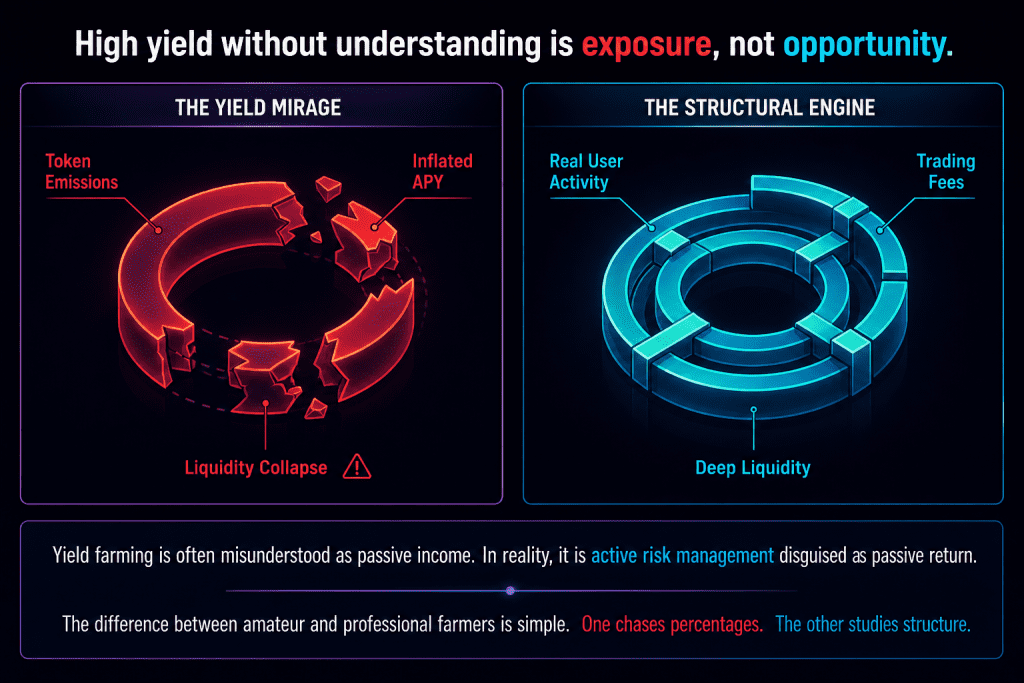
Not every platform offering yield deserves your attention. The top yield farming platforms in 2026 have some common traits. They boast deep liquidity pools that minimize slippage and impermanent loss. They draw steady user activity, which generates real fees instead of just relying on token emissions. They function within ecosystems that are still expanding, ensuring long-term engagement. They deliver transparent data, letting traders gauge risk before putting in capital. Most importantly, they endure.
In DeFi, survival is underrated. Platforms that last across multiple cycles often show lower yields than newcomers. But they offer something more valuable: continuity.
Uniswap
Uniswap is still a top player in yield farming as we move through 2026. Its significance goes beyond just being a large platform; it plays a key role within the larger ecosystem. Uniswap serves as the starting point for liquidity, and many tokens find their first trading opportunities here. This means that liquidity providers aren’t just collecting fees; they’re actively engaged in shaping the market from the ground up.
However, the introduction of concentrated liquidity has transformed how yields are generated. Rather than spreading funds thinly across a wide range of prices, traders can now focus their liquidity in specific areas. This approach enhances capital efficiency but also demands more hands-on management. For professionals, this is a win. They can strategically place liquidity around important price levels and take advantage of higher fees during market fluctuations. However, it does make passive farming less viable than it once was. Uniswap rewards those who stay alert. In 2026, it remains a dependable choice for earning yield primarily through trading activity rather than just speculative incentives.
Curve Finance
Curve Finance is still leading the charge in stablecoin yield farming. Its straightforward design is not only user-friendly but also highly effective. By focusing on assets that trade closely in value, like stablecoins or wrapped tokens, Curve minimizes impermanent loss, making it appealing for those looking for steady returns. But what sets Curve apart is its deep integration with other DeFi protocols. The liquidity put to work in Curve frequently flows into lending platforms, collateral systems, and yield aggregators, creating layered opportunities for yield.
For traders, Curve takes a different approach. It’s less about chasing the highest gains and more about capital preservation while still generating reliable yield. This strategy becomes especially valuable in volatile markets compared to more aggressive tactics.
Aave
Aave is in the lending space, differentiating itself from traditional liquidity provision. Users lend their assets and earn interest from borrowers instead of directly providing liquidity to trading pools. As of 2026, Aave stands out as one of the most trusted lending protocols in DeFi, largely due to its robust risk management features. Borrowing is overcollateralized, and its liquidation processes are transparent. Interest rates adjust according to supply and demand, which adds to its stability.
For yield farmers, Aave produces returns that are predictable and less prone to volatility, even if they tend to be lower than what aggressive farming strategies might offer. When paired with other strategies, like using borrowed funds to farm elsewhere, Aave fits into a broader system that savvy professionals leverage instead of relying on it as a single yield source.
Jupiter (Solana)
Jupiter has emerged as a vital DeFi platform within the Solana ecosystem. It acts as a liquidity aggregator, routing trades across different pools to ensure the best prices. This aggregation leads to unique yield opportunities. Liquidity providers see benefits from the increased trade volume, especially during busy periods, as Jupiter directs substantial activity through their pools. Coupled with Solana’s low fees and rapid transaction speeds, it’s a go-to for high-frequency trading in DeFi.
As we look at 2026, Jupiter highlights a larger trend: yield is moving toward platforms that emphasize speed and efficiency. For traders comfortable with the Solana landscape, Jupiter offers a chance to tap into an ever-evolving liquidity environment.
Raydium
Raydium works hand-in-hand with Jupiter in the Solana ecosystem. It serves as both an automated market maker and a liquidity provider, seamlessly connected to Solana’s order book system. This combined approach helps to boost liquidity and optimize pricing.
For yield farmers, Raydium presents great prospects linked to the growth of the ecosystem. As Solana develops, the trading activity picks up, generating fees for those providing liquidity. But like any platform that depends on the overall ecosystem, its success relies on how widely adopted Solana becomes.
Raydium isn’t just about yield farming; it mirrors the growth path of Solana itself.
PancakeSwap
PancakeSwap is still one of the easiest yield farming platforms to use in 2026. It mainly operates on the BNB Chain and features a variety of farming pools, staking options, and incentives for liquidity providers. Its charm lies in its straightforwardness, the user interface is simple, and getting started doesn’t require much investment. Plus, it supports a large selection of tokens.
For newcomers, PancakeSwap often becomes the go-to starting point for yield farming. Meanwhile, for seasoned traders, it’s a chance to earn yields from up-and-coming tokens before they hit the mainstream.
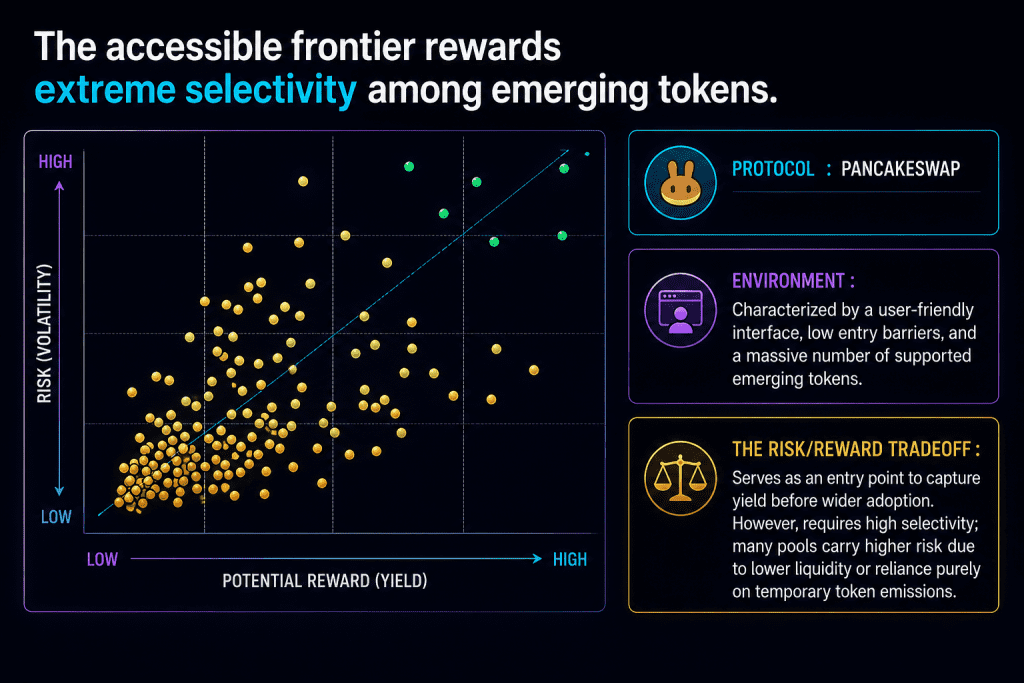
That said, this ease of use does come with some risks. Certain pools may have higher chances of loss due to lower liquidity or tokens that aren’t as well known. So, on PancakeSwap, being selective is key.
Comparison: Best Yield Farming Platforms in 2026
| Platform | Best For | Yield Source | Risk Profile |
| Uniswap | Active liquidity providers | Trading fees | Medium |
| Curve | Stablecoin strategies | Swap fees + integrations | Low |
| Aave | Lending yield | Borrowing interest | Low |
| Jupiter | Solana liquidity routing | Aggregated trading volume | Medium |
| Raydium | Solana ecosystem growth | Trading fees | Medium |
| PancakeSwap | Accessible farming | Token incentives + fees | Medium-High |
Why High Yield Is Often Misleading
The best yields in 2026 are seldom the most secure.
Many systems still provide very large APYs, but these are typically caused by token emissions instead of actual economic activity.
Yields fall dramatically when emissions drop.
Professional traders know this dynamic.
They look beyond the percentage.
They inquire:
Does this yield originate from actual use?
Or from short-term rewards.
The gap will decide if dividends are justifiable.
How Professionals Approach Yield Farming
Professional traders don’t see yield farming as passive income.
They view it as a capital allocation technique.
They spread among many platforms.
They track changes in liquidity.
When circumstances shift, they modify their roles.
Above all, they know when to leave.
Yield farming is not about staying in one pool forever.
It’s all about moving with the market.
FAQs: Yield Farming in 2026
Is yield farming still profitable in 2026?
Yes, but profitability depends on strategy and risk management.
What is the safest yield farming platform?
Platforms like Curve and Aave are considered safer due to their structure and longevity.
Why do some platforms offer extremely high APY?
High APY is often driven by token incentives rather than sustainable revenue.
Can yield farming lead to losses?
Yes. Risks include impermanent loss, smart contract vulnerabilities, and liquidity changes.
Should beginners start yield farming?
Only after understanding the risks involved.
Yield farming in 2026 is not about going to the extremes anymore.
It is regarding comprehension of systems.
The top systems are not always those providing the greatest returns.
These are the ones whereby returns are backed by actual activity, steady liquidity, and long-term participation.
This is because in crypto, yield is not exclusively acquired.
Where Traders Learn to Manage Yield Like Professionals
Yield From the outside, farming seems straightforward.
Fund your account. Unlock rewards.
But the truth is more complicated.
Traders view yield as part of a larger capital plan inside ParadiseFamilyVIP. They assess risk exposure, examine liquidity flows, and modify positions in line with market structure.
Since the ultimate objective is more than simply to generate yield.
It serves to maintain it.