

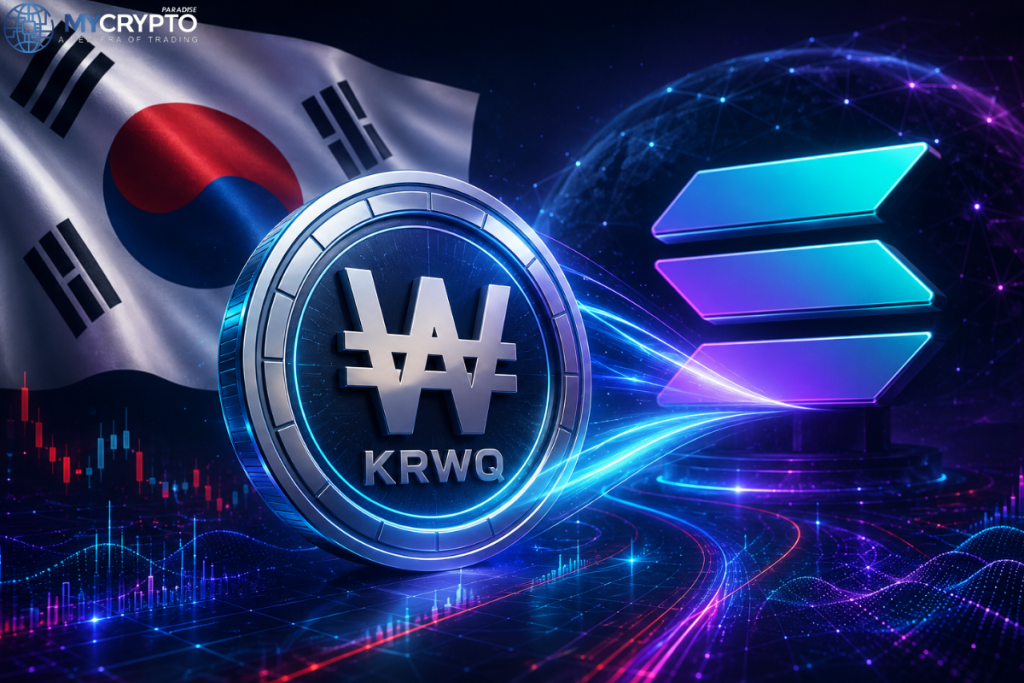
• KRWQ expanded from Base to the Solana network
• The stablecoin targets KRW trading and derivatives liquidity
• Solana gains deeper exposure to non USD stablecoin markets
Crypto markets rarely stay loyal to one currency forever. KRWQ bringing Korean won liquidity to Solana could quietly reshape how traders access Asian capital flows. Is non-USD crypto trading finally scaling?
KRWQ, the Korean won stablecoin created by IQ alongside Frax, has now made its way to the Solana network. This shift positions KRWQ as a vital asset for Korean won liquidity in Solana-based trading systems, decentralized exchanges, and derivatives infrastructure.
This expansion is significant because Korean won activity has a hefty footprint in global crypto markets. South Korea often ranks as one of the busiest regions for digital asset trading, yet the KRW liquidity has remained fragmented across centralized exchanges and offshore derivatives markets.
Now that liquidity is moving on-chain, KRWQ is set to connect about $40 billion in daily KRW spot trading volume with the offshore KRW non-deliverable forward market via a constantly traded blockchain settlement layer.
That brings about a deeper structural change. Stablecoins are gradually shifting from being mere dollar substitutes to serving as regional liquidity channels for global crypto trading. Markets tend to globalize first through convenience and only later through regulation.
Why KRWQ Solana Expansion Matters for Crypto
The KRWQ Solana expansion is essential since it broadens crypto liquidity past the dominance of USD stablecoins. Much of the crypto trading infrastructure still centers around dollar-denominated liquidity. By adding Korean won settlement options, there’s more direct access for regional capital flows, derivatives trading, and cross-border strategies without needing to funnel everything through USD pairs.
A rise in non-USD stablecoin activity enhances trading flexibility across perpetual futures, on-chain FX markets, and algorithmic trading systems.
Solana is set to gain directly from this too. The network’s low-latency execution and robust trading ecosystem make it appealing for high-frequency and institutional trading infrastructure. More stablecoin liquidity usually boosts network activity, trading volume, and DeFi involvement simultaneously.
Market Impact of KRWQ Solana Expansion
Bitcoin could see indirect benefits if the increased KRW liquidity draws more Asian trading participants into crypto markets. Historically, South Korean capital has played a crucial role during high momentum market phases.
Ethereum might face tougher competition in the stablecoin and DeFi landscape as Solana keeps pulling in regional settlement assets and trading applications.
Solana stands to gain the most directly from this. Further stablecoin integrations will bolster the network’s position in global trading infrastructure and raise the chances of more institutional involvement in Solana-based markets. Altcoins linked to decentralized exchanges, synthetic assets, and cross-border settlement systems might also attract attention if non-USD stablecoin adoption picks up.
What to Watch Next After KRWQ Solana Launch
The next key indicator will be whether KRWQ usage grows within Solana’s decentralized exchange ecosystem and derivatives platforms. Trading volume is critical. Strong activity in perpetual futures and FX-related applications would validate real market demand for on-chain Korean won liquidity.
Regulatory changes in South Korea remain crucial too. The nation is still shaping its stablecoin frameworks through the Digital Asset Basic Act. Clearer regulations could speed up the institutional adoption of KRW-denominated stablecoins globally.
Traders should also keep an eye on whether other regional stablecoins start expanding onto Solana or into competing Layer 1 ecosystems. A successful regional stablecoin often attracts imitators surprisingly fast.
Insights for Traders on KRWQ Solana Expansion
KRWQ Solana expansion reinforces the broader shift toward multi currency crypto liquidity infrastructure.
Confirmation would come from rising KRWQ trading activity, deeper Solana DeFi integration, and broader institutional participation in non USD stablecoin markets. Invalidation would emerge if liquidity adoption remains limited despite the infrastructure rollout.
ParadiseTeam is monitoring the market situation closely, and we are taking these developments into consideration while building our trading tactics inside ParadiseFamilyVIP.
Follow this topic: Solana news · Stablecoin news



Join the discussion
No comments yet. Members, share how you are reading this.