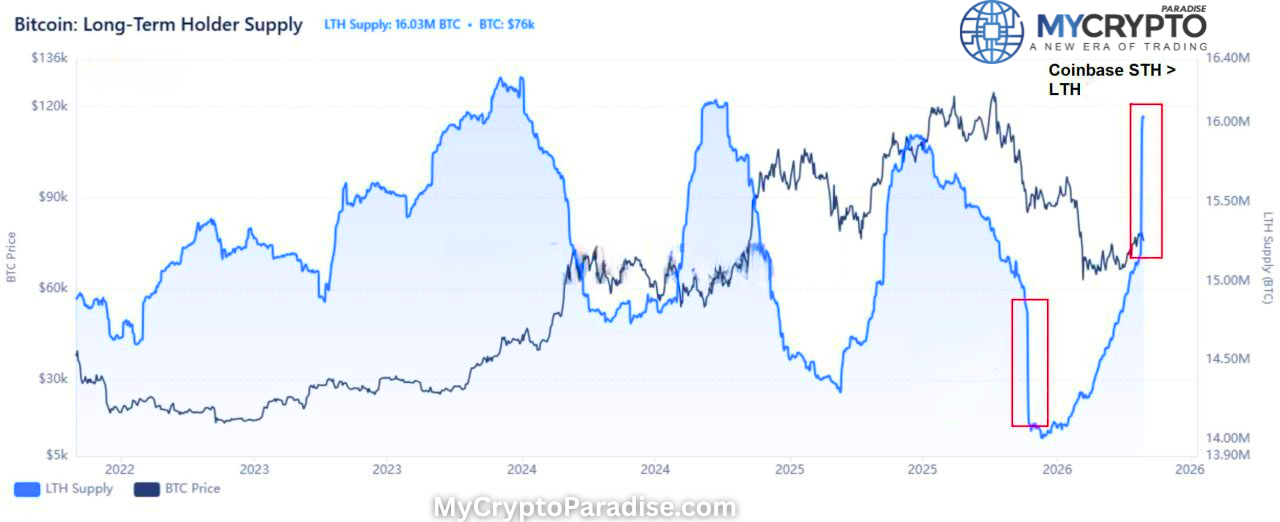
- The inverse cup-and-handle pattern is a bearish structure that signals a gradual shift from buyer strength to seller dominance. Over time, price forms a rounded top followed by weak consolidation, indicating fading momentum and increasing selling pressure.
- It’s important to wait for a clear break before entering a trade. If price breaks below support with strong volume, it confirms seller control. However, failure to break support may result in temporary consolidation or false signals.
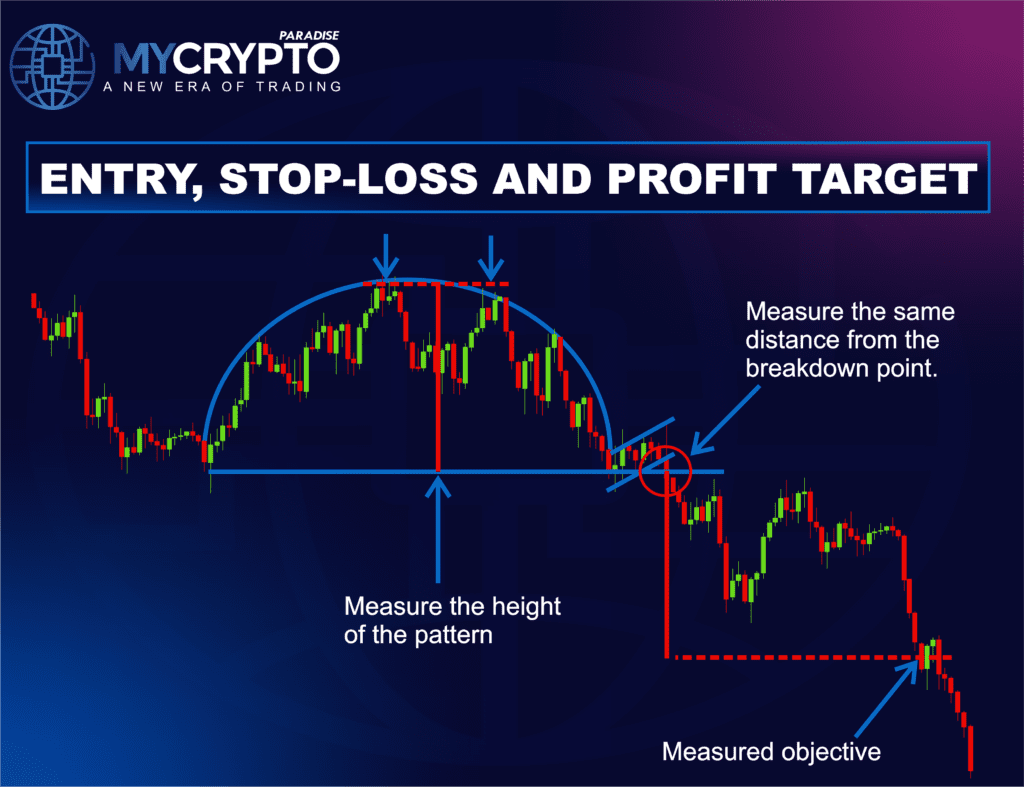
- Stop-loss placement depends on your strategy; however, traders typically place it just above the handle or the most recent swing high to protect against invalidation. Meanwhile, traders calculate profit targets by measuring the depth of the cup and projecting that same distance downward from the breakdown point.
The inverse cup and handle is primarily viewed as a bearish continuation pattern because it typically forms after an uptrend and reflects weakening buying pressure. However, some traders also classify it as a reversal pattern when it develops near the top of a strong bullish move. In either case, a confirmed breakdown below support usually signals potential downside continuation.
At MCP University FREE, this guide is part of our precision trading series developed for disciplined, structure-focused crypto traders. After reading the full article, you will be able to identify, confirm, and trade the bearish flag pattern with expert accuracy and confidence.
Cup and Handle Patterns
Chart patterns are a fundamental part of technical analysis, helping traders understand how price transitions from one phase to another. Over time, these patterns have evolved; therefore, combining both traditional and modern approaches enables traders to apply them more effectively.
The cup and handle pattern is a widely recognized chart pattern in technical analysis that traders use to identify potential trend continuation or reversal opportunities. Structurally, it resembles the shape of a teacup, where the “cup” reflects a period of consolidation and gradual recovery, while the “handle” represents a short-term pullback before a potential breakout occurs.
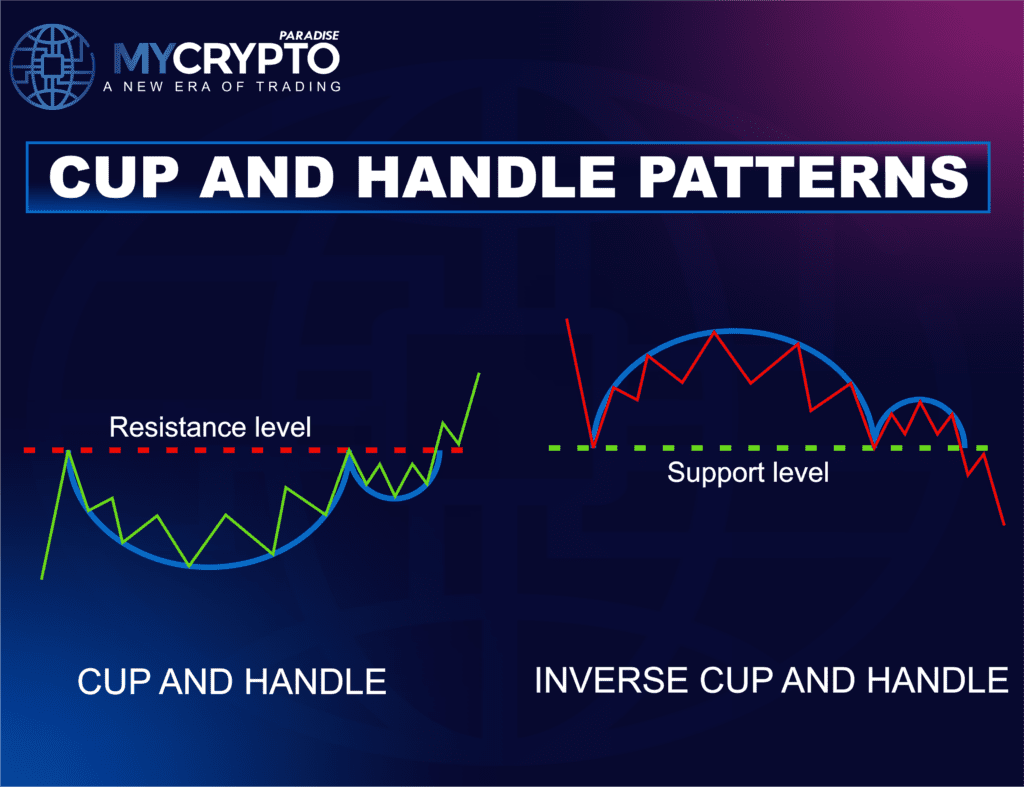
There are two main types of cup and handle patterns. The bullish cup and handle pattern signals a potential upward breakout and continuation of an uptrend, while the Inverse Cup and Handle pattern is bearish and indicates a possible breakdown, suggesting continuation of a downtrend. We will learn the inverse cup and handle pattern here in detail.
Learn more about the cup and handle pattern: Top Crypto Trading Signals Using Cup and Handle Pattern
Introducing the Inverse Cup and Handle Pattern
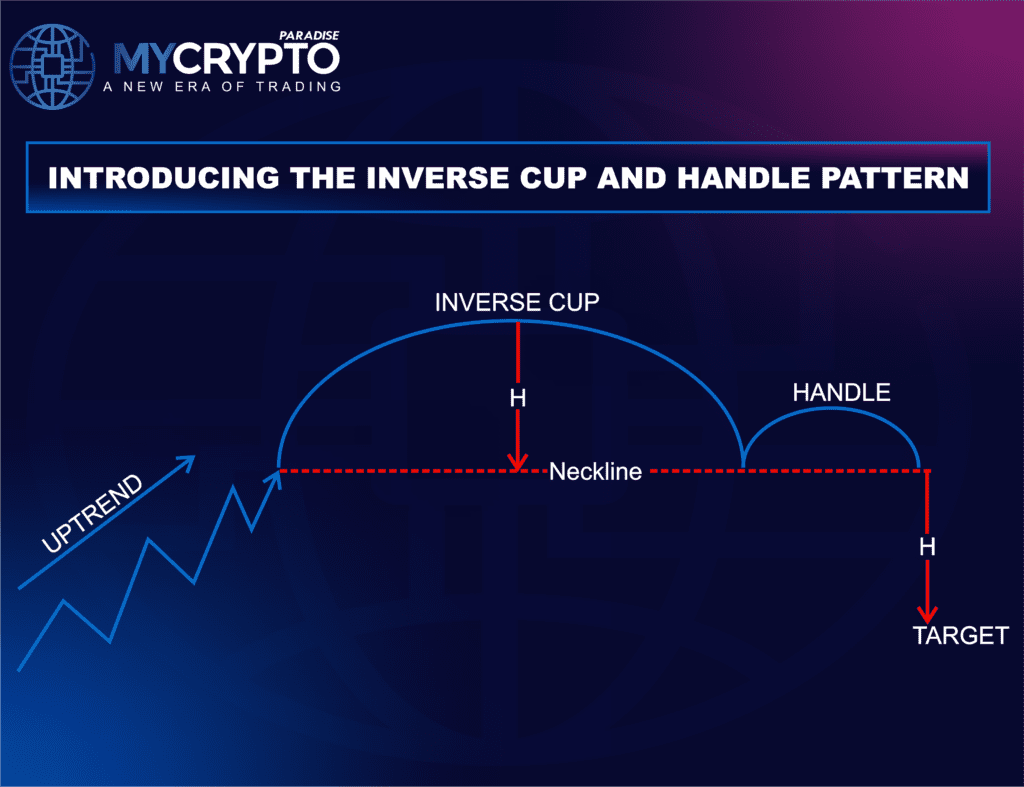
The inverse cup and handle (inverted C&H) pattern is a versatile structure that can act as both a continuation and a reversal pattern, depending on the market context. Typically, it forms when price creates a rounded top followed by a weak consolidation, which indicates a gradual loss of buying momentum.
As a result, after a strong uptrend, it often signals a shift from bullish strength to bearish control, leading to a potential reversal. However, in a broader downtrend, it can also act as a continuation pattern, where the market pauses before moving lower again.
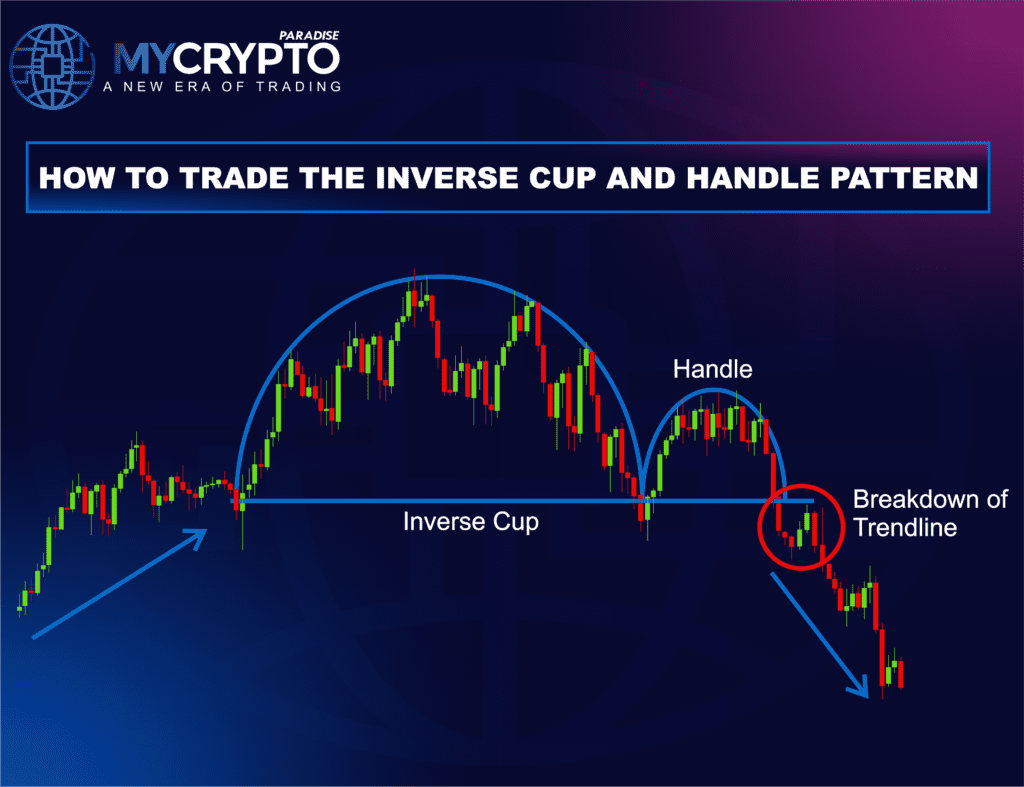
Structurally, the pattern forms as price creates a rounded top followed by a weak handle. This, in turn, shows that buying pressure is fading over time. Therefore, the setup becomes actionable only when the price breaks below the support level (neckline), confirming bearish continuation.
Structure of an Inverse Cup and Handle
The inverse cup and handle pattern follows a clear and well-defined structure that reflects a gradual shift from buyer strength to seller dominance. Structurally, the pattern consists of three key components:
Rounded Top (Cup):
The pattern begins with a smooth, rounded top rather than a sharp reversal. As a result, this indicates that bullish momentum is slowly fading, and buyers are gradually losing control over time.
Handle Formation:
After the top forms, price enters a weak consolidation or slight upward pullback. However, this phase often creates the illusion of continuation; in reality, buyers lack the strength to push the price higher and break through resistance.
Support Level (Neckline):
The base of the handle acts as a critical support level, also known as the neckline. As a result, it becomes the key level that traders watch for confirmation.
For the pattern to be valid, the price must clearly respect this structure. As a result, a decisive break below the support level confirms the pattern and signals a higher probability of further downside.
Anatomy of the Inverse Cup and Handle Pattern
The inverse cup and handle pattern develops in a structured sequence that reflects a gradual shift from bullish momentum to bearish control. Initially, the market moves upward with strong buying pressure, creating bullish sentiment among traders.
Over time, momentum begins to slow, and price starts forming a rounded top instead of continuing aggressively higher. This phase reflects weakening demand and gradual distribution by sellers.
After the cup is formed, price enters a weak consolidation or slight upward pullback, known as the handle. However, this recovery usually lacks strength and fails to break above resistance, signaling that buyers are losing control.
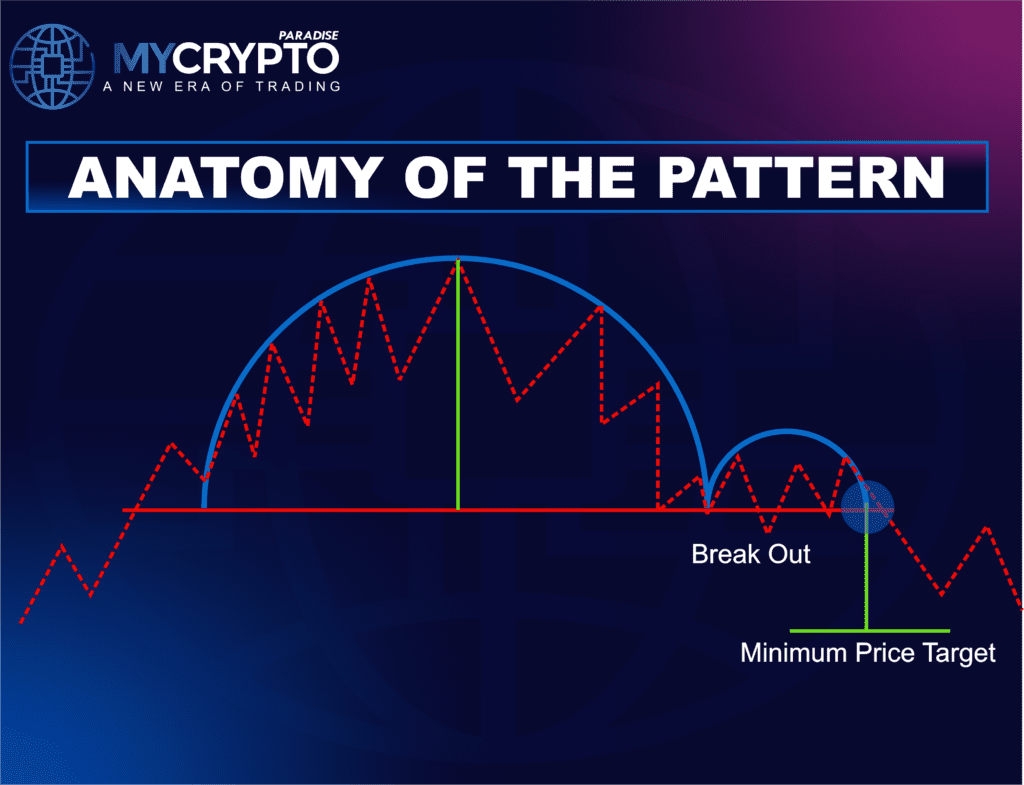
Finally, the pattern becomes actionable when the price breaks below the neckline or support level with strong volume. As a result, this confirms bearish continuation and increases the probability of further downside movement.
Market Psychology Behind the Inverse Cup and Handle
Price movements are not random; they reflect the behavior and decisions of market participants. Therefore, understanding the psychology behind a pattern is what separates average traders from consistent ones.
The inverse cup and handle shows a slow shift in control from buyers to sellers. Initially, buyers are confident as prices trend higher. However, as the rounded top forms, momentum begins to fade.
During the handle, many traders expect continuation as prices start making higher highs and higher lows structure most of the time, but the failure to push higher signals weakness.
Over time, sellers gain confidence and step in more aggressively. Eventually, when the price breaks below support, it confirms that sellers are in control, often leading to a strong downward move.
How to Trade the Inverse Cup and Handle Pattern?
Trading this pattern requires patience, structure, and confirmation. Since the inverse cup and handle generally forms over a longer period, traders must remain patient and avoid forcing early entries before the structure fully develops.
Trend Confirmation Approach:
Traders typically enter short positions after a confirmed breakdown below support(neckline), as a result, confirming bearish continuation.
Aggressive Approach:
On the other hand, some traders prefer entering during the handle formation by using simple trendline breaks or their own personal trading techniques. However, this aggressive approach carries a higher risk and usually requires strong experience and proper risk management.
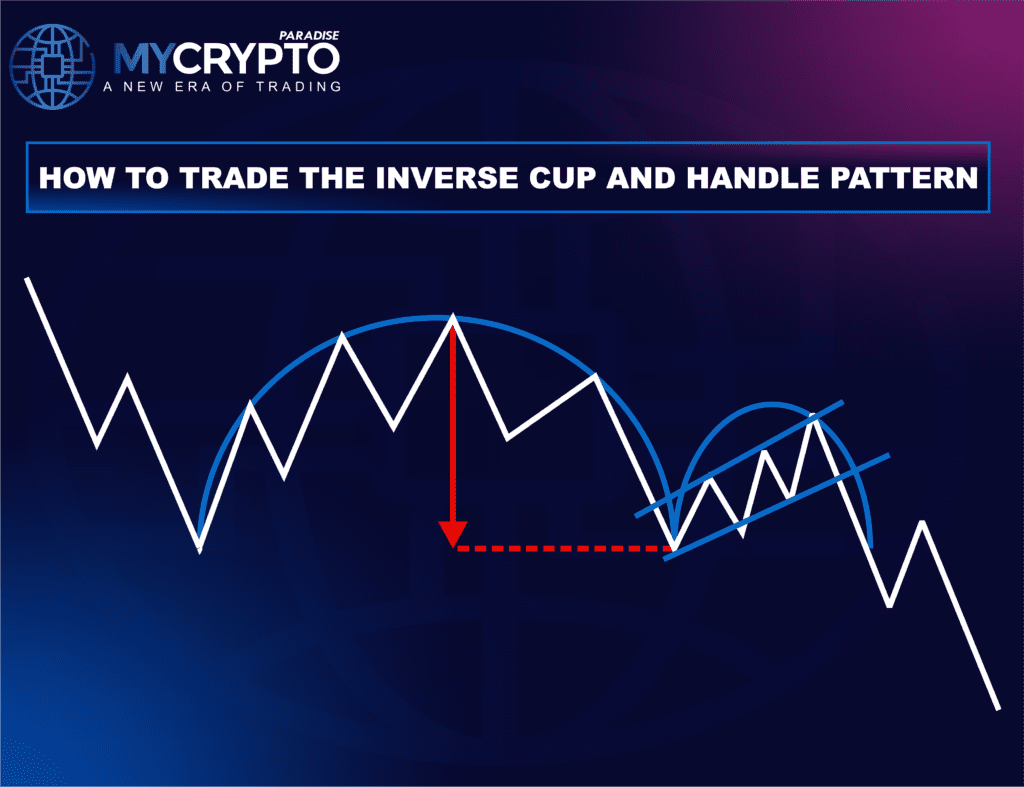
Ultimately, in both cases, waiting for confirmation is essential; otherwise, it can lead to false signals and poor entries.
Volume & Confirmation Guide
Understanding volume behavior is crucial when trading this pattern. During the formation of the cup, volume typically declines, indicating weakening momentum; similarly, volume remains low during the handle.
When the breakdown occurs, volume should expand significantly. As a result, this increase confirms strong market participation. Otherwise, the breakdown may lack reliability.
Trading Parameters For Inverse Cup and Handle?
Executing trades correctly is just as important as identifying the pattern. The inverse cup and handle offers a clear continuation setup based on how the price reacts at support.
Entry Level:
It is important to wait for confirmation before entering a trade. Therefore, traders should take positions only after a clear breakdown below support, as entering too early often leads to false signals and poor execution.
Stop-Loss:
Traders should place the stop-loss based on market structure, typically above the handle or the most recent swing high, to protect against invalidation and unexpected reversals.
Profit Target:
Profit targets are typically determined by measuring the depth of the cup and projecting that same distance downward from the breakdown point, giving traders a structured and logical bearish target.
Inverse Cup and Handle vs Other Patterns
| Feature | Inverse Cup & Handle | Rounding Top | Inverted Head & Shoulders |
|---|---|---|---|
| Structure | Rounded top + weak handle | Smooth rounded top only | Smooth, rounded top only |
| Market Type | Bearish (continuation or reversal) | Bearish reversal | Bullish reversal |
| Shape | Curved top followed by consolidation | Continuous curved top | W-shaped with neckline |
| Psychology | Gradual distribution + trap before breakdown | Slow loss of buying interest | Accumulation and shift to buyers |
| Confirmation | Weakening during the cup, weak handle, then breakdown | Breakdown below support | Breakdown below the support (neckline) |
| Momentum Behavior | Three troughs (middle, lowest) | Gradual momentum loss throughout | Momentum shifts from bearish to bullish |
| Volume Behavior | Declines during formation, expands on breakdown | Gradual decline, spike on breakdown | Volume increases on breakout |
| Trading Direction | Short after breakdown | Short after breakdown | Breakout above the neckline |
| Reliability | High with confirmation | Moderate to high | High |
| Long after the breakout | Misreading handle as strength | Entering before full formation | Misidentifying structure |
Learn more about the Rounding Top pattern: Top 8 Crypto Trading Patterns
Learn more about the Inverted Head & Shoulders: Best Trend Reversal Signals with the Inverse Head and Shoulders Pattern in Crypto Trading
Common Mistakes Trading the Inverse Cup and Handle Pattern
One of the most common mistakes is entering trades without proper confirmation. Traders often anticipate the move instead of waiting for a confirmed breakdown. In many cases, traders enter aggressively on simple trendline breaks during the handle formation; however, this frequently leads to traps and stop-loss hits because the pattern has not fully completed yet.
Another critical mistake is ignoring volume behavior and overall market context. Without proper confirmation, the setup becomes less reliable, increasing the chances of false breakdowns and volatile price movements.
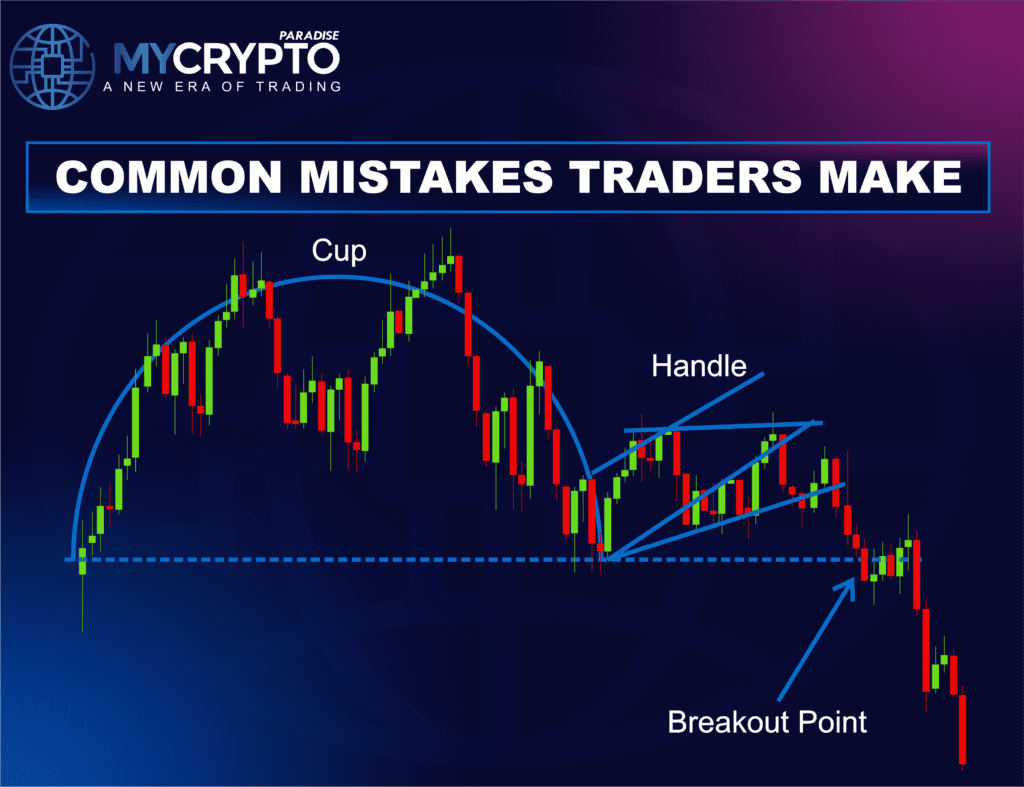
Keeping an inadequate stop-loss is another major mistake traders make. Stops placed too tightly often get triggered by normal market volatility, while excessively wide stops can lead to unnecessary risk and poor trade management.
Conclusion
The inverse cup and handle pattern is a powerful bearish structure that helps traders identify potential continuation and reversal opportunities in crypto markets. Its ability to reflect weakening momentum, gradual distribution, and shifting market control makes it a valuable tool for structure-based trading.
However, like any technical pattern, success depends on execution rather than recognition alone. Therefore, traders should focus on confirmation, volume behavior, and overall market context before entering a position.
When traded with patience, discipline, and proper risk management, the inverse cup and handle can provide high-probability setups with clearly defined risk and reward parameters.
At ParadiseFamilyVIP🎖️, crypto traders dive deep into setups like the Bull Flag, learning exact entry rules, how to spot momentum, and how to handle risk like a pro.
👉 Join ParadiseFamilyVIP🎖️ to trade with confidence, structure, and precision. Limited slots are available, so secure your place or join the waiting list to stay ahead of high-momentum market moves.
FAQs
1. What is an inverse cup and handle pattern in crypto trading?
Inverse cup and handle is a bearish pattern in which the price forms a rounded top, followed by weak consolidation before breaking down.
2. Is the inverse cup and handle pattern reliable?
Yes, it is reliable when the structure is clearly defined and supported by volume. You can trade both continuation and reversal structures.
3. How should traders approach this pattern?
Traders should wait for a confirmed breakdown with volume and avoid entering trades without confirmation.
4. What confirms a valid breakdown?
A strong close below support(neckline) with increasing volume confirms the move, then you can trade it on a pullback or breakdown.
5. Where should stop-loss and targets be placed?
ideally Stop-loss is placed above the handle, ideally, but its personal choice as you gain experience, and targets are projected using the depth of the cup.