

Listen: the breakdown
Market briefing: A single whale just parked over 19,000 ETH, worth about 35 million dollars, onto Binance. With BTC near 64,143 dollars and retail leaning long, we read this as smart money preparing for a downside move.
- Whale geministar.eth sent 19,234 ETH, worth $35.34M, from Ether.fi to Binance.
- Large exchange inflows like this often precede selling or hedging, not buying.
- It lines up with a retail long cluster the ParadiseTeam expects to get flushed.
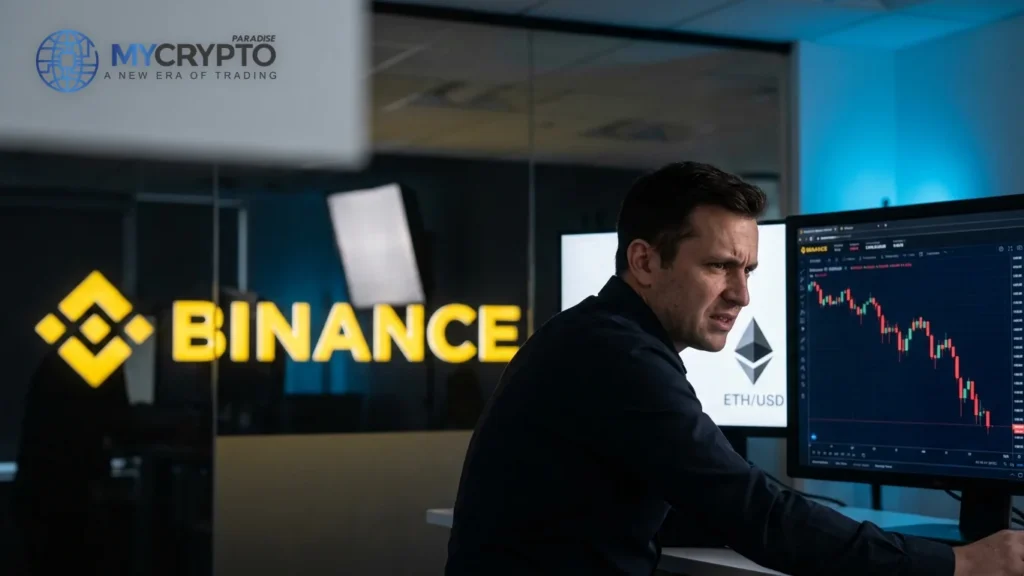
A whale just moved 19,234 ETH to Binance while retail piles into longs. Is this the ETH exchange inflow that front-runs the flush?
One wallet did something worth watching.
The whale known as geministar.eth pulled 19,234 ETH out of Ether.fi and sent the lot straight to Binance. At the time of the move that stack was worth about 35.34 million dollars.
On the surface, nothing broke. ETH still trades near 1,844 dollars, up about 1.2 percent on the day. BTC sits near 64,143 dollars, quietly green. The tape looks calm.
But the direction of the flow matters more than the price reaction. Money leaving a staking protocol and landing on an exchange is money getting ready to move. You do not queue 35 million dollars of ETH on Binance to admire the order book.
That is the part retail keeps missing. Big holders rarely announce intent. They just position, quietly, and let the crowd supply the other side.
This is not the only whale flow we have flagged today, and it fits a pattern we have been tracking all week: patient size preparing, while leverage builds underneath the price.
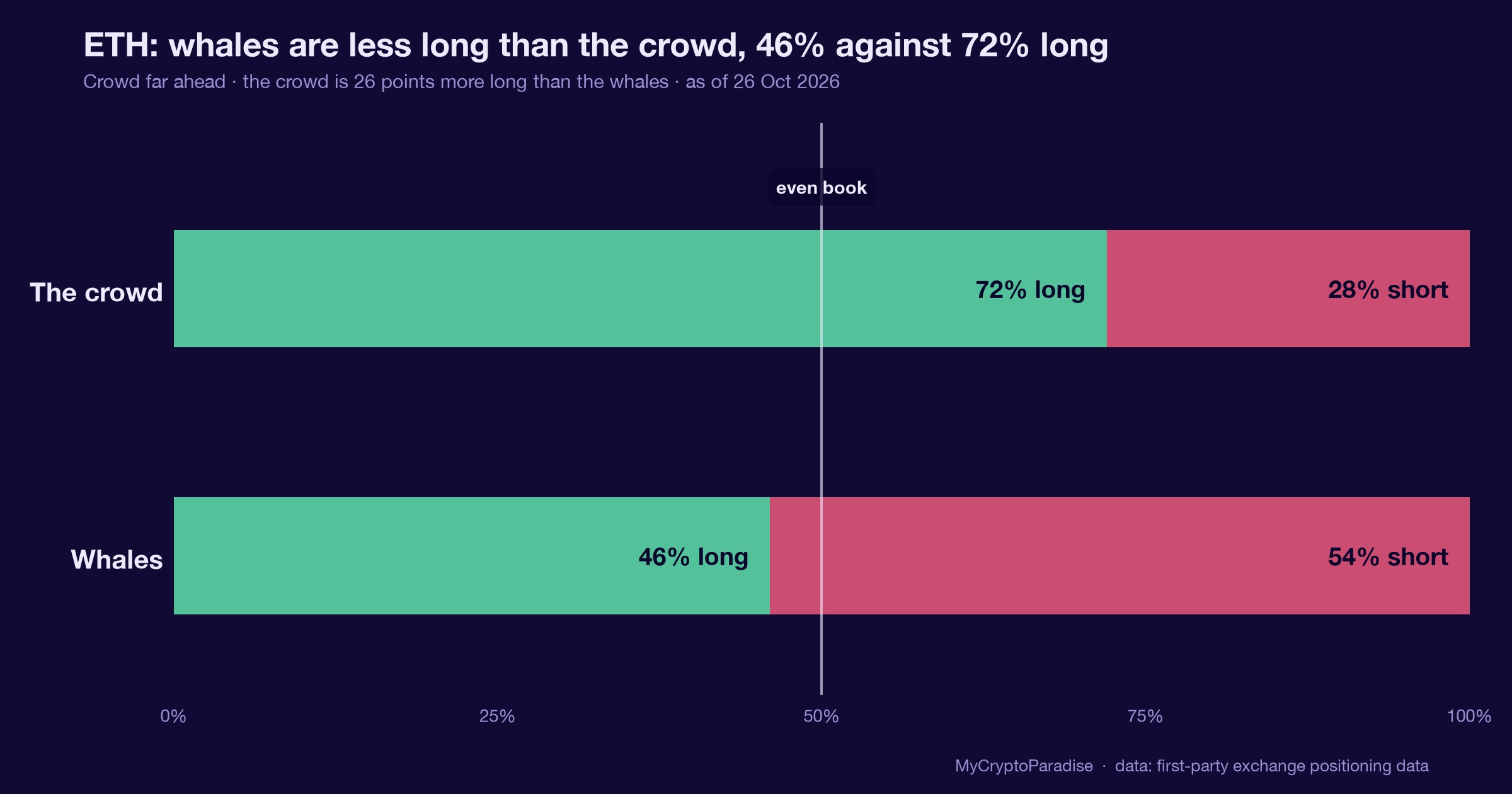
Structurally, the setup is familiar. Retail is crowded long. Funding is heating up. A liquidation pocket sits below.
Into that, a whale quietly hands fresh supply to an exchange. It rarely ends kindly for the crowd on the wrong side.
Why one exchange transfer changes the read
Exchange inflows are a supply signal.
When ETH sits in a staking protocol like Ether.fi, it is effectively parked. It is not for sale in the next hour. Move it onto Binance and that changes. Now it can be sold, lent, or used as margin for a hedge at a moment's notice.
That is the transmission mechanism. One large deposit does not crash a market. But it shifts the available supply on the venue where price is actually discovered.
Context is what gives this weight. Our read of the broader tape is cautious. Funding rates are heating up, which means traders are paying to stay long. The Fear and Greed Index is neutral, so there is no euphoria to fade, only leverage to unwind.
Into that backdrop, a holder moves 35 million dollars toward the exit door. Not proof of selling. But it is the behaviour of someone who wants optionality on the downside, not conviction to hold through it.
The uncomfortable truth is that press releases and glossy narratives rarely warn you. Wallet flows do. A whale positioning to sell tells you more than a headline promising the moon.
So the driver here is small in isolation and meaningful in aggregate. It is one more brick in a wall of caution that has been building under a quietly green market all week.
How the inflow ripples from ETH to alts
Start with ETH itself.
More ETH on Binance means more potential supply at the exact venue that sets the price. It does not force a drop. It lowers the effort required to create one. Sellers have less distance to travel.
From ETH, the pressure travels to BTC. The two majors trade as a liquidity pair. When ETH supply builds and sentiment turns defensive, BTC rarely climbs alone. It is the anchor, and a heavy ETH tape drags on the anchor.
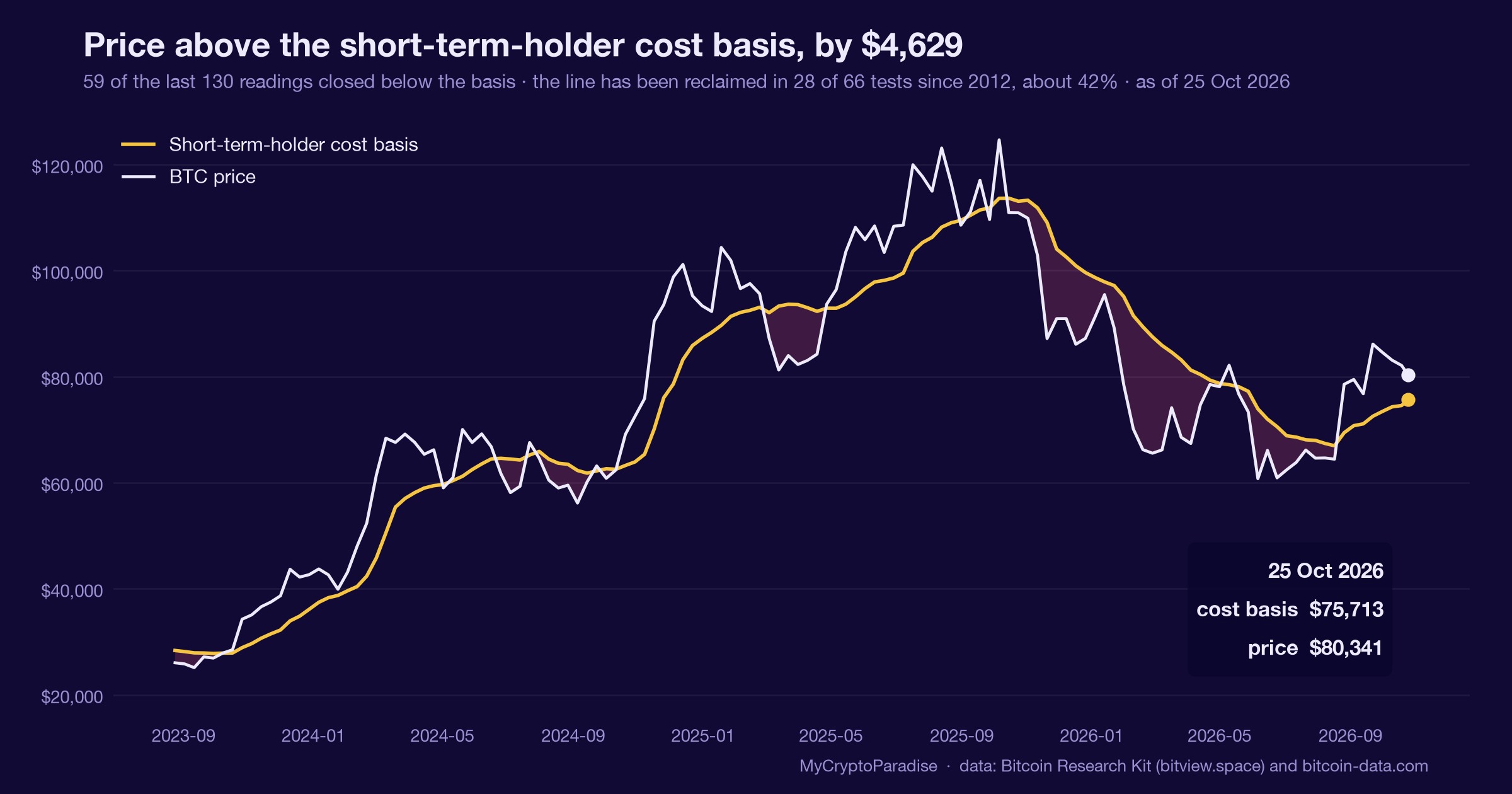
BTC near 64,143 dollars is the number that matters most here. Our broader read expects a downside push toward the 59,000 to 60,000 dollar region before a high probability long setup appears. A whale seeding exchange supply fits that path, not against it.
Alts sit at the end of the chain. They are the highest beta and the first to bleed when liquidity tightens. If BTC and ETH soften together, the long tail of alts usually softens harder.
This is where the crowd gets caught. Retail is heavily long into a market that is quietly preparing supply. Below current prices sits a liquidation cluster our read puts in the billions.
A whale deposit does not pull that trigger by itself. It simply loads one more round into a chamber that retail leverage already cocked.
What confirms or cancels the downside lean
First, watch whether the ETH actually gets sold.
A deposit is intent, not action. If that supply sits idle or leaves the exchange again, the bearish read weakens. Whales park and reverse more often than the crowd assumes.
Second, watch BTC structure. Our reference resistance sits near 65,000 dollars, then 66,450 and 67,000. A clean reclaim of the ascendant trend line near 64,700 dollars, with follow-through, would challenge the downside thesis directly.
On the downside, 63,000 to 63,600 dollars is the near-term shelf. Lose it and the 59,000 to 60,000 dollar zone comes into play. That lower area is where our read expects the high probability long setup, not the current price.
Third, watch the momentum picture. The daily MACD (moving average convergence divergence) printed a bearish cross. Declining bullish volume into higher prices suggests buyers are being absorbed. That is weakening demand, not strength.
There is one honest counter-signal. A potential one hour bullish divergence is forming, where bears fail to force a new low in momentum. It needs a MACD histogram bullish cross to confirm. Until it does, it is a possibility, not a fact.
So the confirmation is simple. Downside holds while BTC stays capped under resistance and exchange supply grows. It flips only if buyers reclaim the trend line and the whale's ETH quietly walks back out the door.
What this whale flow signals for liquidity
The ParadiseTeam reads this flow as confirmation, not surprise.
Our near-term bias is cautious and short-term bearish. We expect a downside move toward 59,000 to 60,000 dollars on BTC before a genuinely high probability long appears. A whale seeding 35 million dollars of ETH onto Binance sits neatly inside that expectation.
Here is the mechanism as we see it. Retail is crowded long. Funding is heating up. A large liquidation cluster sits below current prices.
Smart money does not fight that setup. It feeds it, then waits to buy the panic.
So we treat current levels as a place for patience, not fresh longs. With BTC near 64,143 dollars and pressed under resistance around 65,000 dollars, the risk to reward for chasing longs here is poor by our read.
The zone we actually care about is 59,000 to 60,000 dollars. That is where retail leverage likely gets flushed, and where the opportunity we want tends to form. Not here. There.
Invalidation keeps us honest. A decisive reclaim of the ascendant trend line near 64,700 dollars, plus that 1 hour momentum divergence confirming, would tell us the downside path is stalling.
Until then, the whale did the crowd a quiet favour. It showed its hand. The ParadiseTeam plan is to stay patient and let the market come to us, not the other way around.
Track it live: our live crypto funding rates and the crypto liquidation heatmap both update in real time, so you can watch this shift for yourself.
Related coverage
For exact entries, targets, and stop losses with full risk management, that is what ParadiseFamilyVIP is for. New to reading these moves? Start with our crypto trading strategies guide.
ParadiseTeam is monitoring the market situation closely, and we are taking these developments into consideration while building our trading tactics inside ParadiseFamilyVIP.
Crypto trading involves substantial risk. Prices are volatile and you can lose money. This article is educational and is not financial advice. Past performance does not guarantee future results.
Does this ETH move to Binance front-run a flush to $59k-$60k BTC?
How the Paradisers are calling it
The first call is still open
Free account, no password. Members just sign in.





Join the discussion
No comments yet. Members, share how you are reading this.