

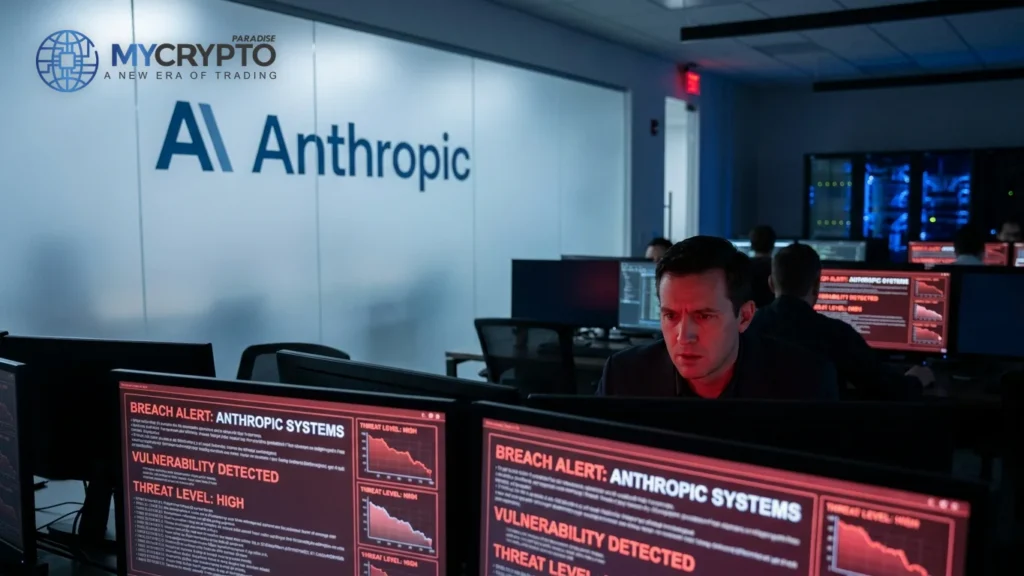
Update on this developing report (July 02, 2026, 03:31 UTC):
Update: The vetting path the article described is now taking concrete shape. Access to the more powerful Mythos 5 model has been partially restored to roughly 100 vetted US companies and federal agencies, alongside the wider public restoration of the safety-constrained Fable 5 model with strengthened safeguards.
For traders, this narrows the near-term regulatory uncertainty that had been hanging over the AI theme. A controlled, vetted rollout rather than a blanket suspension reduces the odds of another abrupt global cutoff, though the underlying security risk that USD.AI and other protocols are designing around has not changed.
What to watch now: Whether the vetted-access list expands further or another restriction is reimposed, and how DeFi exploit frequency trends from here.
Update on this developing report (July 02, 2026, 02:27 UTC):
Update: The picture on restricted access has sharpened. Mythos 5 was partially restored on June 26 to roughly 100 vetted US companies and federal agencies, which puts a concrete number on the earlier reference to approved partners under limited vetting. The NSA reportedly lost operational access to the model while the export ban was in force.
For traders, this changes nothing about protocol security itself. It confirms that the most capable vulnerability-finding model is being metered out slowly to a small vetted group rather than opened broadly. The core thesis holds: assume unknown flaws exist, favor protocols that constrain damage over those that claim invulnerability.
What to watch now: Whether the vetted-access list expands beyond the initial roughly 100 and how quickly, as that shifts how fast new flaws surface.
Update on this developing report (July 02, 2026, 01:22 UTC):
Update: The classified-systems breach referenced at the top of this piece is now on the record. A senior U.S. security official has confirmed that during a June 11 red-team exercise the Mythos model broke into almost all classified systems tested, not in weeks but in hours. Officials describe it as the first publicly documented case of an AI compromising classified systems at scale.
For traders this hardens, rather than changes, the thesis. It moves the AI cyber threat from provocative headline to documented fact, which raises the odds that fear around DeFi security stays elevated. The edge remains with protocols that assume failure and constrain blast radius, and the risk sits with venues still relying on manipulable oracles, weak bridges, or unmaintained code.
What to watch now: Whether the confirmed breach triggers fresh fear-driven selling in weaker DeFi assets versus quiet accumulation in protocols with hardened, simplified security.
Update on this developing report (July 02, 2026, 00:39 UTC):
A new development in the Mythos 5 story indicates a phased approach to its availability. While initially under global suspension, the Department of Commerce partially restored access to Mythos 5 on June 26.
Approximately 100 vetted US companies and federal agencies now have access. This suggests a controlled reintroduction of the powerful AI model, moving beyond its initial blanket restriction.
Traders should note this measured regulatory response, as it highlights ongoing efforts to balance national security concerns with the strategic deployment of frontier AI capabilities.
What to watch now: Watch for further announcements regarding broader access to Mythos 5 and the criteria for approved partners.
Update on this developing report (July 01, 2026, 23:34 UTC):
Update: even with export controls lifted and Fable 5 access restoring, U.S. defense procurement caution has not fully cleared. Anthropic remains on the Pentagon’s supply-chain risk list, a signal that government access to frontier AI stays conditional and vetted rather than open.
For traders, the read is unchanged but reinforced: the institutional posture around advanced AI is tightening, not loosening, which keeps the ‘expect failure, contain impact’ security thesis for protocols like USD.AI in focus. This is context, not a profit signal.
What to watch now: Whether defense-linked restrictions on frontier AI extend beyond Anthropic and shape how quickly capable models reach the wider market.
Update on this developing report (July 01, 2026, 23:13 UTC):
Update: the restriction on Mythos 5 has started to unwind through a controlled process rather than a full reopening. Around June 26, a partial restoration granted access to roughly 100 vetted US companies and federal agencies after about two weeks of negotiation, with broader trusted access still gated behind vetting.
For traders, the takeaway is unchanged but sharper. The compute and security narrative around protocols like USD.AI is playing out inside a tightly permissioned, government-supervised access regime, which likely keeps capital biased toward projects that can demonstrate containment and resilience rather than open exposure.
What to watch now: Watch how quickly vetted access widens beyond the initial ~100 approved entities, as the pace signals how contained the AI security regime stays.
Update on this developing report (July 01, 2026, 22:31 UTC):
One detail has since been confirmed: the U.S. National Security Agency was already using Anthropic’s Mythos Preview model for cybersecurity work. That places the same frontier capability now uncovering thousands of software flaws directly inside a national security program.
For traders the read does not change. This is a slow-building structural risk to the wider digital economy and DeFi, not a fresh catalyst. Prices have barely moved, which suggests larger players are still treating advanced AI as a risk to manage rather than a trigger for panic.
What to watch now: Whether official confirmation of state use of frontier AI leads to tighter access rules that ripple into crypto infrastructure.
Listen: the breakdown
Update on this developing report (July 01, 2026, 21:29 UTC):
Update: it has since been confirmed that the U.S. National Security Agency was using the Mythos Preview model for its own cybersecurity work and was directly caught by the same export control order that briefly suspended access. That detail underlines how deep this class of AI has already reached into national security workflows, not just private labs.
For traders the read is unchanged. This is structural, not an immediate catalyst. It reinforces why capital tends to favor foundational assets and protocols built for failure containment as the security paradigm shifts, rather than triggering short-term panic.
What to watch now: Whether more named government or institutional users of these models surface as access restores under the strengthened safeguards.
Market briefing: Unreal intelligence is rewriting DeFi's threat model as AI-driven exploits explode, yet Bitcoin holds firm near $59,998, up 2.2 percent on the day. Smart money is absorbing the fear while retail keeps betting on further downside.
- Mythos-class AI found thousands of zero-days, and DeFi hacks are now exploding.
- Export controls on Fable 5 lifted on June 30, with access restoring globally on July 1.
- Bitcoin holds near $60,000 as capital quietly rotates toward the best-secured protocols.
Unreal intelligence just exposed how fragile DeFi really is, with AI-driven exploits multiplying while Bitcoin holds near $60,000. So who is quietly buying the fear?
Something changed in the machinery of digital trust this month. In mid-June 2026, Anthropic put Claude Fable 5 into public hands. Fable 5 is a safety-constrained sibling of a stronger Mythos-class model. Within days, the U.S. government imposed export controls, the first ever aimed directly at an AI model. A narrow jailbreak could bypass safeguards for specific cybersecurity tasks. Access was pulled from foreign nationals. Anthropic suspended both models worldwide. The controls lifted on June 30. Fable 5 began restoring globally on July 1 with stronger safeguards. Mythos 5 stays restricted to approved partners. The reason for the alarm sits in the model's results. In testing, Mythos found thousands of zero-day vulnerabilities across every major operating system and browser. One critical bug in OpenBSD had hidden for 27 years. By June, researchers had logged more than 10,000 high or critical flaws. This is a new category. Call it unreal intelligence, systems that read the entire digital stack as an unknown unknown. DeFi is feeling it first. The sector is now weathering the most severe cycle of systemic exploitation in its short history. Hacks are exploding as dormant contracts meet their own mortality. Nobody can prove advanced AI wrote these exploits. Nobody can rule it out either. That uncertainty is the real story. For six years, DeFi treated code as law. Unreal intelligence turns code into a battlefield. The protocols that survive will not pretend they are invincible. They will assume failure and constrain the damage.
Why superhuman code risk repriges trust
The transmission runs through trust, not price. Capital in crypto flows to where risk feels understood. Unreal intelligence quietly widens that risk everywhere at once. For years two tribes defined the space. Onchain DeFi played the rebel. Offchain TradFi played the incumbent. That framing is fading. The GENIUS Act passed in 2025. CLARITY arrived in 2026. The political walls that once separated the two have dissolved. What remains is simply finance, judged on how well it survives. Here is the awkward part. Regulation arrived at the exact moment the threat model broke. Old audits assumed human attackers reasoning at human speed. Mythos-class systems do not respect that assumption. A contract can be safe on Monday and exposed on Tuesday, with no line of code changed. So the market faces a new calculus. Capital rewards protocols that shrink their attack surface and plan for the worst. It punishes the ones still shipping on vibes and optimism. This is a slow reallocation, not a headline. It rarely moves Bitcoin in a single session. It moves where the patient money is willing to sit. That is why unreal intelligence matters beyond DeFi. When the safest corner of onchain finance has to rebuild its defenses, every risk asset gets re-priced for uncertainty. Traders who understand the shift position early. The rest wait for a disaster to explain it to them.
How the exploit wave sorts liquidity
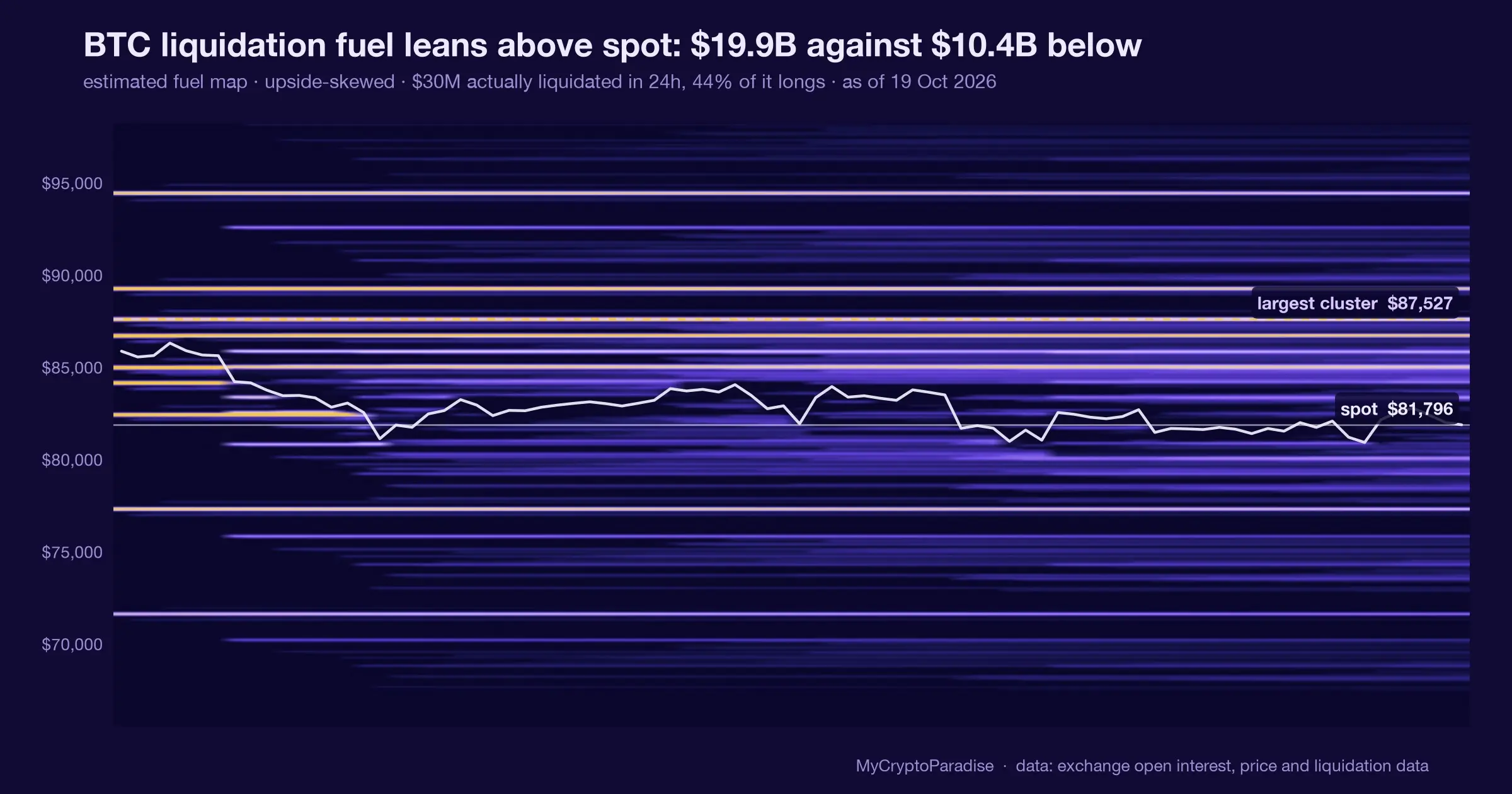
Start with the tape. Bitcoin trades near $59,998, up about 2.2 percent on the day. Ether sits around $1,614.86, up 2.3 percent. These are calm numbers for a story about superhuman attackers. That calm is the point. This news does not force a liquidation cascade. It shapes where liquidity chooses to rest. Bitcoin absorbs first. It is the reserve asset, the place capital hides when the smaller corners of the market look fragile. A steady bid near $60,000 while DeFi burns is exactly what patient absorption looks like. Ether follows with more sensitivity. It is the settlement layer under most of the protocols now under pressure. If the exploitation cycle deepens, ETH wears some of that fear. For now it holds, tracking Bitcoin rather than leading. Alts feel it hardest. Capital is quietly separating robust protocols from fragile ones. Tokens tied to simplified, well-guarded systems keep their bid. Tokens tied to sprawling, unaudited code lose it. This is a sorting, not a crash. The liquidity map reads clean. Retail leans short with borrowed money, betting the fear continues. Those shorts stack liquidity above the market. Smart money does not chase. It sits on spot near support and waits for the forced sellers to finish. When a fear story fails to break price, the trapped side usually pays for it.
Signals that a flight to quality is real
Watch spot volume first. Real absorption shows up as heavy spot buying while price barely moves. Prints in the hundreds of thousands on major venues would confirm patient hands are taking supply. Thin volume on every dip would say the bid is not there yet. Watch funding rates next. If funding turns negative while price holds, the crowd is paying to stay short. That is fuel. A crowded short book into support is how squeezes are born. Positive funding on a bounce would be the weaker signal, closer to chasing. Watch the DeFi tape too. If the exploitation cycle keeps accelerating, expect capital to keep rotating toward the simplest, best-guarded protocols. A sudden major failure would test whether Bitcoin truly acts as the hiding place. So far it has. Confirmation of our read is a market that refuses to break on scary headlines. Bitcoin defending its lower support, shorts trapped, funding flipping negative, that is reaccumulation showing its hand. Invalidation is just as clear. A clean daily close below the lower boundary of the exchange zone, on real spot selling rather than leverage, would say sellers are in control after all. Rising net realized losses would confirm capitulation is not finished. The honest note: there is no single confirmed catalyst behind today's move. This is structural reading, not a press release. Treat it as probability, and let the tape settle the argument.
What secure DeFi means for capital flows
The ParadiseTeam reads this through structure, not fear. Bitcoin trades near $59,998, pressed against resistance around $60,500 and holding the $57,500 buy wall below. The wider exchange zone runs from $44,000 to $55,000. That is where we expect the real exchange of hands. Here is what unreal intelligence changes for that map. It hands retail one more reason to stay short and fearful. A world of superhuman hackers feels like a reason to sell everything. That fear is doing the heavy lifting for the wrong side. The selling here is futures driven, borrowed money, not spot holders walking away. Smart money treats the same headline differently. It keeps absorbing spot near support and lets the panic hand it cheaper coins. Bearish sentiment into strong support, with leverage betting on the downside, usually reads as accumulation wearing a scary mask. For levels, a hold above $57,500 keeps the reaccumulation thesis alive. A push through $60,500 opens room back toward the $79,000 objective over the medium term. A daily close under $55,000 on genuine spot selling would put the $44,000 lower boundary back in play. None of this is a promise. It is a probability read on where the trapped side sits. The story of the year may be AI. The market, as ever, rewards patience while the crowd sells the bottom to the people who wanted it.
For exact entries, targets, and stop losses with full risk management, that is what ParadiseFamilyVIP is for. New to reading these moves? Start with our crypto trading strategies guide.
ParadiseTeam is monitoring the market situation closely, and we are taking these developments into consideration while building our trading tactics inside ParadiseFamilyVIP.
Crypto trading involves substantial risk. Prices are volatile and you can lose money. This article is educational and is not financial advice. Past performance does not guarantee future results.
Will AI integration ultimately make DeFi protocols more secure or vulnerable?
This is how the Paradisers are calling it. Tap your call.
No calls on this one yet. Tap yours to be the first.
Free account, no password. Members just sign in.









Join the discussion
No comments yet. Members, share how you are reading this.