


Elliot Wave Corrective Patterns
In short
The ABC corrective pattern is a three-wave pattern (A, B, and C) that appears as the second phase of an Elliot Wave. It moves in the opposite direction of the prevailing trend and is also known as a zigzag pattern due to its shape. Wave A is the initial move of this pattern.
Traders are able to predict potential price movements using technical analysis tools. A popular choice among traders is the Elliot wave theory. It is based on the idea that financial markets move in waves that are influenced by investor psychology and market sentiment. There are two distinct phases of the Elliot wave patterns.
These are the impulse waves phase and the corrective waves phase. When the charts make a similar move or follow the same direction as the trend, the resulting momentum creates the impulse wave. The corrective pattern, on the other hand, will make an opposite move to the trend in place. The commonest corrective pattern observed by many traders is the ABC corrective pattern. This article will detail this pattern and also focus on how to apply it in crypto trading.
What is the ABC Corrective Pattern?

The ABC pattern appears at the tail end of the Elliot wave. It is the second phase of the wave which contains three distinct waves ABC. It is also known as a zigzag pattern because of its zigzag shape. The ABC pattern is composed of three waves: A, B, and C.
The A wave is the first wave of the pattern and represents a move in the opposite direction of the trend. The B wave is the second wave and represents a corrective move that retraces some of the A wave. The C wave is the third and final wave of the pattern. It also moves in the direction of the established trend like the other two waves A, B. The C wave is often equal in length to the A wave.
How to Identify the ABC Corrective Pattern


Identifying the ABC corrective pattern in Elliot wave analysis is not always easy, but it can be done by looking for specific price movements. The A wave is typically a sharp move in the opposite direction of the trend, and it should be the longest wave in the pattern. The B wave is a corrective wave that retraces some of the A wave, but it should not retrace more than 61.8% of the A wave. The C wave is the final wave and should move in the direction of the trend, and it should be at least as long as the A wave.
Trading the ABC Corrective Pattern
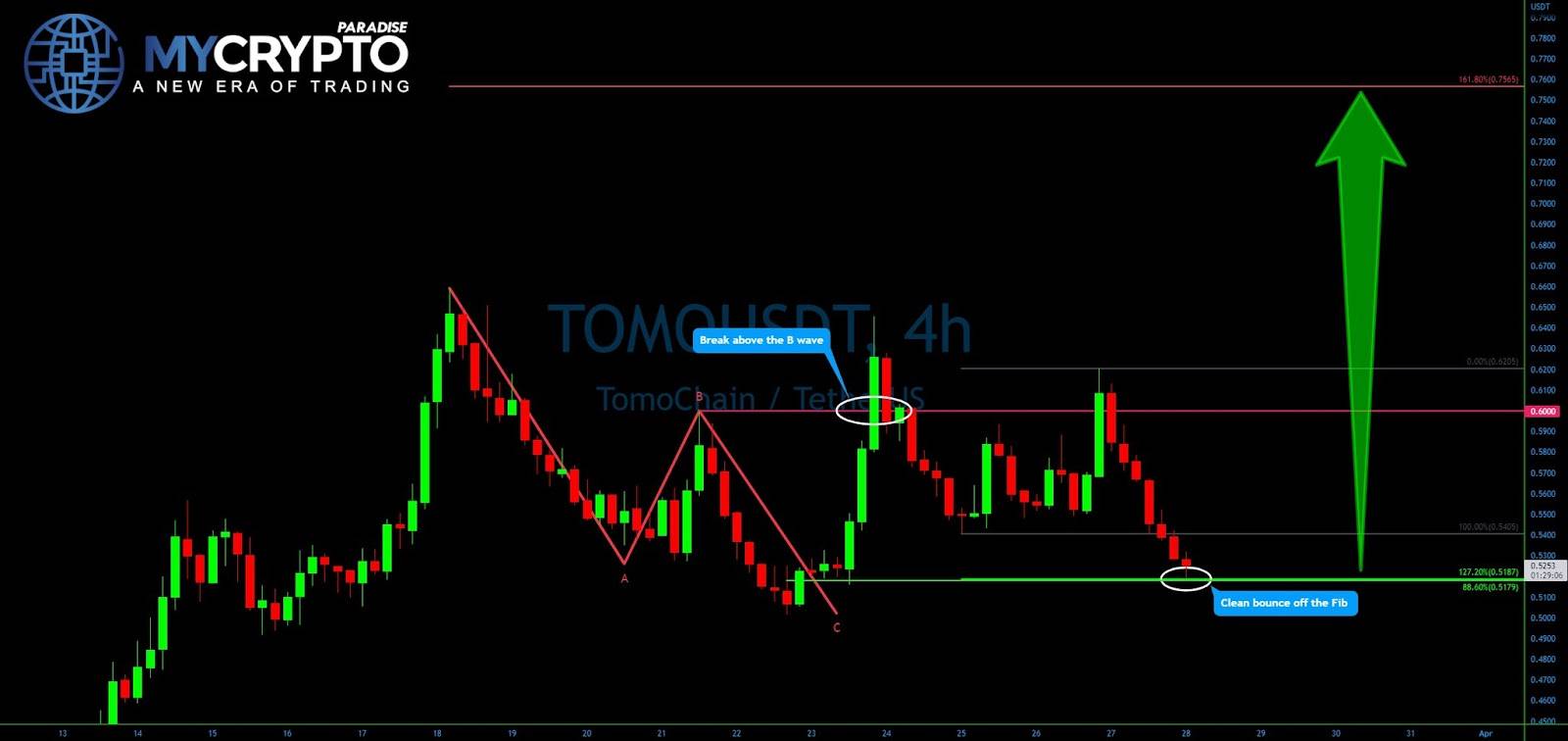
The ABC corrective pattern can be a useful tool for traders and investors. Experienced traders know exactly how to use it to fix trade entry and exit points. Many traders also work around the pattern to enter stop-loss values for their positions. For example, when the price of an asset is in a downtrend, and it forms an ABC corrective pattern, traders can look for a buy signal when the C wave begins. Similarly, when the price is in an uptrend and forms an ABC corrective pattern, traders can look for a sell signal when the C wave begins.
Limitations of the ABC Corrective Pattern
While the ABC corrective pattern can be a useful tool in trading, it is not foolproof. It is important to note that the ABC pattern is not the only corrective pattern in Elliot wave analysis, and there are other patterns that traders should be aware of. Additionally, the ABC pattern does not always occur in every corrective wave, and it can be difficult to identify the pattern in real-time trading.
Conclusion
In conclusion, the ABC corrective pattern is a useful tool in Elliot wave analysis. It is a three-wave pattern that appears in a corrective wave and can be used to identify potential entry and exit points in a trade. When in use, specific price directions are crucial before trade entry. Traders need to combine the strategy with other indicators for effective use.
Crypto trading involves substantial risk and is not suitable for everyone. Nothing here is financial advice; it is education only. Never risk more than you can afford to lose.













Join the discussion
No comments yet. Members, share how you are reading this.