

Altcoin Trading 2026
In short
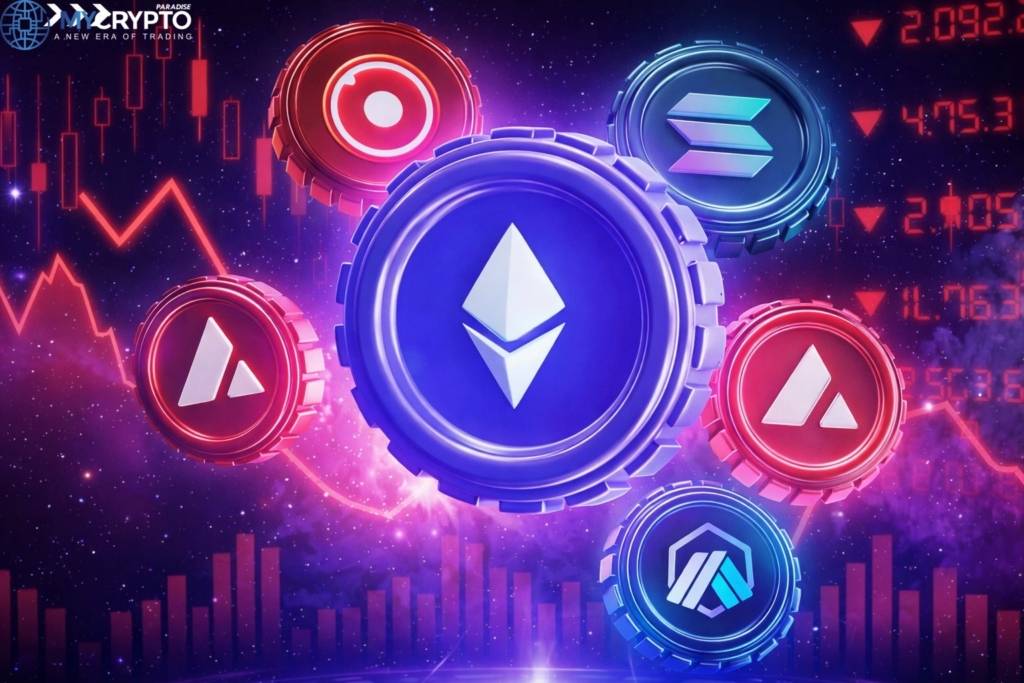
The major altcoins traders are watching in 2026 include Ethereum, Solana, Chainlink, Avalanche, Arbitrum, and Render. These altcoins represent different sectors such as smart contracts, high-speed blockchains, oracle data, Layer 2 scaling, and AI computing. Liquidity in the market is flowing towards ecosystems with real usage, active developer communities, and strong on-chain activity.
Every bull cycle begins the same way.
Bitcoin moves first. Capital follows. Narratives form. Then quietly, almost unnoticed at first, altcoins begin to outperform.
By the time retail investors notice, much of the early opportunity has already passed.
In 2026, traders searching for the best altcoins to trade are no longer chasing random tokens. The market has matured. Liquidity flows toward ecosystems with real usage, active developer communities, and strong on-chain activity.
The question is no longer which coin will pump. The better question is which ecosystems are attracting capital right now.
After reviewing current liquidity flows, market narratives, and trading activity, here are some of the altcoins that traders are watching closely in 2026.
Ethereum (ETH)
Ethereum remains the backbone of the entire altcoin ecosystem.
While Bitcoin dominates as digital gold, Ethereum dominates as the infrastructure layer for decentralized finance, NFTs, and smart contracts. Thousands of applications continue to run on Ethereum’s network.
For traders, Ethereum offers something unique: liquidity depth combined with volatility.
Major institutional funds increasingly use ETH as a trading vehicle alongside Bitcoin. This means price movements often mirror macro market sentiment, making ETH one of the most reliable altcoins for technical analysis strategies.
Ethereum is also central to the DeFi and staking ecosystem, which creates continuous demand for the asset.
In trading environments, ETH is often used as the primary altcoin pair for futures trading, swing trading, and options markets.
In short, Ethereum may not always deliver the largest percentage gains, but it consistently remains one of the most tradable altcoins in the market.
Solana (SOL)
Solana has emerged as one of the fastest-growing blockchain ecosystems in recent cycles.
Its primary strength is speed and scalability. Solana processes transactions significantly faster than most legacy blockchains, making it attractive for decentralized applications, NFT marketplaces, and high-frequency DeFi trading.
In 2026, Solana’s ecosystem continues to expand with platforms like Jupiter, Raydium, and Orca attracting strong liquidity flows.
For traders, Solana offers a powerful combination of strong community momentum and volatile price action.
Large ecosystem announcements often trigger aggressive price swings, which creates opportunity for swing traders and futures traders alike.
However, Solana remains more volatile than Ethereum, meaning risk management remains essential.
Despite that volatility, many traders consider Solana one of the most actively traded altcoins outside Bitcoin and Ethereum.
Chainlink (LINK)
Chainlink plays a very different role compared to many other altcoins.
Instead of competing as a smart contract platform, Chainlink focuses on data infrastructure for blockchains.
It provides decentralized oracle networks that allow smart contracts to access real-world data such as prices, weather data, financial market information, and more.
This may sound technical, but it creates a powerful narrative.
Nearly every decentralized finance protocol requires reliable price data. That makes Chainlink an essential part of the blockchain infrastructure stack.
For traders, LINK often moves strongly during periods when DeFi adoption accelerates.
As decentralized finance expands across multiple chains, demand for oracle services continues to grow.
This structural demand has helped Chainlink remain relevant across multiple market cycles.
Avalanche (AVAX)
Avalanche has positioned itself as one of the leading multi-chain blockchain ecosystems.
The platform focuses on high throughput, low transaction costs, and customizable blockchain environments through its subnet architecture.
This structure allows developers to create specialized blockchains tailored to specific applications.
For traders, Avalanche often moves strongly during periods when new DeFi protocols or institutional partnerships emerge.
The ecosystem has attracted several enterprise integrations, which has strengthened its credibility in the broader blockchain sector.
From a trading perspective, AVAX frequently shows strong technical setups due to its liquidity and volatility balance.
Many traders monitor Avalanche during ecosystem expansion periods because those moments often trigger aggressive capital inflows.
Arbitrum (ARB)
Layer 2 solutions have become one of the most important sectors in crypto.
Ethereum remains dominant, but scaling solutions are essential to reduce fees and improve transaction speed.
Arbitrum is one of the leading Layer 2 networks built on Ethereum.
It allows users to interact with decentralized applications at significantly lower costs while still benefiting from Ethereum’s security.
For traders, ARB represents exposure to Ethereum scaling growth.
As more decentralized applications migrate to Layer 2 networks, demand for these ecosystems increases.
Arbitrum’s trading activity tends to spike when new protocols launch or when Ethereum gas fees rise sharply.
This makes ARB a strong candidate for traders looking to capture momentum within the Ethereum ecosystem.
Render (RNDR)
Render represents a newer category of altcoin narratives: AI infrastructure and decentralized computing.
The project focuses on connecting GPU computing power to creators, developers, and AI applications through a decentralized network.
As artificial intelligence continues expanding rapidly, demand for GPU power is rising across multiple industries.
Render positions itself as a decentralized solution to that demand.
For traders, RNDR has shown strong momentum during periods when AI narratives dominate the market cycle.
While still more speculative than larger altcoins, its connection to the AI sector makes it one of the most closely watched narrative tokens in 2026.
Comparison: Major Altcoins to Watch in 2026
| Altcoin | Sector | Why Traders Watch It |
| Ethereum (ETH) | Smart Contracts | Deep liquidity and institutional interest |
| Solana (SOL) | High-Speed Blockchain | Strong ecosystem growth and volatility |
| Chainlink (LINK) | Oracle Infrastructure | Core data layer for DeFi |
| Avalanche (AVAX) | Multi-Chain Ecosystem | Enterprise integrations and DeFi expansion |
| Arbitrum (ARB) | Ethereum Layer 2 | Scaling solution for Ethereum |
| Render (RNDR) | AI Infrastructure | Growing demand for decentralized GPU computing |
Bitcoin may dominate headlines, but altcoins remain the arena where traders often find the largest percentage opportunities.
Ethereum, Solana, Chainlink, Avalanche, Arbitrum, and Render represent different sectors within the crypto economy, each driven by unique narratives and adoption trends.
For traders in 2026, the key is not chasing hype but understanding which ecosystems are attracting liquidity and attention.
Because in crypto markets, the biggest opportunities rarely appear where the crowd is already looking.
Where Traders Learn to Identify the Next Altcoin Opportunities
Spotting altcoin opportunities early requires more than just watching price charts.
Inside ParadiseFamilyVIP, traders analyze market structure, on-chain data, liquidity movements, and ecosystem growth to identify high probability opportunities before they become mainstream narratives.
Because the traders who navigate altcoins well rarely rely on luck, knowing any trade can still lose.
They rely on preparation.
Altcoin Trading FAQ
What are altcoins in cryptocurrency?
Altcoins are all cryptocurrencies other than Bitcoin. They include Ethereum, Solana, Chainlink, and thousands of other blockchain-based assets across many different sectors.
Are altcoins riskier than Bitcoin?
Generally yes. Altcoins tend to move later in the cycle, rise faster, and fall harder than Bitcoin, which increases both upside potential and downside risk.
How do traders choose which altcoins to trade?
Professional traders usually focus on coins with strong liquidity, active ecosystems, and clear market narratives rather than chasing hype or random tokens.
Can altcoins outperform Bitcoin?
During certain phases of the market cycle, altcoins can significantly outperform Bitcoin. This period is often referred to as an altcoin season, though it carries higher volatility.
Crypto trading involves substantial risk of loss. This article is educational and is not financial advice. Past performance does not guarantee future results. Always do your own research.
What is different here
Most guides stop at the theory. The MyCryptoParadise team shares the live trades, and the reasoning behind each one, inside ParadiseFamilyVIP. Everything here is education, not financial advice.
Crypto trading involves substantial risk and is not suitable for everyone. Nothing here is financial advice; it is education only. Never risk more than you can afford to lose.




Join the discussion
No comments yet. Members, share how you are reading this.