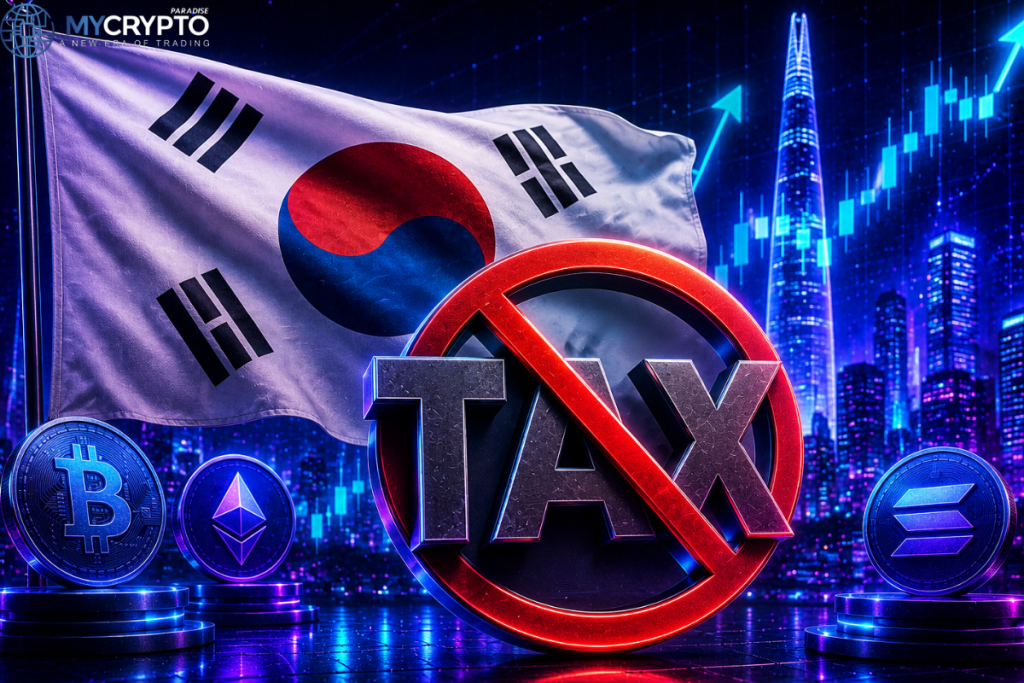
- Crypto tax repeal petition passed 50,000 signatures
- South Korea parliament must now review the proposal
- Investors warn tax could hurt crypto market growth
Crypto taxes usually sound technical until they start colliding with retail participation and capital flows. Is South Korea about to test how much regulation crypto liquidity can absorb?
A petition calling for the cancellation of South Korea’s planned 22% crypto investment tax has officially surpassed the 50,000 signatures needed for parliamentary review. Now, it heads to the National Assembly’s Strategy and Finance Committee, shifting investor frustration from social media to a real political issue.
This tax is set to kick in January 2027 and will target annual crypto gains exceeding 2.5 million won. Supporters of the petition argue that the tax imposes unfair financial burdens on investors, especially young Koreans already facing high housing costs and limited economic mobility.
This is a big deal because South Korea is one of the largest retail-driven crypto markets in the world. About 32% of the population held crypto assets earlier this year. Any uncertainty around taxation can significantly impact participation, liquidity, and exchange activity throughout Asia’s crypto landscape.
Why South Korea Crypto Tax Matters for Crypto
When governments raise taxes on crypto transactions, it usually leads to a drop in investor enthusiasm and lesser trading incentives. That can dampen retail engagement in active markets.
Less participation means reduced exchange volume. With lower volume, liquidity conditions tighten. This, in turn, can ramp up volatility across crypto markets. Crypto taxes influence participation, participation impacts liquidity, and liquidity determines market stability.
Market Impact of South Korea’s Crypto Tax
Bitcoin often reacts indirectly to regulatory changes in major crypto centers since retail-driven markets contribute significantly to overall trading volume.
Ether (ETH) and altcoins might feel the pinch more if Korean retail activity slows down, particularly in speculative sectors where local traders remain highly active.
Exchange volumes and trader sentiment in Asia might become more reactive as they assess whether the tax will face delays, revisions, or political pushback. The tax is scheduled for 2027, the market is reacting now because liquidity tends to price uncertainty early.
What to Watch Next After South Korea Tax Petition
Keep an eye on parliamentary discussions. The petition reaching formal review status keeps regulatory uncertainty alive and heightens the chances of political debate around implementation timelines or potential revisions.
Traders should also track exchange volume trends across South Korean platforms. Any dip in activity could indicate rising caution among local investors as the tax rollout approaches.
Responses from other Asian governments may also become relevant if they start reevaluating the impact of crypto taxation on innovation and capital flow.
Insights for Traders on South Korea Crypto Tax
This isn’t just about taxes, it’s about how regulation influences liquidity behavior in one of the most active retail markets for crypto. South Korea has historically been a hotbed for digital asset participation. Any policy that stifles retail activity threatens to impact market depth and sentiment across Asia.
Confirmation will come if lawmakers reassess the tax framework or delay its implementation. Invalidation is possible if the policy rolls out smoothly without affecting participation levels or exchange volume. Right now, the discussion has moved beyond theory. Crypto regulation in South Korea has become a political issue, and markets usually take note when liquidity becomes part of public policy.
ParadiseTeam is monitoring the market situation closely, and we are taking these developments into consideration while building our trading tactics inside ParadiseFamilyVIP